
Electric Toothbrush Buying Guide: Two Features Actually Matter
A pressure sensor and a quadrant timer are what the evidence supports. Modes, apps, and AI claims are packaging, and heads are the real cost.
Electric toothbrushes are sold on the number of cleaning modes, an app, and a travel case. The clinical evidence points at almost none of that. What matters is that the brush oscillates or vibrates at all, that it has a pressure sensor and a timer, that the head is small enough to reach behind your back molars, and that replacement heads are affordable — because that last point determines whether you actually change them every three months.
Here is what the difference between a £30 brush and a £250 brush actually buys, which is less than the packaging implies.

Oscillating-rotating or sonic
Two mechanisms dominate, and both work.
Oscillating-rotating brushes have a small round head that rotates back and forth, often with a pulsating in-and-out motion as well. The head is roughly the size of one tooth, so you clean tooth by tooth. Reviews of clinical trials have generally found this mechanism reduces plaque and gingivitis somewhat more than manual brushing, and in several comparisons slightly more than sonic brushes over the short term.
Sonic brushes have an elongated head, similar in shape to a manual brush, that vibrates at high frequency. You sweep it along the gum line. The vibration also agitates the fluid around the bristles, which contributes some cleaning beyond direct contact. Many people find the sensation gentler than a rotating head.
The practical difference is smaller than the marketing suggests, and both are clearly better than manual brushing for most people, largely because the timer makes you brush for the full two minutes and the motion does not depend on your technique. Choose on feel: if a rotating head feels aggressive to you, get a sonic brush, and vice versa. A brush you dislike using is worse than either.
Avoid the third category: cheap battery-powered brushes that take AA cells and simply vibrate the bristles slightly. They are closer to a manual brush than an electric one, and they lack pressure sensors and useful timers.
The features that are actually worth money
A pressure sensor is the single most valuable feature on an electric toothbrush, and it is the one to insist on. Brushing too hard causes gum recession and enamel wear, and the damage is cumulative and irreversible. A sensor that lights up, changes tone, or reduces motor speed when you press too hard retrains your technique within a week. Most people press harder than they realise.

A two-minute timer is on essentially every model and is a large part of why electric brushes outperform manual ones. A quadrant pacer — a pause or change of rhythm every thirty seconds — is better still, because most people spend far longer on the front teeth than on the back ones.
A sensitive mode is worth having if you have receding gums, exposed dentine, or you are new to electric brushing. It reduces speed and amplitude, and it lets you use the brush at all in the first fortnight of adjustment.
That is close to the complete list of features supported by evidence. Everything below is optional.
What you can skip
Extra cleaning modes. Whitening, gum care, tongue cleaning, deep clean — most are variations in speed and duration. Whitening modes do not whiten teeth; they remove surface stain slightly faster, which is what any brushing does. Very few people use more than two modes after the first month.
Bluetooth and apps. Position-tracking apps that map where you have brushed can be genuinely useful for a short period, particularly for children or for correcting a habit of missing the same area. As a permanent daily routine, almost nobody keeps using them. Do not pay a large premium for connectivity, and be aware that the app is a dependency on a phone platform for a device that should last a decade.
Charging travel cases and premium stands. Pleasant, not functional. A brush with three or four weeks of battery does not need a charging case for a holiday.

Artificial intelligence claims. These describe accelerometer-based position detection, which is the app feature above under a more exciting name. It does not change what the bristles do.
The consequence is that the sweet spot in this category is a mid-range model with a pressure sensor, a quadrant timer, two modes, and a good battery — not the flagship. The flagship's genuine advantages over the mid-range model are usually a nicer finish, a better display, and an app.
Brush heads are the real cost
Heads should be replaced every three months, or sooner if the bristles splay. Over five years that is twenty heads, and at typical prices the heads cost considerably more than the handle did. This is the actual economics of the category, and it is where you should focus.
Check the price of official heads for the model you are considering and multiply by twenty. Then check whether compatible third-party heads exist and what owners say about them. Third-party heads vary in quality — bristle stiffness and rounding differ, and poorly finished bristle ends are harsher on gums — so buying from a reputable maker matters more here than saving the last few pounds.
Be alert to authentication. Some manufacturers embed chips in heads so the handle recognises them and can nag about non-original heads. Check whether the handle merely notices or actually restricts function.

Head type matters more than mode. Soft bristles are what dental guidance recommends for nearly everyone; medium and hard bristles damage gums and enamel without cleaning better. A smaller head reaches the back molars and the inner surfaces of the lower front teeth, which are the two areas people most commonly miss. If you have crowns, implants, or braces, ask your dentist which head shape suits, because interdental and orthodontic heads exist for exactly that.
Also check head availability over time. Manufacturers retire head designs, and a handle whose heads are discontinued is scrap. Sticking to a manufacturer's mainstream head standard — the one used across most of their range — is the safe choice.
Battery and charging
Battery life ranges from about five days on cheap models to five or six weeks on good ones. Two weeks is the practical threshold that means you can travel without the charger. Lithium-ion cells hold their charge better over time than the older nickel-metal-hydride cells still found in budget models.
The uncomfortable truth is that the battery is the life-limiting component and is almost never user-replaceable. Most electric toothbrushes are sealed for waterproofing, so when the cell degrades after roughly three to five years the whole handle is discarded. A few models are designed for battery replacement or repair; if longevity matters to you, look for them specifically.
Charging is usually an inductive stand, which is convenient and means no exposed contacts to corrode. Check whether it uses USB or a fixed mains plug — USB charging is much more useful when travelling. Do not leave the brush permanently on the charger if the manual advises against it, though most modern chargers manage this properly.
Technique, which matters more than the brush
Electric brushes do the scrubbing, and your job is placement. Hold the brush at roughly 45 degrees to the gum line so the bristles reach slightly under the gum margin, and let the brush do the work without scrubbing. On a rotating brush, hold it on each tooth for a couple of seconds and move on. On a sonic brush, sweep slowly along the gum line.
Cover all surfaces: outer, inner, and chewing. The inner surfaces of the lower front teeth and the outer surfaces of the upper back molars are the two most commonly neglected areas, and they are where tartar accumulates first.

Two habits worth adopting. Do not rinse with water immediately after brushing: spit out the excess and leave the fluoride toothpaste in contact with the enamel, because rinsing washes away the protective effect. And brushing cannot clean between teeth — interdental brushes or floss do that, and no electric handle, mode, or app substitutes for it.
If you have eaten or drunk anything acidic, wait about half an hour before brushing. Acid temporarily softens enamel, and brushing straight away abrades it.
Children, sensitivity, and specific situations
For children, the useful features are a small head, a gentle mode, a timer, and a handle they will actually pick up. App gamification genuinely helps here, which is one of the few places connectivity earns its keep. Follow the age guidance on the model, and supervise brushing until they can manage the full two minutes properly.
If you have sensitive teeth or receding gums, prioritise a pressure sensor, a sensitive mode, and soft bristles, and consider a sonic brush for the gentler sensation. If sensitivity is new or worsening, that is a reason to see a dentist rather than to buy a different brush.
With braces, implants, or crowns, ask your dentist before switching mechanisms, and use the specialised head they recommend. With limited dexterity or grip strength, a thicker handle and a heavier brush are easier to control, and an electric brush is a substantial improvement over a manual one precisely because it removes the need for a scrubbing motion.

Care and hygiene
Rinse the head and the top of the handle after brushing and store the brush upright and uncovered so it dries. A sealed travel case holding a wet head is an incubator; dry the head before packing it. Wipe the metal drive shaft on the handle occasionally, because toothpaste residue accumulates there and gums up the connection.
Replace heads every three months, and sooner after illness or if bristles splay. Splayed bristles clean less and irritate gums more, and the colour-fade indicator on most heads is a reasonable prompt. Never share a head, and store brushes a reasonable distance from the toilet.
For the rest of the routine, the Philips Sonicare ProtectiveClean 5100 review covers a representative mid-range sonic model, and our hair styling tools guide and recovery tools guide cover other everyday personal-care equipment where the marketing similarly outpaces the evidence.
The short version
Both oscillating-rotating and sonic mechanisms work; pick whichever feels tolerable, because you will use it twice a day for years. Insist on a pressure sensor and a quadrant timer, take a sensitive mode, and ignore extra modes, apps, and AI claims. Buy a mid-range model rather than the flagship. Before buying, price twenty replacement heads and check third-party availability, because that is the real cost. Use soft bristles, hold at 45 degrees without scrubbing, do not rinse afterwards, and clean between your teeth separately — no handle does that for you.
More coupon shopping advice
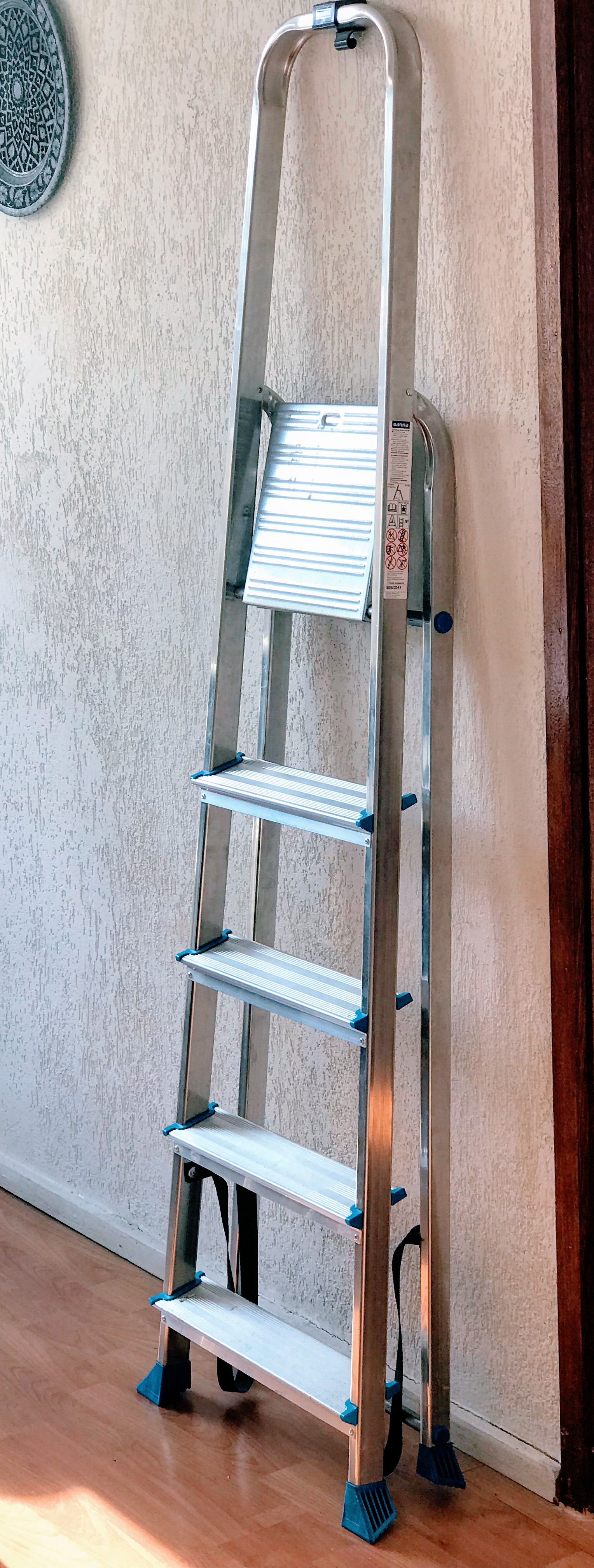
Ladder Buying Guide: Standards, Reach, and the Feet
Ladder specs are actually standardised and worth reading. Size by working height, not length, and check the feet before every single climb.

Iron and Garment Steamer Buying Guide: Steam Over Watts
Wattage only sets reheat speed. Grams per minute, bar pressure, and a removable scale collector decide how fast you get through a pile of shirts.

Dehumidifier Buying Guide: Diagnose the Damp First
Dehumidifiers fix condensation, not leaks. Compressor or desiccant depends on room temperature, and quoted capacity is measured in a greenhouse.