
Sunglasses Buying Guide: UV400 First, Everything Else Second
A dark lens with no UV filter is worse than nothing, because your pupils dilate behind it. Price and protection are almost unrelated.
Sunglasses are the only everyday purchase where the price and the protection are almost entirely unrelated. A pair costing a few pounds with a proper UV400 marking blocks ultraviolet light as effectively as a designer pair costing two hundred times as much. Darkness is not protection either — a very dark lens with no UV filter is actively worse than no sunglasses at all, because your pupils dilate behind it and let more ultraviolet into the eye.
What money genuinely buys is optical quality, frame durability, coatings, and fit. Those are real, and they are not what the marketing leads with.
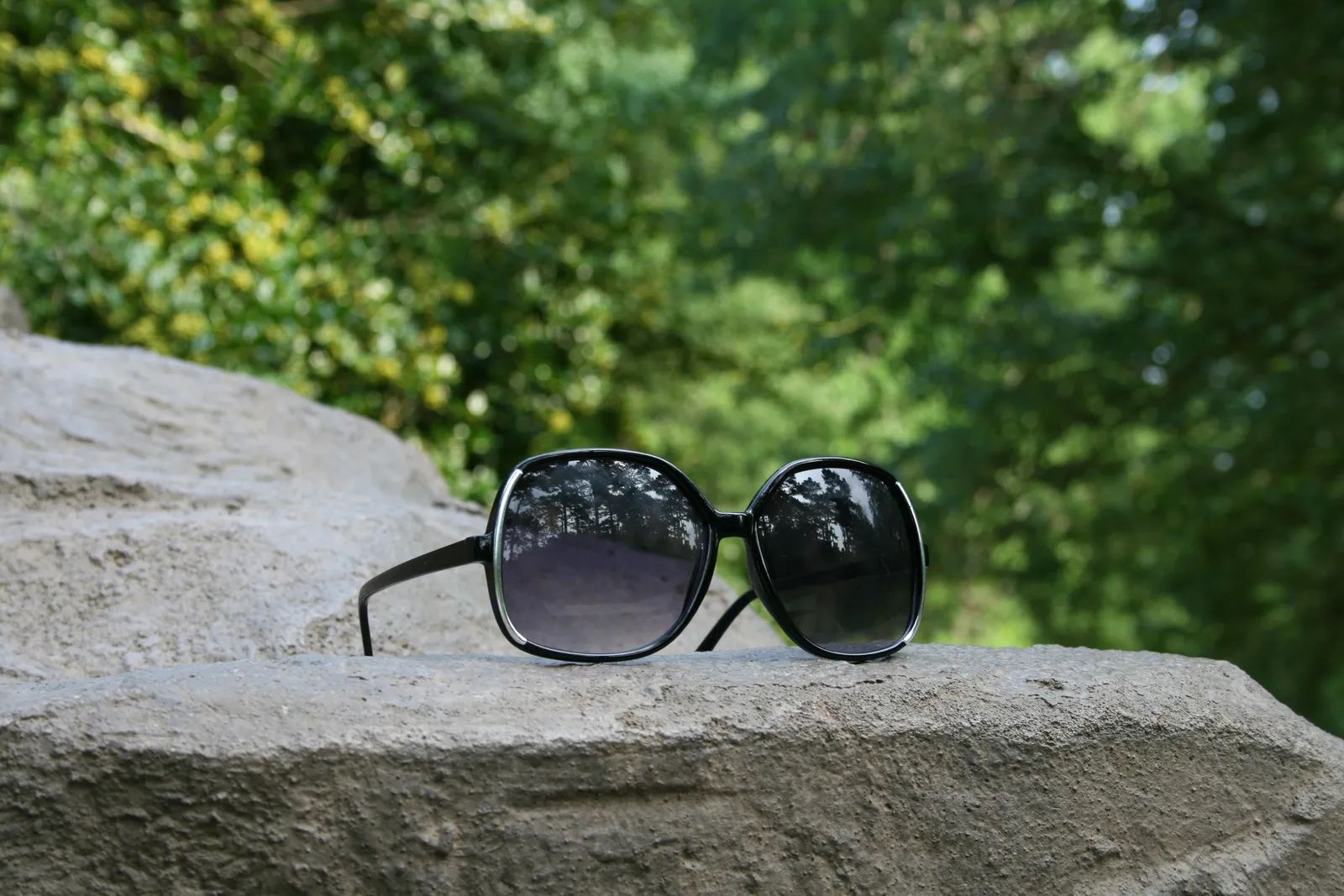
UV protection is the only non-negotiable
Ultraviolet exposure is linked to cataract, pterygium, and photokeratitis, and the eyelid skin is a common site for skin cancer. Protection is what sunglasses are for; the tint is a comfort feature.
Look for one of these markings: UV400, which means the lens blocks wavelengths up to 400 nanometres, covering effectively all UVA and UVB; 100% UV protection; or the European CE or UKCA mark alongside the EN ISO 12312-1 standard. In Australia and New Zealand the AS/NZS 1067 standard applies and lens categories are marked 0 to 4.
If a pair has no marking at all — a market stall, a petrol station rack, an unbranded online listing with no specification — assume no filter. The UV filter is a chemical additive or coating in the lens material, and it costs almost nothing to include, which is why cheap reputable brands include it and anonymous ones sometimes do not.
Two related points. Polycarbonate and Trivex lens materials block UV inherently as a property of the plastic, so any polycarbonate lens is UV-protective. And UV protection has nothing to do with how dark the lens is, so a lightly tinted lens can offer full protection while a very dark untested lens offers none.
Tint category, and matching it to conditions
Lens darkness is graded in categories, and they correspond to real use cases rather than fashion.
Category 0 transmits 80 to 100 per cent of visible light — essentially clear, for indoor or evening use with UV protection. Category 1 at 43 to 80 per cent suits overcast conditions. Category 2 at 18 to 43 per cent is a medium tint for variable weather. Category 3 at 8 to 18 per cent is the standard bright-sunlight tint and what most sunglasses are. Category 4 transmits only 3 to 8 per cent, is intended for glaciers and high mountains, and is not legal for driving in many countries because it is too dark to see instruments and tunnels.
Check the driving marking if you drive in them. Many sunglasses carry a small symbol indicating suitability for daytime driving, and category 4 lenses and some very dark or heavily mirrored lenses are excluded. Never drive in category 4.
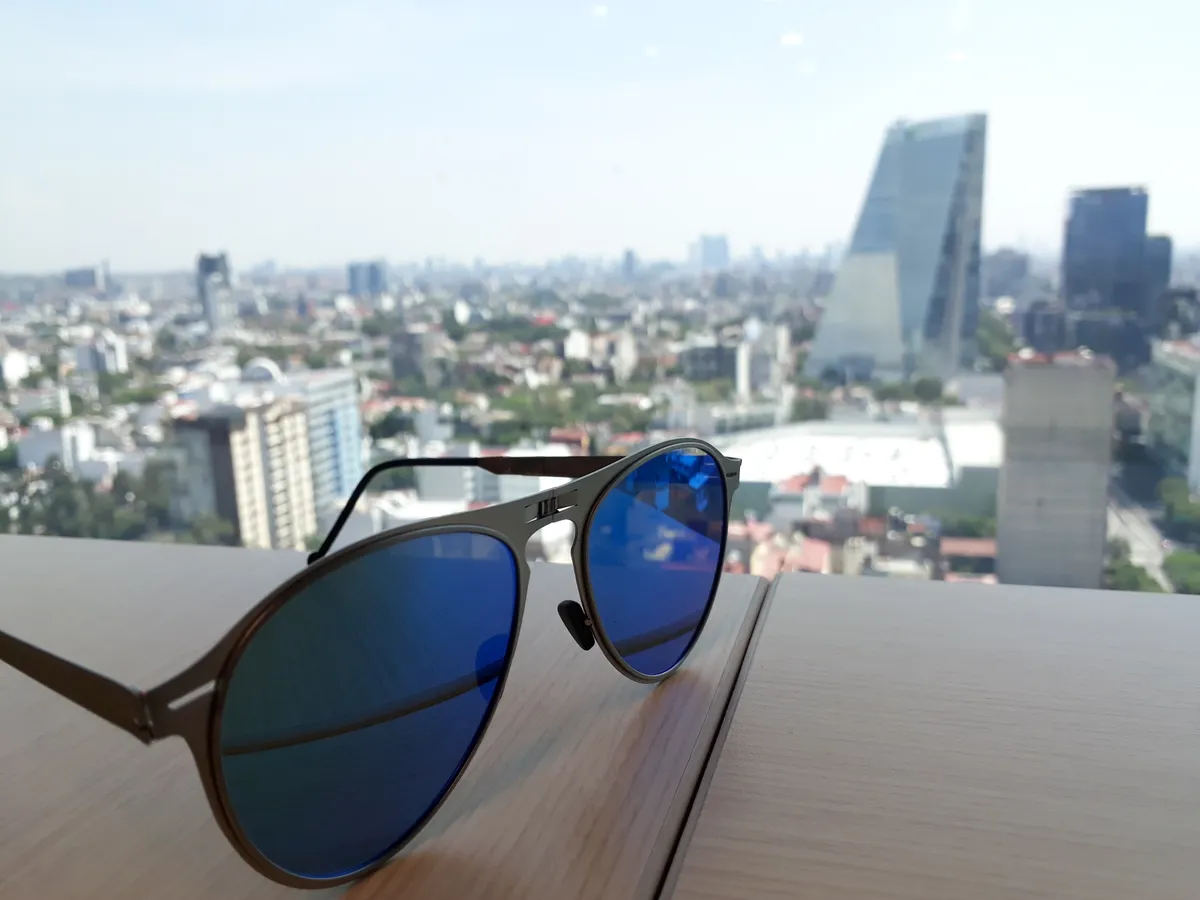
Tint colour changes contrast rather than protection. Grey is neutral and preserves colour accuracy, which is why it suits general use and driving. Brown and amber increase contrast and warm the image, which helps in variable light and on green surfaces, and is popular for golf and cycling. Green is close to neutral with a mild contrast lift. Yellow and rose lift contrast strongly in low light and distort colour badly in bright sun. Blue and pink lenses are cosmetic.
Polarisation: what it does and when not to
Light reflecting off a horizontal surface — water, wet road, car bonnet, snow — becomes polarised in a horizontal plane. A polarising filter blocks that plane, so reflected glare disappears while the rest of the scene stays visible. The effect is dramatic and genuinely useful.
Polarisation is worth having for driving, fishing, boating, skiing, and anyone who finds glare uncomfortable. It also has nothing to do with UV protection — a polarised lens without a UV filter is still unprotective, and the two are separate features that usually come together.
There are situations where polarisation is a disadvantage. LCD screens are themselves polarised, so a car dashboard display, a cash machine, or a phone can go black at certain angles. Pilots are generally advised against polarised lenses for exactly that reason. Skiers and climbers sometimes prefer non-polarised lenses because polarisation can hide the sheen that distinguishes ice from snow. And looking through a windscreen with certain laminates can produce visible stress patterns.
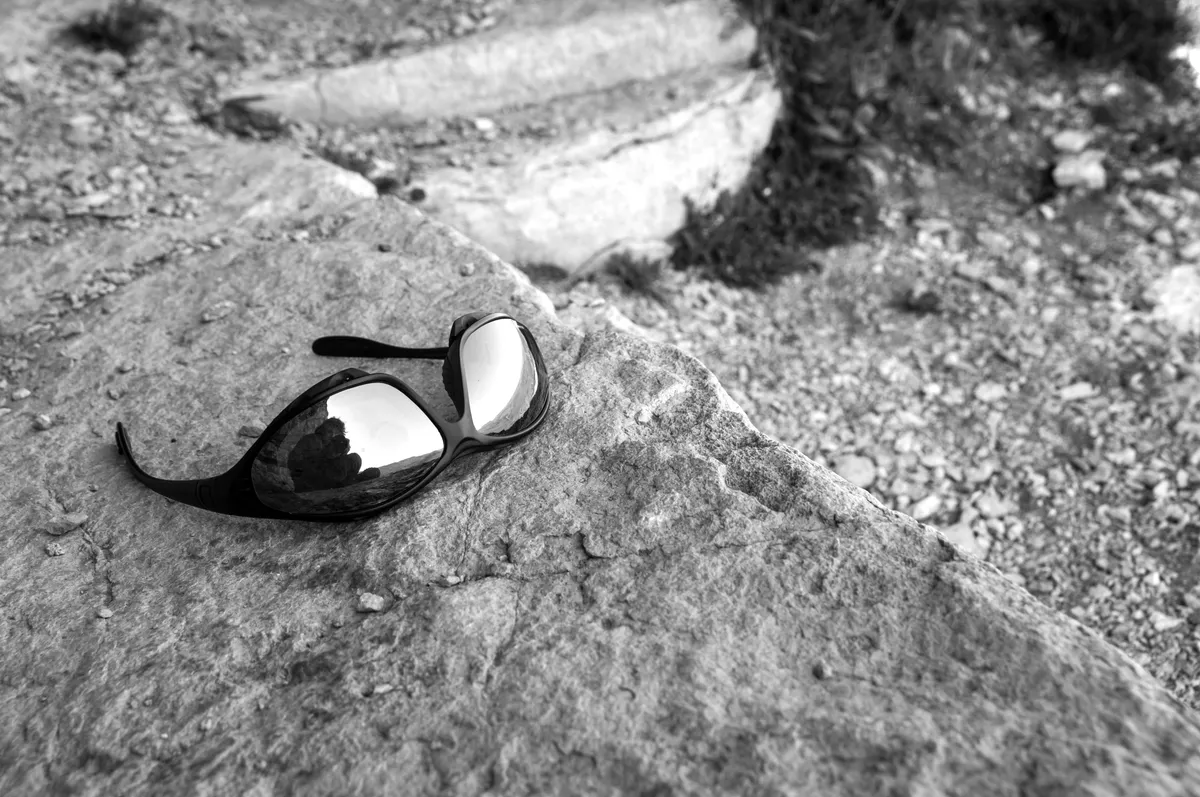
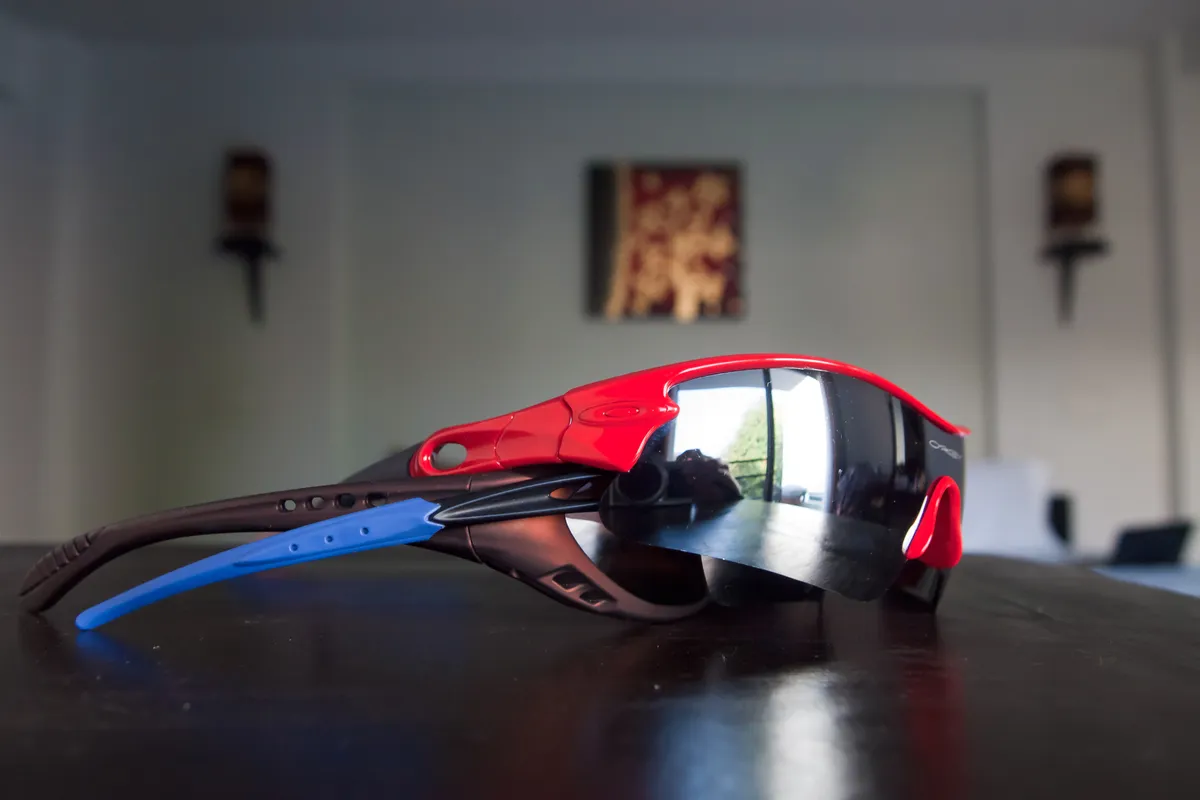
A mirror coating is a different thing: a reflective layer on the outer surface that reduces transmitted light further and cuts glare from the front. It also scratches more visibly than an uncoated lens and shows every fingerprint. Useful in very bright environments, cosmetic elsewhere.
Lens material and optical quality
Polycarbonate is the default for good reason: light, inherently UV-blocking, and highly impact-resistant, which is why it is standard in sports and children's eyewear. Its optical clarity is slightly lower than glass or CR-39, and it scratches easily without a hard coating.
Trivex is similar in impact resistance with better optics and lower weight, and it costs more.
CR-39 plastic has excellent optics and moderate impact resistance, and is common in prescription lenses.
Glass has the best optical clarity and scratch resistance and the worst impact behaviour — it can shatter — and it is heavy. Some premium brands still use mineral glass for exactly the clarity reason.
Optical quality is where cheap lenses actually fail. Injection-moulded lenses can have small variations in thickness that act as unintended prisms, producing distortion at the edges and, over a day, headaches and eye strain. The quick shop test: hold the glasses at arm's length, look through them at a straight line — a door frame or window edge — and move them slowly across your view. If the line bends, wobbles, or ripples, the lens is poorly made. Then put them on and look at a straight vertical line to check that it stays straight.
Fit, frames, and coverage
UV reaches your eyes from the sides and from below as reflected light, so coverage matters as much as lens quality. A wrap-around or close-fitting frame blocks substantially more than a small flat lens sitting far from the face. For time on water, snow, or sand — all strong reflectors — coverage is worth prioritising.
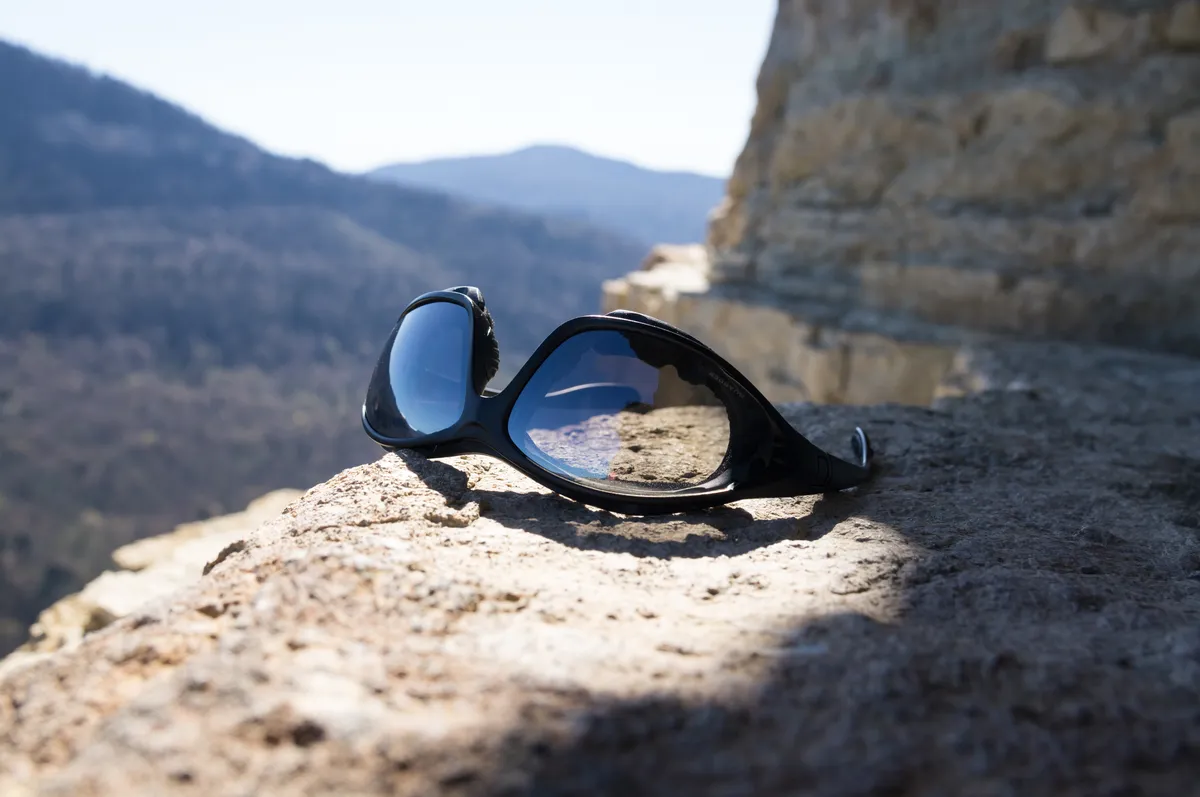
Fit criteria are straightforward. The frame should sit level, the lenses should not touch your eyelashes or cheeks, the bridge should rest on the nose without pinching, and the temple arms should follow the head and touch just in front of and above the ears rather than clamping at the temples. When you nod firmly, the glasses should stay put.
Adjustability separates good frames from bad. Adjustable nose pads let you set the height and stop them sliding on a hot day; metal temple arms can be bent to fit by an optician. Acetate frames can be heat-adjusted; cheap injection-moulded plastic cannot be adjusted at all, so it either fits or it does not.
Frame materials: acetate is durable, adjustable, and available in every colour; metal alloys are slim and can be bent to fit; titanium is light, strong, and hypoallergenic; TR-90 nylon is flexible and nearly unbreakable, which is why it dominates sports frames. Spring hinges survive being pushed on and off carelessly, which is most of how frames die.
For a sensible test of durability, twist the frame gently: it should flex and return. Then check whether replacement nose pads, arms, and screws exist for the model, because a lost screw should not end a pair.
Photochromic, prescription, and clip-ons
Photochromic lenses darken in UV light and clear indoors. They are convenient for one-pair-for-everything use, and they have two limits worth knowing: most darken poorly inside a car, because windscreens block much of the UV that triggers them, and they respond slowly in the cold. Some are specifically formulated to work behind glass; check if that matters to you.
If you wear a prescription, you have four options. Prescription sunglasses give the best optics and cost the most. Clip-on or magnetic overlays are cheap and add reflections between the two lens surfaces. Fit-over frames worn on top of glasses are ugly and effective, and popular after eye surgery. Contact lenses plus non-prescription sunglasses is the most flexible arrangement, and note that UV-blocking contact lenses protect the eye but not the eyelids, so sunglasses still help.
A note on lenses with electronics: smart glasses with cameras and audio are a separate category with their own trade-offs — our smart glasses buying guide and the Ray-Ban Meta smart glasses review cover those, and if you want them as your everyday sunglasses, check the lens category and UV marking exactly as you would on any other pair.
Children, and why it matters more for them
Children's eyes transmit more UV to the retina than adult eyes because the lens is clearer, and children spend more time outdoors. A large part of lifetime UV exposure happens before adulthood, which makes protection more important, not less.
Buy polycarbonate lenses for impact resistance, a flexible frame that survives being sat on, a wrap shape for coverage, and a retaining strap for younger children. Prioritise a certified UV filter over anything else, and pair sunglasses with a wide-brimmed hat, which blocks a substantial amount of light from above.
Care, and how lenses actually get ruined
The overwhelming cause of scratched lenses is dry wiping. Dust on a lens is abrasive, and rubbing it with a shirt tail drags it across the coating. Rinse with water first, then dry with a microfibre cloth. Use a mild soap for grease, and avoid alcohol, glass cleaner, and anything containing ammonia, all of which attack anti-reflective and mirror coatings.
Heat is the other killer. A car dashboard in summer reaches temperatures that delaminate coatings, warp frames, and craze lens surfaces. Never leave sunglasses on a dashboard, and never push them up onto your head for long in strong sun, which both stretches the arms and heats the lenses.
Store them in a hard case, or at minimum a pouch, lens-up. Tighten hinge screws occasionally with a small screwdriver; loose hinges are the beginning of a broken arm. And accept that lenses are consumable: a scratch in your line of sight scatters light and causes strain, and a scratched lens is worth replacing rather than persevering with.
Matching them to your use
General everyday wear and driving: category 3, grey or brown tint, polarised, in a frame with adjustable nose pads and spring hinges. Check the driving-suitability marking.
Water, snow, and high altitude: maximum coverage with a wrap frame, polarised for water and often non-polarised for snow and ice, and category 4 only above the treeline and never for driving.
Running and cycling: TR-90 nylon frame, polycarbonate lenses, a shape that vents to prevent fogging, and a retaining grip on the nose and arms. See our running shoes buying guide and commuter bike guide for the rest of that kit.
Travel and hot climates: one pair with a hard case and a spare cheap certified pair, because sunglasses get lost and sat on. The travel packing system guide covers keeping fragile items intact in a bag.
Light-sensitive eyes or recent eye surgery: photochromic lenses or fit-overs, wrap coverage, and follow whatever your clinician specifies rather than a shop assistant.
The short version
Insist on UV400, 100 per cent UV, or a CE/UKCA mark against EN ISO 12312-1 — and treat an unmarked pair as unprotective regardless of how dark it is. Choose category 3 for general sun, and never category 4 for driving. Add polarisation for glare unless you fly or need to read polarised screens. Test optical quality by looking through the lens at a straight line and moving it. Prioritise coverage and adjustable fit over brand, keep them out of hot cars, and rinse before wiping.
More coupon shopping advice

Home Security Camera Buying Guide: Local vs. Cloud Storage
A practical, balanced buying guide to home security cameras that weighs local storage against cloud subscriptions, wired versus battery power, camera placement, night vision, smart detection accuracy, and smart home integration.

Beginner Mirrorless Camera Buying Guide
A practical, honest walkthrough of what actually matters when buying your first mirrorless camera, from sensor size and lens mounts to autofocus, video specs, and the real total cost of a beginner-friendly system.

Air Purifier Buying Guide: CADR, ACH, and Filter Costs Explained
A practical walkthrough of the numbers that actually matter when buying an air purifier — CADR and ACH for sizing, true HEPA versus marketing terms, real three-year filter costs, realistic noise levels, and when a purifier won't help at all.