
Over-Ear Headphones Buying Guide: Comfort Beats Specs
Frequency response figures tell you nothing. Clamping force, pad material, and whether the pads are replaceable decide whether you keep wearing them.
Over-ear headphones are judged in shops by two things that do not predict whether you will like them: how they sound in a thirty-second demo in a noisy room, and how impressive the specification list looks. Frequency response figures are meaningless as published, driver diameter tells you nothing, and the demo tells you about the shop rather than the headphones.
What determines whether a pair earns permanent residence on your desk is clamping force, how hot your ears get after ninety minutes, whether the noise cancelling handles the noise you actually have, and whether the pads can be replaced when they crumble.
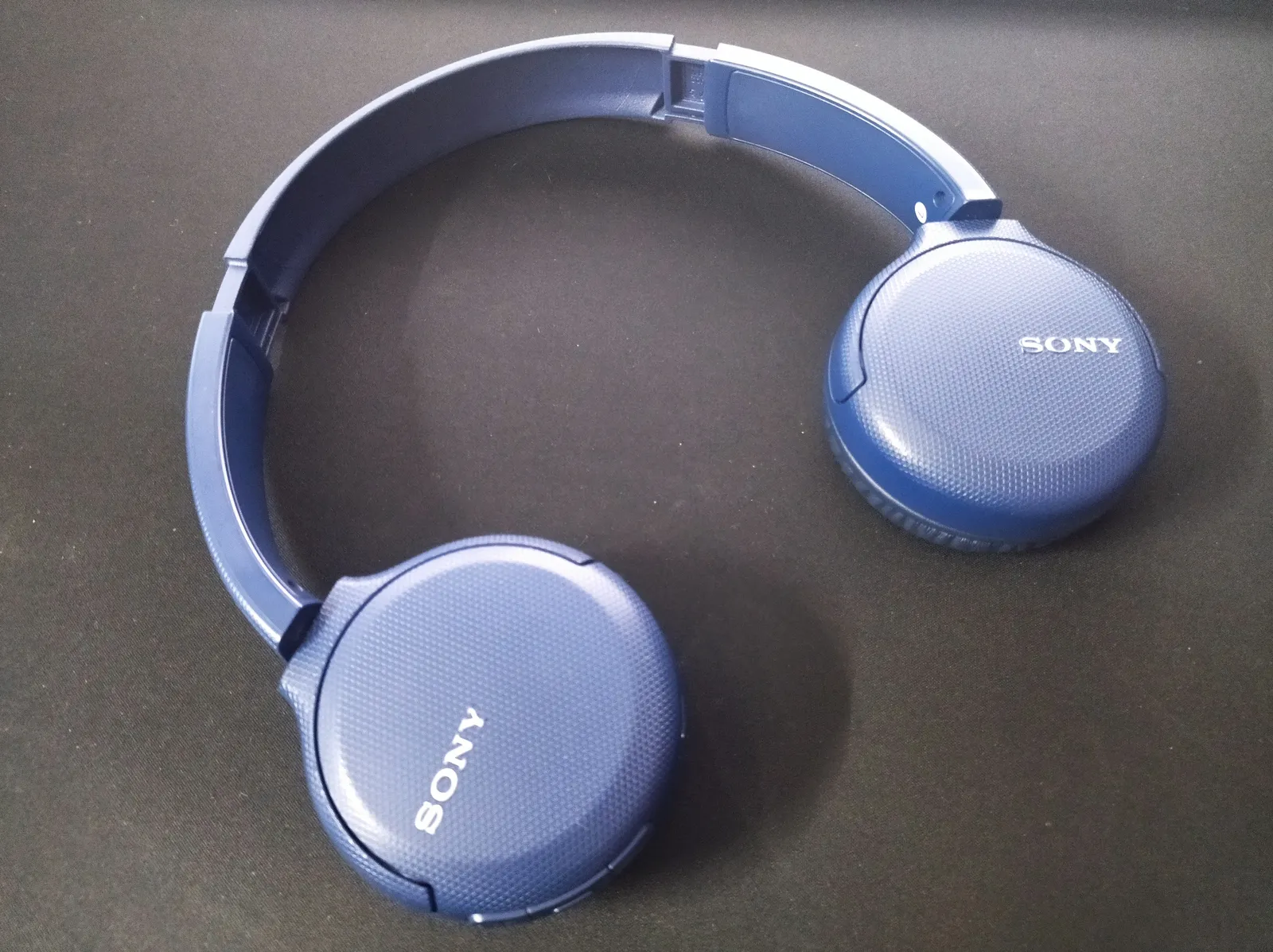
Closed, open, or semi-open
This is the first decision and it eliminates most of the market immediately, because it depends entirely on where you listen.
Closed-back headphones seal the outer housing. They block a moderate amount of outside noise passively, leak very little sound outward, and are the only sensible option for offices, trains, planes, and shared rooms. The trade is a smaller-feeling soundstage and warmer ears.
Open-back headphones have a perforated or grilled housing. Air moves freely, so bass is less boomy, the stereo image sounds spacious, and your ears stay cool for hours. They also let everything in the room in and broadcast your music to everyone near you. They are wonderful in a quiet room alone and useless anywhere else.
Semi-open designs split the difference and generally inherit enough of the open design's leakage to be a problem in an office.
Be honest about your environment. Open-back headphones are frequently recommended by enthusiasts and frequently returned by people who bought them for an open-plan office. If you listen in more than one place, closed-back is the practical answer.
Comfort is the specification nobody publishes
Headphones you can wear for four hours beat better-sounding headphones you take off after one. Four things drive comfort.
Clamping force is how hard the headband squeezes. Too little and they slip; too much and you get a headache above your ears and pressure on your jaw, particularly if you wear glasses. Clamp usually loosens over a few weeks, and you can accelerate it by leaving the headphones stretched over a stack of books overnight.
Weight and distribution matter more than absolute weight. A 350 gram pair with a wide padded band can feel lighter than a 280 gram pair that concentrates pressure on one point at the crown. Check that the headband pad sits on your head rather than a hard plastic strip.
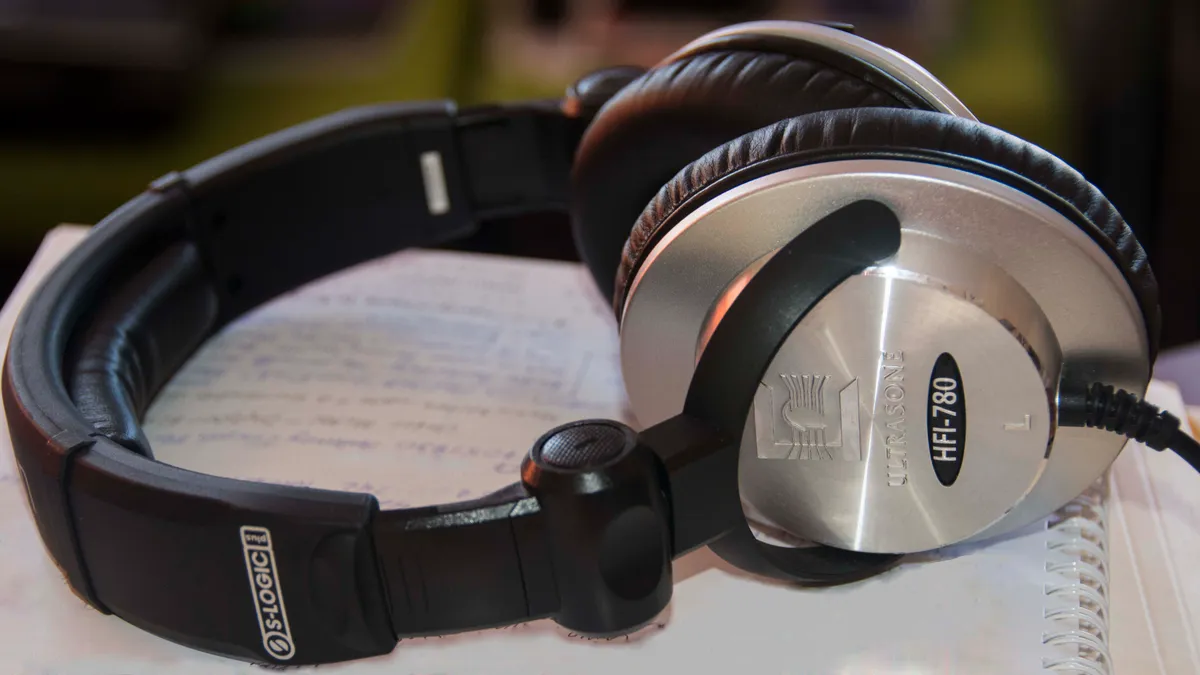
Ear cup depth and opening size decide whether your ears touch the driver. Genuinely circumaural cups surround the ear with clearance; many "over-ear" designs are shallow enough that your ear contacts the inner surface, which becomes painful over an hour. If you can, try them on and check that your ear does not touch anything.
Pad material trades comfort against heat. Protein leather seals well, isolates best, and makes ears sweat. Fabric or velour breathes far better, leaks a little more bass, and is the right choice for long sessions. Many models sell both, so you can change the character of the same headphones for the price of a set of pads.
Noise cancelling: what it can and cannot do
Active noise cancellation works by measuring incoming sound with microphones and generating an inverse waveform. It works brilliantly on low-frequency continuous noise — aircraft cabins, train rumble, air conditioning, road drone — and considerably less well on sudden, high-frequency, irregular sound, which is what human speech is.
That means the honest way to describe ANC is that it removes the drone and leaves the chatter. If your problem is a noisy commute, ANC is transformative. If your problem is a colleague on the phone two desks away, a well-isolating closed-back design plus something to listen to does more, and ANC helps only at the margins.
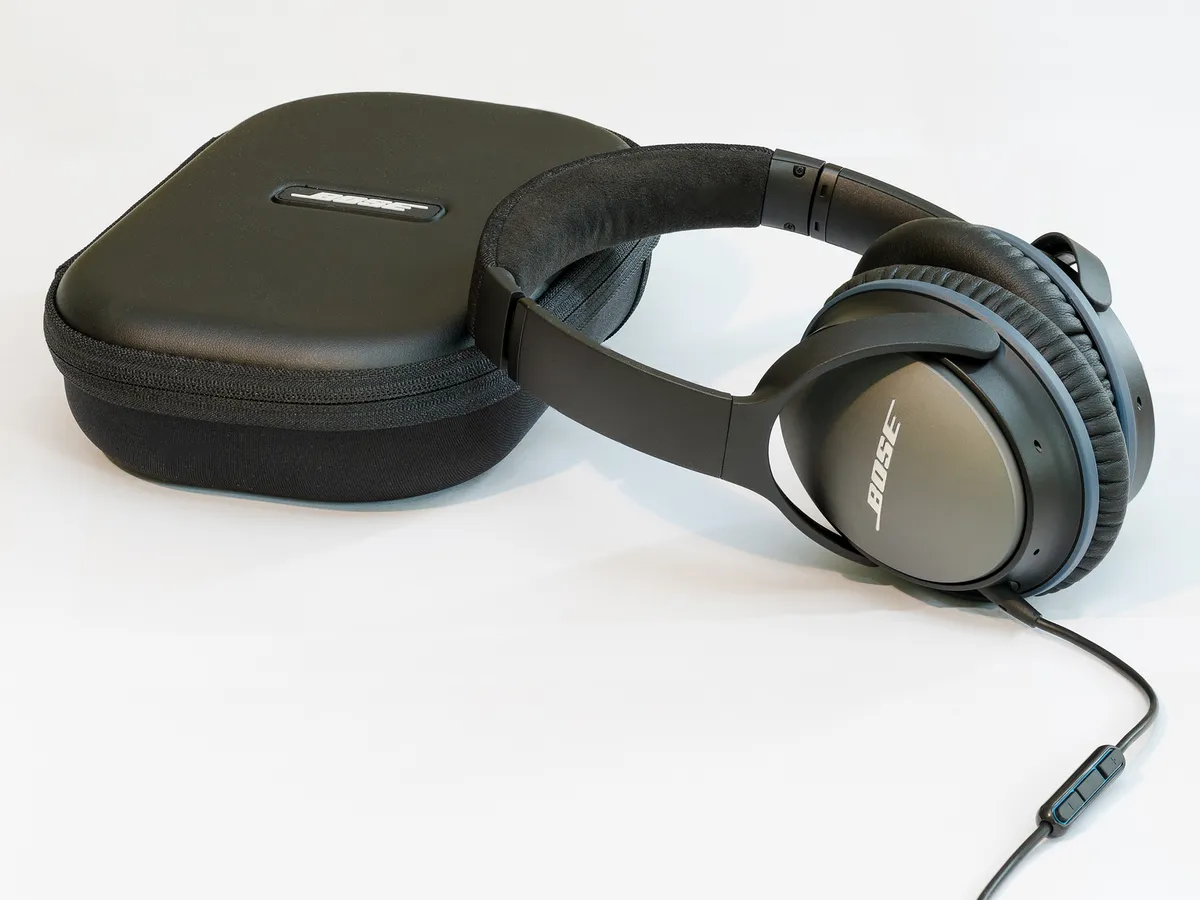
Two side effects to check personally. Some ANC implementations create a sensation of pressure that a minority of people find genuinely unpleasant, and it varies by model rather than by price. And ANC circuits add a low noise floor, which is inaudible with music playing and noticeable in silence. Both are individual, so try before committing where you can.
A transparency or ambient mode pipes the microphones through so you can hear announcements and conversation without removing the headphones. On good implementations it sounds natural; on poor ones it sounds like a hissy walkie-talkie. It is worth testing, because it is the feature you will use several times a day if you commute. The Sony WH-1000XM5 review covers one of the standard reference points here, and our wireless earbuds guide compares the in-ear approach for the same problem.
Wireless: codecs, latency, and battery
Bluetooth codec debates consume a lot of internet argument and matter less than the marketing suggests. AAC and SBC are universal and perfectly good for streaming music. LDAC and aptX Adaptive carry more data and can sound marginally better on high-quality files, if your source device supports the same codec — which is the part people forget. Match the codec to your phone, or accept AAC and stop worrying.
Latency matters for video and games. Standard Bluetooth introduces delay that most video apps compensate for automatically, so lip-sync is usually fine for films. For gaming, that delay is disqualifying, which is why gaming headsets use a low-latency dongle rather than standard Bluetooth. If you game, look for a 2.4 GHz wireless dongle or use a cable.
On battery, treat quoted figures as an upper bound measured at modest volume with ANC off. Thirty hours quoted is comfortably a week of commuting; anything above that is convenience rather than necessity. More important is what happens when the battery dies: check whether the headphones work passively over the 3.5 mm cable with no power, because many do not, and a dead battery then means silence. Also check for a wired USB-C audio mode, which is genuinely useful on modern laptops.
Multipoint pairing — connected to laptop and phone simultaneously, switching automatically when a call arrives — is the single most underrated feature in this category for anyone who works at a desk. Once you have it, headphones without it feel broken.
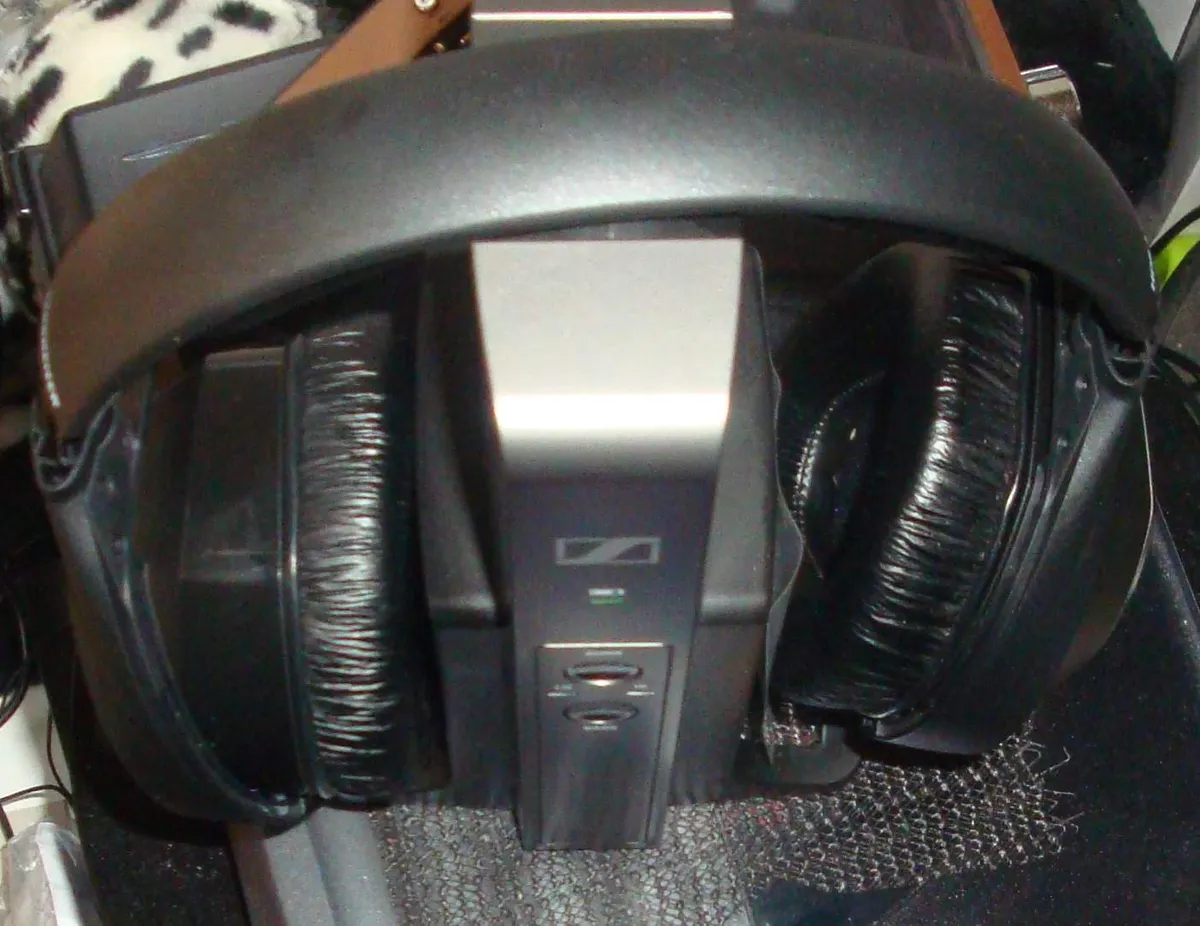
Wired, and whether you need an amplifier
Wired headphones remove the battery, the codec, the app, and the firmware from the equation, which is why studio and enthusiast models are still overwhelmingly wired. They also cannot be improved or broken by a software update.
Impedance and sensitivity determine whether a phone or laptop can drive them. Most consumer headphones sit around 32 ohms and are designed to run from anything. Higher-impedance models — 250 or 600 ohms — need more voltage than a laptop headphone jack provides, and will sound thin and quiet without an amplifier. If a review mentions an amplifier, take it literally: those headphones need one to work properly, and that is an extra purchase.
For everything else, a modern laptop or phone dongle is fine, and a headphone amplifier is an optional refinement rather than a requirement. Do not let an amplifier recommendation talk you into a 250-ohm pair when a 32-ohm pair suits your equipment.
Sound: how to evaluate it without a lab
Published frequency response ranges — "20 Hz to 40 kHz" — are useless, because they omit the tolerance. Every pair of headphones covers the audible band; how evenly they do it is the entire question, and manufacturers rarely publish the curve.
Practical approach: listen to music you know extremely well rather than a demo track. Check whether vocals sound recessed or forward, whether bass is defined or a single blurry thump, and whether cymbals and consonants sound sharp enough to fatigue you after an hour. Elevated treble sounds impressively detailed for five minutes and exhausting for two hours, which is the most common reason people stop wearing an otherwise good pair.
Independent measurement databases plot real response curves for popular models and are far more informative than any specification sheet. Combine one measured curve with a long listen to familiar music and you have a better picture than any spec comparison provides. And remember that software equalisation in the companion app can fix a mild tonal imbalance but cannot fix a fundamentally poor driver.
Build, repairability, and long-term ownership
Headphones fail in three places: the ear pads crumble, the headband padding splits, and the cable or its socket fails. All three are trivially fixable on models that sell spares and terminal on models that do not.
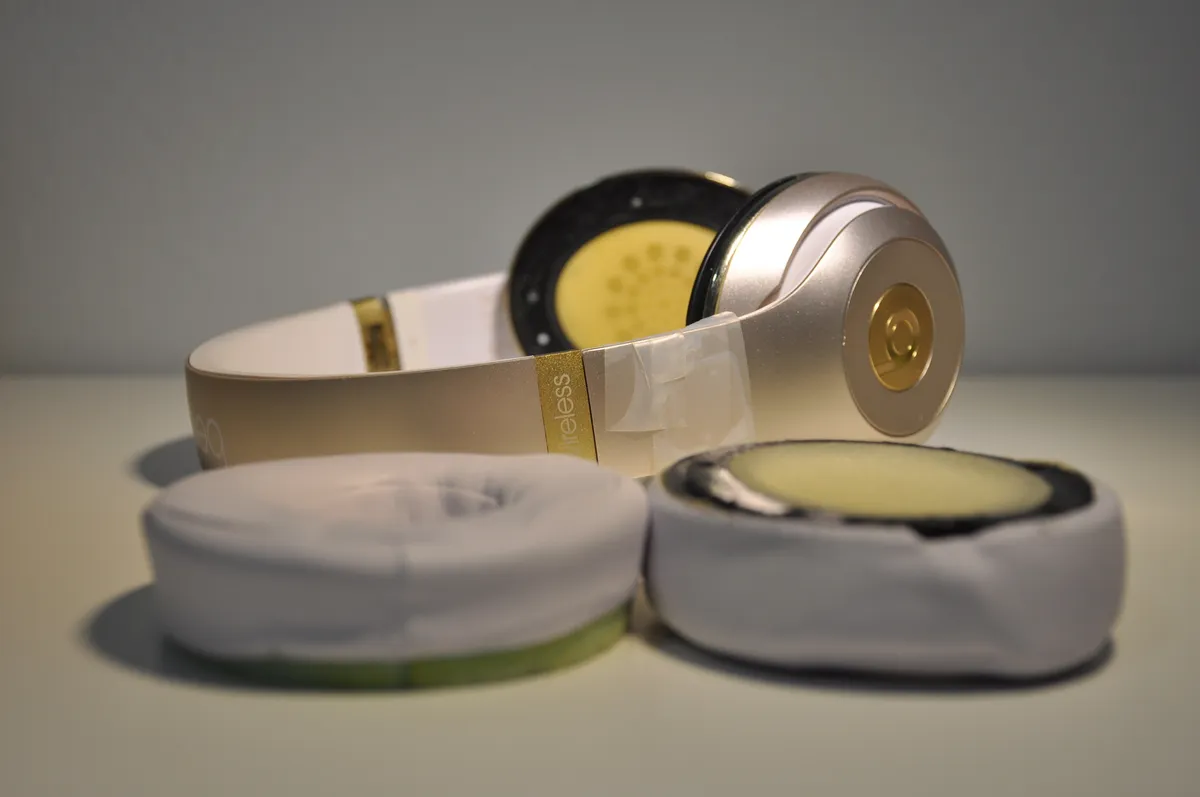
Before buying, search the model number plus "replacement ear pads" and see whether official or third-party pads exist. Pads are consumables with a two-to-three-year life, and a pair whose pads you can renew for a small sum lasts a decade. A detachable cable on a standard connector is likewise the difference between a five-minute fix and a scrap pair.
Check the headband and yoke construction. Metal or reinforced yokes survive being stuffed into a bag; thin unreinforced plastic at the hinge is the classic snap point. If you travel with headphones, a hard case and folding hinges matter, though every hinge is also a potential failure.
Battery is the hard limit on wireless pairs. Lithium cells lose capacity over roughly three to five years of daily charging, and on most sealed designs replacing one is not a user operation. That is the strongest practical argument for wired headphones if you intend to keep a pair for a decade.
Matching them to your use
Commuting and flying: closed-back wireless with strong ANC, multipoint, a good transparency mode, and a case.
Open-plan office and calls: closed-back wireless with a well-reviewed microphone array and multipoint, and consider that a dedicated speakerphone often beats headset microphones for meetings.
Long desk sessions in a quiet room: open-back wired with velour pads. Coolest, most comfortable option, and no battery to age.
Gaming: a 2.4 GHz dongle for low latency, and a boom microphone rather than beamforming mics in the cups.
Mixing and critical listening: closed-back for tracking, open-back for mixing, wired, and check the impedance against whatever you will plug them into.
If the headphones are part of a desk setup, our video call setup guide covers microphones and lighting, and the home speaker guide covers listening out loud when headphones are the wrong tool.
The short version
Pick closed-back unless you listen alone in a quiet room, in which case open-back is more comfortable and sounds better. Prioritise clamping force, cup depth, and pad material over any published sound figure, because comfort decides how much you use them. Expect ANC to remove drone and not speech. Insist on multipoint if you work at a desk, and on passive wired operation so a dead battery is not silence. Check that replacement ear pads exist and the cable detaches. Then judge sound with music you know, not a shop demo.
More coupon shopping advice

Home Security Camera Buying Guide: Local vs. Cloud Storage
A practical, balanced buying guide to home security cameras that weighs local storage against cloud subscriptions, wired versus battery power, camera placement, night vision, smart detection accuracy, and smart home integration.

Beginner Mirrorless Camera Buying Guide
A practical, honest walkthrough of what actually matters when buying your first mirrorless camera, from sensor size and lens mounts to autofocus, video specs, and the real total cost of a beginner-friendly system.

Air Purifier Buying Guide: CADR, ACH, and Filter Costs Explained
A practical walkthrough of the numbers that actually matter when buying an air purifier — CADR and ACH for sizing, true HEPA versus marketing terms, real three-year filter costs, realistic noise levels, and when a purifier won't help at all.