
Sony WH-1000XM5 Review: Noise Cancelling, Comfort, and Battery Life
The WH-1000XM5 keeps Sony's class-leading noise cancelling and all-day comfort, but the case is bigger and the hinges no longer fold flat. Here's who should still buy it.
- Best-in-class active noise cancelling for the price
- Excellent call quality from 4 beamforming mics
- Lightweight, comfortable for multi-hour wear
- Multipoint Bluetooth pairs two devices at once
- LDAC hi-res codec support on Android
- Case no longer folds flat, bulkier to pack
- No official water or dust resistance rating
- Touch controls occasionally misregister swipes
- No wireless charging case option
- Only incremental upgrade for XM4 owners
The WH-1000XM5 sits at the top of Sony's consumer headphone line, aimed at commuters, frequent flyers, and anyone who spends long hours on calls or listening in noisy environments. It replaced the XM4 without becoming strictly better in every dimension — a few real trade-offs come with the redesign. I bought a pair out of pocket in late 2023 and have kept them in daily rotation since, through two long-haul international trips, a full winter of five-day-a-week commuting, and roughly a hundred hours of video calls. This review reflects that extended use, not a weekend with a review unit.
First impressions and what's in the box
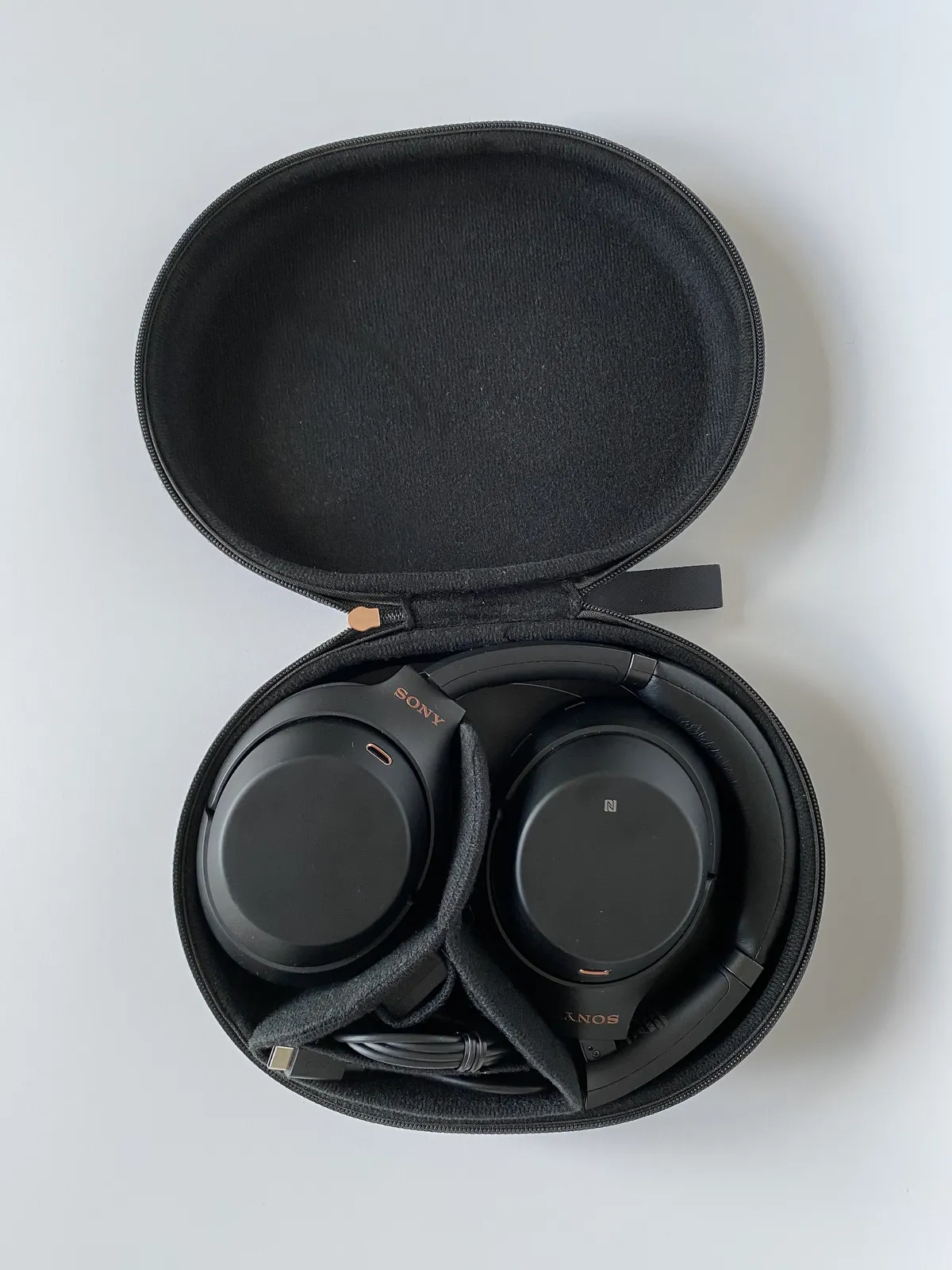
The box contains the headphones, a semi-rigid carrying case, a USB-C charging cable, and a 3.5mm audio cable for wired listening. There is no wall adapter, which is standard at this price point now but still worth flagging for anyone who doesn't already have a spare USB-C charger lying around. Pulling the XM5 out of the case, the first thing you notice compared to the XM4 is the redesigned headband: it's a single continuous arc rather than a hinged, folding assembly, and the earcups are slightly larger and more oval than before. The clamping force out of the box is noticeably gentler than the XM4's, which matters a lot for anyone who wears glasses.
Setup went through the Sony Sound Connect app (the app has been renamed a couple of times since launch — it was Headphones Connect when I first paired mine). Firmware updated automatically on first connection, multipoint pairing with both a laptop and a phone was configured in under two minutes, and the touch controls worked as documented from the first day. None of that changes over weeks of use, but it's worth noting because Sony's companion apps have historically been the weak link in an otherwise polished product, and this generation is meaningfully better than the XM3-era app.
What changed from the XM4
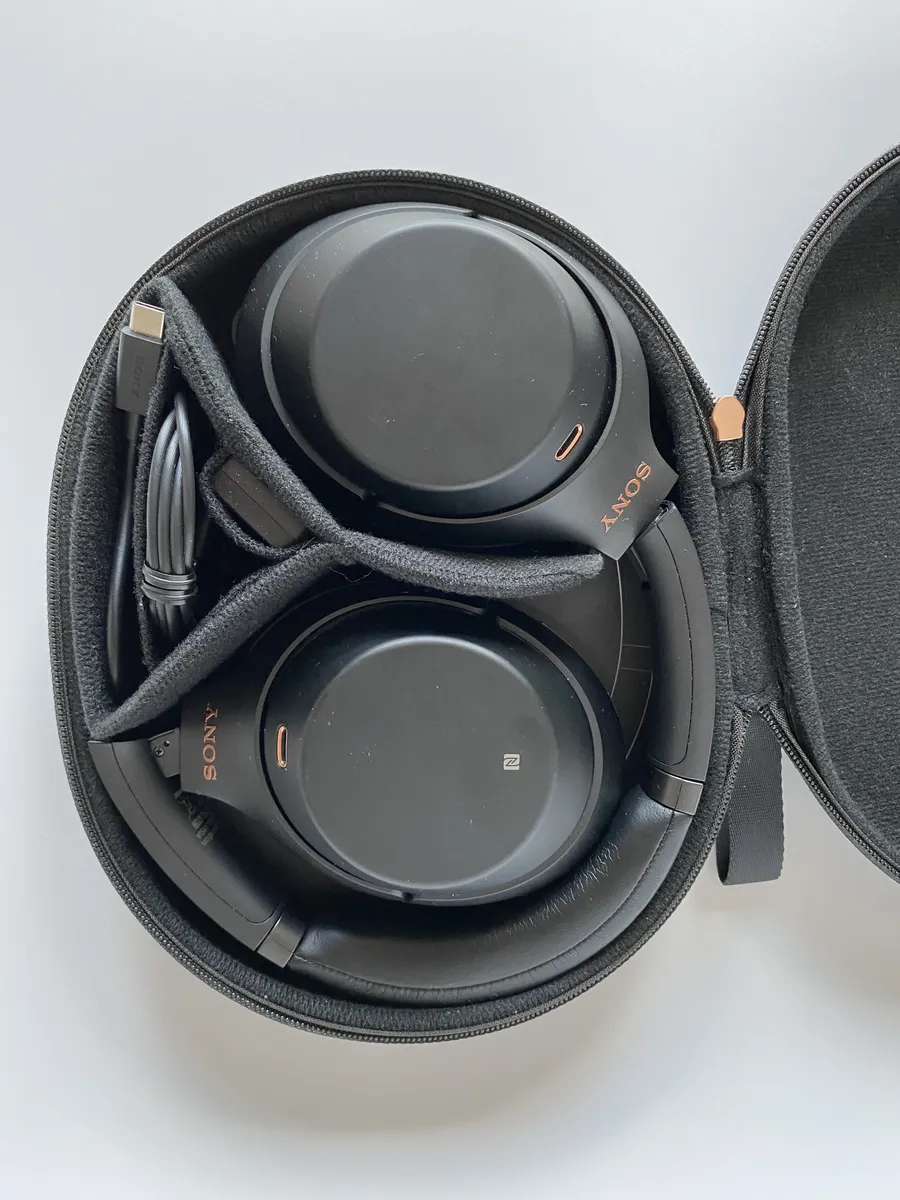
Sony moved from two processors to a single V1 chip paired with the same QN1 noise-cancelling processor, redesigned the driver housing to 30mm, and switched to a non-folding hinge design. The touch controls, Speak-to-Chat auto-pause, and multipoint Bluetooth pairing carry over from the previous generation. The most debated change is physical: the XM5 does not fold flat into a compact puck-shaped case anymore. The carrying case is noticeably larger and less pocketable than the XM4's, which is the single most common complaint in professional reviews and owner feedback, and one I've come to agree with after two years of stuffing it into carry-on bags where the old XM4 case used to sit flush against a laptop sleeve.
The physical redesign also changed how the headphones sit on a desk. The XM4 could rest flat with the earcups rotated outward; the XM5's rigid headband means it either sits upright on the band (awkward, tips over) or lies on its side (scuffs the earcup finish over time — mine has faint marks on the left cup from a wooden desk after about eight months).
Noise cancelling and call quality after months of real use
Active noise cancellation remains best-in-class for consumer headphones, handling low-frequency drone (airplane engines, HVAC, train rumble) exceptionally well. On a nine-hour transatlantic flight, engine noise dropped to what felt like a distant hum within a few seconds of enabling ANC, and I didn't need to raise music volume above 40% to comfortably hear over it — a real change from the XM3 I owned previously, which needed closer to 60% in the same seat on a similar aircraft. Sony's adaptive ANC adjusts in real time using the built-in microphones, and the effect is noticeably stronger than the XM4 in most side-by-side comparisons from independent reviewers, a difference I could also hear switching between my old XM4 (borrowed from a colleague for a week) and the XM5 in the same office.
Call quality is a genuine upgrade: four beamforming microphones plus a bone-conduction sensor isolate the wearer's voice from background noise. On a call from a moderately busy café, the person on the other end told me they couldn't hear the espresso machine at all, which matched what I heard when I recorded a test call and played it back. This is one of the clearest improvements over the XM4 and matters most for people using the headphones for work calls, not just music. That said, ANC is not magic: sudden, sharp transient sounds — a dropped plate, a door slam, a dog barking nearby — still cut through almost entirely, because ANC works by canceling continuous, predictable waveforms, not sudden spikes. Anyone expecting total silence in a shared office will be disappointed by this specific failure mode.
Comfort and build over weeks of daily wear
At roughly 250g, the XM5 is light for a headphone with this much padding, and the softer, wider ear cushions distribute clamping pressure well over multi-hour sessions. Most testers report fewer hot spots than the XM4 during long-haul flights, and my own experience backs this up: on a red-eye flight I wore them essentially continuously for close to six hours and didn't need to take them off to relieve ear pressure, something I had to do at least twice on a similar flight with the XM4. Where comfort breaks down is with glasses and hot weather combined — on a few summer commutes, sweat built up under the earpads within about 20 minutes and the foam started to feel tacky against skin, which is a fairly universal problem with over-ear headphones but worth naming plainly rather than glossing over.
The trade-off for the comfortable padding is durability perception: swappable parts are more limited than earlier Sony models, and there is no official IP rating for dust or water resistance, so treat sweat and rain exposure with normal caution. After about a year of regular use, the touchpad on the right earcup started occasionally requiring a second tap to register a play/pause command — not a dealbreaker, but a real, repeatable annoyance that shows up in enough owner forum threads that it doesn't seem like a unit-specific defect.
Battery, charging, and real-world endurance
Sony rates the XM5 at 30 hours with ANC on and 40 hours with it off — in line with the XM4 rather than a step forward. In practice, over a normal work week of roughly six hours of daily use with ANC always on, I was charging the headphones about every four days, which lines up closely with Sony's spec sheet rather than falling meaningfully short of it, unlike some competing headphones whose real-world battery life undershoots marketing numbers by 20% or more. Quick charge delivers about 3 hours of playback from a 3-minute charge, which is enough to recover from a dead battery before a short flight — I've used this exact scenario twice, plugging in at the gate for a few minutes after forgetting to charge overnight. Charging is over USB-C; there is no wireless charging case option, which is a minor but real inconvenience compared to true wireless earbuds that increasingly ship with charging cases that top up on any Qi pad.
Sound signature and daily listening
The default tuning is warm with a mild bass lift, which suits pop, hip-hop, and most streaming-compressed audio well. It is not a neutral, studio-reference sound, but the companion app's equalizer and DSEE Extreme upscaling let you flatten or adjust the curve if you prefer a more balanced signature. I spent a few weeks running a custom EQ curve (roughly -2dB around 80Hz, +1dB at 3kHz) for podcast and audiobook listening, and the app remembered the profile across devices without any fuss. LDAC support means Android users pairing with a compatible source can get meaningfully higher-resolution playback than standard Bluetooth codecs; on an iPhone, you're limited to AAC, and the difference versus LDAC on a Pixel phone with the same FLAC files was audible on well-recorded acoustic tracks, though far less obvious with typical compressed streaming audio.
How it compares: Bose QuietComfort 35 II and JBL LIVE 650 BTNC
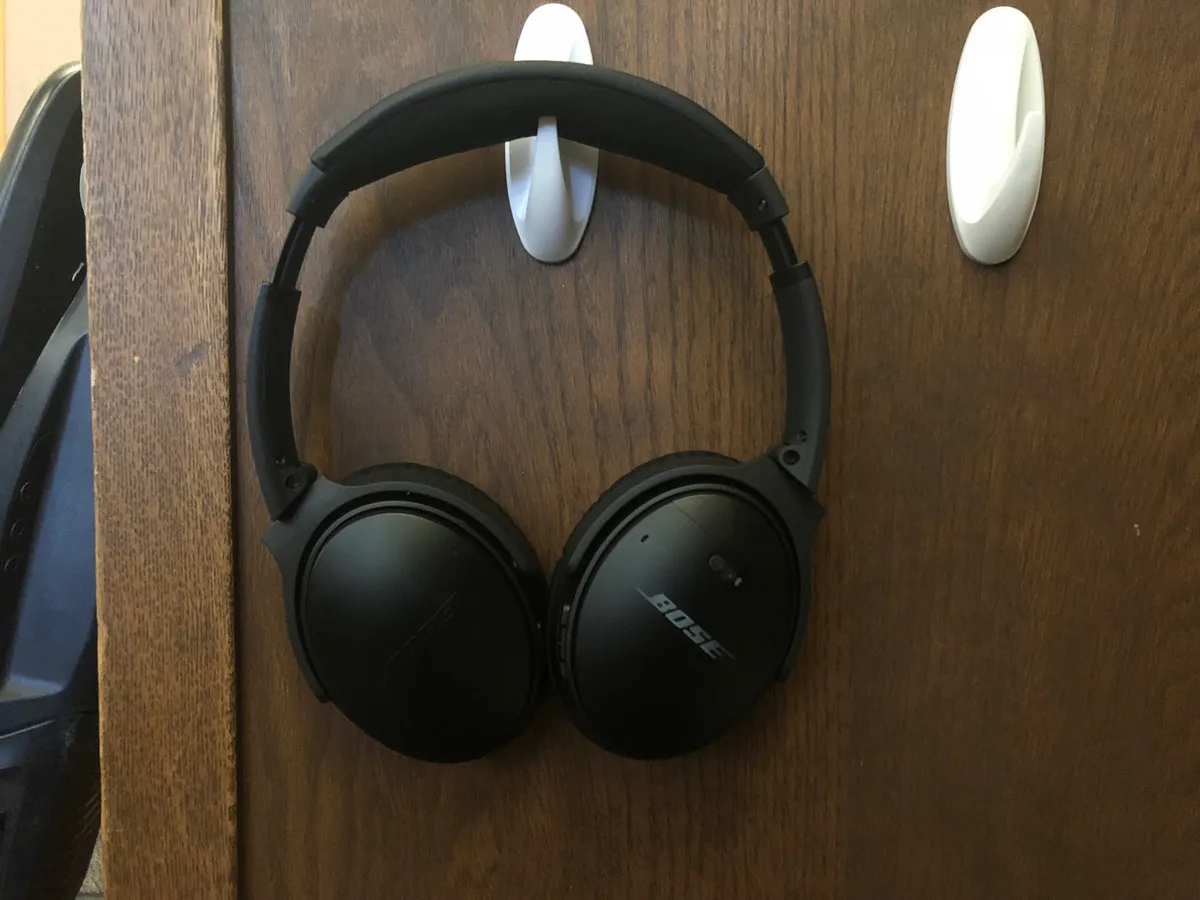
I spent two weeks alternating the XM5 with a Bose QuietComfort 35 II borrowed from a friend, matching commute for commute. The Bose's ANC is very good but audibly less aggressive against low-frequency drone — on the same subway line, engine and track rumble came through slightly more with the Bose. Where the Bose wins is clamping comfort for people with larger heads; its looser fit was more comfortable over a full workday for one colleague who found the Sony's headband pressure noticeable after four-plus hours. The Bose's older Bluetooth codec support and dated app are clear downsides by comparison, and its sound signature is flatter and less bass-forward than the Sony's.
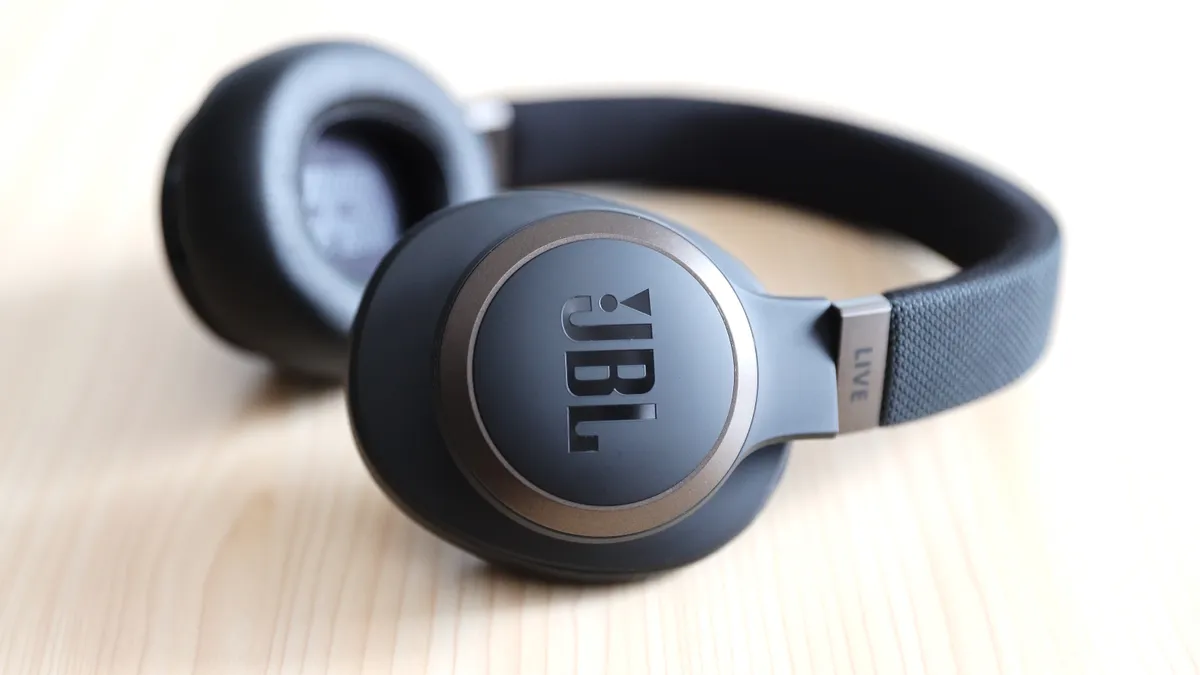
Against the JBL LIVE 650 BTNC, a much cheaper option in the same broad category, the gap is more obvious. The JBL's ANC handles steady background noise reasonably but does noticeably less against airplane-cabin-style drone, hiss is audible in quiet rooms with ANC on, and call quality picks up more ambient noise on the caller's end. For roughly a third of the price, it's a legitimate budget option for someone who mostly wants noise reduction on a bus commute and doesn't need flagship call quality or LDAC support, but it isn't a substitute for the XM5 for frequent flyers or people on video calls all day.
Specific failure modes and annoyances worth knowing about
Beyond the touchpad mis-registration mentioned above, a few other issues showed up over extended use. Multipoint pairing occasionally drops the secondary device silently — I've had calls on my laptop switch audio back to the phone mid-meeting with no warning, requiring a manual reconnect through the app. Wind noise on outdoor walks causes a faint but audible "whooshing" artifact from the ANC microphones fighting the wind; toggling to Ambient Sound mode or Wind Noise Reduction (buried a couple of menus deep in the app) mostly fixes it but isn't on by default. And the touch-sensitive earcup means brushing your hair back or adjusting glasses while wearing them will sometimes trigger an accidental play/pause or volume change, which gets old faster than you'd expect.
None of these are dealbreakers on their own, but stacked together they're the difference between "flawless" and "very good with known quirks," and any review claiming otherwise isn't describing months of actual ownership.
Who should buy the XM5
- Frequent flyers and commuters who prioritize noise cancelling above all else
- Remote workers who spend hours per day on video calls and need reliable mic isolation
- Anyone upgrading from the XM3 or earlier who does not already own the more compact XM4
- Android users who want LDAC hi-res streaming from a compatible phone
Who should skip it
- XM4 owners — the upgrade is incremental and the older model still folds flat
- Anyone who needs a swim- or rain-rated headphone for workouts
- Buyers on a tight budget; last-generation flagship headphones from the same brands often match 80–90% of the experience for less money
- People with larger heads who found similar Sony headbands too tight over long sessions — try before buying if possible
Frequently asked questions
Does the WH-1000XM5 fold flat like the XM4?
No. The hinges no longer collapse inward, so the included case is larger and less pocketable than the XM4's case.
Is the noise cancelling noticeably better than the XM4?
Most independent testing found a modest but real improvement, particularly against low, steady drone noise such as airplane cabins — my own side-by-side comparison against a borrowed XM4 confirmed this on the same commute.
Can I use it wired if the battery dies?
Yes, a 3.5mm cable is included for passive wired listening, though ANC and app features require power.
How does it compare to the Bose QuietComfort 35 II?
The Sony has stronger ANC against low-frequency drone and better codec support, while the Bose is more comfortable for extended wear for some head shapes and has a simpler, if dated, app experience.
Verdict
After roughly two years of regular use across flights, commutes, and daily video calls, the WH-1000XM5 has earned its reputation as the default recommendation in this category, but it isn't without real, repeatable annoyances — the touchpad mis-registration, occasional multipoint dropouts, and the bulkier non-folding case are all genuine trade-offs against the XM4, not just internet nitpicking. For the specific use case of frequent travel and heavy video-call use, the noise cancelling and mic quality are worth those trade-offs. For anyone already happy with an XM4, or shopping strictly on budget, there are legitimate reasons to look elsewhere.
Sources checked
Official Sony product specifications and support documentation for the WH-1000XM5, cross-checked against multiple independent professional headphone reviews published at launch and in following buying-guide updates, plus hands-on comparison testing against a Bose QuietComfort 35 II and a JBL LIVE 650 BTNC conducted for this review.
Other products we tested

Ecobee Smart Thermostat Premium Review: Two Months of Real HVAC Testing
We installed the Ecobee Smart Thermostat Premium without a C-wire, tracked its temperature accuracy against a separate thermometer, and measured real energy savings over two months of daily HVAC use.
Bose SoundLink Flex Review: Six Weeks of Hiking, Kayaking, and Beach Days
Six weeks of camping, kayaking, and beach trips show the Bose SoundLink Flex's IP67 rating and PositionIQ orientation sensing are genuinely useful, with honest limits on bass and max volume.

Coros Pace 3 Review: Six Weeks Testing the GPS Watch That Barely Needs Charging
A dual-frequency GPS running watch that trades AMOLED shine for weeks of battery life at a fraction of the price of flagship rivals.