
Microwave Buying Guide: Inverter Power Changes the Food
Wattage is the least useful number on the box. An inverter, the turntable diameter, and ventilation clearance decide whether it works for you.
Microwaves are the least glamorous appliance in the kitchen and the one most likely to be bought badly, because the specification that gets printed on the front — the wattage — is the only one most people look at, and the ones that actually determine whether food comes out evenly heated are buried or absent entirely.
Three things decide it: whether the machine physically fits where you intend to put it, whether the cavity takes the dish you actually use, and whether it has an inverter rather than a simple on-off magnetron. Everything else is convenience.
Inverter or not: the one spec that changes the food
A conventional microwave has one power level: full. When you select 50 per cent power, it does not halve the output — it switches the magnetron fully on and fully off in cycles. That is why defrosting on a conventional machine cooks the edges of a chicken breast while the middle stays frozen, and why melting chocolate or softening butter is a matter of luck.
An inverter microwave varies the actual power continuously, so 50 per cent means a genuine half-power stream of energy. The practical differences are large: defrosting works without cooking the outside, delicate tasks like melting and softening become reliable, reheating rice and pasta does not produce a molten centre and cold rim, and simmering a sauce is actually possible.
If you use a microwave for anything beyond reheating coffee, this is where the money should go. It matters more than wattage, more than the number of presets, and more than any grill or convection function.
Wattage, and why it is only half a number
Output wattage — commonly 700 to 1200 watts for domestic machines — tells you how fast energy goes in. Higher is faster, and it also means the manufacturer's recipe timings assume that figure, which is why food follows package instructions poorly on a lower-powered machine.
Note that some manufacturers quote input power rather than output, which is a considerably larger number and not comparable. Look for the phrase "output" or check the plate on the back of the machine.
The important caveat is that wattage says nothing about evenness. A 1000 watt microwave with poor field distribution heats worse than an 800 watt one with a well-designed cavity and turntable, because microwaves form standing waves with hot and cold spots and the design determines how well the food moves through them. That is why stirring halfway through does more for evenness than buying a more powerful machine.

For a household reheating leftovers and cooking the occasional jacket potato, 800 to 900 watts is plenty. For a busy family kitchen where the microwave is used constantly, 1000 watts or more saves real time. Be aware that high-wattage machines draw a lot of current, so check what else is on the same circuit if your kitchen wiring is old.
Capacity is about the dish, not the litres
Quoted capacity in litres is the cavity volume, which includes space above the food you cannot use. What determines whether a microwave is useful is the turntable diameter and the cavity width and height.
Take your most-used dish — the dinner plate, the casserole dish, the rectangular container you store leftovers in — and check it against the turntable diameter. A 25 cm turntable will not rotate a 28 cm dinner plate, and a dish that jams against the wall does not turn, which reintroduces every uneven-heating problem the turntable exists to solve.
Height matters for a mug plus a plate, and for tall jars. Rectangular cavities use their space better than round ones for square containers. If a machine has a flatbed design with no turntable, driven by a rotating antenna beneath the floor, that is a genuine advantage for large rectangular dishes and it is easier to clean, at the cost of usually being more expensive.
Countertop, over-range, or built-in
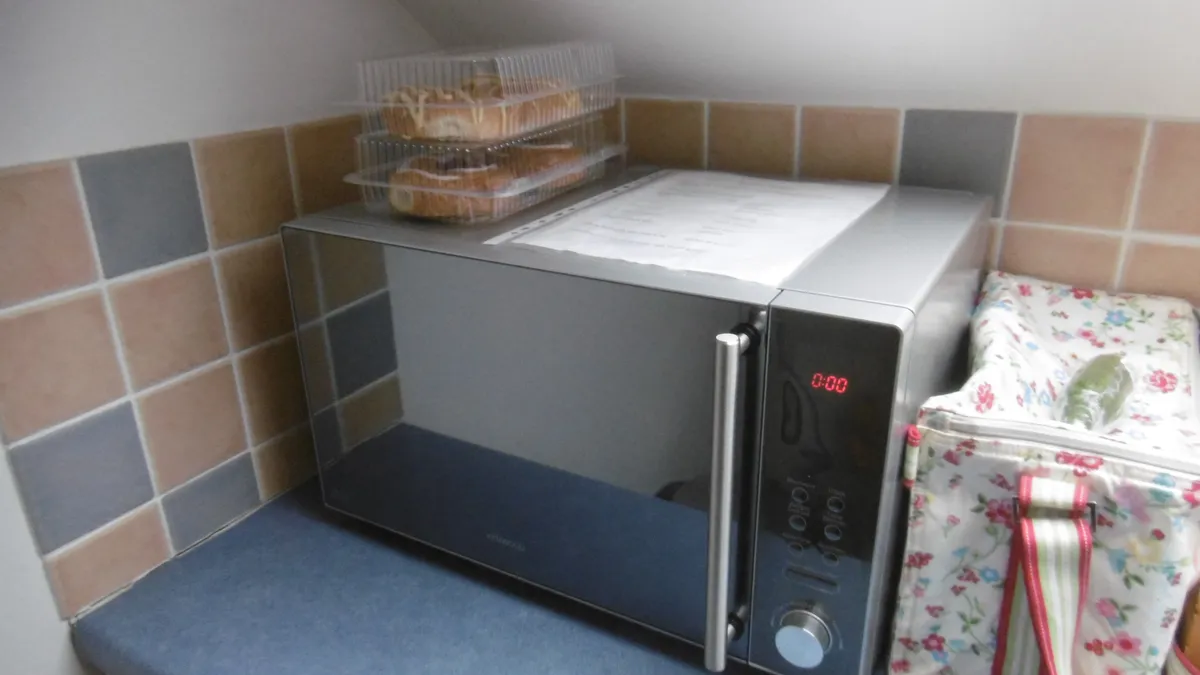
Countertop machines are cheapest, easiest to replace, and eat worktop space — typically 50 cm wide and 40 cm deep, plus ventilation clearance at the back and sides. Measure that clearance requirement; boxing a microwave into a tight alcove makes it run hot and shortens its life.
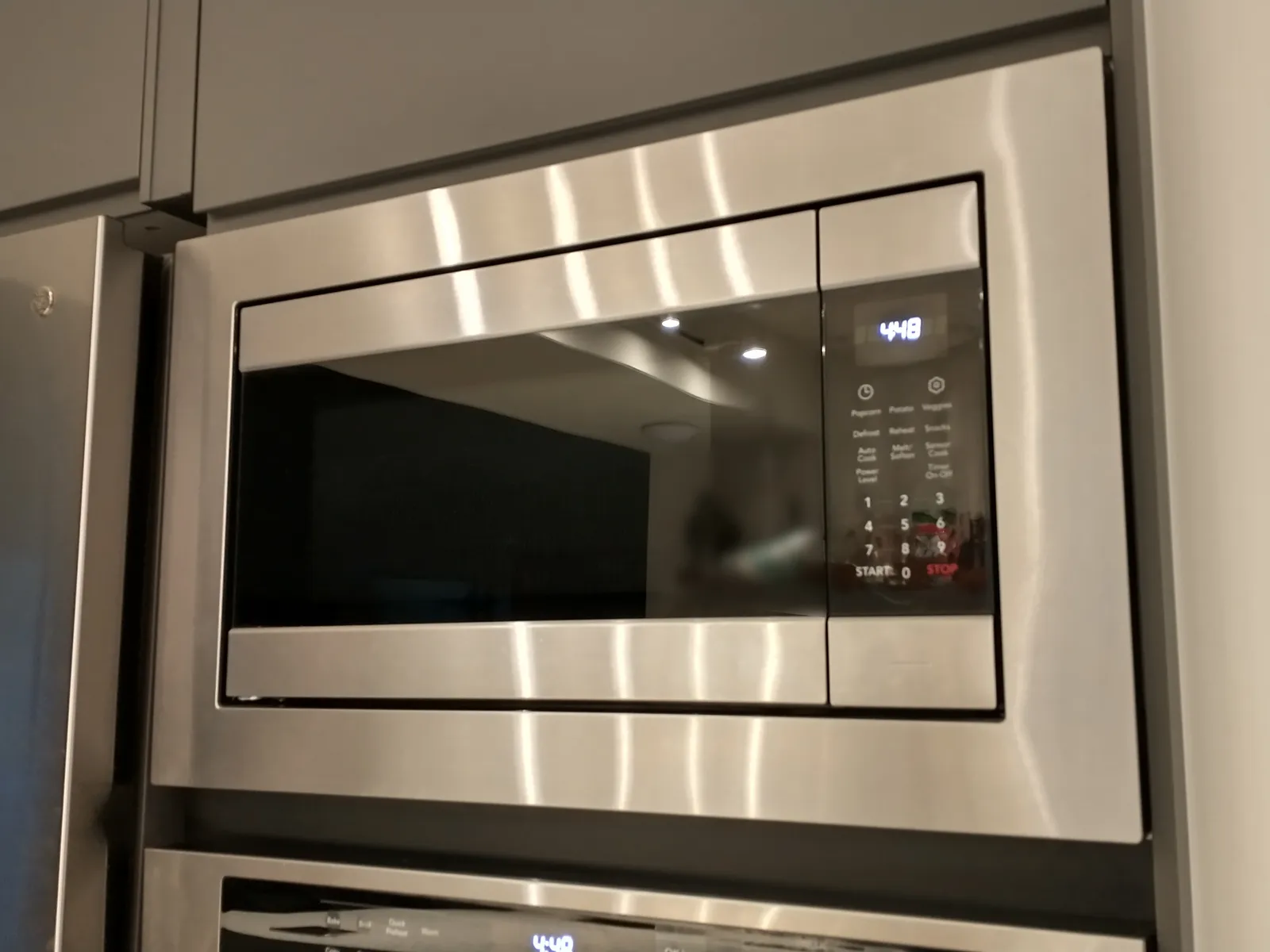
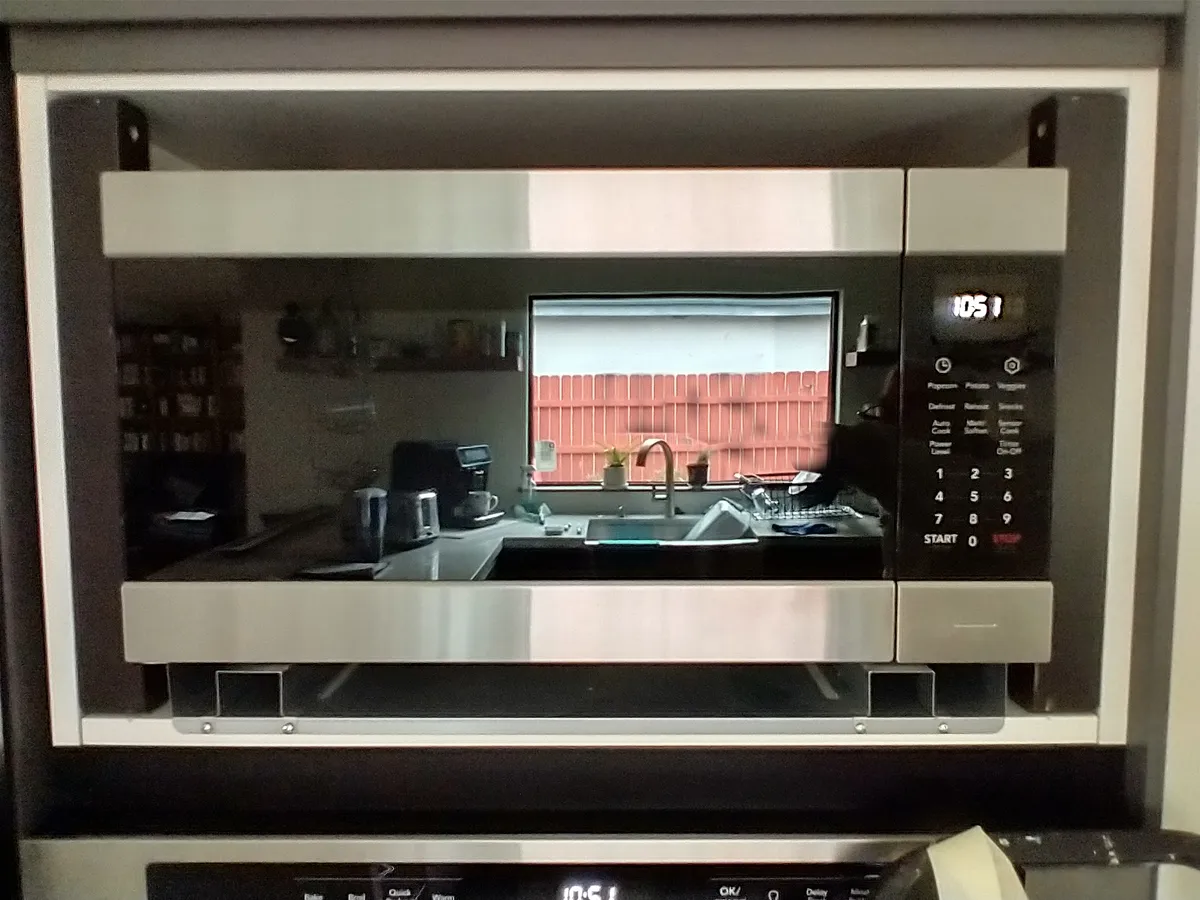
Built-in machines sit in a cabinet, either with a purpose-designed housing or in a trim kit that provides the necessary airflow gap. They look tidy and cost more, and the trim kit is model-specific, which means replacing the machine years later may force you to match a discontinued footprint. Check the cabinet aperture dimensions carefully, and never build a countertop machine into a cabinet without a proper kit — it needs the airflow.
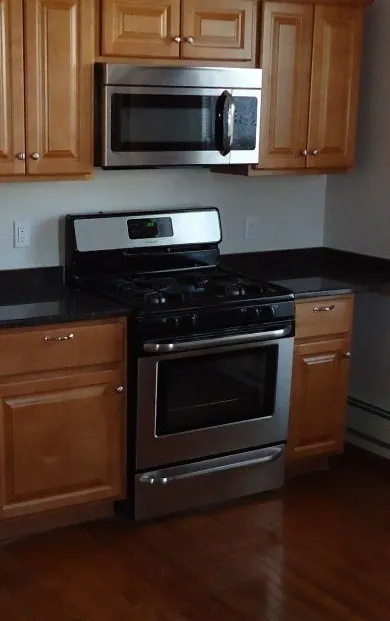
Over-range microwaves combine a microwave with an extractor hood above the hob. They save space and compromise both jobs: extraction is weaker than a dedicated hood, and the microwave sits high enough that lifting a hot dish out over your head is awkward and, with liquids, genuinely risky. Avoid if you can, and if you cannot, choose one that vents outside rather than recirculating through a charcoal filter.
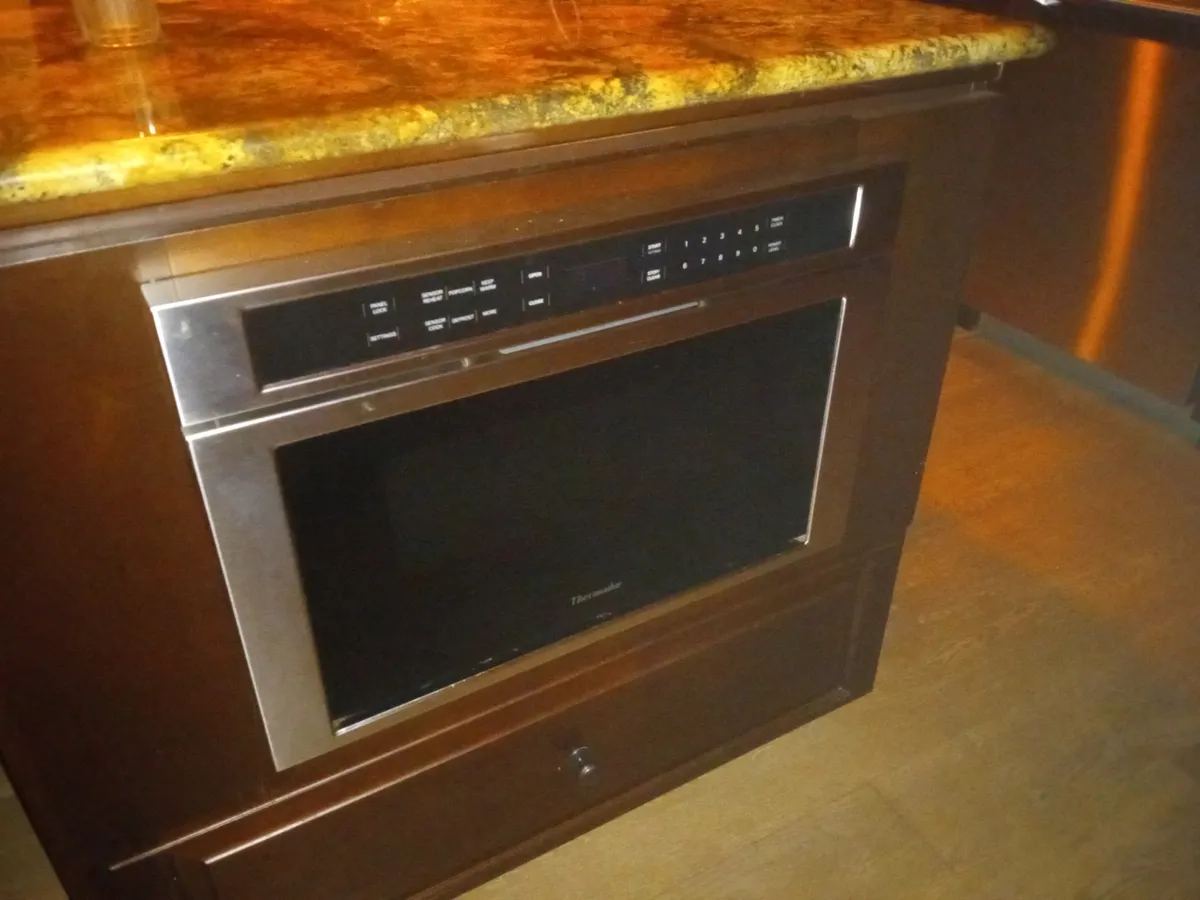
Drawer microwaves pull out from below the counter. Excellent ergonomics, particularly for anyone with limited reach or mobility, and expensive.
Grills, convection, and combination machines
A grill function adds a radiant element at the top of the cavity to brown food, which microwaves cannot do. It is useful for melting cheese and crisping a topping, and it makes the interior harder to clean because splatter bakes onto the element housing.
Convection microwaves add a fan and heating element so the cavity works as a small fan oven. In a kitchen without a conventional oven — a small flat, a caravan, an annexe — this is genuinely valuable, and it will roast and bake at a small scale. In a kitchen that already has an oven, it adds cost and complexity for a function you have, in a cavity too small to be convenient.
Some machines add air-frying, which is convection with a faster fan and a basket. It works, and a dedicated air fryer does it better in a basket designed for it — the multicooker versus air fryer guide covers that comparison, and the basket air fryer review looks at the standalone approach.
Steam functions, usually a plastic container with a lid rather than a plumbed steam generator, are simply microwave steaming and you can do the same thing with a cheap microwave steamer.
Controls, presets, and sensors
The best control layout is the simplest: a dial or keypad for time, a clearly labelled power-level control, and a start button that adds thirty seconds when pressed repeatedly. That last function is the most-used feature on any microwave and its absence is annoying daily.
Preset buttons for popcorn, pizza, and beverages are timers with fixed assumptions about portion size. They are harmless and rarely useful. What is genuinely useful is a sensor-cook function, which measures humidity released by the food and stops when it detects the food is heated through rather than after a fixed time. On machines that implement it well, it removes the guesswork from reheating leftovers.
Check three practical details. Does the door open with a handle or a push-button latch — handles are easier with full hands and last longer. Is the display readable from where the microwave will sit, which matters when it is above eye level. And is there a mute option, because a microwave that beeps five times at the end of every cycle is unpleasant in an open-plan home.
Cleaning, and the parts that fail
Interior finish matters more than it sounds. Stainless steel interiors look premium and show every mark and fingerprint. Enamel or painted interiors wipe clean easily and can chip, and a chipped interior exposing bare metal is a reason to stop using the machine, since arcing can result. Ceramic interiors are the easiest to clean and the most scratch-resistant.
The easiest cleaning method costs nothing: microwave a bowl of water with a slice of lemon for three minutes, leave the door shut for five, then wipe. The steam loosens everything. Do not use abrasive pads inside, and pay attention to the waveguide cover — the small mica or plastic panel on the cavity wall. It gets splattered, it can char, and a charred cover arcs. It is a cheap replaceable part; check that spares are available for the model you buy.
Door seals and the interlock switches are the other consumables. Never run a microwave with a damaged door, bent frame, or broken latch, and never defeat the interlocks — the door is the shielding. A machine that runs with the door open, or that visibly sparks, should be taken out of service rather than nursed along.
Using it well
Even heating comes from technique. Arrange food in a ring rather than a mound, because the centre of a pile heats last. Cover with a lid or damp kitchen paper to trap steam, which distributes heat and prevents drying. Stir or rotate halfway through anything thicker than a few centimetres. Use a lower power level and a longer time for anything dense — the outside has time to conduct heat inward rather than overcooking.
On containers: only use dishes marked microwave-safe, avoid metal and metallic trim, and be careful with cling film touching food. Do not heat sealed containers or whole eggs in shells, both of which build pressure. Take the lid off or vent it.
One safety point worth stating plainly: water heated in a very smooth cup can superheat above boiling point without visibly bubbling, then erupt when disturbed. Put a wooden stirrer or spoon in the cup, or use a cup with a slightly rough interior, and let it stand for a moment before removing it. For tea and coffee, a kettle is faster, safer, and better anyway.
Matching it to your kitchen
Reheating and defrosting for a couple: an 800 to 900 watt countertop inverter machine with a turntable large enough for your dinner plates. Nothing else needed.
Busy family kitchen: 1000 watts or more, inverter, a large or flatbed cavity, a sensor-cook function, and a plus-thirty-seconds button. Prioritise easy cleaning, because it will be used several times a day.
Kitchen with no conventional oven: a convection combination microwave, sized as large as the space allows.
Fitted kitchen where appearance matters: a built-in machine with a proper trim kit, and accept the higher price and the model-specific aperture.
For the rest of the kitchen, the refrigerator buying guide and dishwasher buying guide cover the other large appliances, and the cookware guide covers what to put inside all of them.
The short version
Buy an inverter if you use the microwave for anything beyond reheating drinks: it is the one feature that changes how food comes out. Check the turntable diameter against your actual plates and the cavity height against your mugs, not the quoted litres. Verify the output wattage rather than input. Take the plus-thirty-seconds button and a sensor-cook function, skip presets, and skip convection unless you have no oven. Never build a countertop machine into a cabinet without a trim kit, and check that a replacement waveguide cover is available.
More coupon shopping advice

Home Security Camera Buying Guide: Local vs. Cloud Storage
A practical, balanced buying guide to home security cameras that weighs local storage against cloud subscriptions, wired versus battery power, camera placement, night vision, smart detection accuracy, and smart home integration.

Beginner Mirrorless Camera Buying Guide
A practical, honest walkthrough of what actually matters when buying your first mirrorless camera, from sensor size and lens mounts to autofocus, video specs, and the real total cost of a beginner-friendly system.

Air Purifier Buying Guide: CADR, ACH, and Filter Costs Explained
A practical walkthrough of the numbers that actually matter when buying an air purifier — CADR and ACH for sizing, true HEPA versus marketing terms, real three-year filter costs, realistic noise levels, and when a purifier won't help at all.