
Coffee Grinder Buying Guide: The Part That Changes the Cup
Uneven grind over-extracts and under-extracts in the same cup, and no brewing technique fixes it. Match the grinder to your brew method.
If you own a decent coffee maker and a bag of good beans and the coffee still tastes flat or harsh, the grinder is almost certainly the reason. Grind consistency does more for a cup than any other single piece of equipment, and it is the component people upgrade last.
The reason is simple physics. Extraction happens at the surface of each particle. If your grounds are a mix of boulders and dust, the dust over-extracts into bitterness while the boulders under-extract into sourness, in the same cup, at the same time. No brewing technique fixes that. A uniform grind is what lets you actually taste the difference between beans.
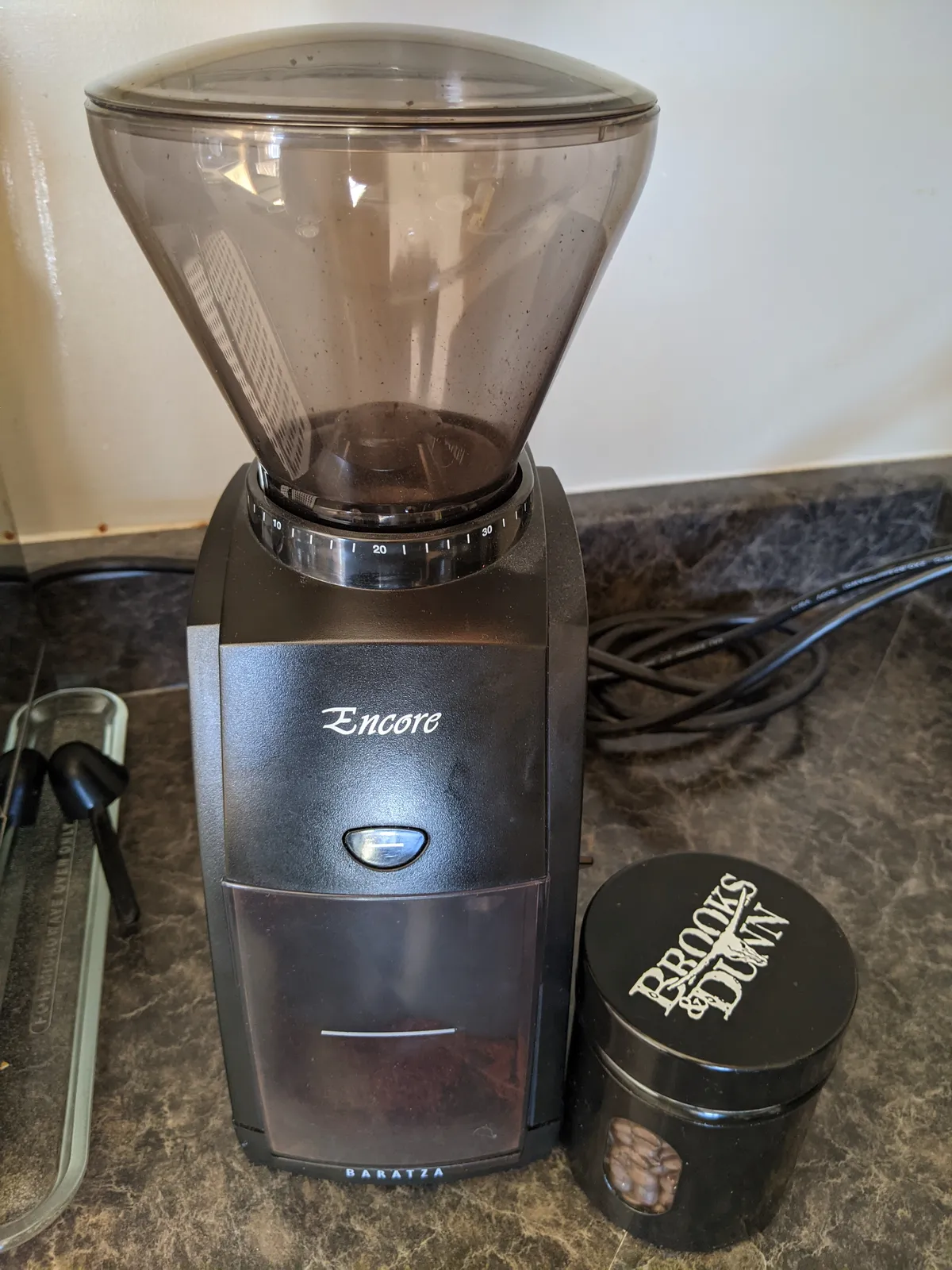
Blade grinders are not grinders
A blade grinder is a small spinning propeller in a chamber. It smashes beans repeatedly, and how fine any given fragment ends up depends purely on how many times it happened to get hit. The output is inevitably a wide distribution of particle sizes, and there is no setting — only how long you hold the button.
They are cheap, and they are better than pre-ground coffee that has been oxidising for a month, but they cannot produce a consistent grind and cannot be dialled in. If you are choosing between a blade grinder and a hand-cranked burr grinder at a similar price, the hand grinder wins comfortably.
Burr grinders work differently: two abrasive surfaces sit a set distance apart, and beans are drawn through the gap and reduced until they are small enough to pass. The gap sets the particle size, which is why burr grinders have adjustable settings that actually mean something.
Conical or flat burrs
Conical burrs are a cone rotating inside a ring. Gravity assists the feed, so they can run slower, which means less heat and less noise. They are the standard in home grinders, cost less to manufacture, and produce a slightly wider particle distribution with a bit more fine material — which many people find gives a fuller, rounder cup.
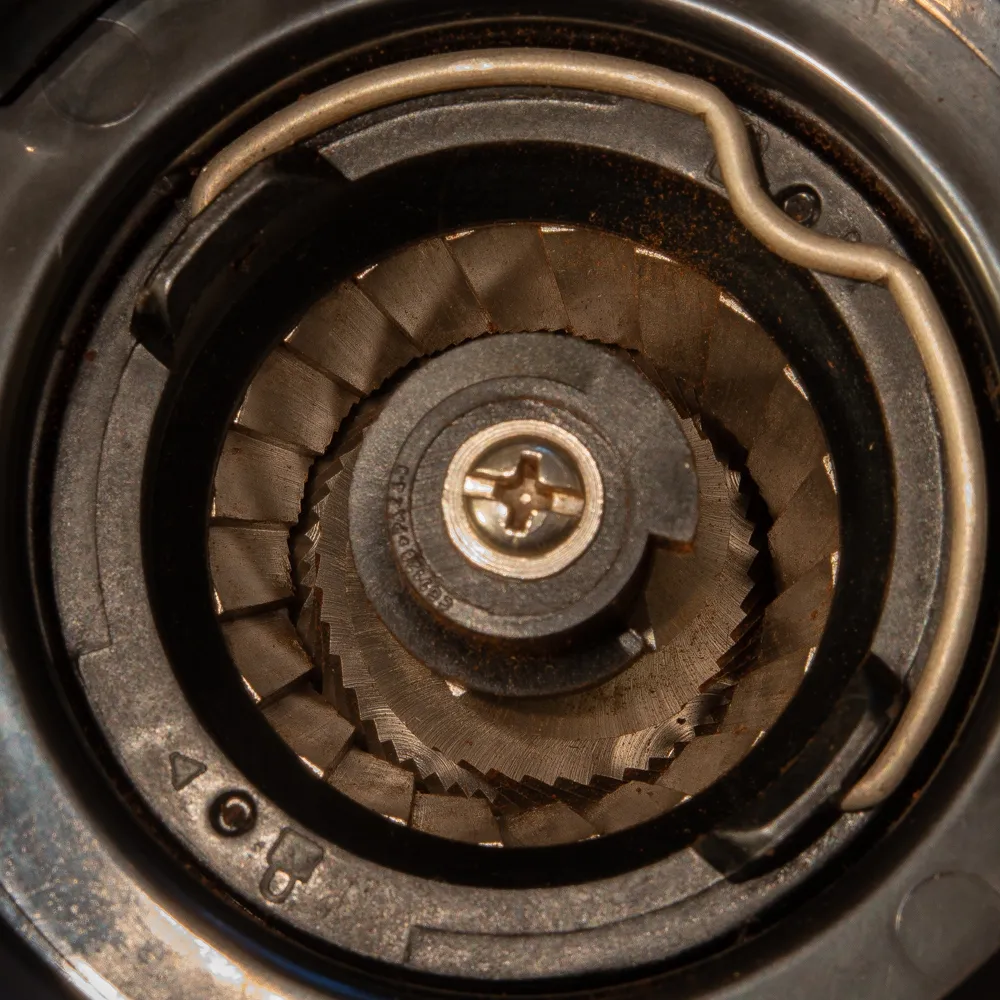
Flat burrs are two parallel rings facing each other. Coffee is pushed outward between them and exits at the rim, which produces a narrower particle distribution and, in filter brewing, tends to give a cup with more separated, distinct flavours. They need more motor power, generate more heat, and usually retain slightly more coffee inside.
The honest summary: burr geometry and quality matter, but the difference between a good conical and a good flat grinder is smaller than the difference between either and a poor grinder. Do not agonise over it. Burr size matters more within a category — larger burrs cut more coffee per rotation, so they run cooler and faster.
Steel burrs are standard and sharp. Ceramic burrs stay sharp longer and are more brittle; a stone in the beans can chip them. Steel burrs dull over roughly 500 to 1000 kg of coffee for home use, which is essentially never for a domestic user, and are replaceable on well-made grinders.
Match the grinder to your brew method
This is the decision that actually determines what to buy, because the grind range required differs enormously.
French press and cold brew need a coarse, even grind. This is the least demanding job, and a modest burr grinder or a hand grinder handles it well.
Pour over, filter, and AeroPress need medium grinds and benefit substantially from consistency, because extraction time is short enough that uneven particles show up clearly in the cup. A good mid-range grinder makes an obvious difference here. Our AeroPress review covers a brewer that is particularly grind-sensitive.
Espresso is the demanding case. It needs a fine grind, and crucially it needs very fine adjustment steps, because a tiny change in particle size dramatically changes how fast water flows through the puck. A grinder that steps too coarsely between settings makes espresso impossible to dial in, regardless of how good its burrs are.
That is the practical rule: filter grinders and espresso grinders are different tools. A grinder sold as espresso-capable but with a handful of coarse clicks in the espresso range is a filter grinder with a marketing claim. If you make both, either buy a grinder explicitly designed to span both with fine adjustment, or accept that one method will be compromised. Our espresso versus pour over guide covers this decision from the brewer side.
Stepped or stepless adjustment
Stepped grinders click between fixed settings. They are repeatable — you can return to setting 12 and get the same grind — and the limitation is the size of the step. For filter coffee, stepped is fine and convenient.
Stepless grinders adjust continuously, letting you land anywhere between two positions. This is what espresso needs, and the trade is that returning to a previous setting relies on a reference mark rather than a click. Some grinders offer many fine steps, which is the best of both.
Whatever the mechanism, check for adjustment backlash and whether the burrs are held in true alignment. A grinder whose adjustment drifts as it runs, or whose burrs sit slightly off-parallel, produces inconsistent output regardless of its specification. Alignment is one of the real, unadvertised differences between price tiers.
Retention, static, and the mess
Every grinder holds some coffee inside after grinding. That retained coffee is stale, and it comes out in your next dose. Low retention matters if you switch between beans or grind small single doses; if you grind the same bean every morning, a few grams of carry-over is not a practical problem.
Static is the other daily annoyance: grounds cling to the chute and jump out of the container. Dry beans in dry weather make it worse. The universal fix costs nothing — add a few drops of water to the beans before grinding, stir, then grind. It clumps the fines slightly and largely eliminates static and mess.
Single dosing — weighing the exact beans for one brew and putting them in rather than filling a hopper — gives fresher coffee and lets you change beans freely. It requires a scale and a grinder that works well with small amounts. A large hopper is convenient for one household bean and keeps beans exposed to air for weeks, which is a real freshness cost.
Hand grinders: better than their price suggests
A hand grinder puts your money almost entirely into burrs, an axle, and bearings, with no motor to pay for. That means a mid-priced hand grinder frequently out-grinds an electric grinder at twice the cost, particularly for filter coffee.
The trade is labour and volume. Grinding 15 grams for one cup takes thirty to sixty seconds and is pleasant. Grinding 60 grams for a full pot every morning becomes a chore quickly. Espresso-fine grinding by hand takes real effort.
What to look for: burrs held by bearings above and below rather than a single bushing, because that keeps the axle from wobbling; a clear numbered adjustment so you can return to a setting; and a body you can grip comfortably. Hand grinders are also the obvious choice for travel and camping, where they need no power — see the camping gear guide for the rest of that kit.
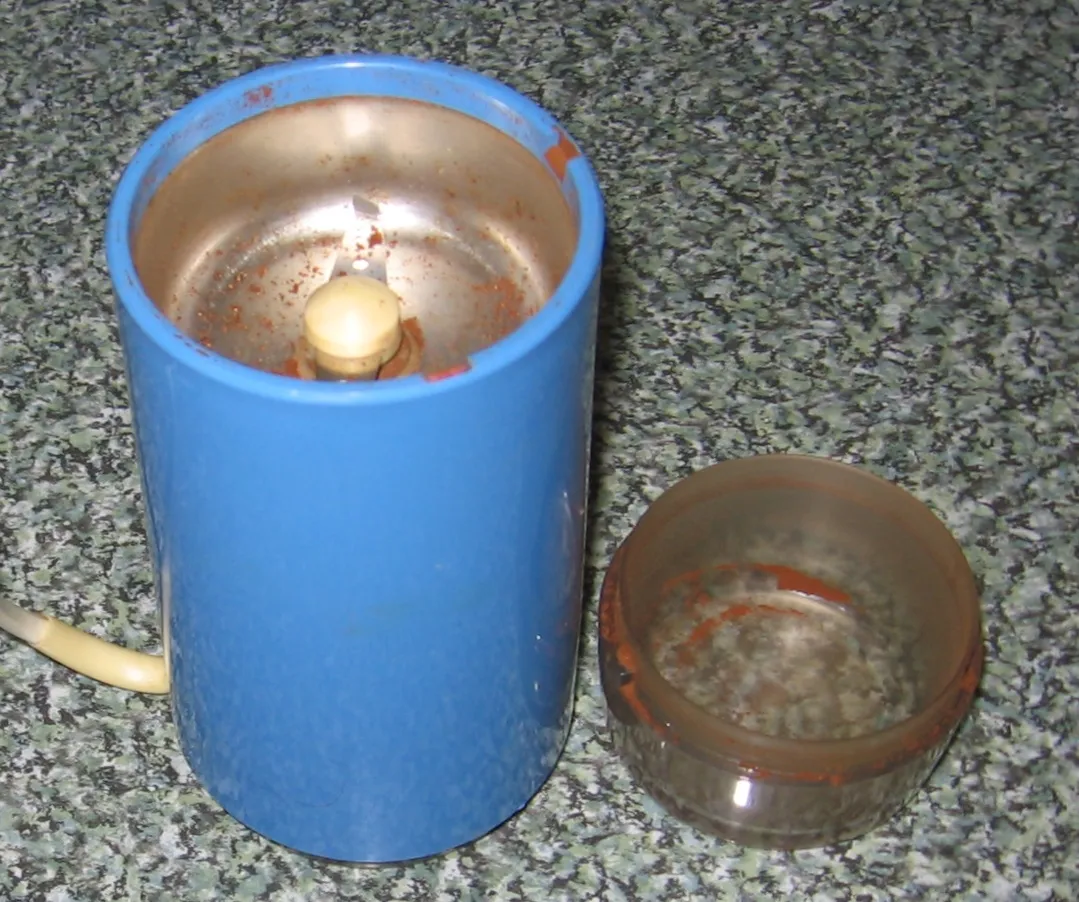
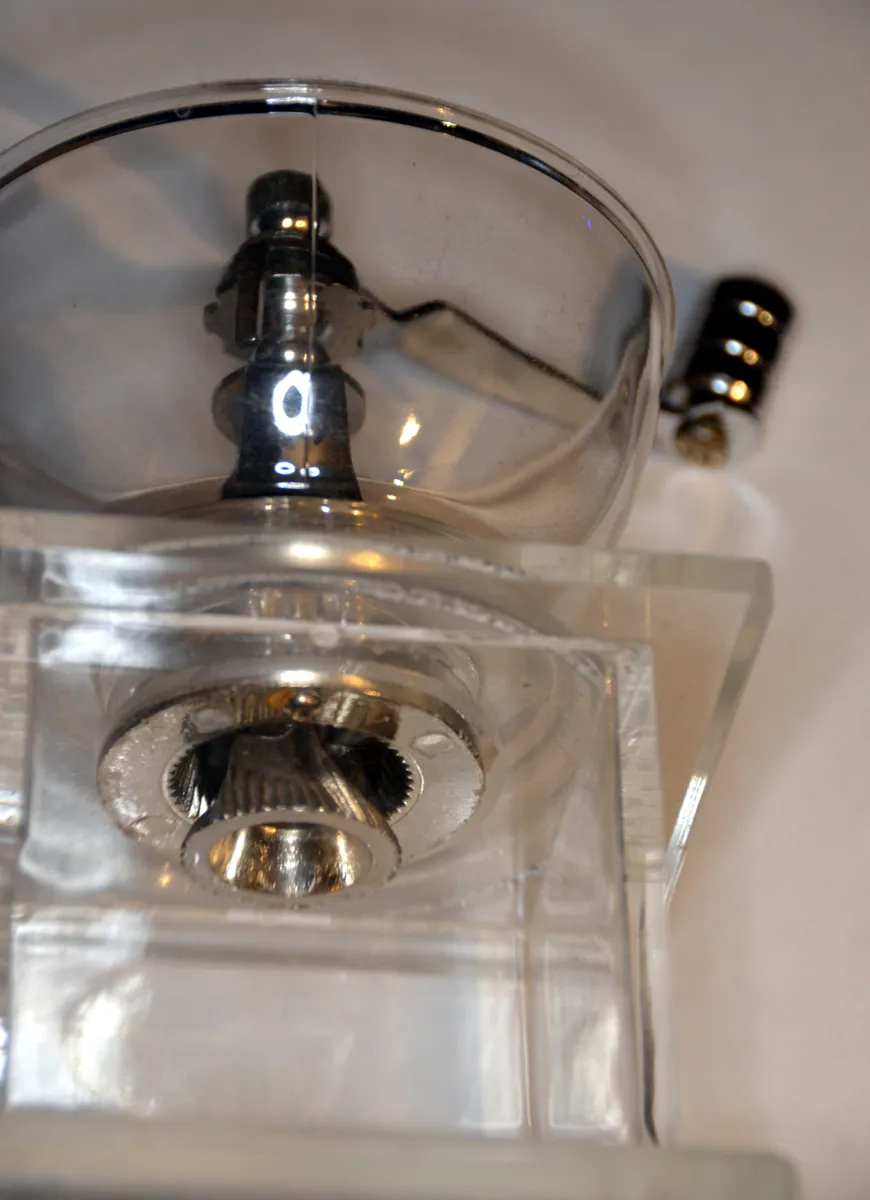
Antique decorative hand mills are a different matter. They look wonderful and their burrs and adjustment mechanisms are generally not up to modern standards. Buy them as objects, not as equipment.
Motor, noise, and heat
Electric grinders use either a high-speed motor with reduction gearing or a lower-speed direct-drive motor. Direct-drive tends to be quieter, cooler, and more expensive. Heat matters because it drives off aromatics, though for domestic volumes the effect is modest — it becomes real when grinding several hundred grams back to back.
Noise varies a lot and is worth considering if you grind at six in the morning in a flat. Slower direct-drive grinders are noticeably quieter, and a grinder on a folded towel is quieter than one on a bare worktop.
Check the footprint and, importantly, the height: many grinders do not fit under a standard wall cabinet with the hopper on, which means lifting the hopper off to fill it. Measure before buying.
Cleaning and keeping it consistent
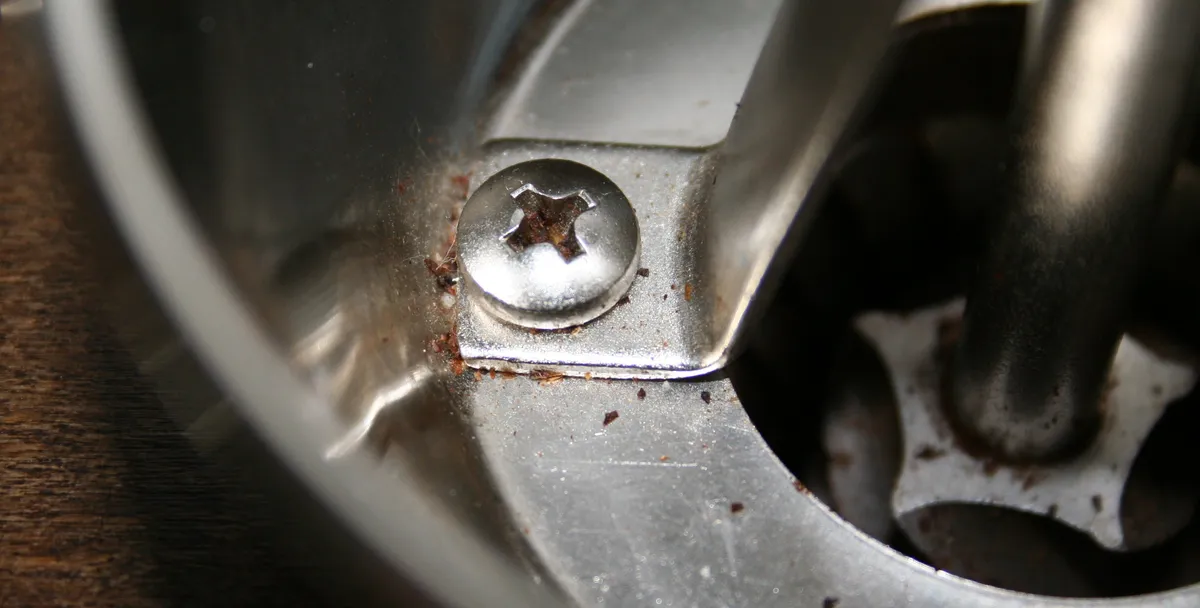
Coffee oils build up on burrs and in the chute, go rancid, and taint the grind. Brush the burrs and chute out weekly with a stiff brush — a cheap paintbrush is fine. Every few months, open the grinder properly, remove the burrs if the design allows, and clean them dry. Do not wash burrs in water; steel rusts and moisture gets into bearings.
Grinder cleaning tablets, which are inert pellets you grind through, work well for the chute and are worth running occasionally if you grind oily dark roasts.
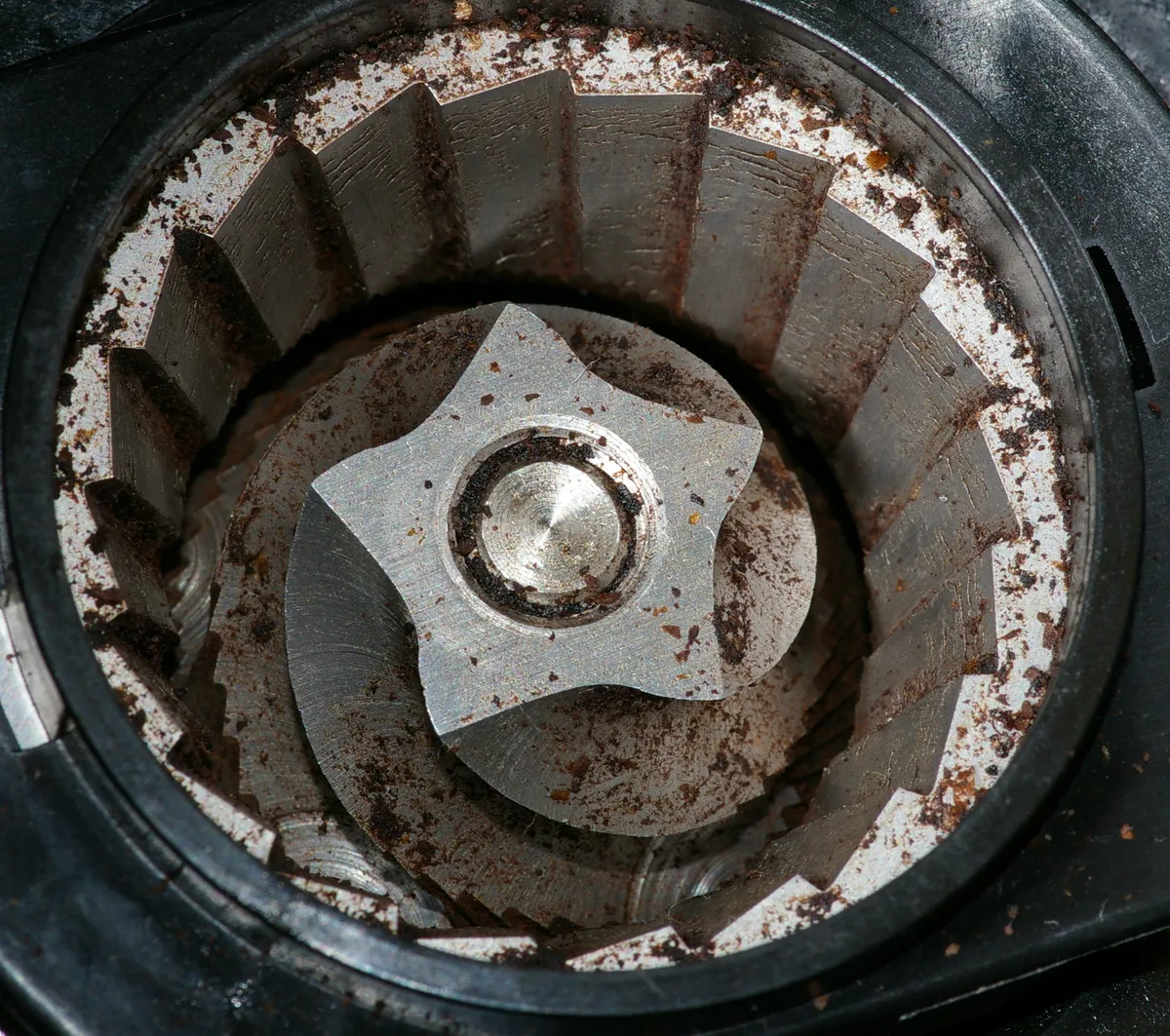
Two things that ruin grinders: stones, which occasionally appear in green coffee and survive roasting, and anything that is not coffee. Do not grind spices in a coffee grinder you care about; the oils persist and cumin coffee is memorable for the wrong reasons.
Before buying, check that burrs are available as spare parts and that the grinder can be opened with ordinary tools. A grinder with replaceable burrs and published spares is a twenty-year purchase. A sealed one is a five-year purchase.
Matching it to your habit
French press or cold brew only: a competent hand grinder, or an entry-level electric burr grinder. Do not overspend; the method is forgiving.
Daily pour over or AeroPress for one or two: a good hand grinder is the best value in coffee equipment, and a mid-range electric grinder is the best convenience-per-pound.
Filter coffee for a household, several cups at a time: an electric grinder with a decent hopper and enough burr size to grind quickly without heating.
Espresso: a dedicated espresso grinder with stepless or very fine stepped adjustment, low retention, and good burr alignment. This is the one case where the grinder should cost as much as or more than the brewer, and buying too cheap here wastes the whole setup.
Both espresso and filter: either a grinder explicitly designed for the full range, or two grinders. Switching a single grinder between the two daily is possible and tedious.
For the rest of the setup, the kitchen knife guide makes a similar argument about where quality actually shows up, and the cookware guide covers the kettle-and-pan side of the counter.
The short version
Skip blade grinders entirely. Choose based on brew method: espresso needs fine, stepless-or-nearly adjustment and low retention, filter needs consistency but is more forgiving, French press is easy. A hand grinder gives you far better burrs per pound if you grind one or two cups. Conical versus flat matters less than build quality and burr alignment. Add a few drops of water to the beans to kill static, brush the burrs weekly, and check that spare burrs are sold before you buy.
More coupon shopping advice

Home Security Camera Buying Guide: Local vs. Cloud Storage
A practical, balanced buying guide to home security cameras that weighs local storage against cloud subscriptions, wired versus battery power, camera placement, night vision, smart detection accuracy, and smart home integration.

Beginner Mirrorless Camera Buying Guide
A practical, honest walkthrough of what actually matters when buying your first mirrorless camera, from sensor size and lens mounts to autofocus, video specs, and the real total cost of a beginner-friendly system.

Air Purifier Buying Guide: CADR, ACH, and Filter Costs Explained
A practical walkthrough of the numbers that actually matter when buying an air purifier — CADR and ACH for sizing, true HEPA versus marketing terms, real three-year filter costs, realistic noise levels, and when a purifier won't help at all.