
Bike Helmet Buying Guide: Fit Is the Whole Safety Decision
Every certified helmet passes the same impact test, so a cheap helmet that fits beats a premium one that does not. Here is how to check.
A bicycle helmet is one of the few purchases where the cheap option and the expensive option are held to the same safety standard. Every helmet legally sold has passed the same impact test, which means a budget helmet that fits you properly protects you better than a premium helmet that does not.
What the extra money buys is ventilation, weight, adjustment mechanisms, and in some cases rotational-impact technology. What it does not buy is a fundamentally higher pass mark on the basic certification. Understanding that changes how you should shop.
Certification: the floor, and how to check it
Look for a sticker or moulded label inside the helmet showing a recognised standard — EN 1078 in Europe and the UK, CPSC in the United States, AS/NZS 2063 in Australia and New Zealand. If a helmet has no certification marking, it is not a helmet, regardless of what it looks like. Novelty helmets and unbranded imports occasionally lack it entirely.
These standards test drop impacts onto flat and angled anvils, strap strength, and retention under load. They set a minimum, and manufacturers do not generally publish how far above the minimum any given model performs. A few independent testing programmes now rate helmets on a scale rather than pass/fail, which is genuinely useful information and worth searching for by model name before you buy.
One clear rule: never buy a used helmet, and never keep one that has been in a crash. The protective foam works by crushing, and once crushed it does not recover. A helmet that looks fine may have compressed foam under the shell, and you cannot see it.
MIPS and rotational protection
Standard certification tests linear impacts — a straight drop onto a hard surface. Real crashes are usually angled, and angled impacts twist the head, which is associated with a particular class of brain injury. Rotational-management systems address that gap.
MIPS is the best-known: a low-friction liner inside the helmet allows a small amount of movement between the head and the shell during an angled impact, which reduces the rotational force transmitted. Several manufacturers have their own equivalents using slip planes, elastomeric mounts, or deformable structures.
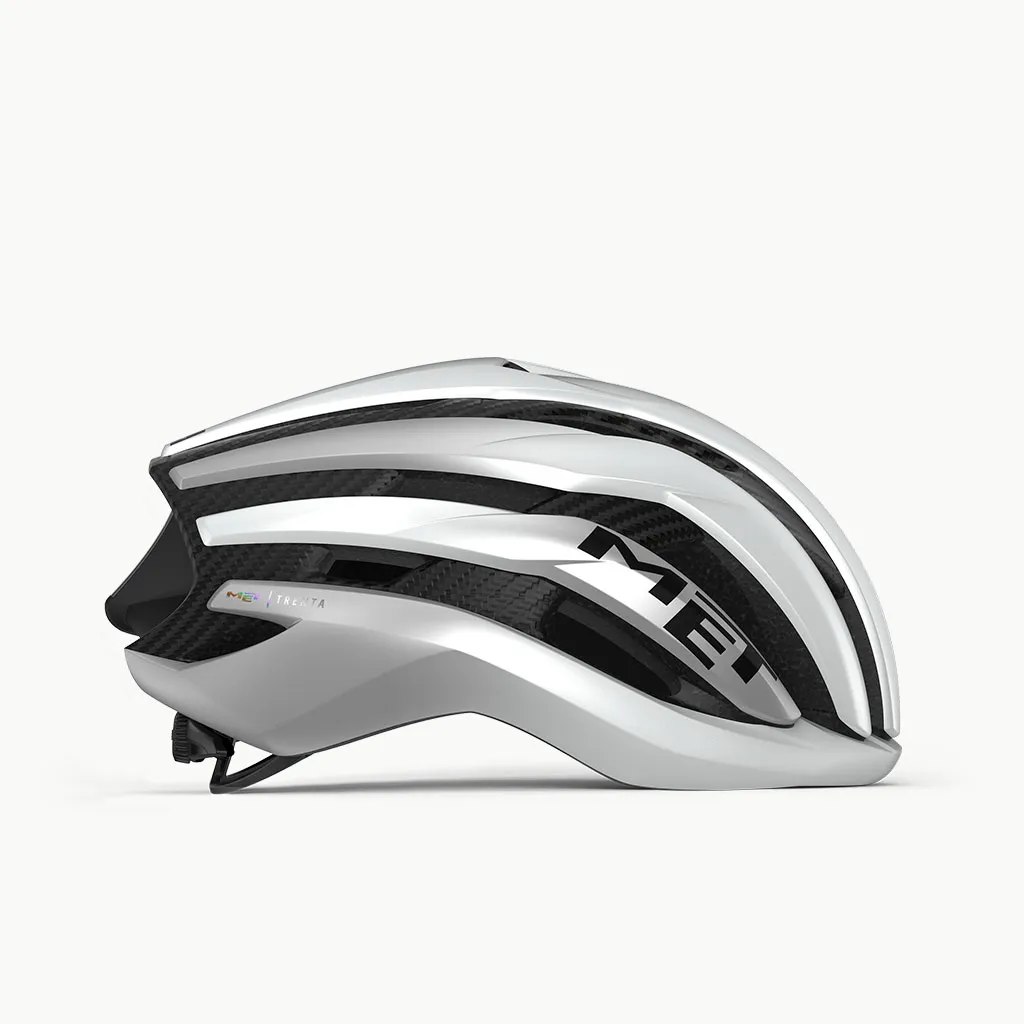
Is it worth it? The laboratory evidence for reduced rotational acceleration is reasonably strong, and the real-world injury data is harder to isolate. The practical position: it adds modest cost and a little weight, the mechanism is plausible and measurable, and there is no meaningful downside. Take it if it is available in a helmet that fits, and do not accept a worse-fitting helmet in order to get it.
What matters more is that the helmet is on your head correctly. A well-fitted certified helmet without rotational technology outperforms a MIPS helmet worn tipped back on the crown, which is the most common wearing error by a wide margin.
Fit, which is the entire safety story
Measure your head circumference with a tape measure around the widest part, roughly a centimetre above your eyebrows and around the back. Compare against the manufacturer's sizing rather than assuming small, medium and large mean the same thing across brands. Head shapes also differ — some brands build rounder shells, others longer ovals — so if a brand pinches at the temples or leaves a gap at the back, try a different one.
Correct position: the helmet sits level, with the front edge about two finger-widths above your eyebrows. It should not tip back to expose your forehead, which is exactly the area most likely to hit the ground. Tighten the rear cradle dial until the helmet stays put when you shake your head with the straps undone — that is the test for a proper fit, and it is the one most people never perform.
Strap adjustment follows. The side straps should form a V around your ears, and the junction should sit just below and slightly forward of the earlobe. The chin strap should be snug enough that you can fit one finger between strap and chin and no more; when you open your mouth wide, you should feel the helmet pull down slightly.
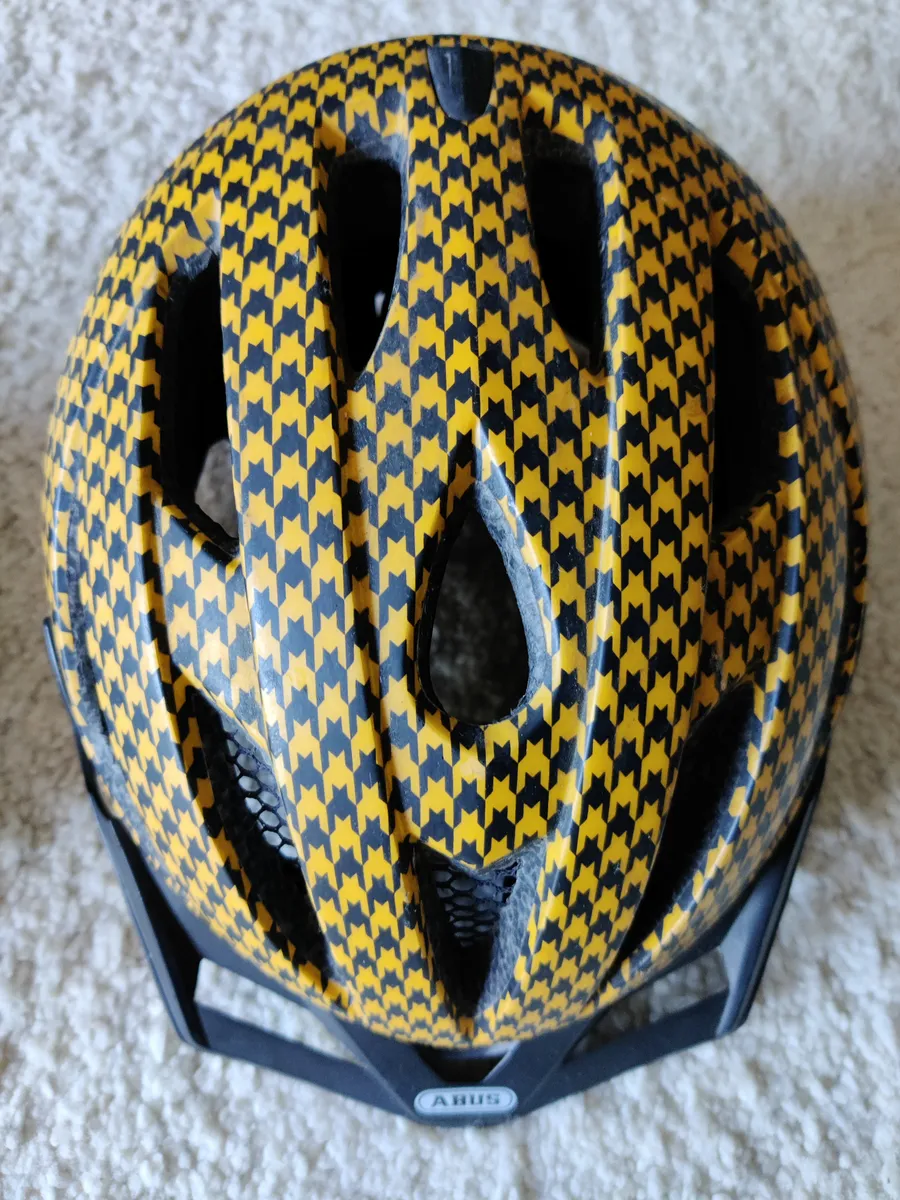
Pads are the fine-tuning. Most helmets ship with pads of two or three thicknesses; swapping them adjusts fit far more effectively than cranking the dial tighter. A helmet held on by tension alone creates pressure points and will be worn loose within a fortnight.
Types, and which one you need
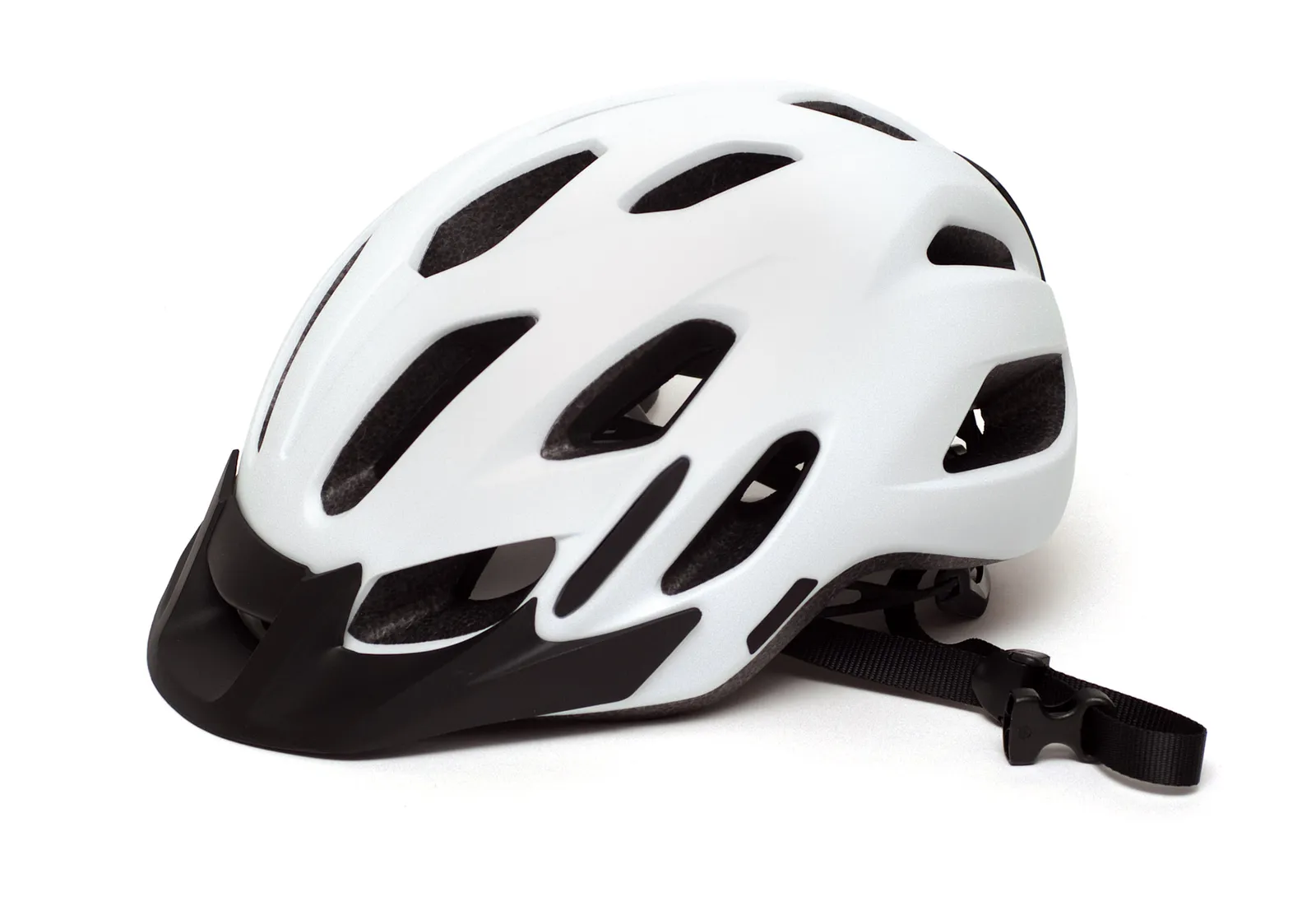
Commuter and urban helmets have fewer, smaller vents, a rounder profile, often an integrated rear light and a small visor or peak. They are heavier and warmer than road helmets and they suit riding in ordinary clothes at moderate speed. Some fold, which is genuinely useful if you park the bike and carry the helmet all day.
Road helmets prioritise ventilation and low weight. Large vents with internal channelling move air across the scalp, which matters on long climbs in summer. They cost more for less material, which feels wrong and is a real engineering trade.
Mountain bike helmets extend further down the back of the head and temples, have a fixed peak to keep sun and branches out of your eyes, and usually accommodate goggles. The extended coverage is worth having on any technical riding.
Aero helmets have minimal vents and a smooth shell to reduce drag. They are meaningfully faster at racing speeds and hot at commuting speeds. Unless you time trial, skip them.

E-bike helmets are worth a separate mention. Faster average speeds mean higher impact energies, and some markets certify a specific higher standard — NTA 8776 in the Netherlands — for speed pedelecs. If you ride a fast e-bike, look for extended rear coverage and that higher certification where it applies. Our commuter bike buying guide covers the bike side of the same decision.
Construction, ventilation, and weight
Almost all helmets use expanded polystyrene foam with a thin polycarbonate shell bonded to it — in-mould construction, which is lighter and stronger than the older glued-shell method. Some premium models add reinforcing skeletons or composite fibre so they can use thinner foam with larger vents without losing rigidity.
Ventilation is not just about hole count. What matters is internal channelling that moves air from front vents across the scalp and out at the rear, which is why two helmets with the same number of vents can feel very different. If you ride hard in heat, this is where the money genuinely goes.
Weight ranges from about 200 grams for a light road helmet to 400 grams for a well-padded commuter model. The difference is barely noticeable on a short ride and matters on your neck over four hours. Do not chase grams at the expense of coverage or fit.
Practical details worth checking: whether the rear dial can be operated one-handed while riding, whether the pads are removable and washable, whether the straps have a magnetic buckle — genuinely easier in winter gloves — and whether there is a proper mount for a rear light or camera rather than a strap that slips.
Visibility, and what actually works
A white or bright helmet is more visible than a black one in daylight, and colour does very little at night. What works after dark is light: a rear light mounted high on the helmet is visible over traffic in a way that a seatpost light is not, and a helmet light moves with your head, which is how you get seen at junctions where you have turned to look.
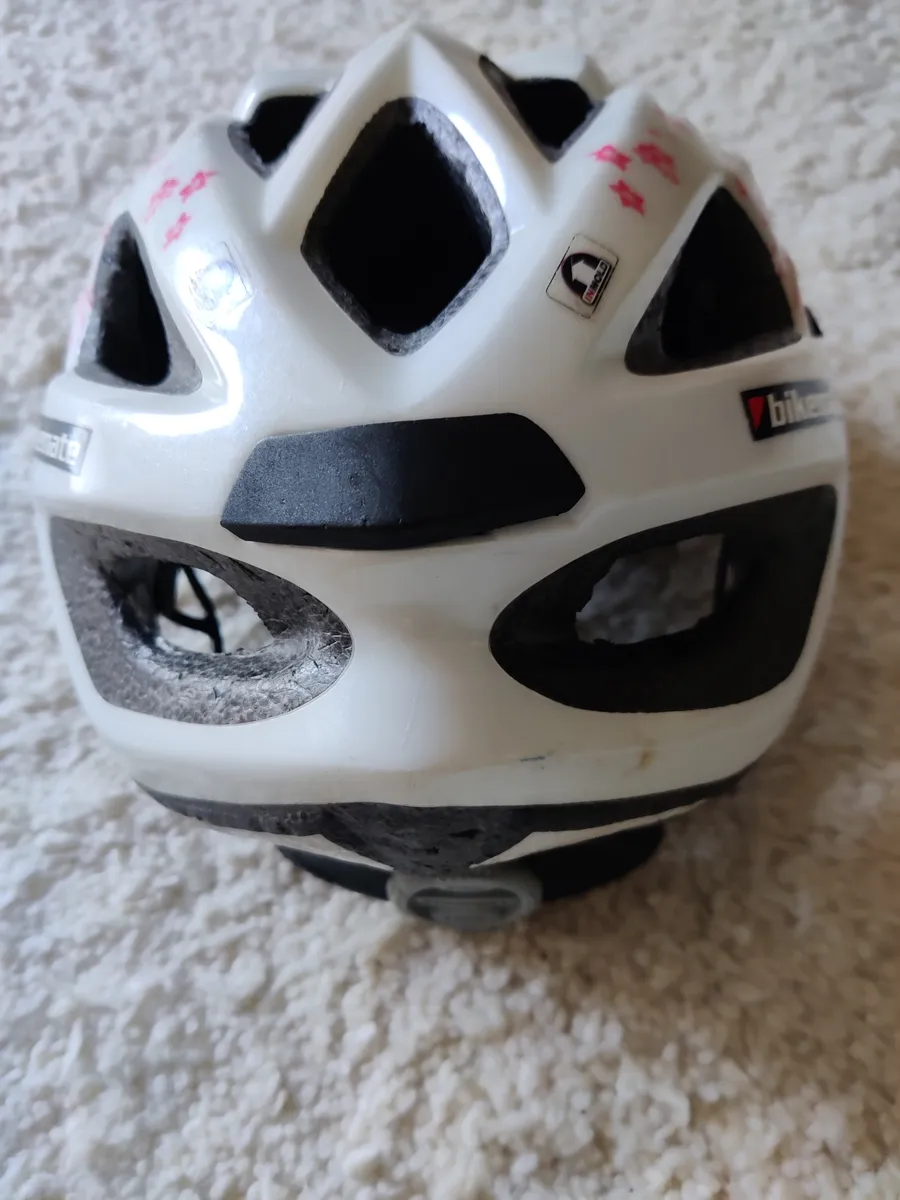
Reflective decals on the rear help when headlights catch them. An integrated light is convenient and usually less bright than a dedicated one; treat it as a supplement to bike lights, not a replacement. Do not fit anything rigid to the outside of a helmet with adhesive that could catch and twist in a crash — use the manufacturer's mount if there is one.
Replacement, care, and storage
Replace a helmet after any impact, even one that leaves no visible mark, and even if you were not wearing it — a helmet dropped hard onto concrete from head height can crush foam. This is the most important maintenance rule and the most commonly ignored.
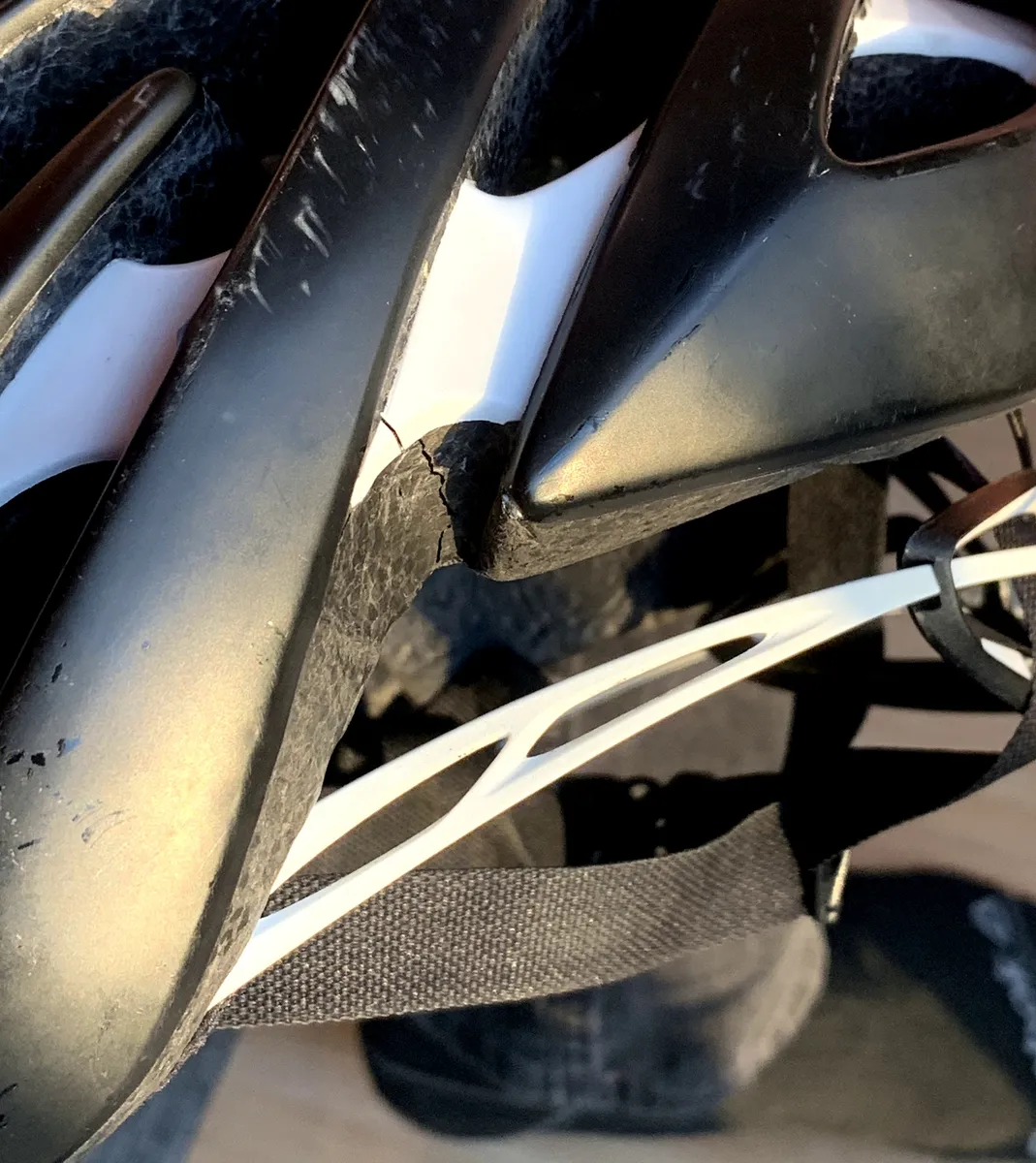
Absent a crash, most manufacturers recommend replacement every three to five years. Foam and shell adhesives degrade with ultraviolet light, heat, and sweat, and straps and cradles wear. That interval is conservative, and a helmet stored indoors and used lightly will outlast it, but a helmet left on a sunny windowsill or in a hot car boot degrades much faster than one kept in a cupboard.
Care is simple. Wash the pads and straps in mild soapy water by hand and air dry; sweat salts degrade webbing over time. Clean the shell with water only — solvents and strong cleaners attack both polycarbonate and the foam beneath. Do not paint or apply stickers with aggressive adhesives, since the solvents can weaken the foam. Store the helmet somewhere cool, and do not hang it by the straps in a way that stretches them.
Children's helmets
Children need helmets sized to their heads, not helmets they will grow into. A loose helmet slides back and exposes the forehead, which defeats the purpose. Measure and buy for now, and expect to replace as they grow.
Look for a rounder shell with good rear coverage, a pinch-guard buckle so the strap does not catch skin, and light weight, since a child's neck is proportionally weaker. Avoid helmets with a hard protruding peak on very young children, and avoid any helmet worn with a hood or hat underneath, which prevents proper fit. For the smallest riders learning balance, the wooden balance bike review covers the bike side.
Get children into the habit of the two-finger check — helmet level, two fingers above the eyebrows, one finger under the chin strap — and it becomes automatic.
Matching it to your riding
Daily urban commuting: an urban helmet with moderate ventilation, rotational protection, an integrated or well-mounted rear light, and a fit you can adjust with gloves on. Pair it with a serious lock rather than a cheap cable — see the mini U-lock review.
Longer road rides: a well-ventilated road helmet with internal channelling and MIPS or equivalent, at whatever weight your budget reaches without compromising fit.
Trails and technical riding: a mountain helmet with extended rear and temple coverage and a fixed peak. Consider full-face for downhill.
Folding bike and mixed transport: a helmet you can carry easily, possibly a folding model, since a helmet left at home protects nobody. The Brompton C Line review covers that style of commute.
The short version
Every certified helmet passes the same test, so fit is the whole safety decision: measure your head, buy the brand whose shape suits you, set it level two fingers above the eyebrows, and tighten the cradle until it stays put with the straps undone. Take MIPS or an equivalent when it comes in a helmet that fits, and never at the expense of fit. Choose the type by where you ride, not by what looks fast. Replace after any impact, keep it out of hot cars and sunlight, and never buy one second-hand.
More coupon shopping advice

Home Security Camera Buying Guide: Local vs. Cloud Storage
A practical, balanced buying guide to home security cameras that weighs local storage against cloud subscriptions, wired versus battery power, camera placement, night vision, smart detection accuracy, and smart home integration.

Beginner Mirrorless Camera Buying Guide
A practical, honest walkthrough of what actually matters when buying your first mirrorless camera, from sensor size and lens mounts to autofocus, video specs, and the real total cost of a beginner-friendly system.

Air Purifier Buying Guide: CADR, ACH, and Filter Costs Explained
A practical walkthrough of the numbers that actually matter when buying an air purifier — CADR and ACH for sizing, true HEPA versus marketing terms, real three-year filter costs, realistic noise levels, and when a purifier won't help at all.