
Brompton C Line Review: Four Months, 600 Miles and 250 Folds
A 14-second fold into a block that stands up on its own is genuinely class-leading — but it weighs 12.6 kg, rides harsher than a $600 hybrid, and eats tyres at twice the rate.
- Consistent 14-16 second fold, 12-14 second unfold after a week of practice
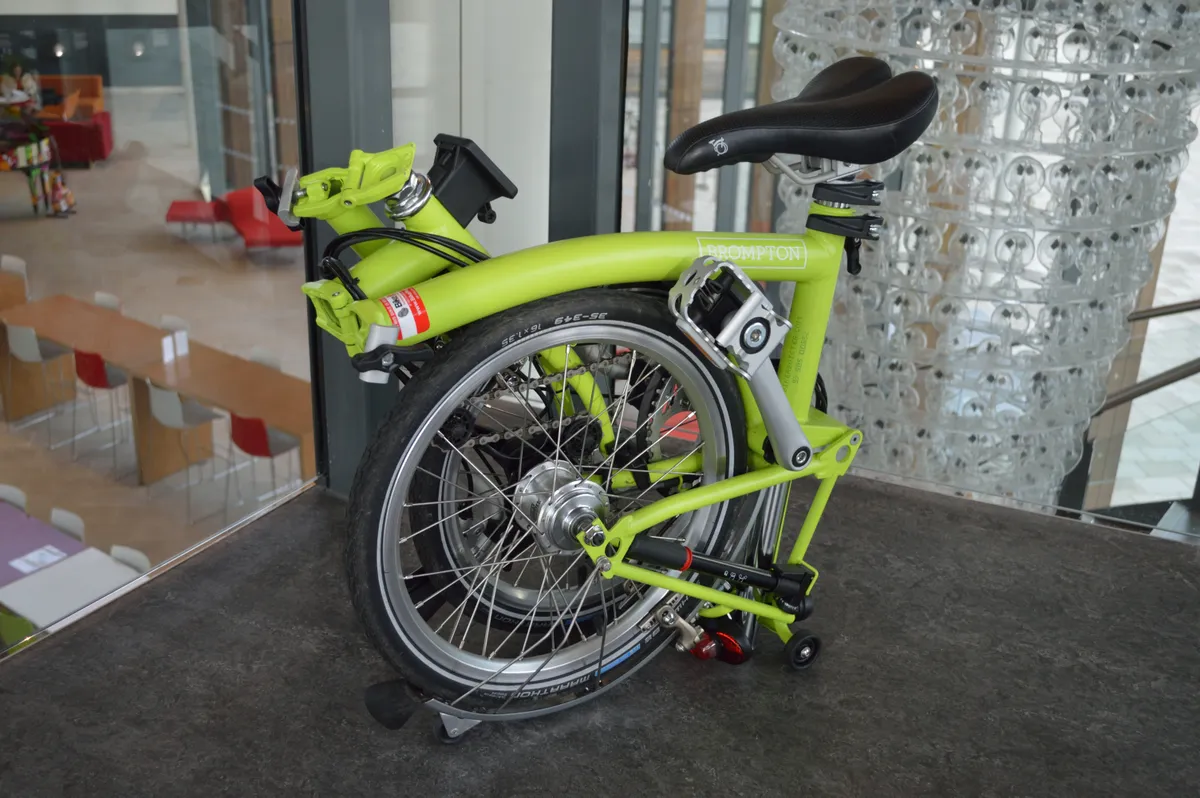
- Folds to roughly 585 x 565 x 270 mm and stands upright unaided
- Chain and both wheels tuck inside the fold — nothing greasy touches you
- Front carrier block puts bag weight on the frame, leaving steering unaffected
- Counts as luggage on essentially every train, with no fee or peak restriction
- 250 folds produced no measurable wear on the hinge faces
- 12.6 kg as tested — a genuine task on stairs twice a day
- 16-inch wheels wore the rear tyre square in 600 miles
- Averaged 2-3 km/h slower than a conventional hybrid on the same route
- Six-speed range runs out on steep climbs
- Folding pedal developed play at month three
- Seatpost has no height markings, so saddle height is set by feel every unfold
- Proprietary parts and bags; many shops have never serviced one
A Brompton costs more than most people's first car did and folds into something the size of a large suitcase. I rode a C Line six-speed for four months as an actual commuting vehicle — roughly 600 miles, about 250 folds, two train journeys a week, and a stretch of genuinely bad November weather. This is not a review about whether folding bikes are clever. It's about whether the fold justifies a $1,650 bike that rides worse than a $600 conventional one.
The answer depends almost entirely on how many times a day you have to carry it up stairs, and that turns out to be a more precise buying criterion than anything on the spec sheet.
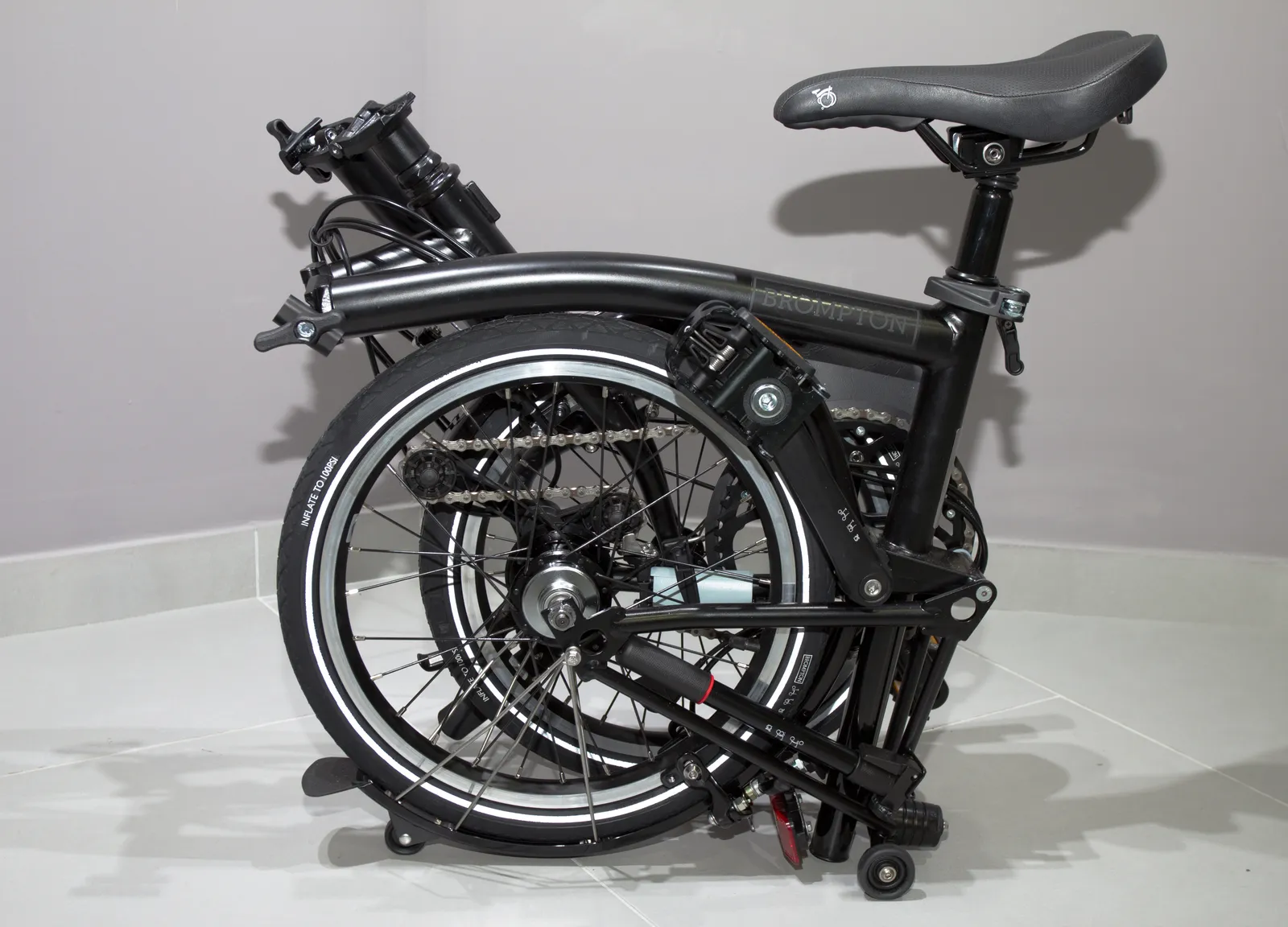
The fold, timed
This is the thing Brompton does better than anyone, and the numbers make the case. After about a week of practice, my consistent fold time was 14 to 16 seconds and my unfold was 12 to 14. By month two I could do it without looking, one-handed on the last stage, standing in a train vestibule.
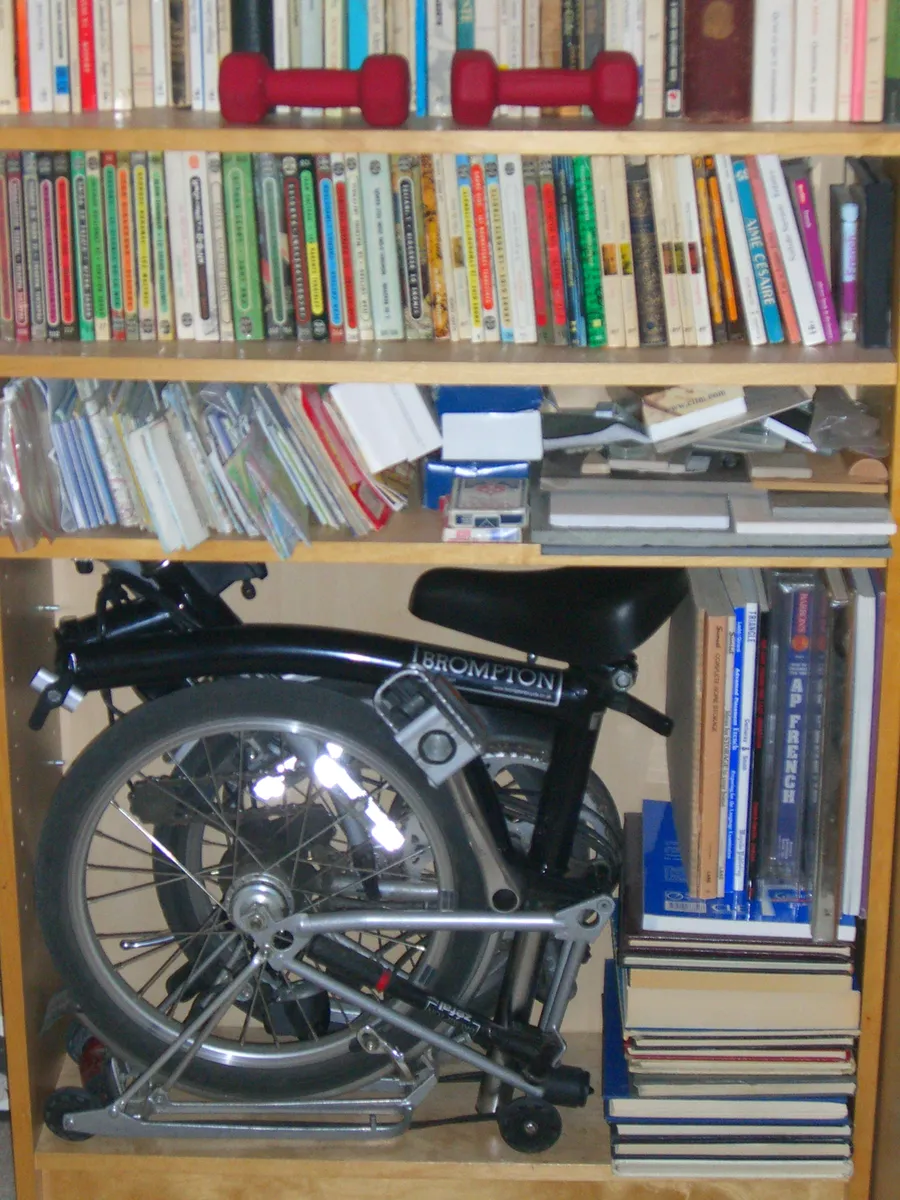
Folded, the package measures roughly 585 x 565 x 270 mm. That is a genuinely different category from most folding bikes, which fold into a flat awkward shape roughly twice the volume. The Brompton folds into a compact block that stands upright on its own, with the chain and both wheels tucked inside so nothing greasy touches your leg or the train seat.
The standing-upright part is underrated. It means you can park it beside a café table, in an office corner, or in a train luggage rack without leaning it against anything. Over four months this changed where I could take a bike more than any other single feature.
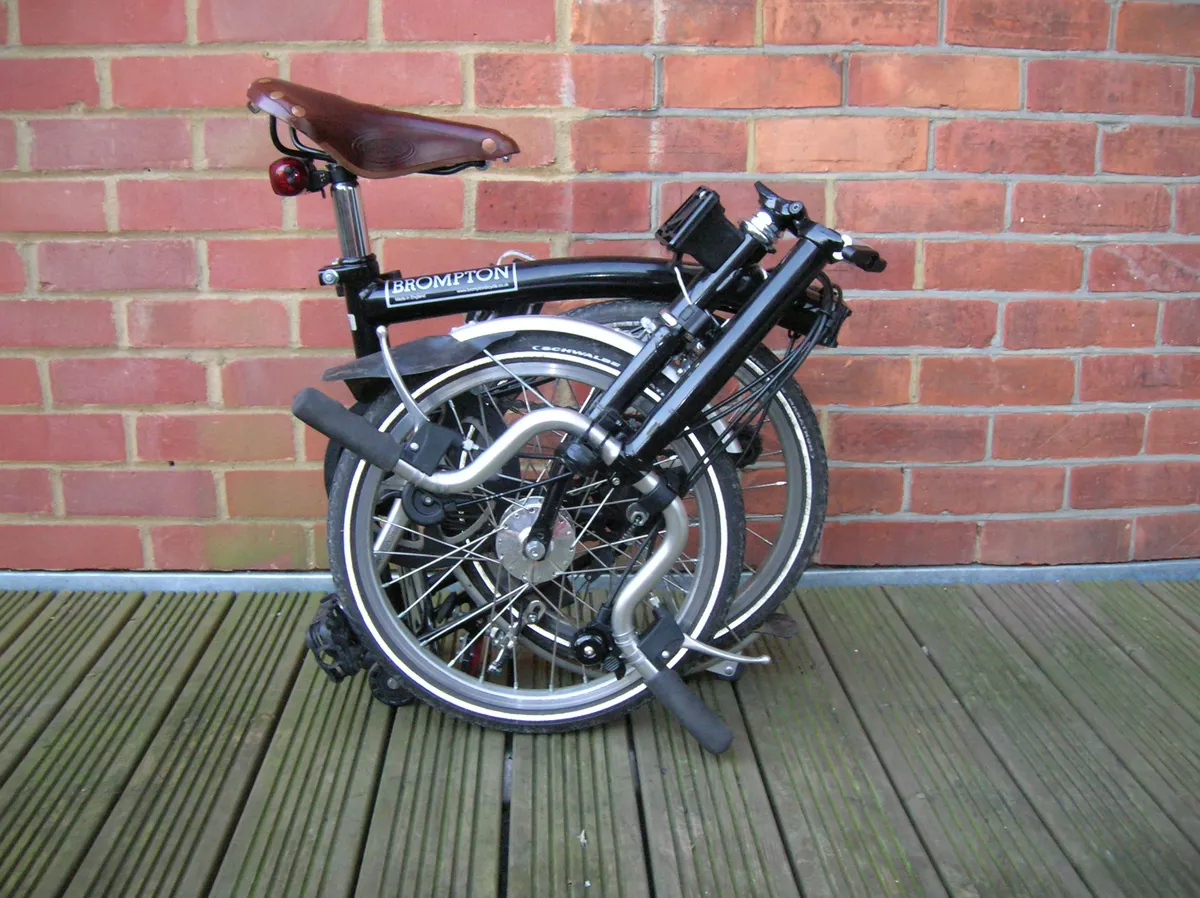
The weight, honestly
My C Line Explore with mudguards and a rear rack weighs 12.6 kg on a luggage scale. That is not light. Carrying it up a flight of 20 stairs is a real task, and doing it twice a day, every day, is the thing that separates people who love these from people who sell them at nine months.
The saving grace is the rolling behaviour. Folded, the bike rolls on its two small rear "easy wheels" like a wheeled suitcase, and on flat ground — station concourses, office corridors, supermarket aisles — you barely lift it. The problem is exclusively stairs and escalators.
The titanium T Line drops to around 7.5 kg and costs roughly double. Having lifted both, the difference is substantial and so is the price. If your commute has stairs at both ends, that upgrade is worth taking seriously rather than dismissing.
How it rides
Better than it looks and worse than a proper bike. The 16-inch wheels make the steering fast — twitchy for the first few rides, then normal — and transmit road texture directly. Potholes that a 700c wheel rolls over are events on a Brompton, and after four months I know the location of every bad drain cover on my route.
The riding position is upright and comfortable, and the rear suspension block takes the sharpest edge off. Over 600 miles I had no back or wrist complaints, which surprised me.
Speed is the honest weak point. On flat ground I average around 2-3 km/h slower than on a conventional hybrid over the same route, and the gap widens with distance. The six-speed range is adequate for moderate hills and runs out on anything steep — I walked one 12% climb that I'd have ridden on a geared road bike. For commutes under about 10 km this is irrelevant. Beyond that, you feel it.
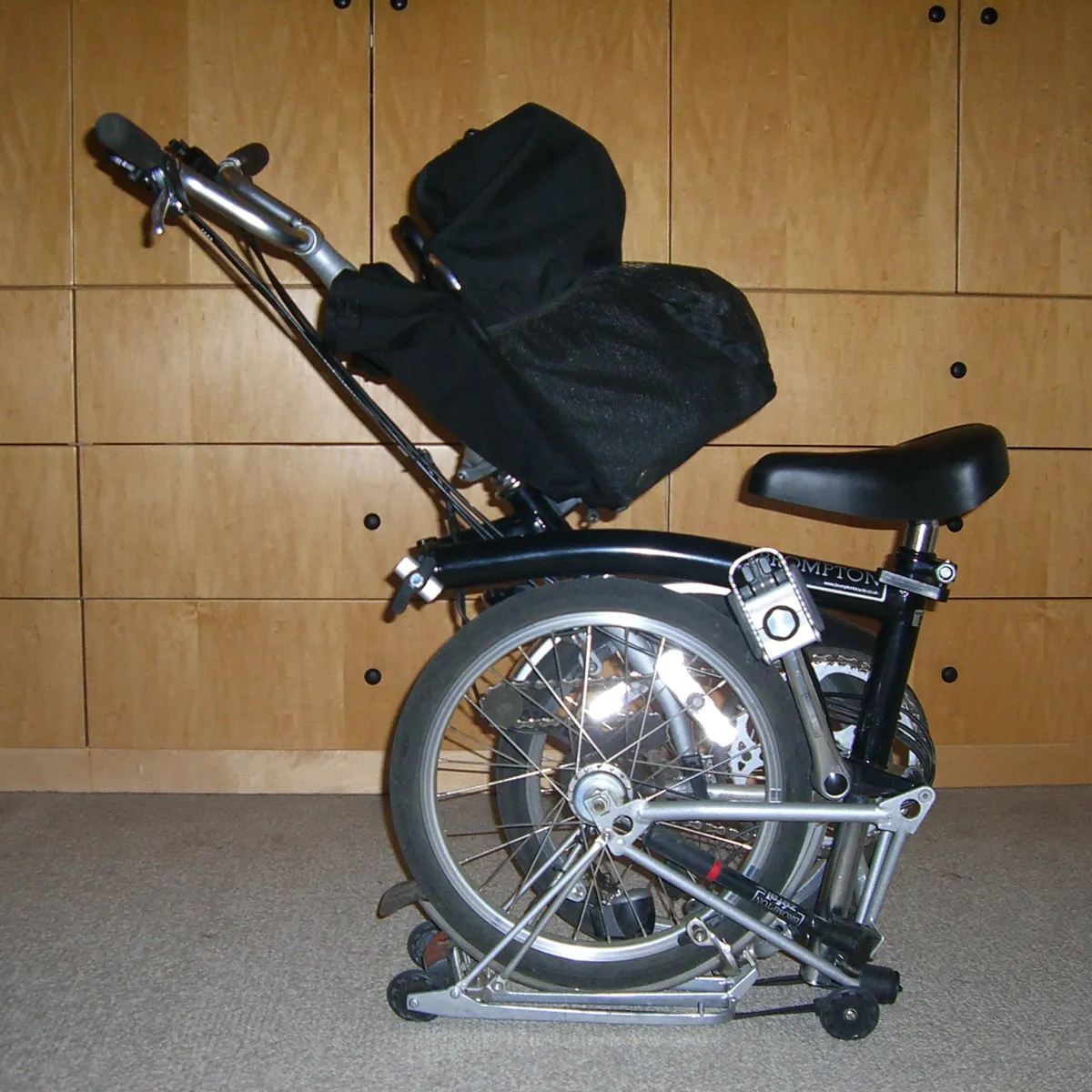
The front luggage system is quietly excellent
Bags mount to a block on the head tube rather than the handlebars, which means the weight is carried by the frame and the steering stays neutral even with a heavy load. I regularly carried a laptop, lunch and a change of clothes in a front bag and the handling was essentially unchanged.
This is a meaningfully better system than a conventional handlebar bag and it is proprietary — Brompton bags only, or third-party bags with a Brompton-compatible mount. Budget $130-200 for a good one, and treat it as part of the purchase rather than an accessory.
Four months of maintenance
The consumables wear faster than on a full-size bike, and the reason is geometry: a 16-inch wheel rotates roughly twice as often per mile as a 700c wheel. My rear tyre showed clear squaring-off at 600 miles, where I'd expect 1,500-2,000 from an equivalent full-size tyre. Brake pads are on a similar accelerated cycle.
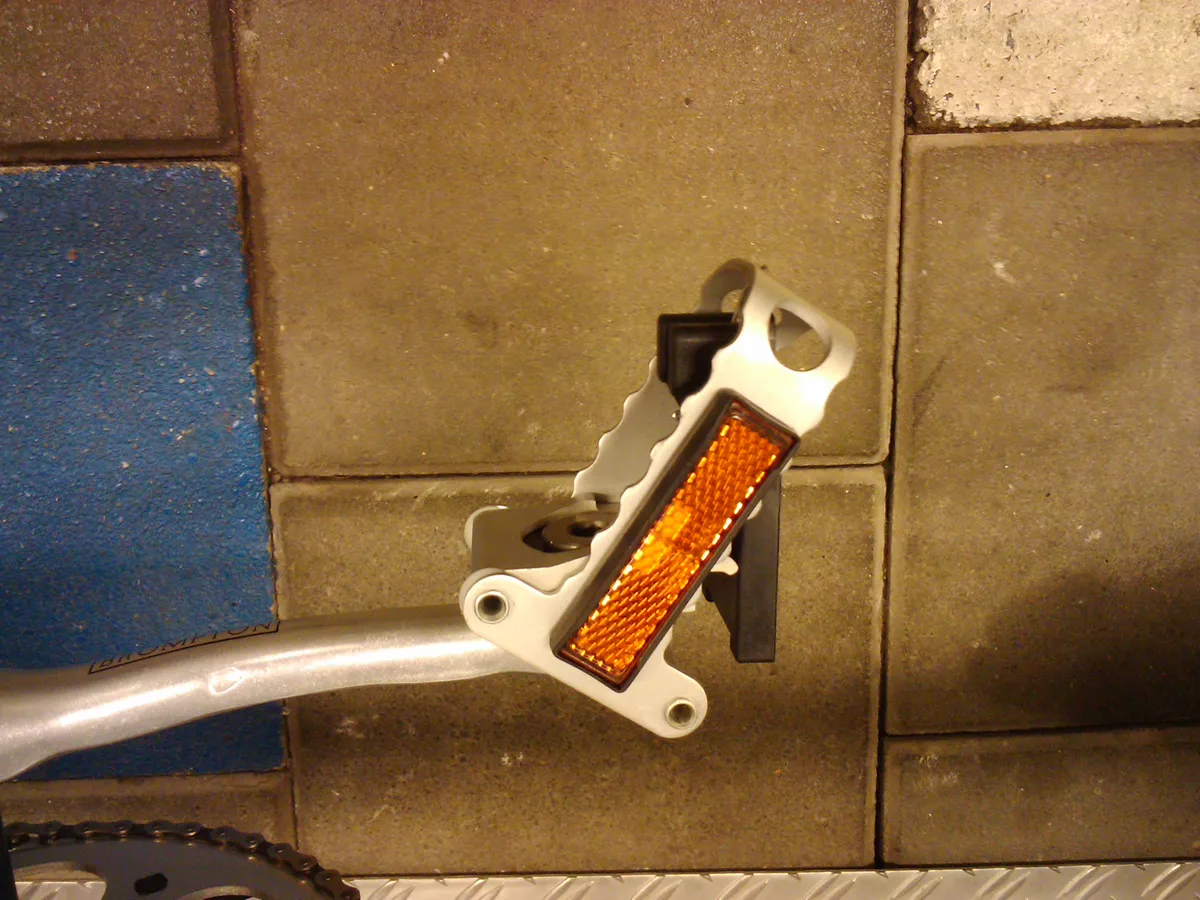
The folding pedal on the left side is a wear item and a known one — mine developed slight play at month three. It is a $40 part and a five-minute job, and it is worth checking periodically because the failure mode is the pedal folding while you're pushing on it.
The hinges need occasional attention. Both the frame and stem hinge clamps have adjustable tension, and mine loosened enough to produce a faint creak at around month two. Tightening took two minutes with the supplied tool. Ignoring it would eventually mean play in the frame, which is the one thing you don't want on a bike that folds in half.
Beyond that: nothing. The internal hub gear needed no attention, the chain has stretched normally, and 250 folds have produced no visible wear on the hinge faces.
Trains, offices and the actual use case
This is where the money goes. Folded, the bike counts as luggage on essentially every UK and European train operator, with no reservation, no peak restriction and no fee — restrictions that apply to full-size bikes constantly. Over four months that saved me perhaps a dozen journeys I simply couldn't have made otherwise.
In the office it lives under a desk. In a flat it goes in a cupboard. In a car boot it leaves room for the shopping. The theft picture also changes fundamentally: a bike that comes indoors with you does not need a $120 lock or a prayer, and after four months I have never locked it outside.
What annoys
The saddle height is set by a single seatpost clamp with no markings, so every unfold requires setting it by feel. A $5 rubber ring or a strip of tape solves this and it's absurd that it isn't done at the factory.
The rear frame clip that holds the bike in its half-folded state is fiddly and I miss it about one time in five, which means the rear wheel swings out at the wrong moment.
And parts are expensive and largely proprietary. A replacement tyre is fine; a replacement hinge clamp plate, seatpost or front carrier block is Brompton-only and priced accordingly. Servicing at a non-specialist shop is possible but many mechanics have never worked on one.
Bad weather, and what the mudguards are worth
November was the useful part of the test. Small wheels throw a lot of road spray, and the C Line Explore's full mudguards with rear flap kept my back and legs dry through weeks of wet commuting — genuinely better coverage than the stubby clip-on guards on most hybrids. Buying the version without mudguards to save weight would be a mistake for a year-round commuter.
Wet-weather braking is the weaker half. The rim brakes on the C Line lose noticeable bite in the first second of a wet stop, and with small wheels and a short wheelbase that first second matters. I adjusted by braking earlier rather than harder, and had no incidents, but a disc-braked bike is plainly better here.
The folded bike also brings water indoors. Because the wheels tuck inside the fold, a wet Brompton drips onto whatever it's standing on, and I now keep a folded towel by the office door. Small thing, four months of noticing it.
Against the alternatives
Against a $500-700 folding bike from a mainstream brand, the Brompton folds smaller, faster and into a shape that stands up, and rides about the same. If your bike lives in a car boot and folds twice a week, the cheaper bike is the sensible purchase and the Brompton is an indulgence.
Against a conventional hybrid at half the price, the Brompton is slower, harsher and needs more frequent consumables. It also goes on trains, under desks and into cupboards, which the hybrid does not.
The clearest way to think about it: you are not buying a bicycle, you are buying the ability to end a bike journey anywhere without solving a parking problem. Price that against a few hundred dollars a year of train and parking costs and it looks different.
Who should buy this
Buy it if your commute is multi-modal, if you have nowhere secure to leave a bike, if you live somewhere with no storage, or if the alternative to riding is not riding at all. Buy it if you fold more than twice a day, because that is where the engineering earns its price.
Skip it if your rides are regularly over 15 km or hilly, if you fold occasionally and store it in a garage, or if you'll be carrying it up stairs constantly and can't stretch to the lighter titanium model. And skip it if $1,650 for a bike with 16-inch wheels feels absurd to you, because four months of ownership will not change that feeling.
Verdict
Four months, 600 miles and 250 folds in, the Brompton has done something no other bike I've owned managed: it removed every reason not to ride. The fold is genuinely a class apart, the front luggage system is excellent, and nothing has broken beyond a pedal developing play. Against that, it's 12.6 kg, it's slower and harsher than a conventional bike, it eats tyres at twice the rate, parts are proprietary and expensive, and the price is hard to defend on cycling merit alone. Buy it for the fold, not for the ride, and count your stairs first.
Other products we tested
Ecobee Smart Thermostat Premium Review: Two Months of Real HVAC Testing
We installed the Ecobee Smart Thermostat Premium without a C-wire, tracked its temperature accuracy against a separate thermometer, and measured real energy savings over two months of daily HVAC use.
Bose SoundLink Flex Review: Six Weeks of Hiking, Kayaking, and Beach Days
Six weeks of camping, kayaking, and beach trips show the Bose SoundLink Flex's IP67 rating and PositionIQ orientation sensing are genuinely useful, with honest limits on bass and max volume.
Coros Pace 3 Review: Six Weeks Testing the GPS Watch That Barely Needs Charging
A dual-frequency GPS running watch that trades AMOLED shine for weeks of battery life at a fraction of the price of flagship rivals.