
Gold-Rated Mini U-Lock Review: Eight Months of City Commuting
Mechanically flawless across roughly 320 cycles through a salted winter — but 1.15 kg to carry, a frame mount that rattled loose, and a shackle that won't fit a lamppost.
- Disc-detainer cylinder never jammed across roughly 320 cycles through a salted winter
- 83 x 165 mm shackle leaves little room for jack or pole leverage attacks
- 13 mm hardened steel resists bolt cutters that defeat thinner shackles
- Independently Gold / 3-star rated, which is what insurers actually ask for
- Small enough to carry in a pannier without dominating the bag
- 1.15 kg is a real weight to carry every day
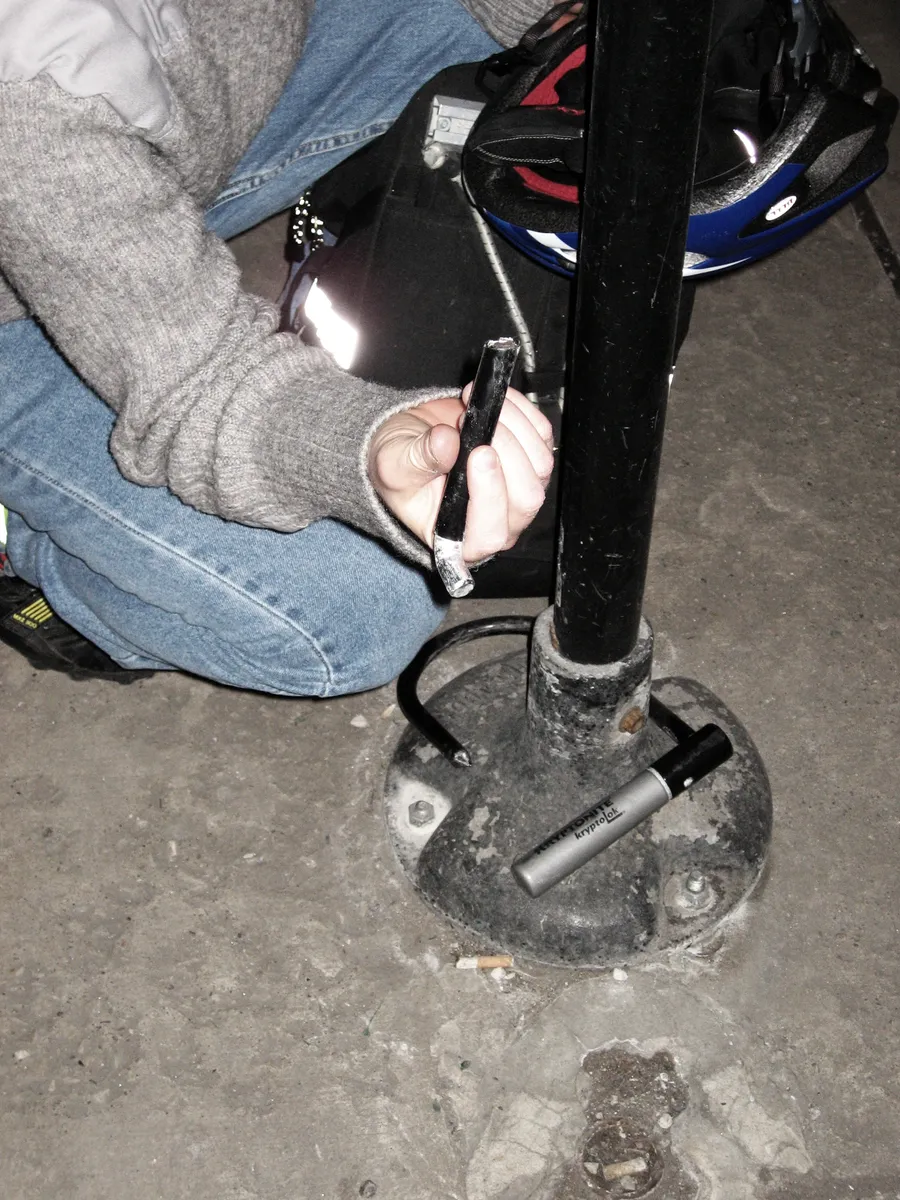
- Included plastic frame mount rattled, loosened monthly and dropped the lock once
- Vinyl coating worn through to bare steel in two places within eight months
- Surface rust appeared on exposed steel and the crossbar
- Small shackle will not fit lampposts, tree trunks or wide railings
- No lock at any price resists an angle grinder for long
I locked a bike in a city centre every working day for eight months with a hardened steel U-lock, and the bike is still there. That is the entire performance data any lock review can honestly offer about theft, and it is worth saying up front, because a lock review cannot tell you whether a lock is secure — only whether it is usable, well made, and rated by people who test it destructively.
So this review covers three things: what the independent security ratings actually mean, how a mini-size U-lock behaves in daily use, and what I got wrong about locking technique for the first month.
Read the rating, not the marketing
Every lock brand describes its products as high security. The only claims worth anything come from independent destructive testing, and there are two systems you'll see.
Sold Secure (UK) rates locks Bronze, Silver, Gold and Diamond based on how long they resist a defined toolkit. ART (Netherlands) uses stars, 1 to 5. Many insurers and workplace bike parking schemes require a specific level, and this is worth checking before buying rather than after a claim is refused.
The rough practical translation: a Bronze or 1-star lock resists opportunistic hand tools and little else. Silver or 2-star is appropriate for short daytime stops in low-risk areas. Gold or 3-star and above is what you want for an expensive bike left in a city, and Diamond is motorcycle territory.
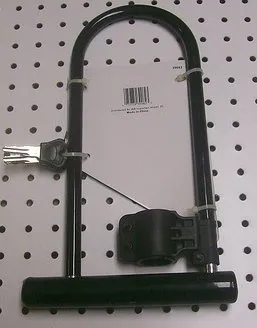
Mine is a Gold-rated mini U-lock with a 13 mm hardened steel shackle. If your lock has no independent rating printed on it or in its specification, that absence is itself the most useful piece of information available.
Why mini size, and the trade it makes
My shackle's internal space is roughly 83 x 165 mm — small. The security logic is straightforward: less internal space means less room to insert a bottle jack, a length of scaffolding pole or long-handled bolt cutters, and leverage attacks are among the most effective against U-locks. A smaller shackle is genuinely harder to attack.
The cost is what you can lock to. A mini U-lock will not go around a thick lamppost, most tree trunks, or a wide railing. Over eight months I have walked away from perhaps a dozen parking spots because the lock physically would not fit, and twice ended up locking to something I was less happy with because it was the only thing the shackle closed around.
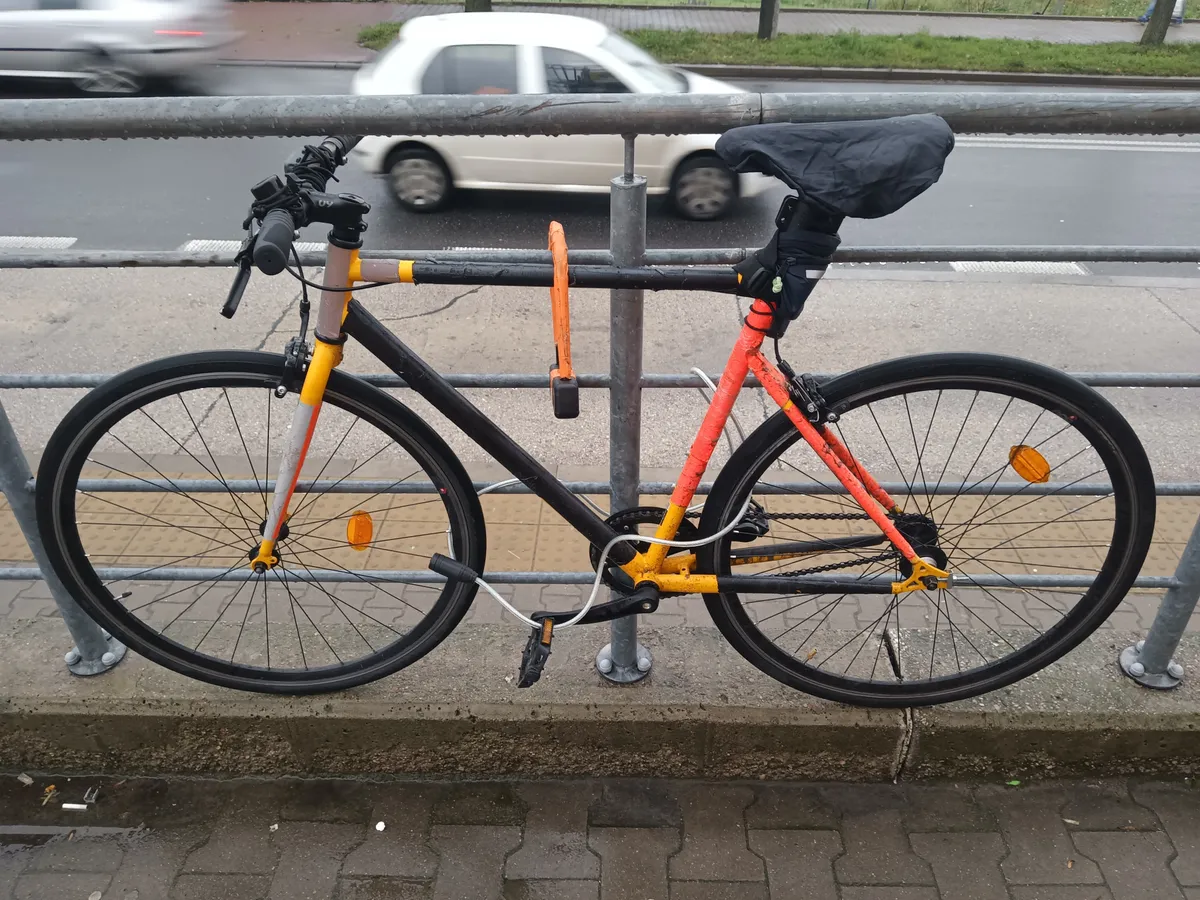
A standard-size U-lock fits far more objects and gives a thief more room to work. Having lived with the mini, I think it's the right choice for a city where bike racks are common, and the wrong choice for anywhere you'll be improvising anchor points.
The locking technique I got wrong
For the first month I locked the front wheel and the frame to the rack, which is the instinct because the front wheel is nearest. That is precisely wrong. A front wheel is held by a quick release or two nuts and can be removed in seconds, leaving the thief with the entire bike minus one wheel.
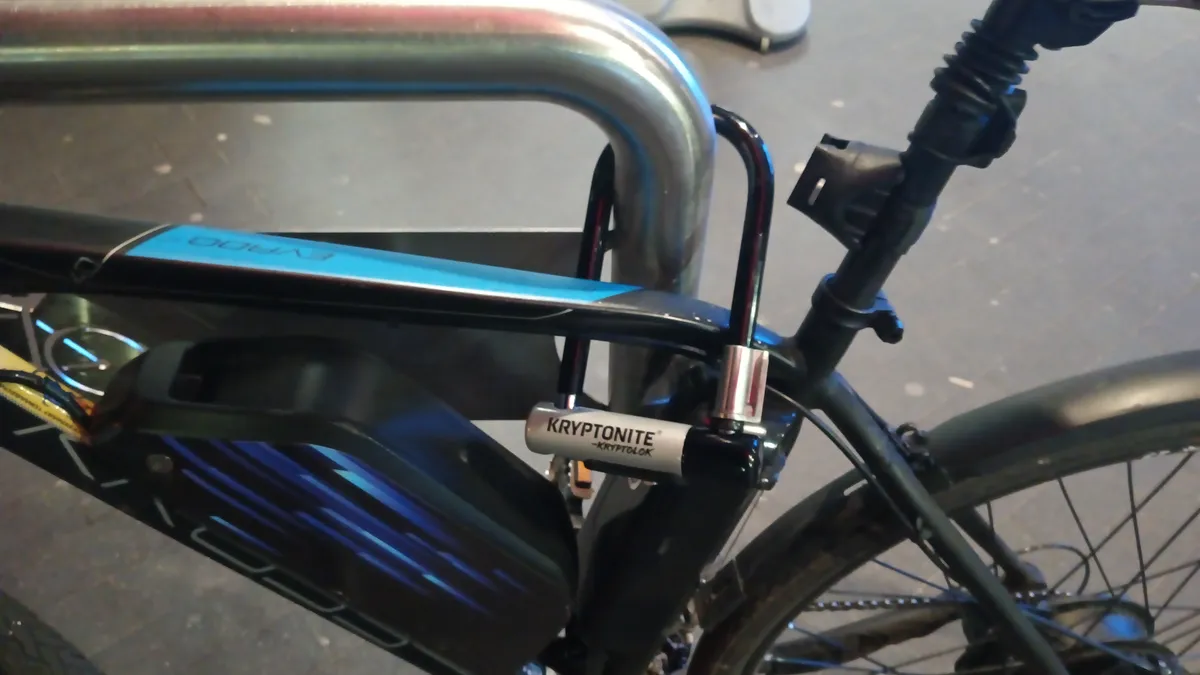
The correct approach with one U-lock: shackle through the rear wheel, inside the rear triangle of the frame, and around the immovable object. That single placement captures the frame and the rear wheel — the two expensive parts — because the rear wheel cannot pass out of the frame while the shackle is inside the triangle.
Then remove or secure the front wheel. I use a supplementary cable through the front wheel and the shackle, which stops a casual walk-off but would not survive thirty seconds with cutters. A better answer is locking skewers, about $40, which replace your quick releases with keyed or hex fittings.
Other things that took me too long to work out: fill the shackle. A lock with lots of empty space inside gives room for tools; positioning the bike so the shackle is packed reduces that. Keep the keyway facing down or sideways rather than up, so it can't be filled with rain or picking debris as easily. And lock to something that cannot be lifted over — a signpost with nothing on top is not an anchor.
Eight months of daily use
The mechanism has been completely reliable. The disc-detainer cylinder has never jammed, never needed lubricating, and turns identically to day one after roughly 320 lock-and-unlock cycles through a winter of rain, road salt and frost.
The vinyl coating on the shackle has worn through in two places where it contacts the bike frame, exposing bare steel. That's cosmetic on the lock and the more relevant point is that a worn coating will start marking your paint — I keep a strip of old inner tube around the contact point now.
Surface rust has appeared on the exposed steel and on the crossbar. Not structural, but a lock left outdoors permanently would deteriorate faster than one that comes indoors. Mine travels with me.
Weight, carrying, and the mount
The lock weighs 1.15 kg on my scale. That is a real number to carry on a bike and it goes somewhere, which becomes the practical problem.
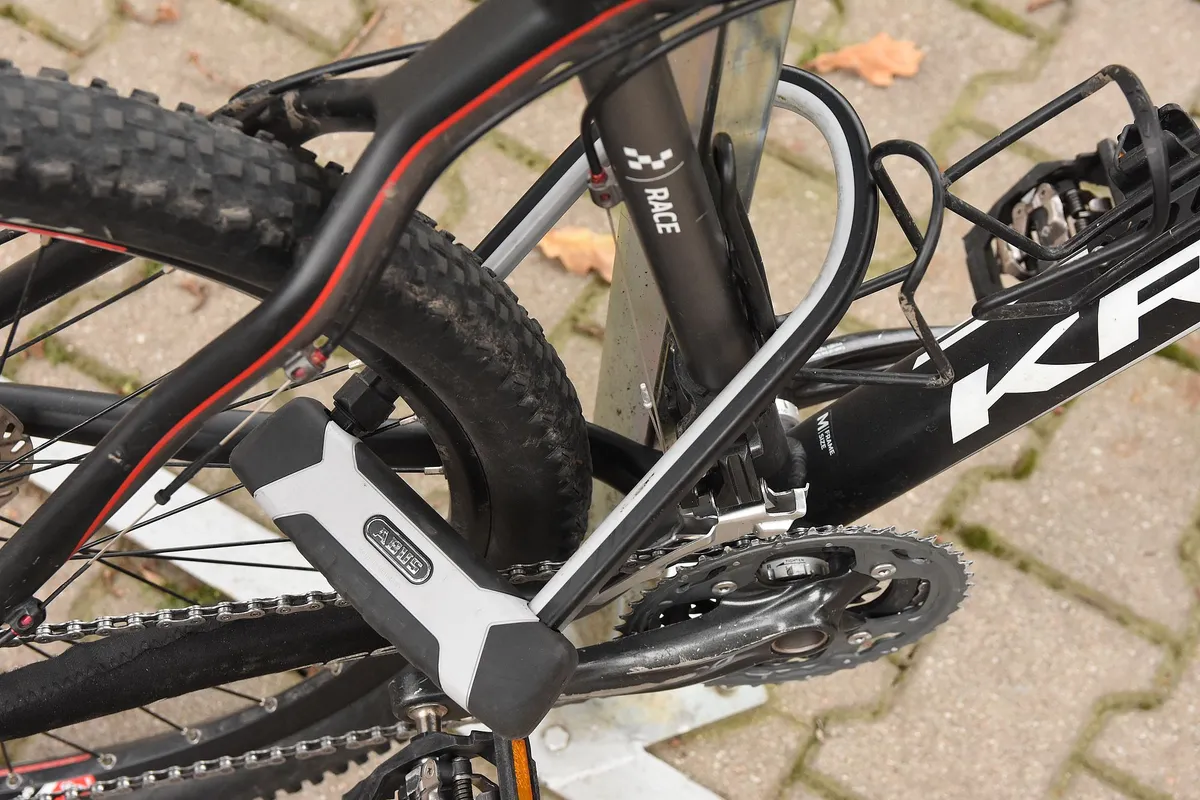
The included frame mount is a plastic bracket that clamps to the frame tube. Mine rattled from the first week, needed re-tightening monthly, and the lock came out of it once over a kerb. That's a common complaint about bundled U-lock mounts generally, and after three months I stopped using it and started carrying the lock in a pannier, which is heavier on the bike and quieter.
Some riders carry a U-lock in a back pocket or waistband. Having tried it for a week, a 1.15 kg steel object against your lower back on a bumpy road is unpleasant and I would not recommend it.
How these locks actually fail
Worth being clear-eyed rather than reassuring. Every U-lock at every price can be defeated with the right tool and enough time. The realistic attacks are an angle grinder, which cuts a hardened 13 mm shackle in well under a minute and is loud and conspicuous, and leverage with a jack or pole, which the mini shackle largely prevents.
Bolt cutters are effective against unhardened or thin shackles and generally not against hardened 13 mm steel, which is precisely why the rating matters. Cheap cable locks are cut with hand tools in seconds and should be regarded as a deterrent against nobody with a bag.
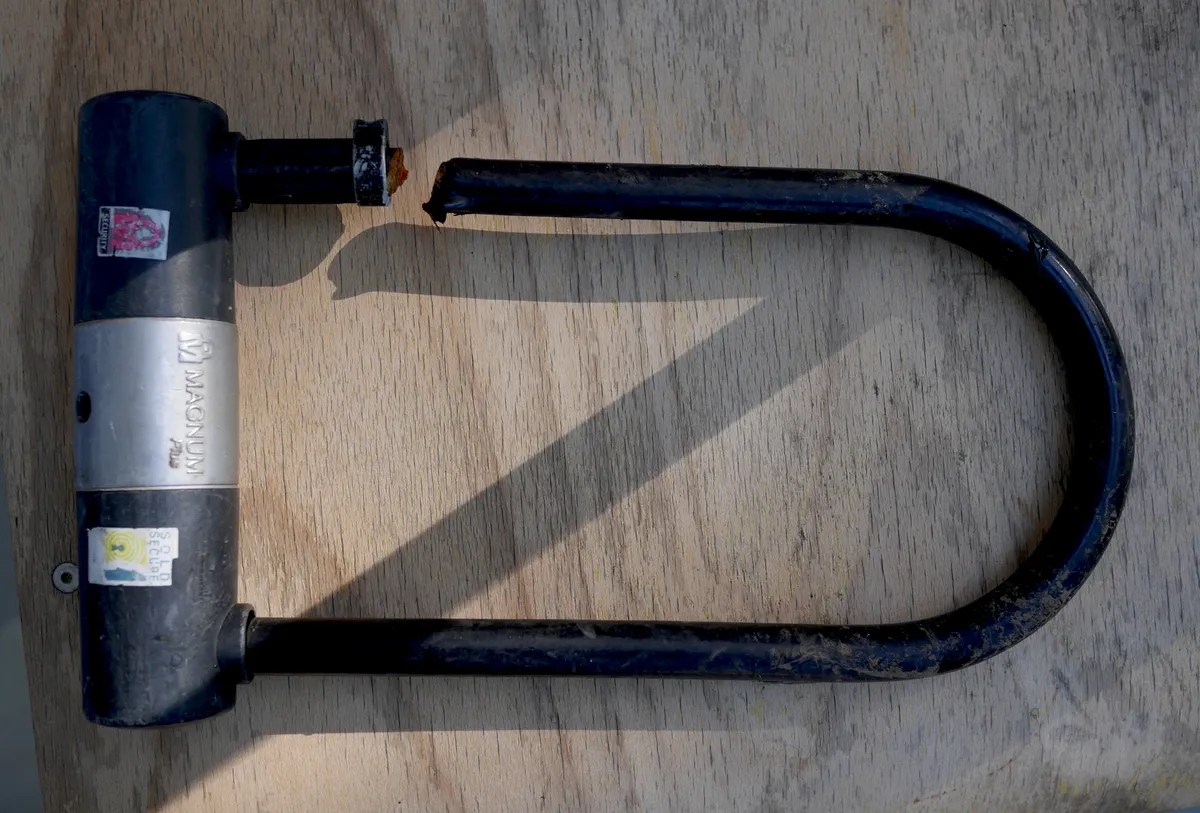
What follows from that is a strategy rather than a product: a good lock buys time and makes your bike a worse target than the one next to it. Locking in a busy, overlooked place matters as much as the lock. Two different lock types — a U-lock plus a chain or folding lock — matter more than one expensive lock, because they require two different tools. And an unattractive bike is stolen less often than an attractive one, which is the cheapest security measure available.
Insurance, registration and the boring measures
Two things worth doing that cost almost nothing. Register the frame number with a national bike register — it's the only realistic route to recovery if a bike is found, and takes ten minutes. Photograph the bike and the frame number and keep it somewhere you'll find it.
And check what your insurer requires. Several home contents policies cover bicycles only if they were secured with a specific rating of lock to an immovable object, and a Silver-rated lock on a policy requiring Gold means an unpaid claim. This is the single most concrete reason to care about the rating printed on the box.
Against the alternatives
Against a $20 cable lock, this is not a comparison. Cable locks are for stopping someone walking off with an unattended bike while you're in sight of it.
Against a $110 folding lock, the folding designs are far more convenient to carry and to fit around awkward objects, and independent testing generally rates them slightly below equivalent U-locks because they have more joints to attack. If your problem is what you can lock to, a folding lock solves it.
Against a $150 heavy chain, the chain fits around anything, weighs two to three times as much, and is what I'd use for a bike left overnight outdoors. Nobody wants to commute with one.
Who should buy this
Buy a Gold or 3-star rated mini U-lock if you park at real bike racks in a city, if your bike is worth more than a few hundred dollars, and if you'll learn to lock the rear wheel inside the frame triangle. Add locking skewers or a cable for the front wheel, and check your insurer's minimum rating first.
Buy the standard size instead if you frequently improvise anchor points. Buy a chain if the bike lives outside. And do not buy an unrated lock at any price, because the rating is the only part of the specification that has been tested by someone whose job is breaking it.
Verdict
Eight months and around 320 cycles in, this lock has been mechanically flawless — no jamming, no seizing, no key trouble through a salted winter — and the small shackle has kept the bike a harder target than the ones parked beside it. The trade-offs are real: 1.15 kg to carry, a frame mount that rattled and eventually got abandoned, a coating that has worn through onto bare steel, and a shackle that won't fit around a lamppost. A Gold-rated mini U-lock is the right default for city commuting, provided you accept that no lock is a guarantee and technique matters as much as the hardware.
Other products we tested
Ecobee Smart Thermostat Premium Review: Two Months of Real HVAC Testing
We installed the Ecobee Smart Thermostat Premium without a C-wire, tracked its temperature accuracy against a separate thermometer, and measured real energy savings over two months of daily HVAC use.
Bose SoundLink Flex Review: Six Weeks of Hiking, Kayaking, and Beach Days
Six weeks of camping, kayaking, and beach trips show the Bose SoundLink Flex's IP67 rating and PositionIQ orientation sensing are genuinely useful, with honest limits on bass and max volume.
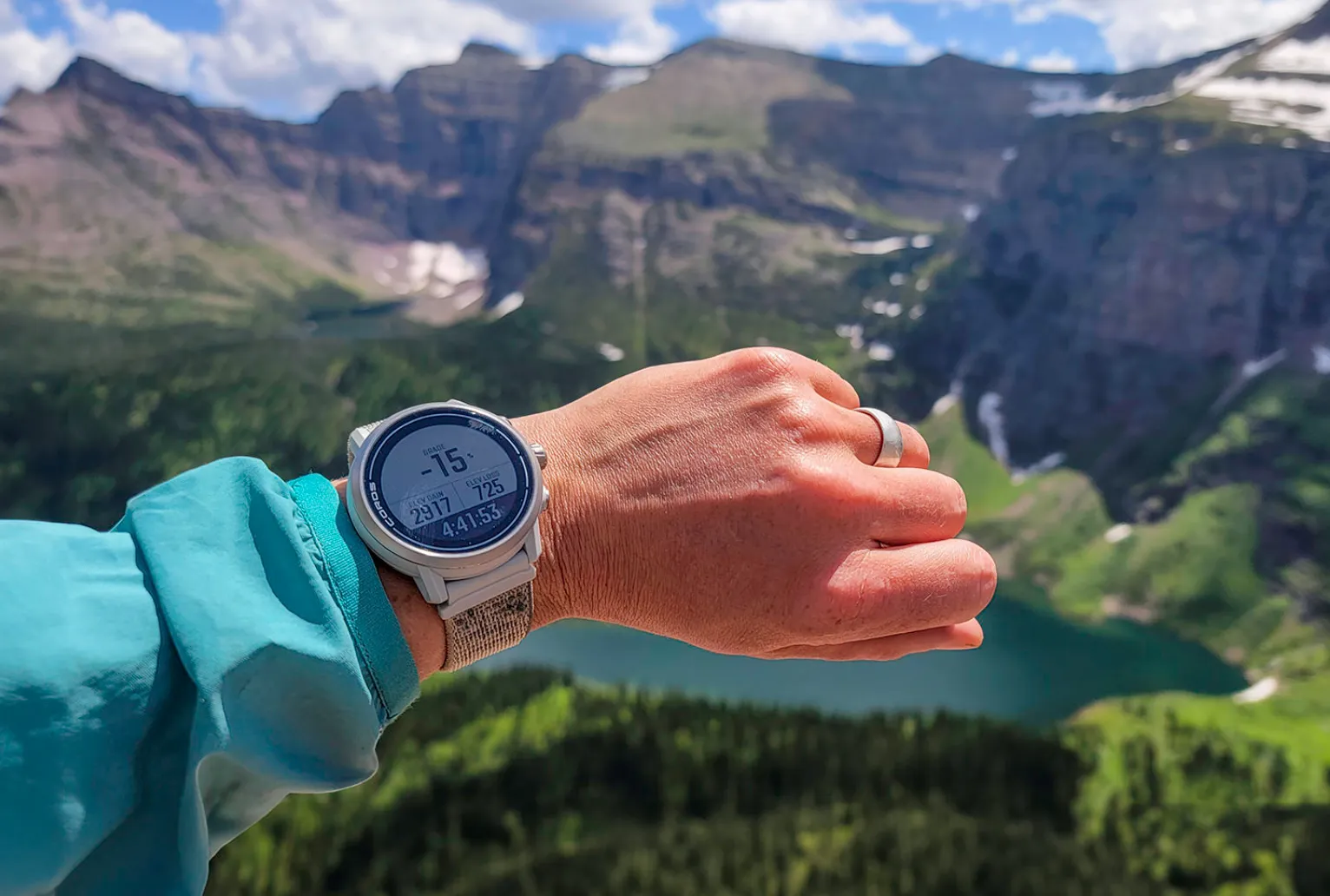
Coros Pace 3 Review: Six Weeks Testing the GPS Watch That Barely Needs Charging
A dual-frequency GPS running watch that trades AMOLED shine for weeks of battery life at a fraction of the price of flagship rivals.