
Wooden Balance Bike Review: Seven Months, Then a Pedal Bike in Three Sessions
Our child moved to a pedal bike with no training wheels in three sessions — but stepped saddle adjustment and no brake are reasons to consider a metal model instead.
- Pedal bike transition took three short sessions with no training wheels
- 3.4 kg — light enough for an adult to carry one-handed to the park
- Puncture-proof EVA foam tyres never needed inflating or repairing
- Wooden frame survived seven months of hard use including two rain exposures
- Eleven-minute assembly with the supplied Allen key
- 30 cm minimum saddle height suited a 32 cm inseam from day one
- Saddle adjusts in fixed ~3 cm increments, leaving gaps during growth spurts
- No brake at all, which became a real constraint on slopes by month six
- Foam tyres slide on wet grass and transmit every bump
- Sealed plywood raised slightly at the footrest after rain exposure
- Handlebar bolt loosened within a fortnight and needs monthly checking
- Does not fold; competes with a pushchair for boot space
A balance bike is a bicycle with no pedals, no chain and usually no brake, and the claim made for it is that a child who learns to balance first will skip training wheels entirely and ride a pedal bike within days. We bought a wooden balance bike for a two-year-old and used it for seven months, then bought a 14-inch pedal bike to test the claim directly.
The claim held up almost exactly as advertised. The bike itself, however, had one design decision I would not repeat, and there are two measurements that matter far more than brand.
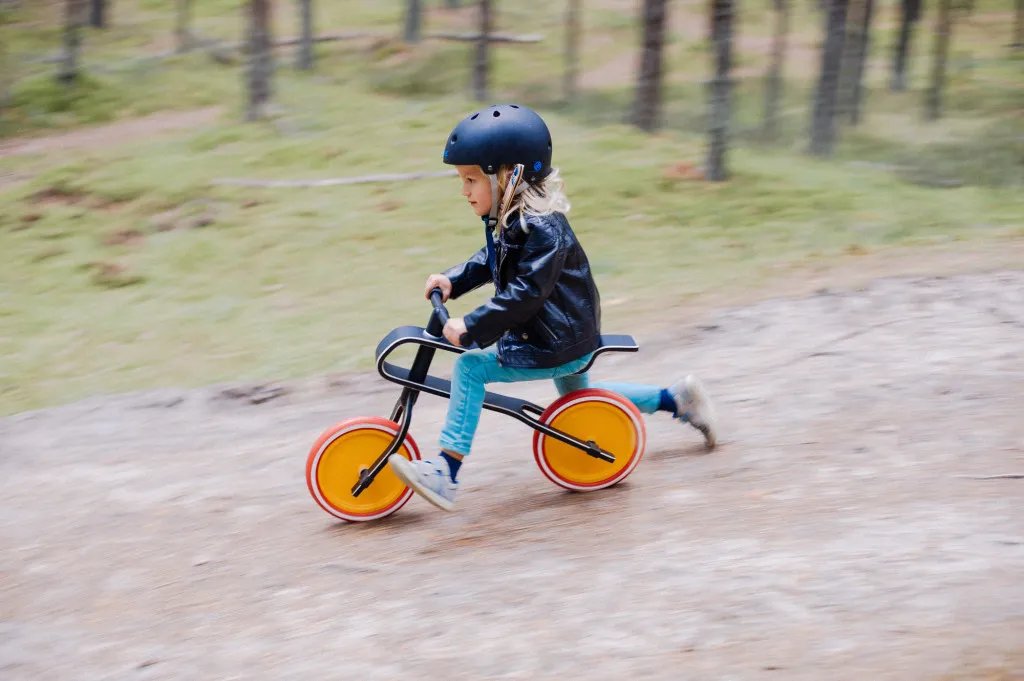
The two measurements that decide everything
Minimum saddle height must be below your child's inseam. Not their height — their inseam, measured barefoot from floor to crotch. A child needs to sit on the saddle with both feet flat on the ground, because that's how they push, stop and feel safe. Ours had a 30 cm minimum saddle height and our two-year-old's inseam was 32 cm, which worked from day one.
Get this wrong and the bike is unusable for months. A friend bought one with a 35 cm minimum for a similarly sized child and it sat in the garage until the following summer. Measure first; ignore the manufacturer's age ranges entirely, which are marketing rather than fit.
Weight should be under about 30% of the child's body weight. Ours weighs 3.4 kg on a luggage scale, against a 12 kg child — about 28%. That matters because a toddler has to lift and reposition the bike constantly, and a heavy bike gets abandoned. Steel-framed balance bikes at 5-6 kg are common and are too heavy for the youngest riders.
Seven months of actual progression
We kept notes because the progression is the whole point.
Weeks 1-3: walked while straddling the bike, never sat down. Showed no interest in the saddle. This phase is normal and lasts as long as it lasts — pushing is genuinely how it starts.
Month 2: sitting and walking, feet flat, slow. Steering deliberately around obstacles.
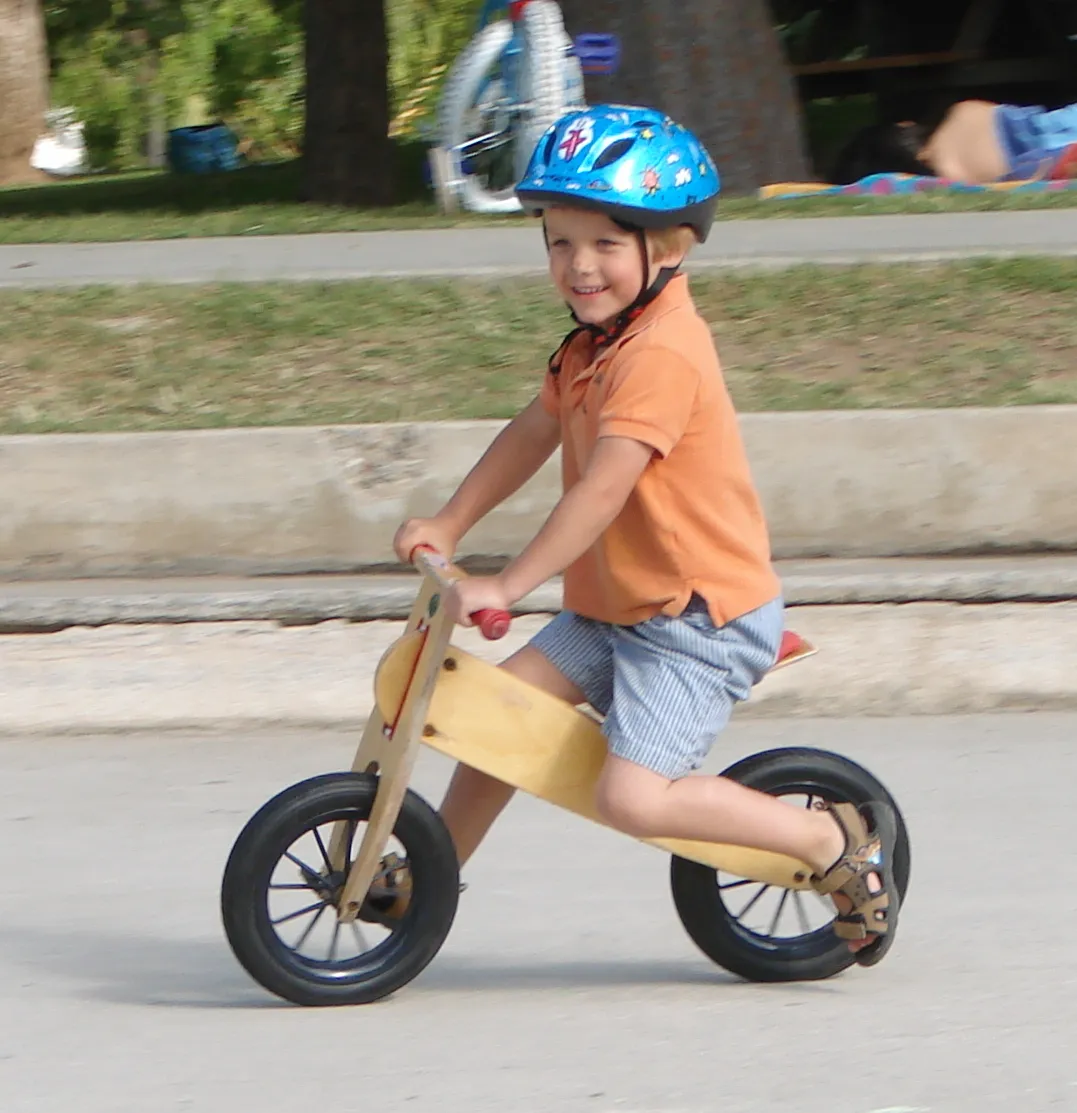
Month 4: running strides, then lifting both feet for a metre or two at a time on a gentle slope. This is the moment balance actually arrives, and it happened over about a week rather than gradually.
Month 7: gliding confidently for 15-20 metres, feet up on the footrest area, steering into turns while coasting, going down a shallow grass slope on purpose. At this point the bike had stopped being a learning tool and become a toy.
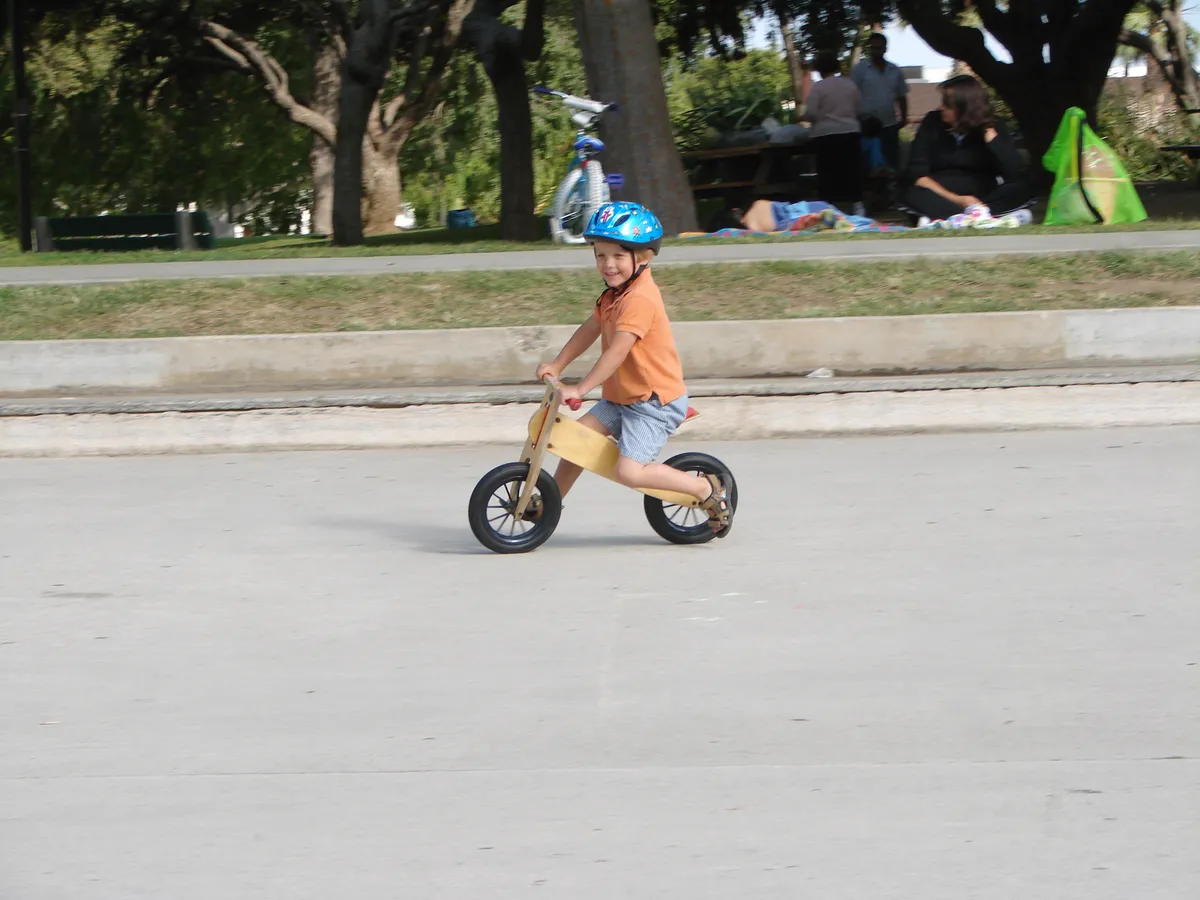
Did the pedal bike transition work?
This is the claim that justifies the purchase. We bought a 14-inch pedal bike with the training wheels left in the box.
First attempt: about eight minutes of trying to coordinate pedalling while balancing, with a hand on the saddle. Second attempt, the following day: riding unaided across a car park, wobbly, no training wheels, no running behind holding the seat. Third session: turning, starting from a standstill, stopping with the brake.
So the transition took roughly three short sessions, and the difficulty was pedalling rather than balancing — which is precisely the argument for balance bikes. Balancing is the hard skill and it was already done. I would not present a single child as evidence of anything general, but it matched what the research and every parent I know reports, and it is a genuinely striking thing to watch.
Wood versus metal, and what I'd change
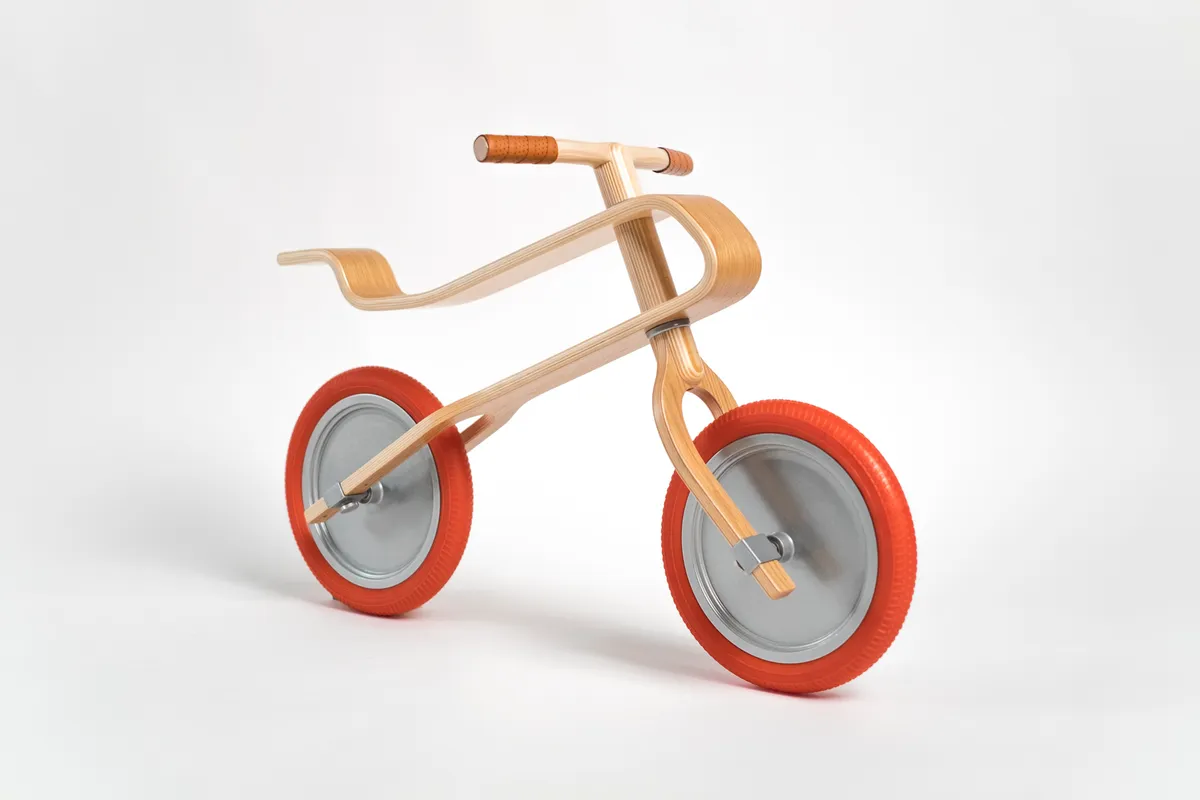
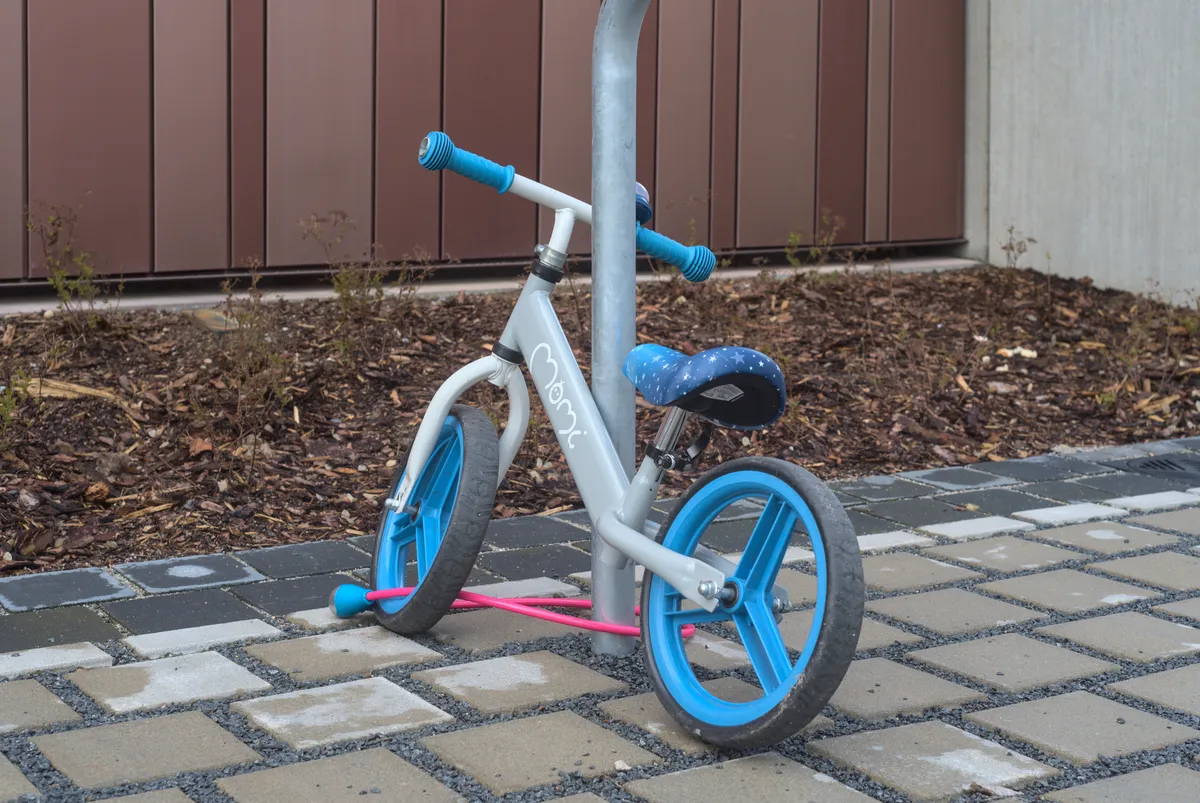
The wooden frame is light, looks better in a hallway than a plastic-and-steel bike, and has held up structurally with no cracks after seven months including being left out in rain twice.
What I would change is the saddle adjustment. On ours the saddle post is a wooden peg through a hole with a single bolt, which means adjustment happens in fixed increments of about 3 cm rather than continuously. Over seven months of growth we were between settings twice — too low for efficient striding, too high for flat feet — and there is nothing to do about it. Metal-framed bikes with a clamped seatpost adjust continuously, and having lived with the alternative, that's the feature I'd prioritise next time.
The other wood-specific issue is water. Ours is sealed plywood and the two rain exposures raised the grain slightly at the footrest. Cosmetic so far, but a bike that lives outdoors should be metal.
Tyres: the difference between models
Ours has EVA foam tyres — solid, puncture-proof, permanently inflated. That is the right choice for a first bike, because a puncture on a toddler's bike is a bike that stops being used until an adult finds a repair kit.
The trade is grip and cushioning. Foam tyres slide on wet grass and transmit every bump on rough pavement. Air tyres grip far better and roll more smoothly, and on the pedal bike we later bought, the difference was immediately obvious to the child, who preferred it.
For a first balance bike on pavement and indoors, foam. For a confident rider spending time on grass and gravel, air tyres are worth the puncture risk.
Brakes, and the honest answer about safety
Ours has no brake, which is standard for wooden balance bikes. Children stop with their feet, and for the first year that is genuinely adequate because they cannot go fast enough to need more.
By month six that had changed. Gliding down a gentle slope, our child was moving faster than they could stop with dragging shoes, and the answer was rules rather than hardware: no slopes without an adult walking alongside, and no riding anywhere with a road at the bottom. A rear hand brake — which some metal models include — would have been genuinely useful at that stage, and it's the second thing I'd look for next time.
A helmet is not optional and this is not a preference. Balance bike falls are frequent, low-speed and almost always harmless, but heads hit kerbs and a $25 helmet fitted properly — two fingers above the eyebrows, straps snug, buckle fastened every single time — is the difference between a scare and an injury. Our child fell perhaps twenty times over seven months and the helmet took an impact twice.
Living with it
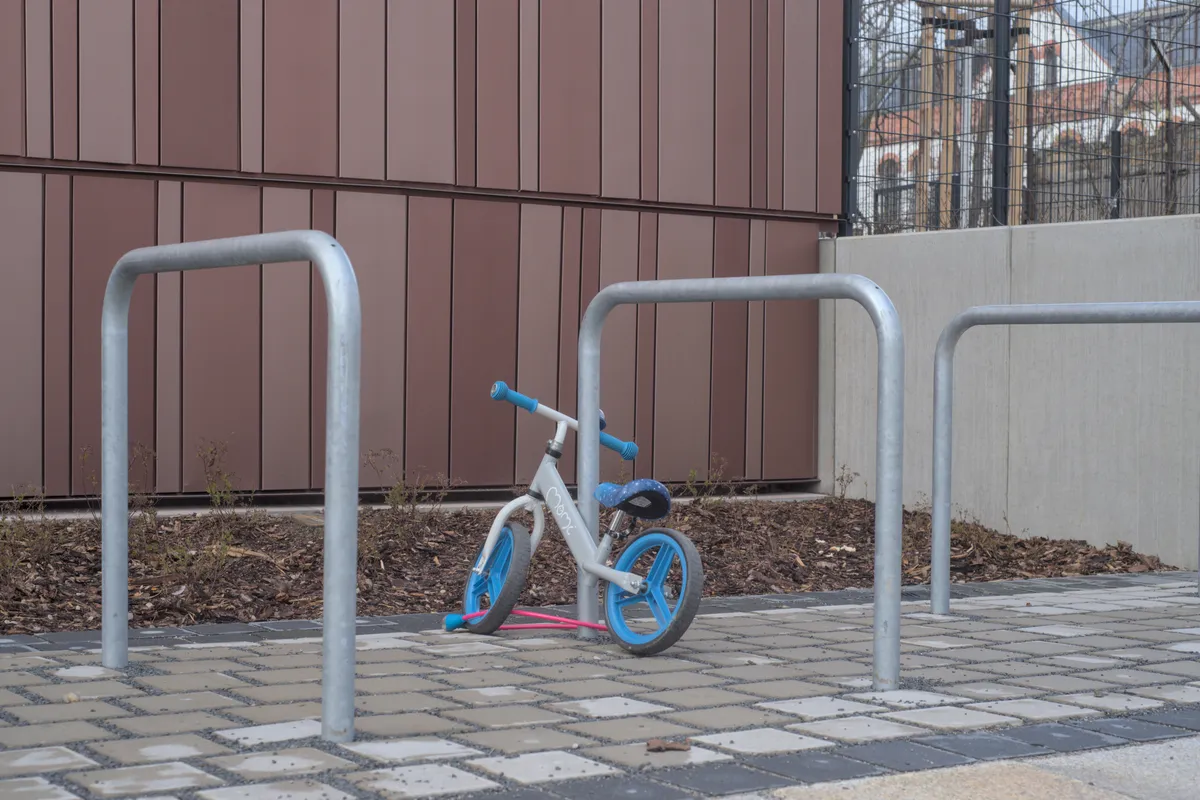
It weighs 3.4 kg, which means an adult can carry it in one hand along with everything else a toddler outing requires. That sounds trivial and it is the difference between the bike coming to the park and staying at home.
It does not fold and it does not fit in a small car boot alongside a pushchair. Ours goes in a hatchback with the pushchair only if the parcel shelf comes out.
Assembly took eleven minutes with the supplied Allen key: attach the handlebars, fit the front wheel, set the saddle. The instructions were adequate. Worth checking after a fortnight — the handlebar bolt on ours had loosened slightly and needed retightening, and I've checked it monthly since.
Against the alternatives
Against a tricycle, the balance bike teaches the skill that transfers. A tricycle teaches pedalling in a stable position, which is the easy half, and children move from tricycle to bicycle no faster than from nothing.
Against a pedal bike with training wheels, the evidence and our own experience both point the same way: training wheels teach a child to lean on the wheels rather than balance, and removing them starts the learning over. Skipping them entirely was the single best decision in this whole exercise.
Against a metal balance bike at $110-140, you'd get continuous saddle adjustment, an optional hand brake, air tyres and full weather resistance. Having used the wooden one, I'd spend the extra. The wooden bike is prettier and about $50 cheaper and those are the only two advantages.
Who should buy this
Buy a balance bike — this one or a metal equivalent — for any child from around 18 months whose inseam exceeds the bike's minimum saddle height. Measure the inseam, check the weight is under about 30% of the child's, and buy a properly fitted helmet at the same time.
Choose the wooden version if it will live indoors, be used mainly on pavement, and you care how it looks in a hallway. Choose a metal one with a clamped seatpost and a rear brake if it will live outside, if you want continuous height adjustment through a growth spurt, or if there are any slopes where you ride.
Verdict
Seven months in, this bike did the job it exists to do: our child moved to a pedal bike with no training wheels in three short sessions, and the limiting skill was pedalling rather than balance. At 3.4 kg it came everywhere, the frame has survived hard use including rain, and assembly took eleven minutes. Against that: stepped saddle adjustment left us between settings twice during a growth spurt, foam tyres slide on wet grass, wood does not want to live outdoors, and the absence of any brake became a real constraint by month six. Buy a balance bike without hesitation — and consider spending $50 more on a metal one.
Other products we tested
Ecobee Smart Thermostat Premium Review: Two Months of Real HVAC Testing
We installed the Ecobee Smart Thermostat Premium without a C-wire, tracked its temperature accuracy against a separate thermometer, and measured real energy savings over two months of daily HVAC use.
Bose SoundLink Flex Review: Six Weeks of Hiking, Kayaking, and Beach Days
Six weeks of camping, kayaking, and beach trips show the Bose SoundLink Flex's IP67 rating and PositionIQ orientation sensing are genuinely useful, with honest limits on bass and max volume.
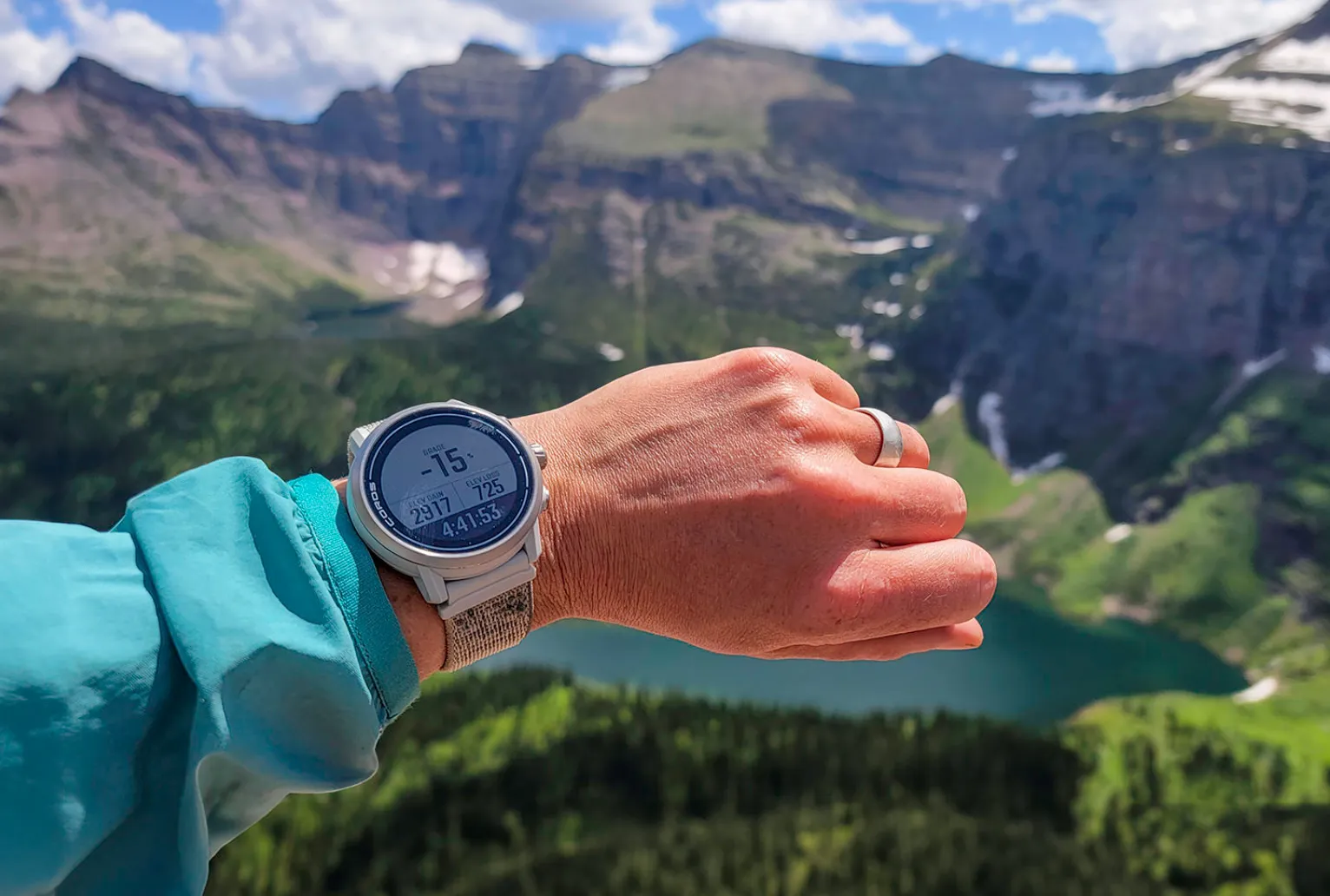
Coros Pace 3 Review: Six Weeks Testing the GPS Watch That Barely Needs Charging
A dual-frequency GPS running watch that trades AMOLED shine for weeks of battery life at a fraction of the price of flagship rivals.