
Lawn Mower Buying Guide: Match the Machine to the Garden
Area picks the power source and lawn shape picks the cutting width. A blunt blade is why your lawn looks yellow after mowing.
Lawn mowers are sold on cutting width and engine size, and the thing that actually determines whether mowing is a twenty-minute job or an hour of frustration is whether the machine suits the shape and size of your garden. A self-propelled petrol mower is miserable on a small lawn with three flower beds. A small cordless mower is miserable on half an acre.
Work out your lawn area and obstacles first, then the power source, then everything else.
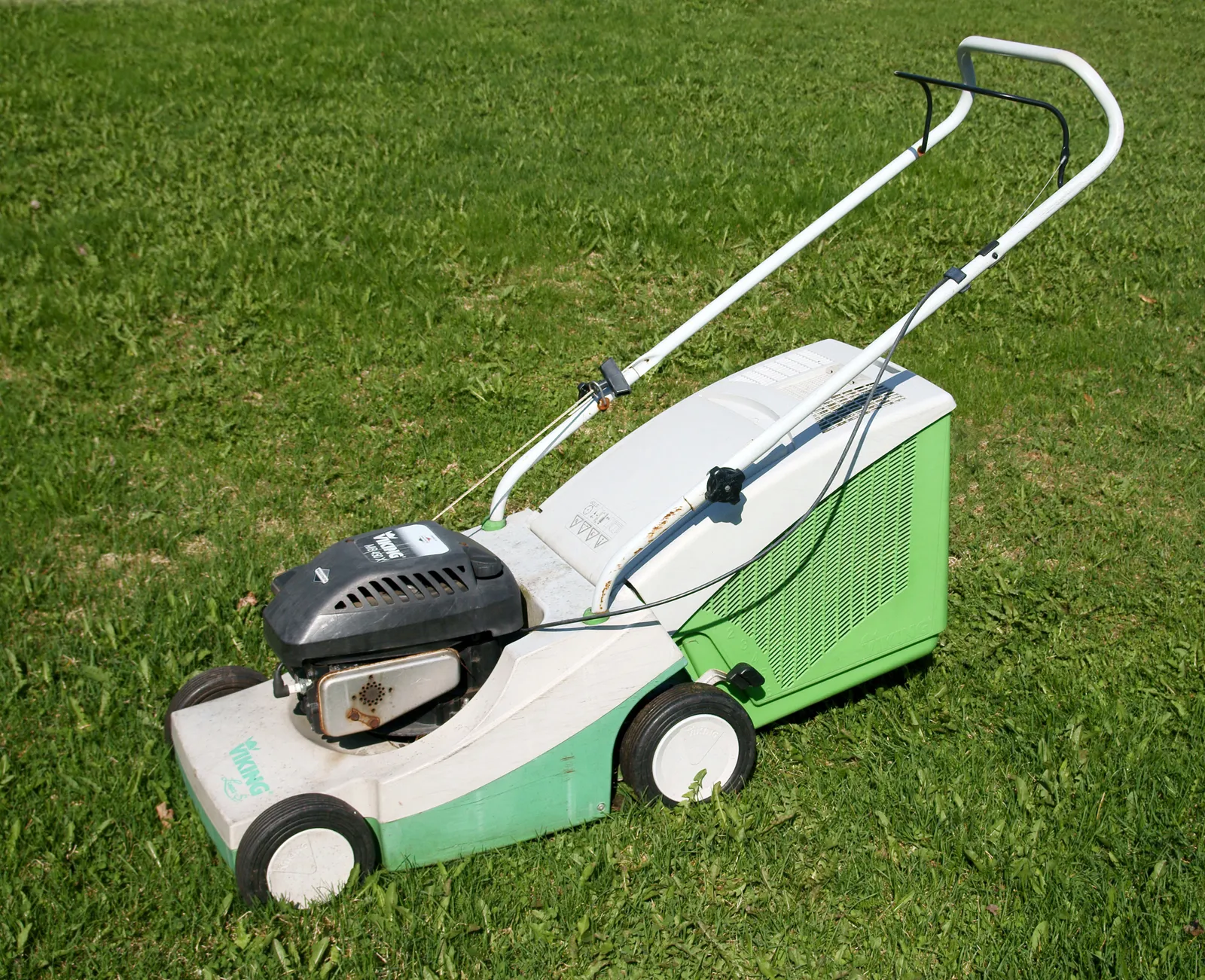
Measure the lawn, then pick the power source
Rough guidance by area, assuming reasonably flat ground:
Up to about 100 square metres — a small courtyard or front lawn. A corded electric mower or a compact cordless model with one battery. A manual cylinder mower is also genuinely viable at this size and needs no power at all.
100 to 500 square metres — a typical suburban garden. A cordless mower with a 4 to 5 amp-hour battery, or a corded electric if you do not mind managing a cable.
500 to 1500 square metres — a large garden. A cordless mower with two batteries and a wide deck, or a petrol mower. Self-propelled becomes worth having above about 700 square metres, especially on any slope.
Above 1500 square metres — petrol, self-propelled, or a ride-on. Cordless machines exist at this scale and need multiple large batteries.
Then adjust for shape. A lawn broken up by beds, trees, and paths favours a light, manoeuvrable machine over a wide one, because you will be turning constantly and a heavy 50 cm deck is unpleasant to pivot. A long open rectangle favours the widest deck you can push.
Cordless, corded, or petrol
Cordless is now the default for most domestic lawns, and the reasons are practical rather than environmental: no cable to cut, no fuel to store, no engine to service, starts instantly, and quiet enough to use early on a Sunday without a neighbour dispute. The limits are runtime and cost. Expect roughly 20 to 40 minutes of cutting per 5 amp-hour battery depending on grass thickness, less in long wet grass.
If you already own cordless tools, staying within the same battery platform is a substantial saving — batteries are the expensive part. Our cordless power tool buying guide covers how those platforms lock you in and why it usually still pays to stay in one.
Corded electric is the cheapest way to get adequate power, is light, and needs no battery management. The cable is the whole problem: you must mow in a pattern that keeps it behind you, you need an RCD-protected outdoor socket, and every year people cut through the lead. Fine for small square lawns, tiresome on anything complicated.

Petrol still wins on sustained power and unlimited runtime, and it handles long, wet, thick grass that stalls electric machines. The costs are real: annual servicing, oil changes, spark plugs, air filters, fuel that degrades in storage, pull-starting, noise, and vibration. Petrol makes sense above about 1500 square metres, on rough or overgrown ground, or where mains power is not available.
If you buy petrol, four-stroke engines are standard and take separate oil and fuel; two-stroke machines needing pre-mixed fuel are now rare and best avoided. Ethanol in modern fuel degrades and gums carburettors, so use fuel stabiliser or drain the tank before winter — this single habit prevents most spring starting problems.
Cutting deck, width, and what actually gets cut
Cutting width determines how many passes you make. A 33 cm deck suits small gardens; 40 to 46 cm is the mainstream size; above 50 cm is for large open lawns and gets heavy to turn. Wider is faster only if the lawn is open enough to use it.
Deck material matters for longevity. Polypropylene decks are light, cheap, will not rust, and can crack on impact. Steel decks are robust and rust where the paint chips, especially if you leave wet clippings inside. Aluminium is light and corrosion-resistant and expensive. For a machine you want for fifteen years, aluminium or well-maintained steel; for a small lawn, plastic is fine.
Cutting height adjustment is used more than people expect and design differs a lot. A single lever that raises all four wheels at once takes seconds; four separate wheel adjusters mean you will never bother changing the height. Check the range too: many mowers do not go below about 25 mm, which matters if you want a short ornamental lawn, and a maximum of 70 to 80 mm is useful for the first cut of spring and for drought conditions.
Rotary or cylinder, and mulching
Rotary mowers spin a blade horizontally and cut by impact. They handle long grass, uneven ground, and weeds, and they leave a slightly rougher finish. This is what almost all domestic mowers are.
Cylinder mowers use a helical blade against a fixed bar, cutting like scissors. The finish is superior — this is how striped lawns and cricket grounds are cut — and they demand flat ground, short grass, and regular mowing. They cannot cope with anything long or with twigs. Push cylinder mowers are also quiet, cheap, and effective on small flat lawns.
Mulching is worth understanding because it changes your routine. A mulching mower recirculates clippings under the deck, chops them finely, and drops them back into the turf, where they decompose and return nitrogen. Done properly it reduces fertiliser need meaningfully and eliminates emptying a box. It requires cutting little and often on dry grass — mulch long wet clippings and you get clumps that smother the lawn.
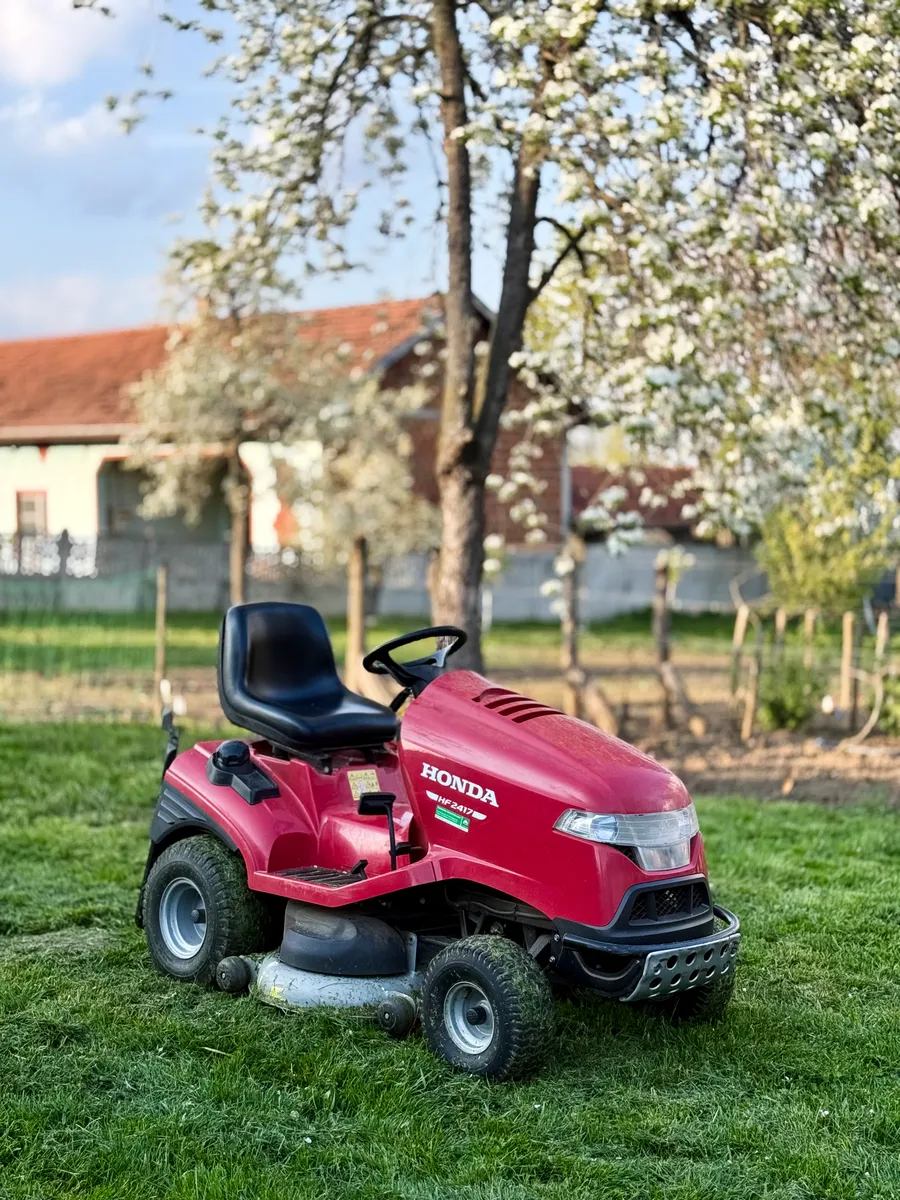
Look for a machine that does three things: collect into a box, mulch with a plug fitted, and side-discharge. That covers every situation — collect in spring when growth is heavy, mulch through summer, discharge when the grass has got away from you.
Grass box capacity is quoted in litres and is always optimistic, because clippings compress. A 50 litre box on a 450 square metre lawn means several trips to the compost heap. Check whether the box has a fill indicator, and more importantly whether it can be lifted out and emptied one-handed.
Self-propelled, drive systems, and slopes
A self-propelled mower drives its own wheels so you steer rather than push. On flat ground under 500 square metres it is unnecessary weight. On any slope, or above about 700 square metres, or if pushing a loaded mower is hard for you, it transforms the job.
Variable speed is worth having, because a fixed speed that suits open stretches is too fast around beds. Rear-wheel drive holds traction better on slopes and when the grass box is full and weight shifts back; front-wheel drive is easier to pivot, since lifting the front unweights the drive wheels.
On slopes, mow across the face rather than up and down with a walk-behind machine, and never use a ride-on across a steep slope, where it can roll. Manufacturers publish maximum slope ratings; take them seriously. If your garden has a bank steeper than about 15 degrees, a strimmer is safer than any mower.
Robot mowers
A robot mower cuts a small amount every day, which produces a consistently good surface and mulches automatically because the clippings are tiny. For a suitable garden they genuinely remove the chore.
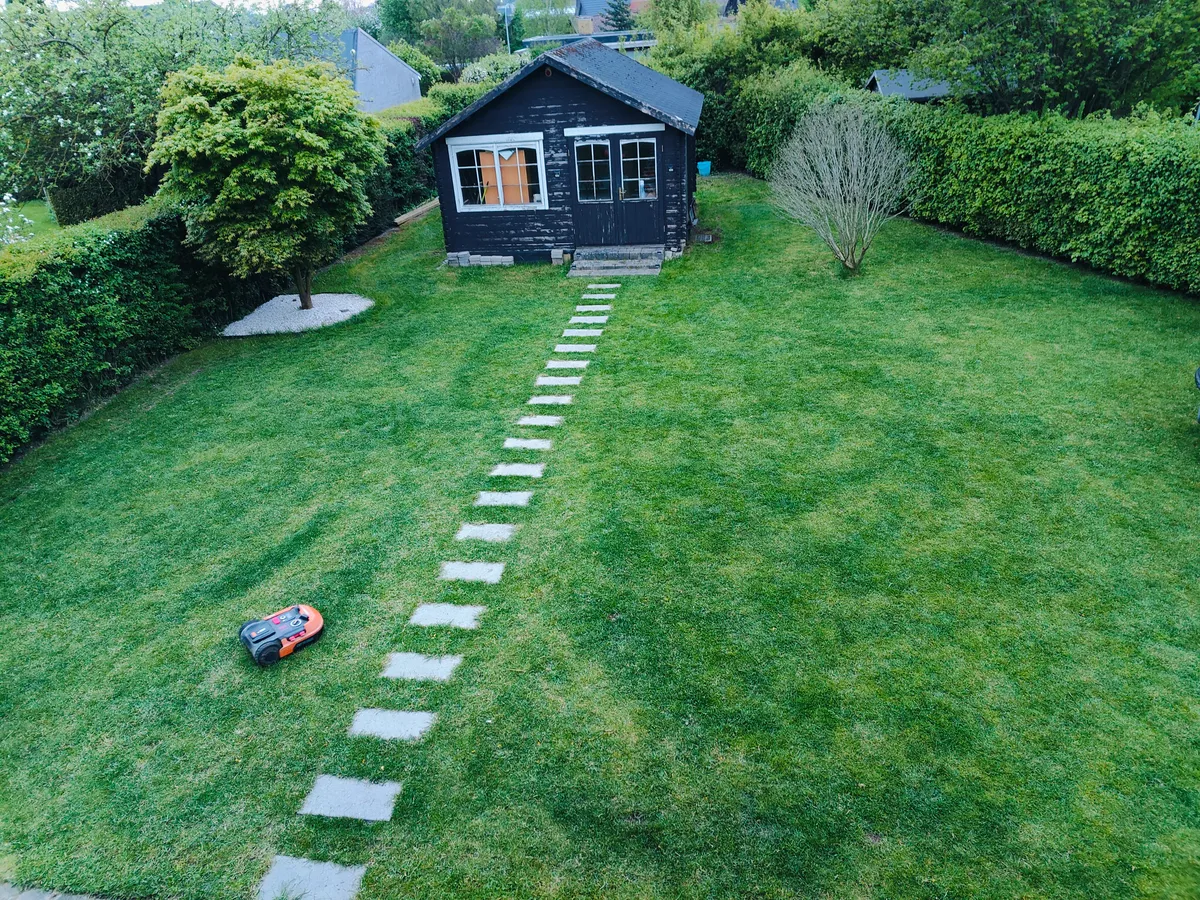
The conditions are specific. Older models need a perimeter wire pegged or buried around the lawn and around every bed, which is a real installation job; newer satellite-guided and vision-based models avoid the wire and cost more. They struggle with steep slopes, narrow gaps between lawn areas, deep shade affecting GPS, and gardens with a lot of fallen fruit or toys. They will not cut long grass, so you cannot leave the lawn for three weeks.
Two practical concerns. Robot mowers can injure hedgehogs and other ground-dwelling wildlife, so run them in daylight rather than at night and check the lawn first. And they are theft targets; look for a PIN lock and tracking.
Safety details worth checking
Every mower should have a bail lever or handle that stops the blade when released, and the blade should coast to a halt in a couple of seconds. Test that on the machine you buy. Never defeat that lever.
Before mowing, walk the lawn and pick up stones, wire, dog toys, and hose fittings. A rotary blade launches a stone at high speed. Wear stout shoes rather than sandals, and eye protection is sensible.
Never put your hand under the deck with the machine connected to power. Remove the battery, or disconnect the spark plug lead on a petrol mower, before touching the blade or clearing a jam. This is the single most common source of serious lawn mower injuries and it is entirely avoidable.
Keep children and pets indoors while mowing rather than nearby, and never carry a passenger on a ride-on.
Blade sharpness, and why your lawn looks bad
A blunt blade tears grass rather than cutting it. Torn tips turn brown within days, which is why a lawn can look yellowed and ragged after mowing even at the right height. Sharpen or replace the blade at least once a season, more if you hit stones.

Buying a spare blade and swapping it while the first is sharpened means no downtime. Before buying any mower, check that blades and drive belts are available for the model, because a mower whose blade is unobtainable in five years is disposable.
Follow the one-third rule: never remove more than a third of the grass height in one cut. Scalping stresses the plant, exposes soil, and invites weeds. If the lawn has got long, cut high, wait a few days, then cut lower. Cut when the grass is dry — wet grass clumps, clogs the deck, and cuts unevenly.
Basic maintenance: scrape clippings off the underside of the deck after each use, since compacted grass holds moisture against steel and rots it. Clean or replace the air filter on petrol engines, change the oil annually, and store the machine dry. Remove batteries for winter and store them part-charged indoors rather than in a freezing shed.
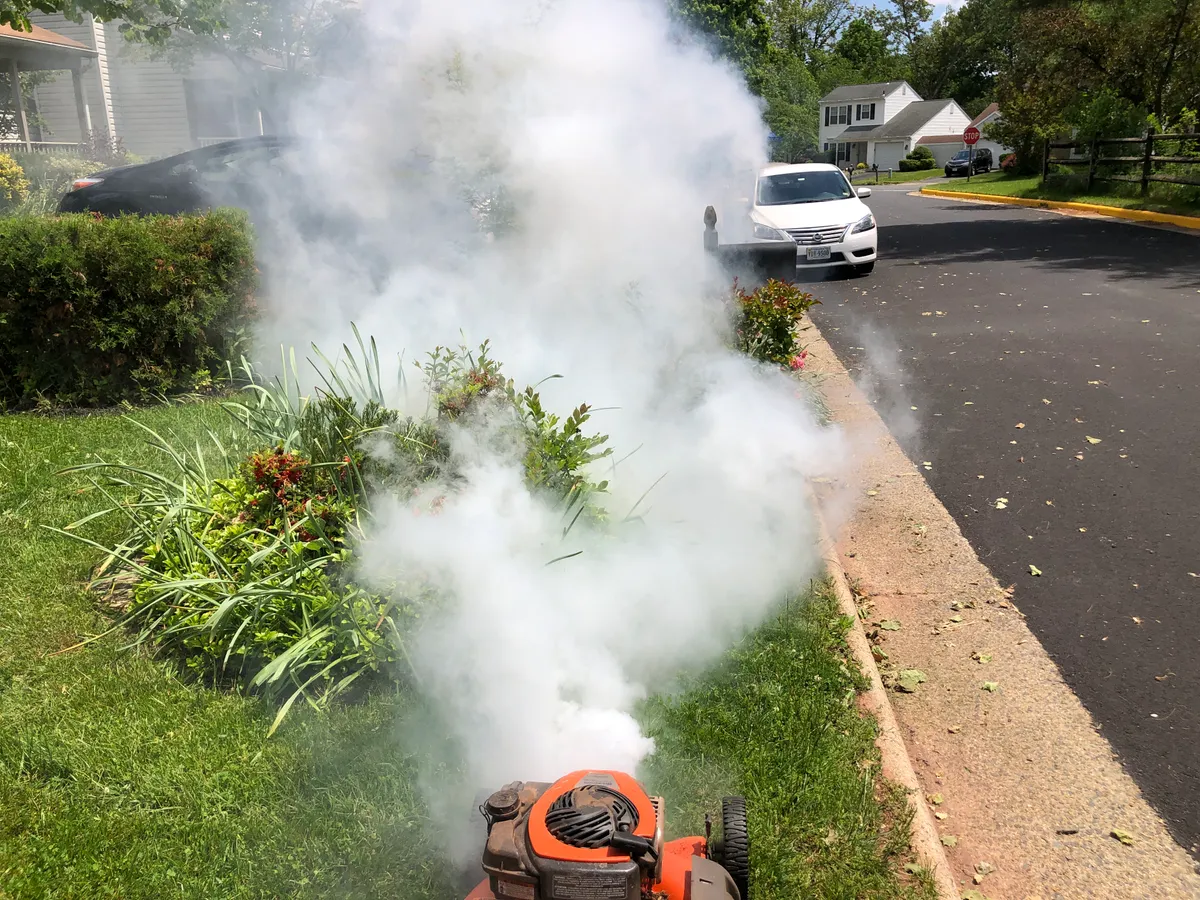
Blue or white smoke from a petrol mower means oil where it should not be, usually from overfilling, tipping the machine the wrong way, or a worn engine. Tip a mower with the air filter and carburettor side upward, and check the oil level rather than topping it up blindly.
Matching the machine to the garden
Small flat lawn, no storage space: a compact cordless mower on a battery platform you already own, or a push cylinder mower if the lawn is flat and you cut weekly.
Typical suburban garden with beds and a path: a 40 cm cordless mower, two batteries, single-lever height adjustment, and mulch plus collect capability. Light enough to turn constantly.
Large lawn, some slope: a self-propelled mower with rear-wheel drive and variable speed, cordless with two large batteries or petrol if the area is very large.
Rough or semi-wild ground: petrol, high maximum cutting height, steel deck, and a strimmer for edges and banks.
Want it done without doing it: a robot mower, provided the lawn is one connected area without steep banks, and budget for the perimeter wire installation unless you buy a wire-free model.
For the rest of the garden, the garden wheelbarrow review covers moving clippings, and the Black+Decker 20V Max drill review covers a common starting point for a battery platform you can then share with garden tools.
The short version
Measure your lawn and count the obstacles: area picks the power source, shape picks the width. Cordless suits most domestic gardens up to about 1500 square metres; petrol earns its keep above that or on rough ground; corded is for small square lawns only. Insist on single-lever height adjustment, a deck that mulches as well as collects, and self-propulsion if you have slopes or a big lawn. Check blade availability before buying. Then sharpen the blade every season, never remove more than a third of the height, and always remove the battery or plug lead before reaching under the deck.
More coupon shopping advice

Home Security Camera Buying Guide: Local vs. Cloud Storage
A practical, balanced buying guide to home security cameras that weighs local storage against cloud subscriptions, wired versus battery power, camera placement, night vision, smart detection accuracy, and smart home integration.

Beginner Mirrorless Camera Buying Guide
A practical, honest walkthrough of what actually matters when buying your first mirrorless camera, from sensor size and lens mounts to autofocus, video specs, and the real total cost of a beginner-friendly system.

Air Purifier Buying Guide: CADR, ACH, and Filter Costs Explained
A practical walkthrough of the numbers that actually matter when buying an air purifier — CADR and ACH for sizing, true HEPA versus marketing terms, real three-year filter costs, realistic noise levels, and when a purifier won't help at all.