
Black+Decker 20V MAX Drill Review: 400 Screws and One Brick Wall
Handled 400 screws, two wardrobes and 43 brackets without complaint, then took four minutes per hole in brick because it has no hammer function.
- Never stalled across roughly 400 screws in softwood and flat-pack panels
- 11-position clutch effectively eliminated stripped and over-driven screws
- 1.4 kg with battery — genuinely usable for 43 overhead bracket fittings
- 20V battery platform shared with Black+Decker garden and sanding tools
- LED light with run-on is well placed and useful in dark cupboards
- Survived two one-metre drops with scuffing and no functional damage
- No hammer function — a 6 mm hole in brick took about four minutes
- 115 in-lbs stalled on a 25 mm spade bit in 20 mm oak
- 1.5 Ah battery managed only about 80% of one wardrobe build
- Charger took 3 h 40 min for a full charge, measured
- Brushed motor brushes are not user-replaceable
- No belt clip and no on-board bit holder
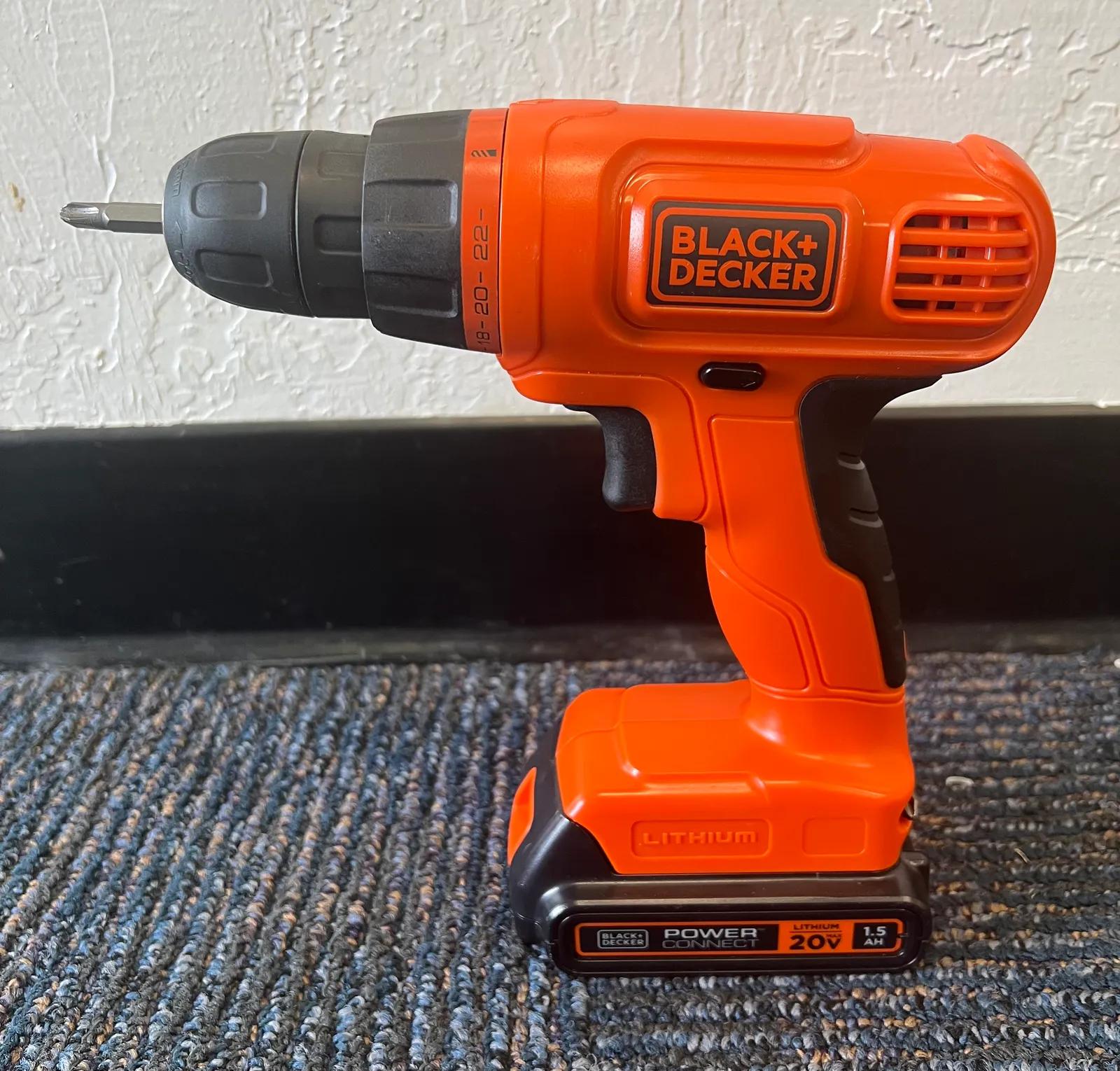
A $59 cordless drill is the tool most households actually need and the tool most reviews refuse to take seriously, because review sites are written by people comparing $250 brushless professional drivers. I used a Black+Decker 20V MAX drill/driver as the only drill in a flat renovation over five months — 43 shelf brackets, two flat-pack wardrobes, a curtain pole into masonry, roughly 400 screws — and kept notes on where it struggled.
It struggled in exactly two places, both predictable from the specification, and did everything else without complaint. This review is about establishing where the line is.
What "20V MAX" means, and why it's marketing
Worth clearing up first because it confuses buyers constantly. "20V MAX" is the peak no-load voltage of a five-cell lithium pack. Its nominal working voltage is 18V, and an 18V drill from another brand has an identical cell count. The numbers are marketing conventions, not a performance difference.
What matters is torque and motor type. This drill produces 115 in-lbs of maximum torque with a brushed motor and an 11-position clutch. A $200 brushless professional drill will do 400-600 in-lbs. That is a fourfold difference and it defines what each tool can do.
Where 115 in-lbs is plenty
Everything involving flat-pack furniture, softwood, plasterboard and pre-drilled holes. Across two wardrobes and roughly 400 screws it never stalled, never bogged and never needed a second pass. Driving 4 x 50 mm screws into pine with a pilot hole was effortless on clutch setting 7.
Plasterboard anchors, shelf brackets into studs, hinge screws, assembling a bed frame, hanging pictures — all of it is inside this tool's comfortable range, and that is the overwhelming majority of what a home drill is asked to do.
The 11-position clutch is genuinely useful rather than a spec-sheet feature. Set to 4 or 5 it stops driving before a screw head strips or sinks through thin material, and after a few days I stopped over-driving screws entirely — something I did constantly with a cheap corded drill.
Where it struggles: masonry and large holes
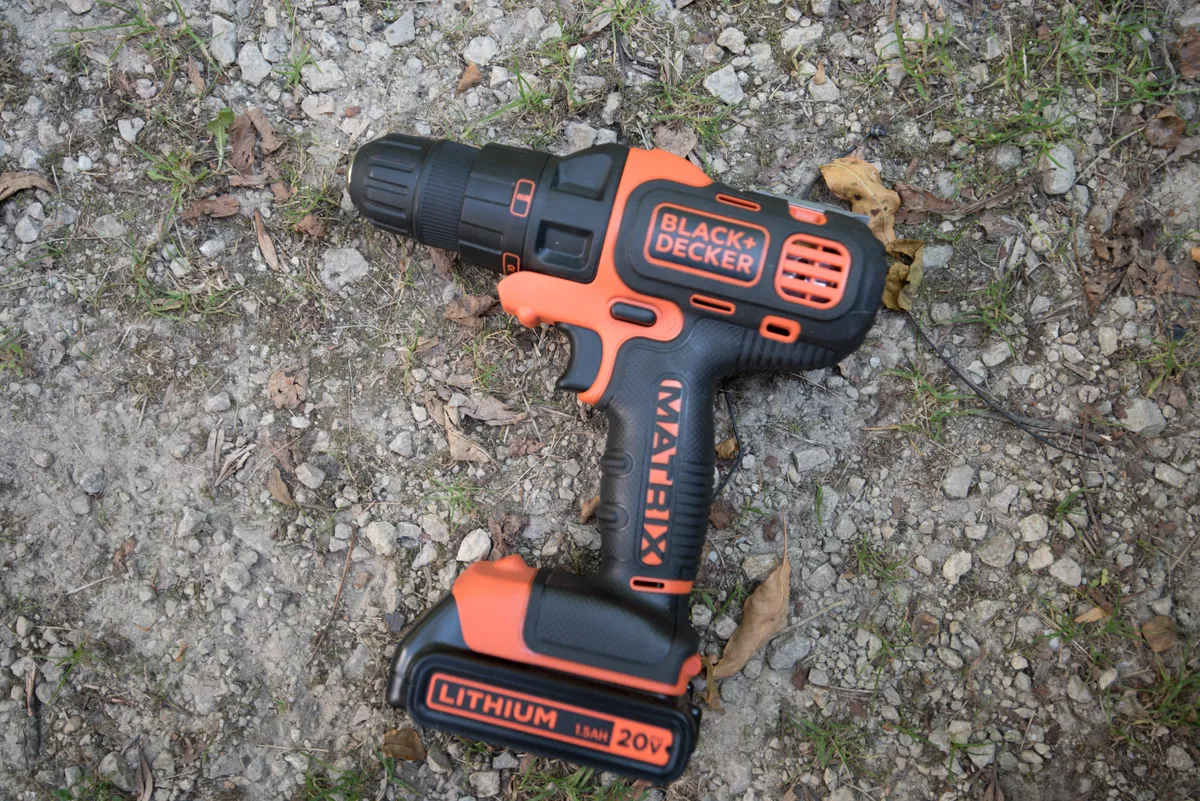
Failure one: masonry. This drill has no hammer function, so drilling into brick or concrete means grinding rather than percussive impact. I put a curtain pole into a brick wall with a 6 mm masonry bit and it took about four minutes per hole, with the drill getting noticeably hot and the bit doing most of the work through sheer pressure. A $90 hammer drill does the same hole in fifteen seconds.
It is possible. It is not something you would want to do more than a few times. If your walls are brick or concrete and you plan to fix anything to them regularly, buy a hammer drill and treat this review as irrelevant.
Failure two: large-diameter holes in hardwood. A 25 mm spade bit through 20 mm oak stalled the motor twice and needed a slow, patient approach with frequent withdrawals to clear the flutes. Anything above about 20 mm in hardwood is at the edge of what 115 in-lbs will do.
Battery and charging, measured
The 1.5 Ah pack that ships with most kits is the weak point. Assembling one wardrobe — roughly 120 screws with pilot holes — took the battery from full to the point of noticeably slowing, about 80% of a single build. Two wardrobes in a day needs two batteries or a break.
Charge time on the supplied charger was 3 hours 40 minutes from empty for the 1.5 Ah pack, timed. That is genuinely slow — professional-grade fast chargers do the same job in 30-40 minutes. If you buy this, buy a second battery rather than a faster charger; the packs are around $30 and the charger is the same speed regardless.
The 20V platform is shared across Black+Decker's range, so the same batteries fit their strimmers, sanders and blowers. Over five months I acquired a second pack with a sander, which effectively solved the battery problem for free.
Ergonomics and the things you notice on day three
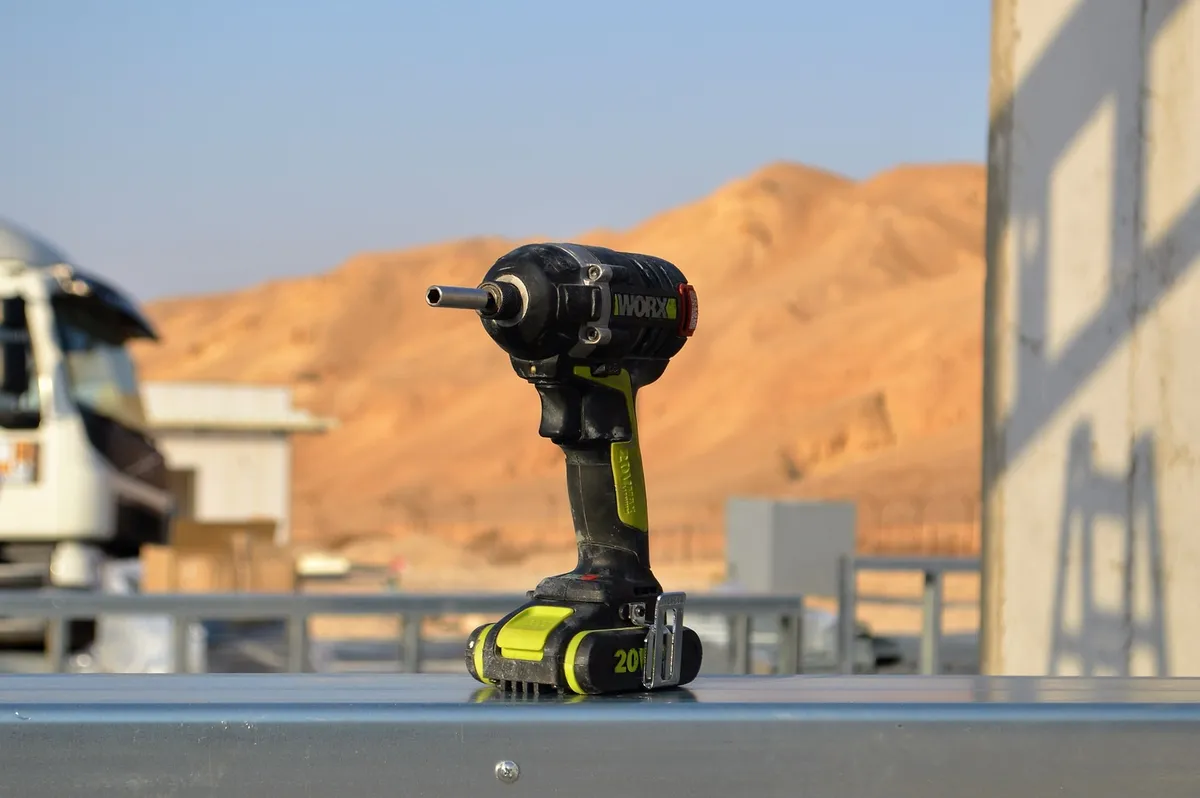
It weighs 1.4 kg with the 1.5 Ah battery, which is light enough to use overhead. I fitted 43 brackets, many at shoulder height or above, and my arm was tired rather than dead. A 2.5 kg professional drill would have been considerably worse for that job.
The keyless chuck is single-sleeve, meaning you tighten it one-handed against the motor brake. It holds bits securely and I had no slipping, but it needs a firm hand — under-tightening lets a bit spin in the jaws, which chews the bit shank.
The LED work light is positioned above the trigger and is genuinely useful in a dark cupboard. It stays on for a few seconds after the trigger releases, which is the correct behaviour.
Two annoyances. There is no belt clip, which on a ladder is a real omission — I put the drill on the ladder step twice and knocked it off once. And there is no bit holder on the body, so the bit you're not using lives in a pocket and gets lost.
Five months of durability
The tool has been dropped from about a metre onto laminate twice and from a ladder step once onto carpet. The plastic body has scuffing and no cracks, the chuck still runs true, and the clutch settings still engage correctly.
The brushed motor is the component with a finite life. Brushes wear, and on a tool at this price they are not user-replaceable — when they go, the drill is finished. Estimates vary wildly and five months of household use is nowhere near enough to test it. What I can say is that heavy stalling accelerates brush wear, and the masonry drilling I did was exactly the kind of abuse that shortens a brushed motor's life. I would not repeat it.
Safety notes worth stating plainly
Two things that are easy to get wrong with a drill this accessible.
Check the wall before you drill. A $20 detector that finds cables and pipes costs a fraction of the repair for hitting either, and hitting a live cable with a drill is a genuine electrocution and fire risk. I found a cable run 40 mm from where I had intended to put a bracket, in a location that looked entirely safe.
Wear eye protection when drilling overhead or into masonry. Brick dust and fragments come down directly into your face, and safety glasses cost a few dollars. Both of these are boring and both are the actual reasons DIY jobs go badly.
The bits matter more than the drill
The single biggest improvement in results over five months had nothing to do with the tool. The kit's included bit set is 30 pieces of soft steel, and the Phillips driver bits in particular rounded off within about fifty screws, at which point they start slipping and chewing screw heads. That slipping reads as the drill being weak when it is actually the bit failing.
A $15 set of impact-rated driver bits and a $12 set of HSS twist drills changed the tool's apparent capability. Screws that had been camming out went in cleanly, and drilling in pine went noticeably faster with sharp bits. If you buy this drill, budget another $25 for decent bits and throw the included set in a drawer as spares.
For masonry specifically, a fresh carbide-tipped bit is the difference between four minutes and eight. A dull masonry bit in a drill with no hammer action is close to useless, and mine was blunt by the third hole.
Against the alternatives
Against a $30 corded drill, this wins on convenience by a wide margin and loses on sustained power. A corded drill never runs out and will happily grind through masonry all afternoon. If everything you drill is within reach of a socket and includes brick, the corded tool is arguably the better buy.
Against a $120 mid-range brushless combi drill with a hammer function, you're paying double for roughly triple the torque, masonry capability, a faster charger and a motor that will outlast the tool. For anyone renovating rather than maintaining, that is the correct purchase and the extra $60 is trivial against the time saved.
Against a $200 professional drill, this tool is not competing and neither should you be. Trade drills are built for eight hours a day, and no household needs that.
Who should buy this
Buy it if your drilling is furniture, shelves, plasterboard and softwood, if you want something light enough to use overhead, and if you'll add a second battery for $30. Buy it if you already own Black+Decker 20V garden tools, because the shared battery makes it cheaper still.
Skip it if your walls are brick or concrete and you fix things to them regularly — the absence of a hammer function is not something you can work around. Skip it if you drill large holes in hardwood. And skip it if you're renovating a whole house, where a $120 brushless combi will pay for itself in saved afternoons.
Verdict
Five months, 400 screws and 43 brackets in, this drill has done everything a household drill is genuinely asked to do without a single failure. The 11-position clutch stopped me stripping screws, 1.4 kg made overhead work tolerable, and the shared 20V battery platform is a real long-term advantage. Against that: no hammer function makes masonry a four-minute-per-hole ordeal, 115 in-lbs stalls on big bits in hardwood, the 1.5 Ah battery doesn't finish a wardrobe, charging takes nearly four hours, and there's no belt clip. Know which of those apply to your house and the $59 is very well spent.
Other products we tested

Ecobee Smart Thermostat Premium Review: Two Months of Real HVAC Testing
We installed the Ecobee Smart Thermostat Premium without a C-wire, tracked its temperature accuracy against a separate thermometer, and measured real energy savings over two months of daily HVAC use.

Bose SoundLink Flex Review: Six Weeks of Hiking, Kayaking, and Beach Days
Six weeks of camping, kayaking, and beach trips show the Bose SoundLink Flex's IP67 rating and PositionIQ orientation sensing are genuinely useful, with honest limits on bass and max volume.

Coros Pace 3 Review: Six Weeks Testing the GPS Watch That Barely Needs Charging
A dual-frequency GPS running watch that trades AMOLED shine for weeks of battery life at a fraction of the price of flagship rivals.