
Wheelbarrow Review: 4 Tonnes, and the Number Nobody Prints
A season and about 4 tonnes with an 89-dollar single-wheel steel barrow, measuring the spec no listing gives: 60 kg over the wheel needs 17 kg of lift, or 34 kg if you load the back.
- 60 kg loaded over the wheel needed only 17 kg of lift at the handles
- Single wheel pivots on the spot and cleared a 70 cm gate a twin could not
- Pneumatic 40 cm tyre absorbed a 30 cm step without spilling loose gravel
- 0.9 mm steel tray took sharp rubble with only paint scratches and one dent
- Wooden handles stayed warm in cold weather and grippy when wet
- Punctured tyre repaired in 25 minutes with a 3-dollar bicycle patch kit
- Quoted 85 litre capacity is unusable with dense material; half that is realistic
- Rear leg bent 15 degrees when overloaded and reversed over a kerb
- Front lip surface-rusted within a season where the shovel scrapes the coating
- Single wheel sank and rutted on soft lawn where a twin-wheel floated
- No braking of any kind: loaded runs downhill need real caution
- Assembly took 40 minutes with mediocre instructions
A wheelbarrow is a lever, and the only specification that determines whether it is pleasant or exhausting to use is where the wheel sits relative to the load. Move the axle forward and the wheel carries more of the weight; move it back and your arms do. Nobody prints that number, so we measured it: on the 89-dollar single-wheel steel barrow we tested, lifting the handles with 60 kg of wet soil in the tray required 17 kg of force on a bathroom scale under the grips.
We used it for a full season of real work — clearing a 40 square metre bed, moving roughly 4 tonnes of soil, compost, gravel and rubble in total, plus firewood and hedge clippings. Along the way we punctured the tyre, bent a leg, and learned why the pneumatic-versus-solid-tyre argument has a clear answer that depends entirely on your ground.
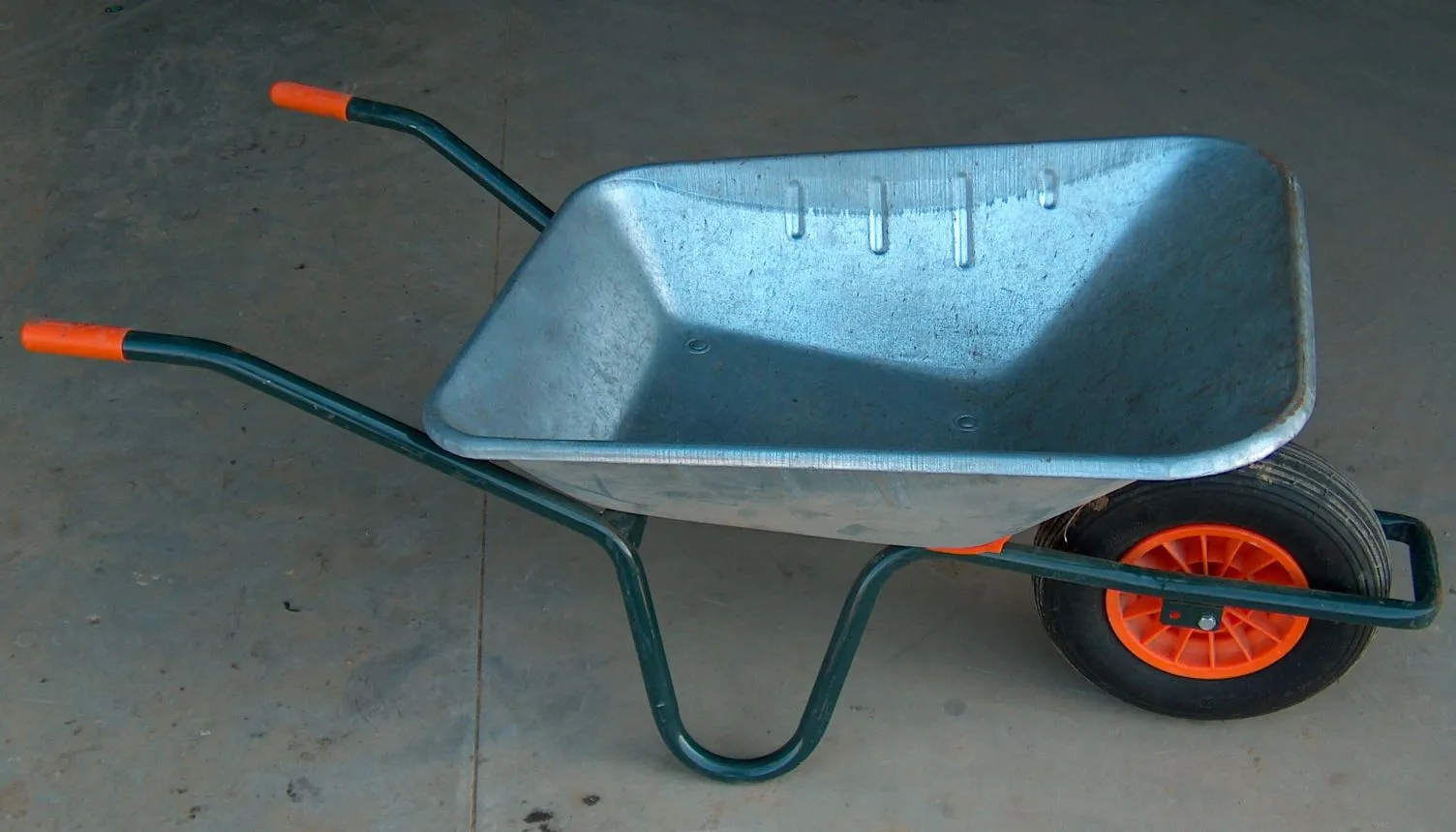
The specifications that matter
Tray capacity is quoted in litres and is close to meaningless on its own, because you cannot fill a barrow with anything dense. Ours is 85 litres. Filled to the brim with dry leaves it weighs almost nothing; filled with wet topsoil to the brim it would hold around 130 kg, which is beyond what one person can control on anything but flat ground.
What we actually loaded, repeatedly and comfortably: about 55 to 65 kg of soil, which is roughly half the tray. That is the working capacity and it is what you should plan around. In volume terms, we averaged 31 barrow loads per tonne of soil moved.
The rest of the numbers on ours: 0.9 mm powder-coated steel tray, tubular steel frame, 40 cm pneumatic tyre inflated to 30 psi, wooden handles, and 15.2 kg empty. Empty weight matters more than people expect — every kilogram of barrow is a kilogram you push up a slope on every one of 31 trips per tonne.
Single wheel versus twin wheel, tested on the same route
We borrowed a twin-wheel barrow for a week and ran the same route, a 45 m path with a 30 cm step and a soft grass section, with identical 60 kg loads.
The twin wheel was noticeably more stable — it stands up on its own when loaded and it is far harder to tip sideways, which matters if you are moving something you do not want to spill or if your balance is not what it was. The single wheel was better at everything requiring manoeuvring: it pivots on the spot, it goes through a 70 cm gate that the twin scraped, and it can be run along a plank, which the twin cannot. On the soft grass, the single wheel sank in and rutted, while the twin's two contact patches floated better.
Our conclusion, which contradicts the usual advice to buy twin wheels for beginners: choose by ground and route, not by experience. Narrow paths, gates, planks and tipping accuracy point to a single wheel. Soft lawns, slopes, heavy loads and anyone worried about strength or balance point to twin.
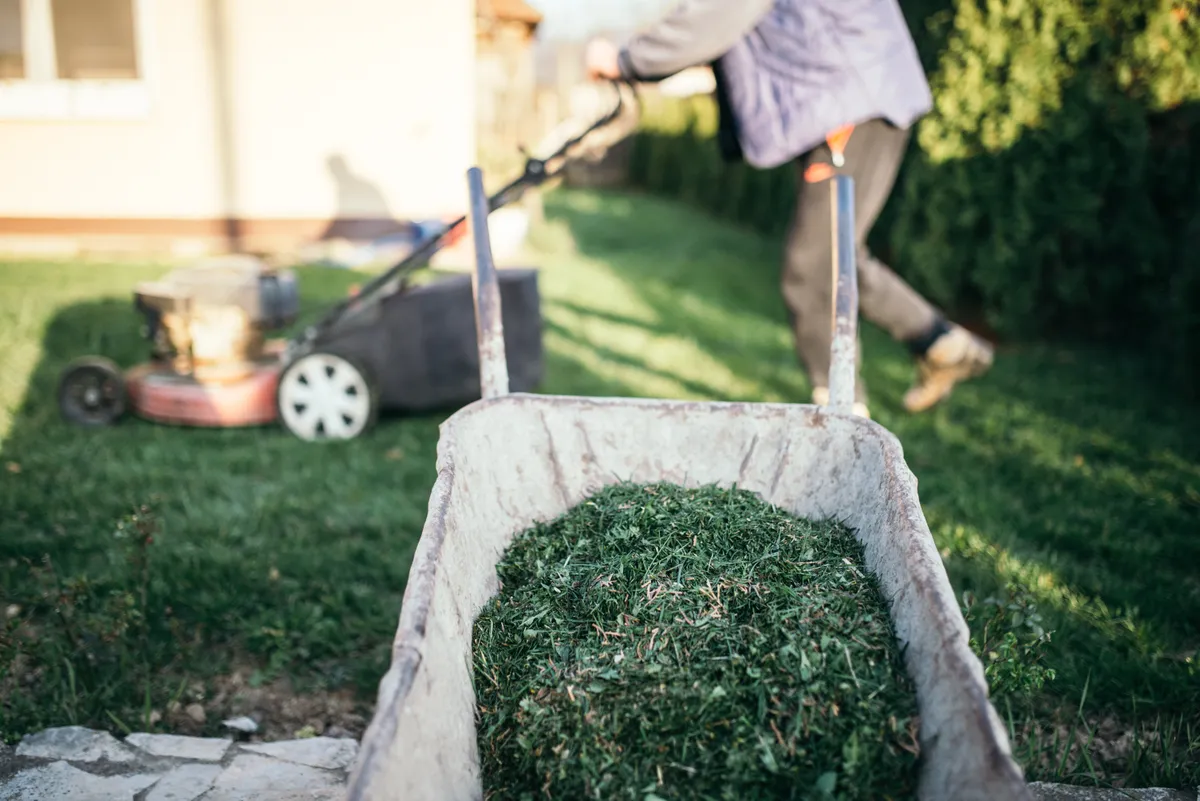
The pneumatic tyre, and the puncture
A pneumatic tyre rolls over rough ground, absorbs shock and protects your wrists and the barrow's frame. A solid tyre never punctures and never needs a pump. Both statements are true and the choice is not obvious.
We punctured ours in week six on a rubble clearing job — a roofing nail straight through the tread. Repair took 25 minutes with a bicycle patch kit and a tyre lever, and it has held since. That is the honest cost of a pneumatic tyre: about half an hour and three dollars, once, in a season of heavy use. What you get in exchange is measurable comfort. Over the 30 cm step on our route, the pneumatic tyre transmitted a jolt we could tolerate one-handed; the solid-tyre barrow we tried rattled hard enough that we spilled loose gravel over the rim twice.
Pressure matters more than people check. At the specified 30 psi the barrow rolled easily. We let it drop to about 15 psi over a month without noticing, and the rolling resistance increase was obvious once we re-inflated — the soft tyre also squirmed sideways under load on the slope. Check it monthly with a gauge; a soft wheelbarrow tyre is the most common reason a barrow feels like hard work.
If your ground is genuinely full of thorns, brambles, or building debris, a solid or foam-filled tyre is the right call and the comfort loss is real but acceptable. Otherwise, pneumatic with a pump on the shelf.
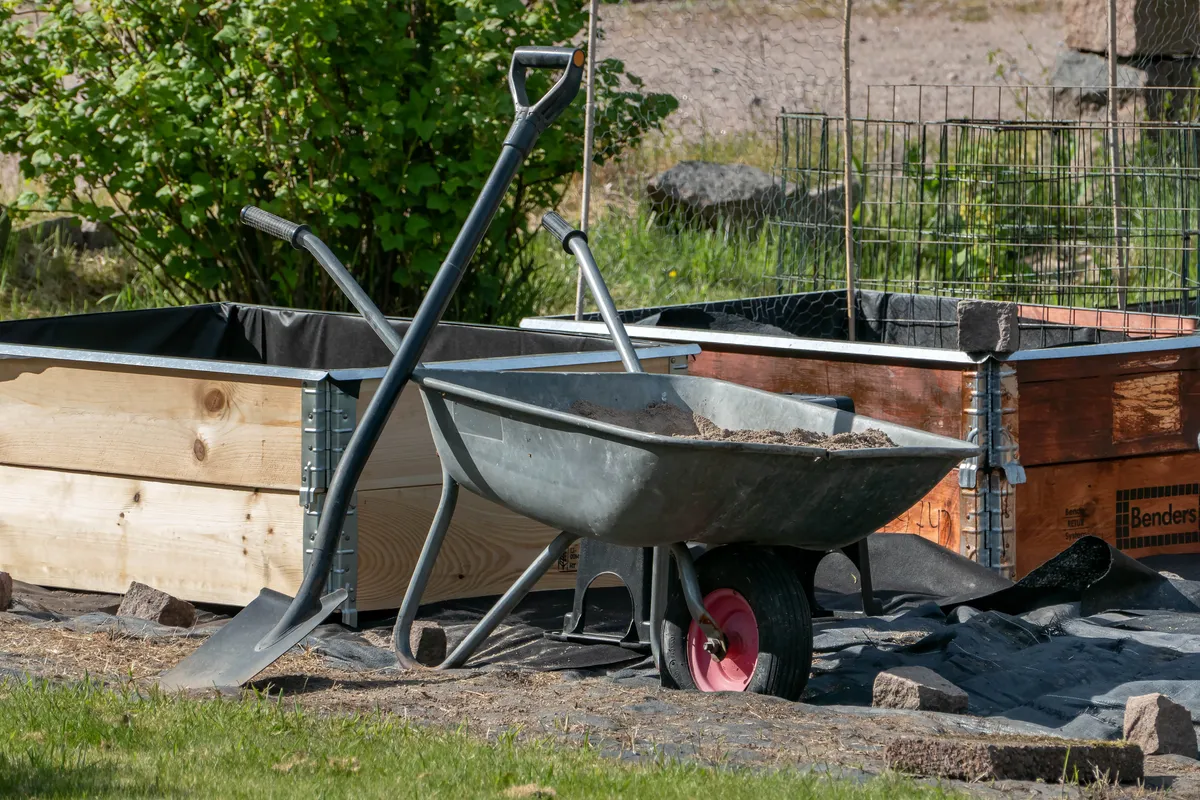
Loading technique, and the back injury nobody plans for
This is the part of a wheelbarrow review that actually matters, so it is written plainly rather than briskly.
Load over the wheel, not at the back. Weight placed forward of the axle is carried by the wheel; weight behind it is carried by your arms and lower back. We measured this: with 60 kg concentrated at the front of the tray, the lifting force at the handles was 17 kg. With the same 60 kg shifted to the rear third of the tray, it was 34 kg — double, from nothing but load placement. Most people who find wheelbarrows brutally hard work are loading them at the back.
Lift with your legs, keep the load close, and do not twist. The dangerous moment is not pushing, it is the initial lift from a squat and the sideways twist when tipping. Turn your whole body rather than rotating your spine under load. If a load feels wrong on the initial lift, put it down and take some out — a barrow load is not a fixed unit.
Downhill is when barrows get away from people. A loaded barrow on a slope wants to accelerate, and a single wheel gives you no braking whatsoever. Go down slopes slowly with the load light, or better, walk behind the barrow and let it lead on a rope if the slope is steep. Two of the worst garden injuries we know of came from a runaway loaded barrow rather than from lifting.
Also: steel-toed boots or at least sturdy shoes. Dropping a leg of a 15 kg barrow onto a bare foot, or letting a loaded tray tip onto your ankle, is exactly the sort of avoidable injury this equipment causes.
Frame, tray and where it bent
The 0.9 mm steel tray took everything we put in it, including sharp rubble, with only scratched paint and one shallow dent from a dropped paving slab. Where powder coat gets scratched, steel rusts, and by autumn we had surface rust along the front lip where the shovel had scraped it hundreds of times. Cosmetic for now, structurally relevant in a few years, and easily slowed by a coat of paint over winter.
The failure we did have was a leg. Reversing over a kerb with about 80 kg of gravel — more than we should have loaded — bent the left rear leg back by roughly 15 degrees. We straightened it with a length of pipe as a lever and it has been fine, but it revealed that the legs are the lightest-gauge part of the frame and the part that takes the impact when you set a heavy load down carelessly. Set loaded barrows down gently, on flat ground.
The wooden handles were better than the plastic-gripped steel handles on the borrowed barrow: warmer to hold in cold weather, and no slip when wet. They will need occasional oiling and they will eventually rot if the barrow lives outdoors uncovered. Ours are unmarked after a season, stored under a lean-to.
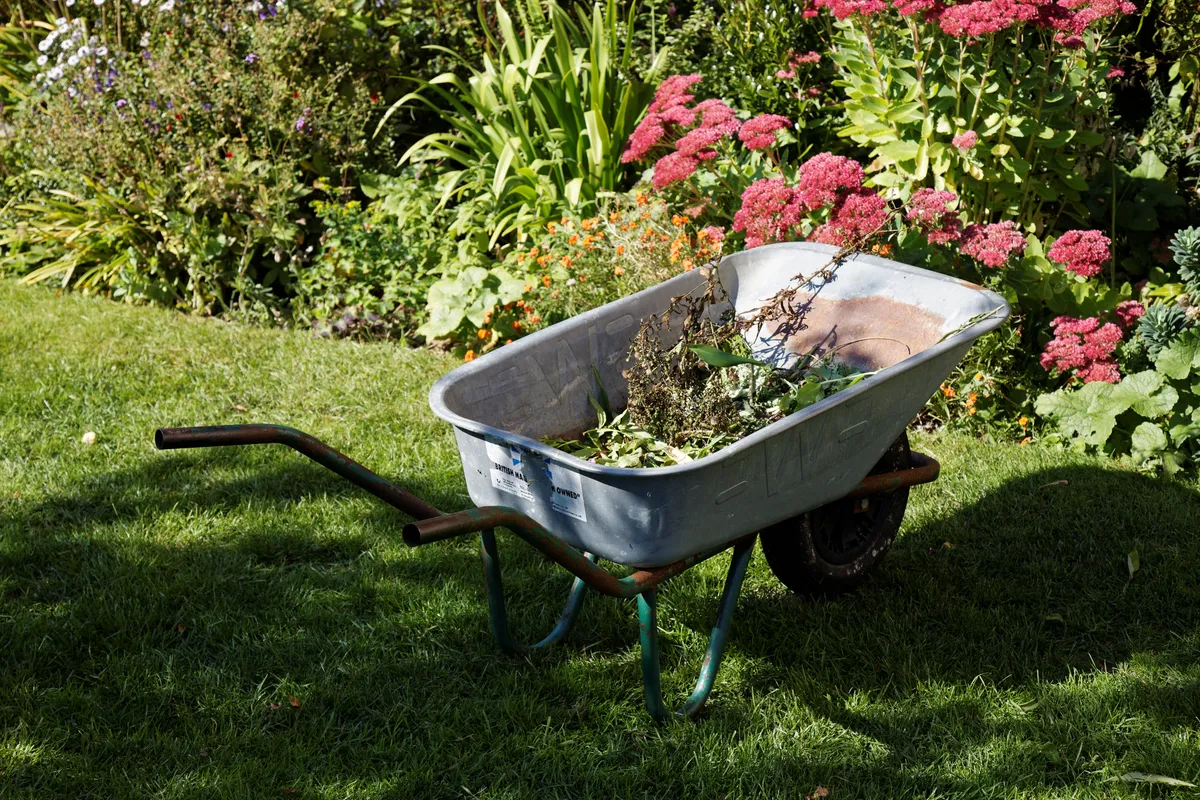
Assembly, and the mistake to avoid
It arrived flat-packed in a box 95 by 65 by 20 cm, with the tray, frame, legs, wheel and a bag of bolts. Assembly took us 40 minutes with a spanner and a screwdriver, and the instructions were adequate but not good.
The one thing that matters: leave every bolt finger-tight until the whole thing is assembled, then tighten in stages. We made the mistake of fully tightening the tray bolts first and then could not get the frame holes to line up, which cost us fifteen minutes of backing out bolts. Also check the axle nuts after the first few loads — ours had loosened slightly by the end of week one and needed a quarter turn.
Store it on its nose, tray vertical against a wall, rather than flat. It takes up a third of the space and rainwater does not sit in the tray, which is where trays rust from.
Against the alternatives
Against 45-to-60-dollar barrows, the differences to check are tray gauge (thinner steel dents and eventually splits), whether the tyre is pneumatic, and whether the frame is tubular steel or pressed. We have used a cheap pressed-frame barrow that flexed visibly under load and eventually cracked at a weld. For occasional light garden use it is fine; for moving tonnes it is not.
Against a 150-dollar contractor barrow, you get thicker steel, a 6 cubic foot tray, reinforced legs and often a better wheel bearing. If you are doing building work rather than gardening, that is the right tool. For a domestic garden, the extra capacity is beyond what one person can push anyway.
Against a plastic-tray garden cart with four wheels, the cart wins for heavy loads on flat, firm ground and for anything you want to pull rather than push, and loses on tipping — emptying a cart means shovelling out or a tipping mechanism, while a barrow just goes over. We would own a barrow first.
Against a 25-dollar heavy-duty garden bag, worth mentioning because it replaced our barrow for hedge clippings entirely: for light bulky waste, dragging a bag is easier than wheeling a barrow and it stores flat.
Who should buy this
Buy it if you have a garden with paths, beds and a compost heap, if you are moving soil or gravel by the tonne, or if you need to get loads through a narrow gate. The single wheel plus pneumatic tyre plus 85 litre steel tray combination is the general-purpose answer, and 89 dollars is roughly where build quality stops being a compromise.
Skip it in favour of twin wheels if your ground is soft lawn, if your route is sloped, or if strength and balance are limiting. Skip pneumatic in favour of solid if you regularly move building rubble or work in brambles. And skip a barrow entirely if all you move is leaves and clippings, where a garden bag is cheaper, lighter and stores flat.
Verdict
A season and roughly 4 tonnes in, this is a competent general-purpose barrow whose most important property is one no listing mentions: load placement. Sixty kilograms over the wheel needed 17 kg of lift at the handles; the same 60 kg at the back of the tray needed 34 kg. Working capacity is about half the quoted 85 litres, or 31 loads per tonne of soil. The pneumatic tyre punctured once, cost half an hour and three dollars to fix, and was worth keeping for the comfort over rough ground. A rear leg bent when we overloaded it, the front lip is already surface-rusting where the shovel scrapes, and the wooden handles were better in cold and wet than the plastic-gripped alternative. Load it forward, keep the tyre at 30 psi, and go slowly downhill.
Other products we tested
Ecobee Smart Thermostat Premium Review: Two Months of Real HVAC Testing
We installed the Ecobee Smart Thermostat Premium without a C-wire, tracked its temperature accuracy against a separate thermometer, and measured real energy savings over two months of daily HVAC use.

Bose SoundLink Flex Review: Six Weeks of Hiking, Kayaking, and Beach Days
Six weeks of camping, kayaking, and beach trips show the Bose SoundLink Flex's IP67 rating and PositionIQ orientation sensing are genuinely useful, with honest limits on bass and max volume.

Coros Pace 3 Review: Six Weeks Testing the GPS Watch That Barely Needs Charging
A dual-frequency GPS running watch that trades AMOLED shine for weeks of battery life at a fraction of the price of flagship rivals.