
Electric Kettle Buying Guide: Element, Spout, Lid
A concealed element, a spout that does not dribble, and a lid you can clean through matter more than wattage or any temperature dial.
An electric kettle is the appliance you use more often than any other in the kitchen and think about least. The consequence is that most people own one chosen on price and colour, then live with a lid that scalds their knuckles, a spout that dribbles down the side, and a limescale-clogged element that adds thirty seconds to every boil.
Very little of this is about wattage. It is about temperature control, the shape of the spout, whether the element is concealed, and whether you can actually see and clean inside.
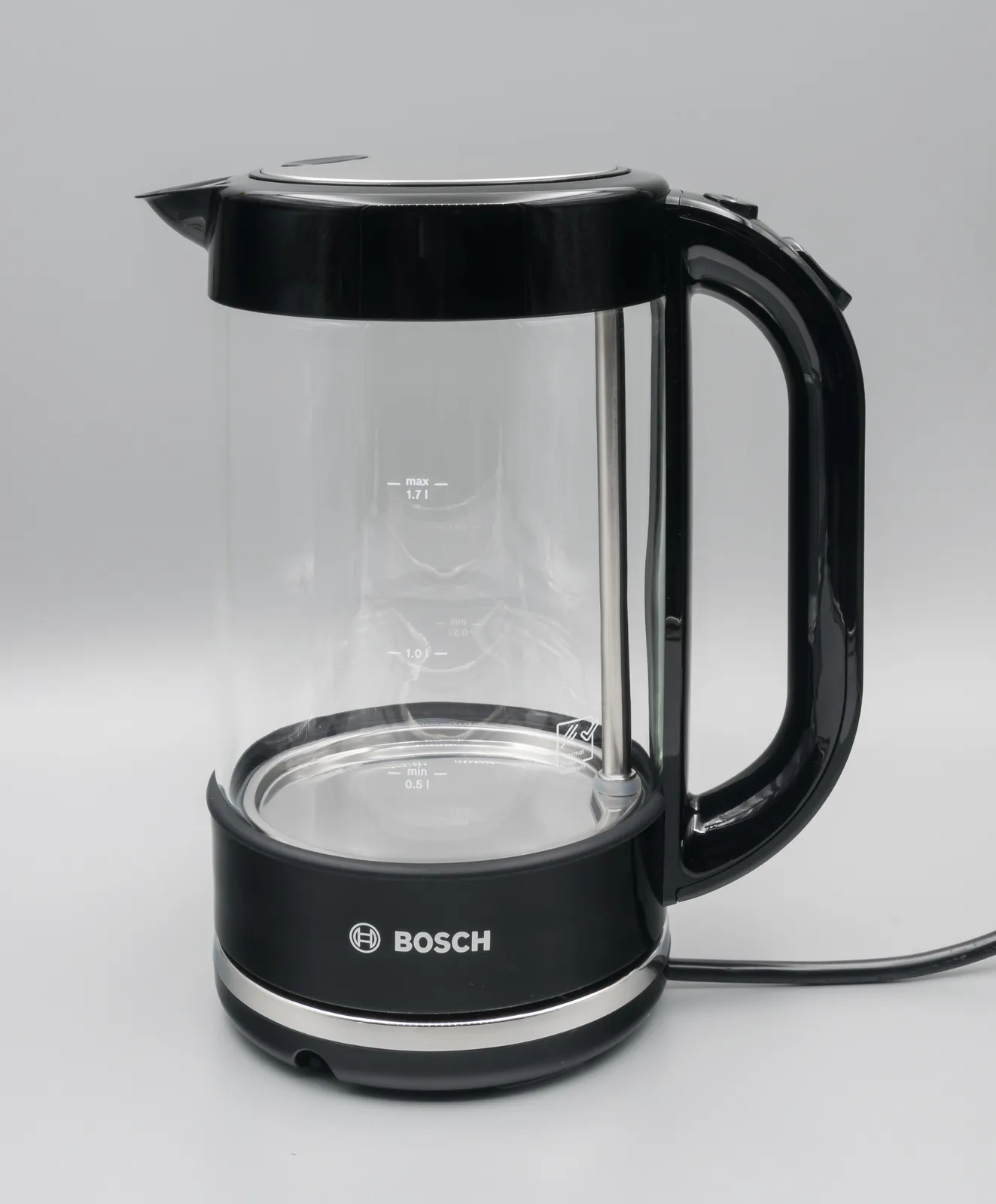
Variable temperature: who needs it
A basic kettle boils and stops. That is correct for black tea, instant coffee, pasta water, and stock. It is wrong for several things people drink daily.
Green tea wants roughly 70 to 80 °C, and boiling water strips it into bitterness. White tea sits around 75 °C, oolong around 85 to 95 °C. Coffee brews best somewhere between 90 and 96 °C, which means water straight off a rolling boil is slightly too hot — a boil-and-wait-a-minute approach works, and a kettle with a set temperature removes the guessing. Baby formula preparation has its own guidance to follow, which usually specifies a temperature rather than boiling.
So variable temperature is worth it if you drink green or white tea, or if you brew filter coffee and care about consistency. It is a waste of money if you drink builder's tea and boil pasta water. Look for a kettle with a few useful presets rather than a dial claiming single-degree precision, because the thermostat's real accuracy is a couple of degrees either way regardless of what the display shows.
Keep-warm functions hold a set temperature for twenty to sixty minutes. Genuinely useful if you make several cups over a morning, and it costs electricity continuously, so it is a convenience rather than an efficiency feature.
Spout shape decides pour control
Standard kettles have a wide spout designed to empty fast. That is fine for filling a pan and poor for anything requiring precision: it gushes, splashes into a mug, and frequently dribbles down the outside of the kettle afterwards.
A gooseneck kettle has a narrow, curved spout that delivers a slow, controllable, vertical stream. For pour-over coffee this is not an affectation — even saturation of the coffee bed is most of what makes pour over work, and you cannot do it from a gushing spout. Gooseneck kettles pour slowly for everything else too, which is a mild irritation when filling a pan.
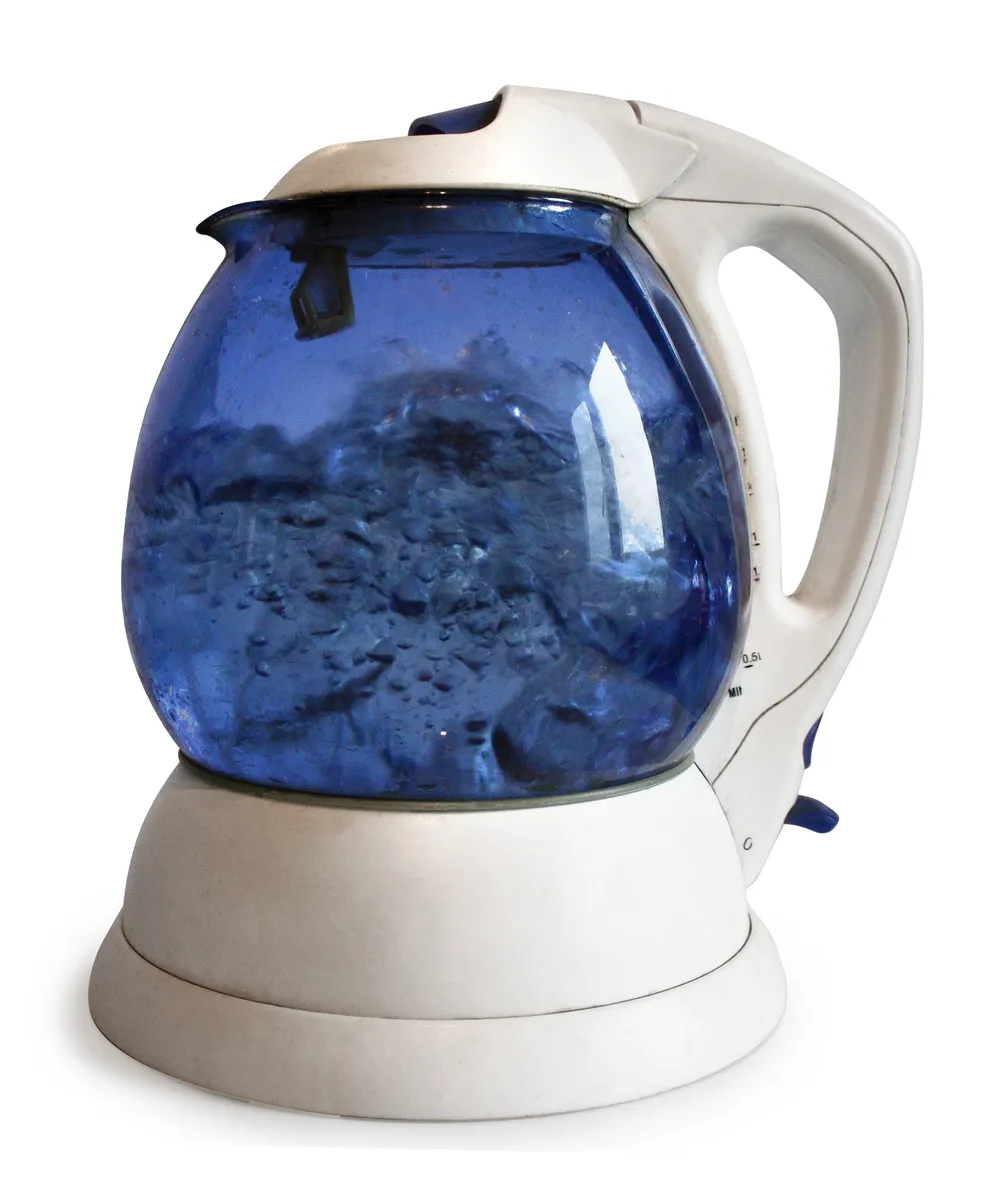
Whatever the shape, test the pour if you can. A well-designed spout has a sharp lip that breaks the water stream cleanly; a rounded lip lets water cling and run back down the body. Dribbling is a design fault, not something you can fix, and it is the single most common complaint about otherwise good kettles.
Also check the handle position and balance. A kettle whose handle sits directly above the centre of mass pours with a wrist rotation; one whose handle is set back requires you to lift and tip the whole weight, which is tiring with 1.7 litres of water in it. And check where steam vents when pouring — a badly placed vent puts steam directly onto your hand.
Concealed element, and why it matters
Older and cheaper kettles have an exposed coil element inside the water. Limescale forms preferentially on the hot metal, so the coil furs up, insulates itself, boils progressively slower, and is very difficult to clean around.
A concealed element sits under a flat stainless base plate. Scale still forms, but it forms on a flat surface you can reach with a cloth, and descaling actually works. This is a straightforward upgrade with no downside and it is standard on all but the cheapest models. If a kettle has a visible coil, do not buy it.
Material choice follows from the same logic. Stainless steel interiors are durable and easy to clean, and the outside gets hot unless it is double-walled. Plastic kettles are light and cheap, and cheap plastic can impart a taste, especially when new; if you buy plastic, buy from a maker that uses food-grade BPA-free material and expect to run and discard the first couple of boils. Glass kettles look attractive, show every trace of scale, and let you see the water level clearly. Double-walled stainless is the best combination of cool exterior, no taste, and durability.
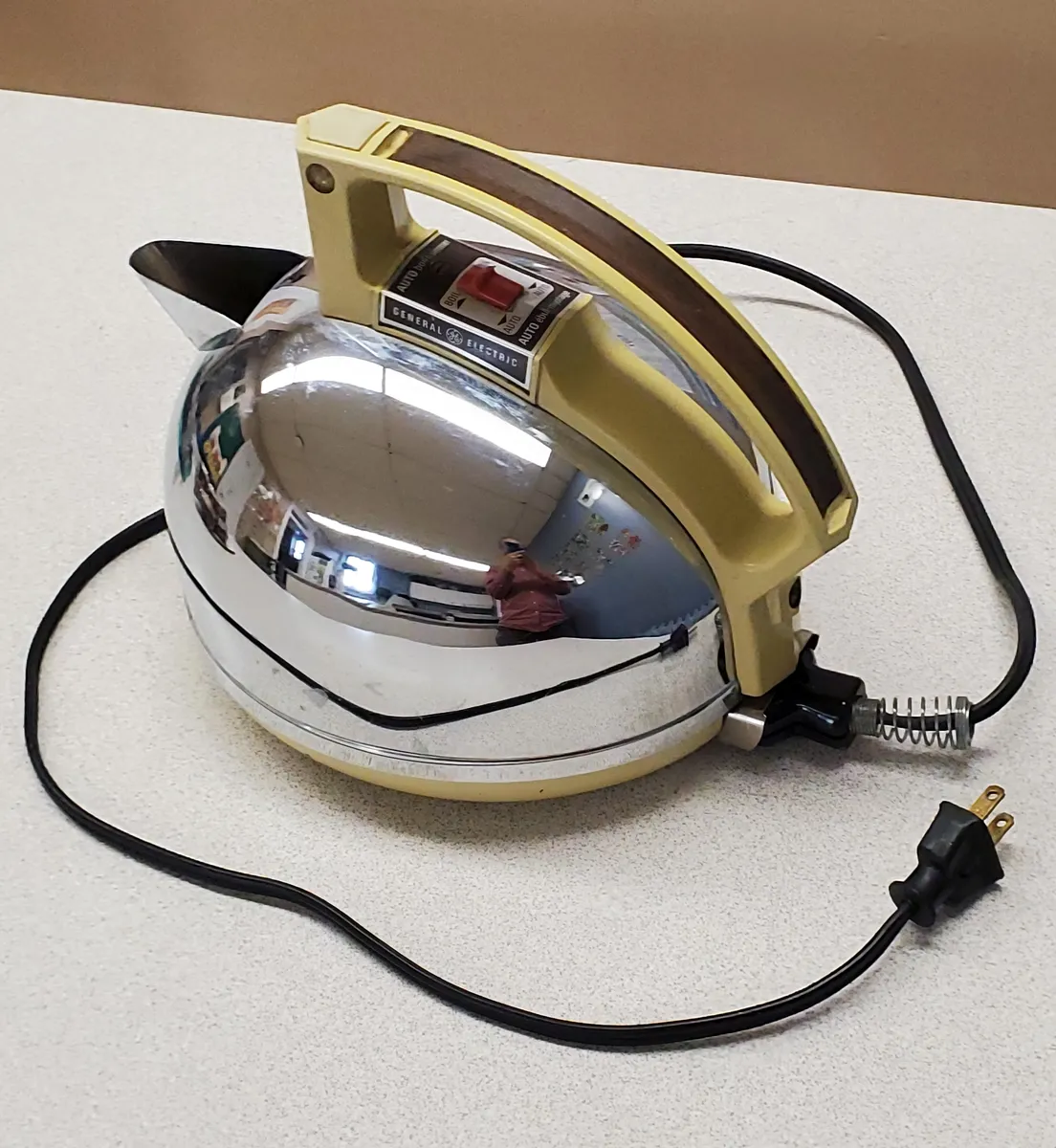
Wattage, capacity, and actual efficiency
Wattage determines boil speed and nothing else. A 3000 watt kettle boils roughly twice as fast as a 1500 watt one and uses about the same total energy to heat the same water, because the physics of heating water does not care how quickly you deliver the energy. In regions with 230 volt supplies, 2.5 to 3 kW is standard; in 120 volt regions, kettles are limited to around 1500 watts by the socket, which is why they are slower.
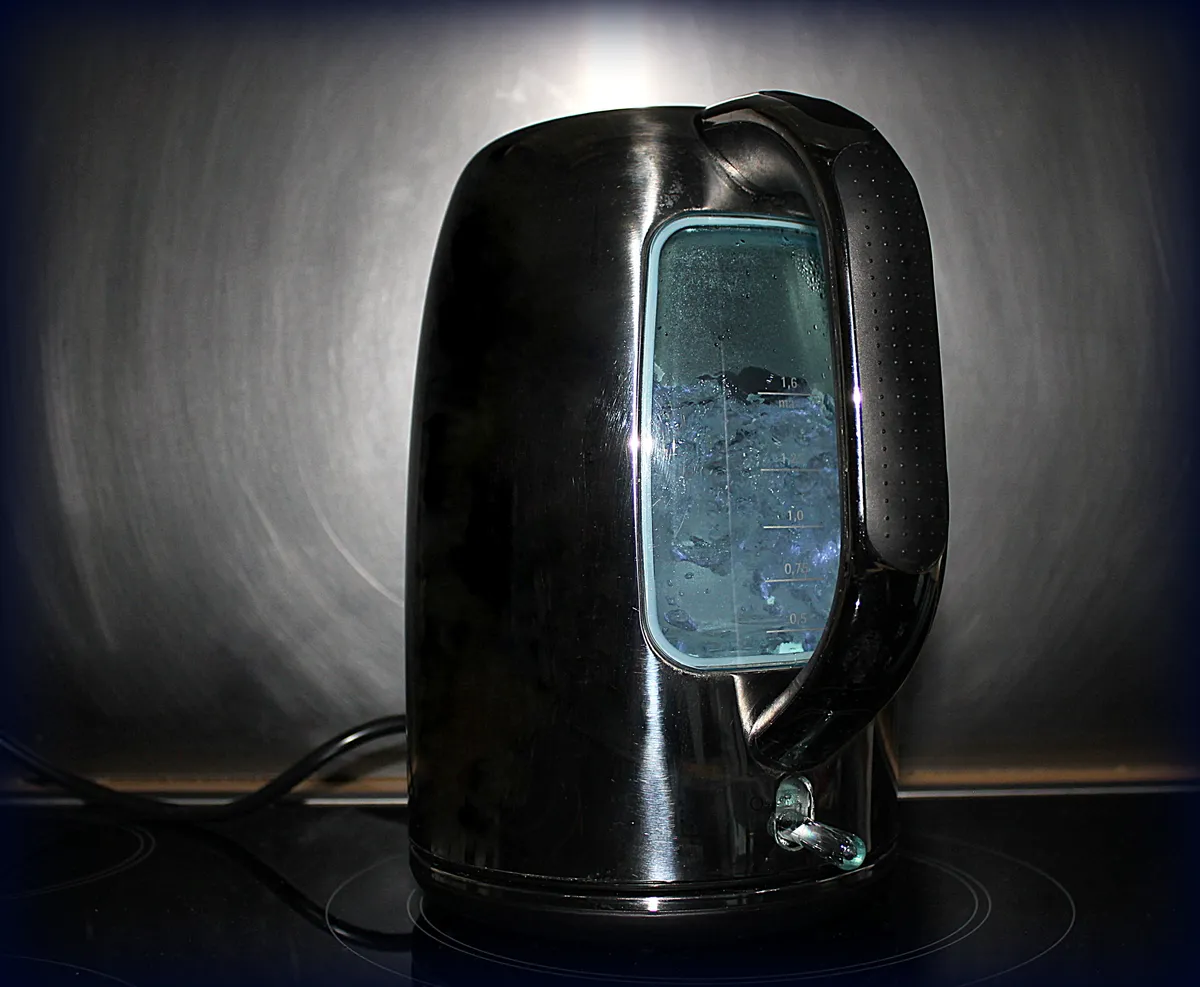
Real efficiency comes from two things. First, boiling only what you need: heating a full kettle for one cup wastes most of the energy. Second, a minimum-fill line low enough to make one cup, and clear graduations you can actually read — ideally marked in both litres and cups, and visible from the side you fill from.
Capacity is a trade. A 1.7 litre kettle fills a teapot and several mugs in one boil and is heavy and bulky. A 1 litre kettle is easier to handle, faster for single cups, and needs refilling for a group. If you mostly make one or two drinks, smaller is better; the "boil a big kettle less often" instinct is backwards, because reheated water has to be reboiled anyway.
Limescale, which is the real enemy
In hard water areas, calcium carbonate precipitates out as water heats and coats the element and interior. Scale insulates, so boils get slower and energy use rises; it also flakes into drinks, which is where the white bits in your tea come from.
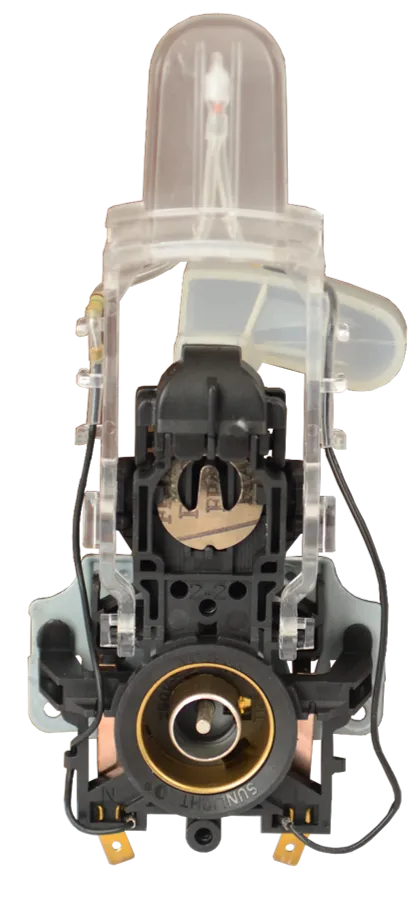
Descaling is simple and should be routine: fill with equal parts water and white vinegar or a citric acid solution, bring to the boil, leave for twenty minutes to an hour, empty, then boil twice with fresh water and discard both. Monthly in hard water, quarterly in soft. Proprietary descalers work identically and cost more.
Two features help. A washable mesh filter in the spout catches flakes and is worth having — check that it removes and refits easily, because a filter you cannot get out will not be cleaned. And a wide lid opening lets you get a hand and a cloth inside; a small hinged lid with a narrow aperture makes cleaning genuinely difficult, and lids that only open to about 60 degrees are a common and avoidable design failure.
Do not leave water standing in the kettle between uses. It accelerates scale and, in a plastic kettle, encourages staleness. Empty and refill each time.
Safety details worth checking
Every modern kettle has boil-dry protection — a thermal cutout that switches off if it is switched on empty — and an automatic shut-off when boiling. Both should be present; a kettle without them is not worth owning.
Beyond that, check the lid mechanism. A lid that springs open when you press a button while pouring is a scald risk, and lids that release under the pressure of a full pour are a known failure. The lid should latch positively and open only when you deliberately open it.
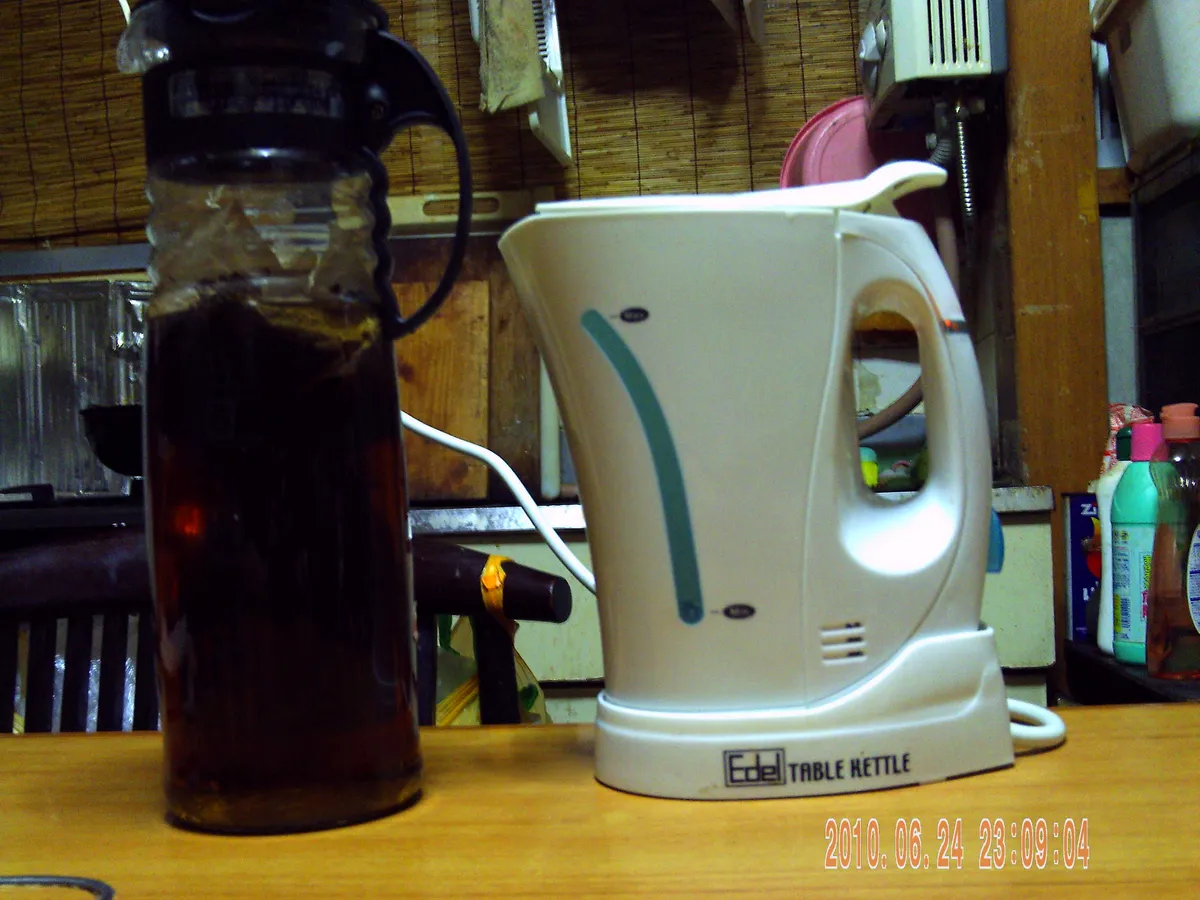
Check the cord and base. A cordless kettle on a 360 degree base can be set down in any orientation, which is more convenient than it sounds. A cord storage recess under the base keeps the worktop tidy and lets you shorten a long cable, which matters near a sink. The base should sit flat and stable, and the kettle should seat on it without hunting for the contact.
If the exterior gets hot, that matters in a household with children. Double-walled or cool-touch bodies are worth choosing for that reason alone.
Noise, repairs, and what actually breaks
Kettles are loud because water boiling against a hot plate cavitates. Quieter models use a larger, lower-power-density element and sometimes a coated base, and the difference is real if you boil water early in the morning in an open-plan home. Double-walled kettles are also quieter, since the outer wall damps the sound.
Failures cluster in three places: the thermostat or steam switch, the lid hinge and catch, and the base contact. Thermostats are the usual cause of a kettle that boils and does not switch off, or switches off early, and on most designs they are not user-serviceable. Lid hinges snap on cheap plastic bodies. Base contacts wear if the kettle is repeatedly slammed onto the base.
Very few kettles are practically repairable, so buy on build rather than on features. A heavier stainless kettle with a positively latching lid and a well-made base will outlast three cheap ones. Check the warranty — two years is common, and manufacturers offering three or more on a kettle are signalling something.
Matching it to your habit
Black tea, instant coffee, cooking water: a 1 to 1.7 litre concealed-element kettle with a clean-pouring spout and a wide lid. No temperature control needed. Spend the money on build quality.
Green, white, or oolong tea: variable temperature with presets, and a removable spout filter. This is the case where temperature control changes what is in the cup.
Pour-over coffee: a gooseneck kettle with variable temperature, ideally with a keep-warm hold so the water stays in range through a brew. Pair it with a decent grinder — see the coffee grinder buying guide, since grind consistency matters more than water temperature, and the espresso versus pour over guide for the brewer decision. The AeroPress review covers a brewer that works fine with a standard spout if you would rather not buy a gooseneck.
High-volume households and offices: a thermal water boiler that holds several litres at temperature indefinitely uses more electricity than boiling on demand but removes all waiting. Sensible for a busy office, hard to justify for a family.
Hard water area, whatever you drink: prioritise a concealed element, a wide lid you can get a hand into, a removable filter, and glass or stainless rather than plastic — and descale monthly. In practice that habit does more for boil speed and taste than any feature on the box. Related: our dishwasher buying guide covers water hardness settings for the other appliance scale destroys.
The short version
Insist on a concealed element; walk away from exposed coils. Test the pour for dribble and check the lid opens wide enough to clean inside. Add variable temperature only if you drink green or white tea or brew filter coffee, and a gooseneck spout only for pour over. Ignore wattage as an efficiency claim and instead boil only what you need, which needs a low minimum-fill line and readable graduations. Then descale monthly in hard water, and buy on build quality, because kettles are not repairable.
More coupon shopping advice

Home Security Camera Buying Guide: Local vs. Cloud Storage
A practical, balanced buying guide to home security cameras that weighs local storage against cloud subscriptions, wired versus battery power, camera placement, night vision, smart detection accuracy, and smart home integration.

Beginner Mirrorless Camera Buying Guide
A practical, honest walkthrough of what actually matters when buying your first mirrorless camera, from sensor size and lens mounts to autofocus, video specs, and the real total cost of a beginner-friendly system.

Air Purifier Buying Guide: CADR, ACH, and Filter Costs Explained
A practical walkthrough of the numbers that actually matter when buying an air purifier — CADR and ACH for sizing, true HEPA versus marketing terms, real three-year filter costs, realistic noise levels, and when a purifier won't help at all.