
New Balance Running Shoe Fit Guide: Size, Width, and the 1080v15
Choose a New Balance running shoe by measuring both feet, matching width and volume, evaluating the 1080v15, and protecting return eligibility.
A running-shoe discount is useful only when the shoe fits your feet, training, and comfort preferences. Buying the wrong width at a low price can lead to pressure, heel movement, numbness, blisters, or an unused pair that no longer qualifies for return after outdoor wear. New Balance offers an unusually broad size-and-width range in many models, which makes fit more precise but also creates more choices to understand.
This guide explains how to choose a New Balance running shoe deal, with the Fresh Foam X 1080v15 as a practical example. It does not diagnose injuries or prescribe footwear. Persistent pain, sudden changes in gait, or a medical foot condition should be discussed with an appropriate health professional.
Quick answer: how should New Balance running shoes fit?
A running shoe should hold the heel securely without painful pressure, allow the midfoot to feel supported rather than squeezed, and leave enough room for the toes to spread and move during a run. Measure both feet while standing, choose for the larger foot, and test the shoes with the socks and any insoles you plan to use. Size labels are a starting point; the shape and volume of the model still matter.
New Balance's official size guide notes that left and right feet can differ in length or width and recommends buying for the larger foot. Feet can also change over time, so an old size should not replace a new measurement.
Size, width, and volume are different
Length is the heel-to-toe measurement that maps most directly to the numbered size. Width describes how much room the shoe provides across the foot, often around the forefoot. Volume is the three-dimensional space inside the upper, including instep height, toe-box shape, and how the upper wraps the midfoot.
Two shoes marked with the same size and width can feel different because their lasts, materials, heel shape, and upper construction differ. A runner with a high instep may feel pressure even when the forefoot width is correct. Another runner may need a wide forefoot but a secure, lower-volume heel. This is why changing only the numbered size does not solve every fit problem.
| Fit dimension | What it describes | Common signal of a mismatch |
|---|---|---|
| Length | Heel-to-toe space | Toes touch the front or foot slides forward |
| Width | Side-to-side room around the foot | Forefoot pressure or excess lateral movement |
| Volume | Overall internal space and instep room | Lace pressure, wrinkling, or poor lockdown |
| Heel shape | How the rear of the shoe holds the foot | Heel lift, rubbing, or collar pressure |
| Toe-box shape | Space and contour around the toes | Toe compression or unnecessary movement |
Measure both feet at the right time
Measure later in the day or after normal activity, when feet may be closer to the size they reach during a run. Wear the socks normally used for training. Stand with weight distributed naturally because a foot can lengthen and widen under load. Measure both feet separately and record length and width.
If using a printable tool, confirm that the page is printed at 100% scale and verify the calibration mark with a ruler. Keep the heel against the indicated line or wall and measure the longest toe, which is not always the big toe. For width, measure the widest part of the forefoot while standing.
At-home measuring checklist
- Print the official measuring tool at actual size or use paper and a ruler.
- Wear normal running socks and remove thick floor mats.
- Stand with full weight on the foot being measured.
- Measure heel-to-longest-toe length on both feet.
- Measure the widest forefoot point on both feet.
- Repeat once to catch placement errors.
- Use the larger measurements as the starting size.
Do not automatically size up to solve width
Going up a full size creates more length as well as some width. That can move the flex point, heel hold, and toe position away from the shape of your foot. If the shoe is long enough but compresses the sides of the forefoot, try the appropriate wider width before adding unnecessary length.
The reverse is also true. A wide shoe should not be used to solve a length problem. Excess width can make the foot slide, cause the upper to fold, and force the laces to do all the stabilizing work. Start with measured length and width, then adjust for the model's specific fit.
Understand New Balance width labels
New Balance offers several width options on selected models, but availability depends on men's, women's, kids', model, size, and color selections. The product page is the source of truth for the exact combination. A label such as narrow, standard, wide, or extra wide is relative to the brand's sizing system; it is not a universal measurement shared identically by every brand.
Do not choose width from the appearance of the outsole alone. Read the size selector and model information. If one color is unavailable in the needed width, prioritize fit over color. A promotion on a standard-width version is not equivalent to the correct wide version.
What the New Balance 1080v15 is designed to do
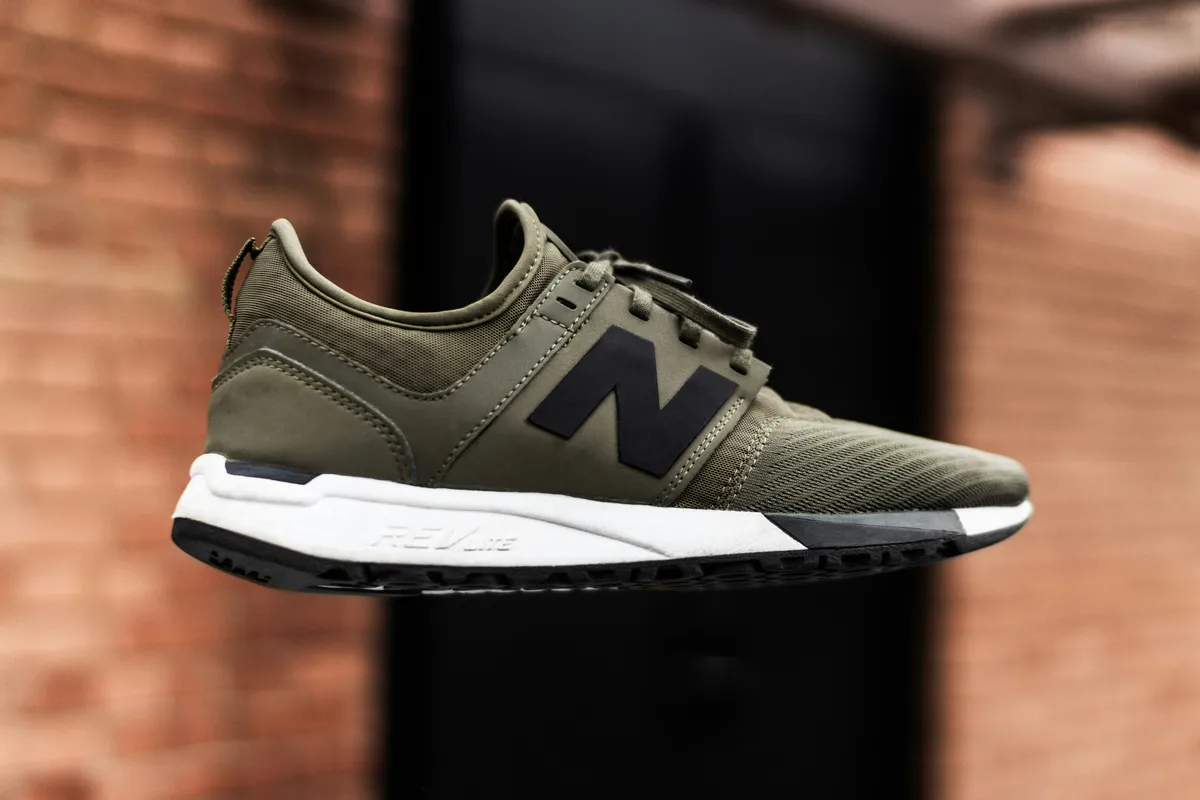
New Balance positions the 1080v15 as an everyday running and long-run shoe. Its official product page describes new Infinion midsole technology intended to provide durable cushioning and energy return, a rubber outsole, and a product weight that varies by the listed men's or women's version. The product has also received the American Podiatric Medical Association Seal of Acceptance according to New Balance.
Those specifications describe the product, not a guarantee that it will fit every runner. A cushioned daily trainer may work for easy miles, walking, standing, or long runs for some users, while another runner may prefer a firmer platform, lower stack, lighter shoe, or different geometry. Comfort during a controlled indoor test is more relevant than broad marketing labels.
1080v15 versus your current shoe
Use your current shoe as a reference only if you understand what is working and what is not. Record brand, model, version, size, width, approximate mileage, sock type, and any insole. Then list fit observations: heel security, forefoot pressure, toe contact, arch sensation, hot spots, and how the shoe feels late in a run.
Model updates can change foam, upper, shape, weight, and ride. Do not assume the 1080v15 fits exactly like an older 1080 version. If replacing the same line, compare the official specifications and try the new version as a new shoe rather than relying only on the label.
| Current-shoe observation | Possible next test | What not to assume |
|---|---|---|
| Toes contact front downhill | Check length and heel lockdown | A wider shoe alone will fix it |
| Forefoot numbness | Test width, volume, lacing, and professional advice | Breaking in will solve painful pressure |
| Heel slips | Check size, heel shape, and lacing | A smaller size is always correct |
| Arch feels intrusive | Try another model or insole setup | More cushioning means better compatibility |
| Shoe feels dead | Review mileage and foam preference | The same model is the only replacement |
How to test running shoes indoors
New Balance's current return policy requires eligible footwear to be in new condition and reserves the right to refuse worn or damaged merchandise. Keep testing clean and indoors until the decision is made. Wear normal running socks and any orthotic or insole that is part of the intended setup.
Stand, walk, climb stairs, perform a controlled calf raise, and jog briefly on a clean indoor surface if safe. Check both feet. The heel may move slightly without rubbing, but repeated lift or collar friction is a warning. The forefoot should not spill over the platform or feel compressed. Toes should move without striking the front.
Ten-minute indoor fit routine
- Loosen the laces fully before putting the shoe on.
- Seat the heel and lace from the bottom with even tension.
- Stand for two minutes and note pressure points.
- Walk slowly, then at a normal pace.
- Test stairs and a controlled forward lean.
- Jog only on a clean surface if space and safety allow.
- Repeat with the other lacing setup or insole if needed.
- Remove the shoes and check for red pressure marks.
Lacing can refine fit, but it cannot replace fit
A runner's loop can improve heel lockdown. Window lacing can reduce pressure over a sensitive instep. Looser forefoot lacing can create a small amount of comfort. These are refinements for a fundamentally compatible shoe. They should not be used to force a painful width, incorrect length, or unsuitable shape to work.
After changing lacing, check that the tongue stays positioned and circulation is not restricted. Retest both feet because one foot may need a slightly different tension. Replace laces only if the original length prevents a secure setup.
Insoles and orthotics change internal volume
An aftermarket insole or prescribed orthotic can raise the foot, reduce toe-box volume, change heel position, and affect lace pressure. Test the exact setup before removing tags. If the product uses a removable sockliner, confirm that the replacement sits flat and does not create an edge or unstable surface.
People using medical orthotics or managing pain should follow professional guidance. A neutral product description or an APMA seal is not a personalized recommendation for a specific injury or condition.
Choose the shoe for the actual training job
The 1080v15 is presented as an everyday and long-run model, which can make it a versatile option. Still, build a rotation around real needs. A new runner may prefer one comfortable daily shoe. A higher-volume runner may use separate shoes for easy runs, workouts, trails, or racing. A walker may prioritize standing comfort, outsole durability, and work-surface requirements.
Do not buy multiple discounted pairs before confirming that the model works over time. Foam preference and fit can change after several runs, and stored shoes still age. One correct pair is more valuable than two discounted pairs that create discomfort.
How to read customer reviews for fit
Filter reviews for the same gender sizing, width, and use case when possible. Look for patterns rather than isolated claims. Useful reviews state the reviewer's usual size, foot width, previous model, distance, and specific fit area. “Runs small” without context is less useful because the reviewer may be describing length, width, or volume.
Separate durability reports from fit reports. A review after one try-on can describe immediate comfort but not long-term outsole wear. A high-mileage review can discuss durability but may reflect a different body, gait, surface, and climate.
Return policy and discount exclusions
New Balance currently states that eligible items in new condition may be returned within 45 days of shipment for online purchases or purchase for store purchases. Proof of purchase is required, and final-sale or non-returnable items are excluded. Online returns may include a restocking fee for non-members, while eligible members and in-store returns have different treatment under the current policy.
The 1080v15 product page can also mark selected versions as excluded from promotions. Always test the coupon against the exact size, width, and color. Do not switch to the wrong width solely because it accepts a code.
Calculate running-shoe value per use
Price per mile is difficult to predict because durability depends on runner, surface, rotation, gait, weather, and care. A more practical pre-purchase measure is expected uses per month and fit confidence. A $170 shoe used comfortably 100 times is cheaper per use than a $100 sale shoe abandoned after three runs.
Include return cost, replacement timing, and whether the shoe fills a missing role. Rewards or a member discount are future value only when you will use them without buying unnecessarily.
Common New Balance shoe-buying mistakes
- Reordering an old size without measuring feet again.
- Using a longer size to compensate for insufficient width.
- Choosing color availability over the correct width.
- Testing outdoors before confirming return eligibility.
- Assuming a highly cushioned shoe is right for every runner.
- Ignoring the volume change created by an orthotic or thick sock.
- Buying two sale pairs before validating the first pair.
- Using customer star ratings as a substitute for fit testing.
- Keeping a painful shoe because it may “break in.”
Frequently asked questions
Should running shoes be a half size larger?
There is no universal rule. Measure both feet, use the brand chart as a starting point, and evaluate toe room, heel hold, width, and the intended sock or insole setup.
What if one foot is larger?
New Balance recommends fitting the larger foot. Adjust lacing or seek fitting help for the smaller foot rather than compressing the larger one.
Is the 1080v15 only for running?
New Balance markets it for everyday running and long runs, while some shoppers may also use it for walking or standing. Suitability depends on fit, comfort, workplace rules, and individual needs.
Can I return shoes after running outside?
The current policy requires eligible merchandise to be in new condition and allows refusal of worn or damaged items. Keep the initial test indoors and read the exact policy before use.
Do New Balance coupons work on the 1080v15?
Promotion eligibility can vary by version, color, and current terms. Some product pages state that an item is excluded from promotions. Judge the final cart for the exact selection.
Final New Balance fit checklist
- Measure both feet while standing in normal running socks.
- Choose the starting size from the larger foot.
- Match width instead of automatically adding length.
- Account for insoles, orthotics, and sock thickness.
- Compare the 1080v15 with the job your current shoe performs.
- Test heel, midfoot, forefoot, and toe room indoors.
- Read reviews that match your width and use case.
- Confirm return fees, final-sale status, and promotion exclusions.
- Open current New Balance deals and running-shoe offers only after fit requirements are clear.
Sources checked
More coupon shopping advice

Home Security Camera Buying Guide: Local vs. Cloud Storage
A practical, balanced buying guide to home security cameras that weighs local storage against cloud subscriptions, wired versus battery power, camera placement, night vision, smart detection accuracy, and smart home integration.

Beginner Mirrorless Camera Buying Guide
A practical, honest walkthrough of what actually matters when buying your first mirrorless camera, from sensor size and lens mounts to autofocus, video specs, and the real total cost of a beginner-friendly system.

Air Purifier Buying Guide: CADR, ACH, and Filter Costs Explained
A practical walkthrough of the numbers that actually matter when buying an air purifier — CADR and ACH for sizing, true HEPA versus marketing terms, real three-year filter costs, realistic noise levels, and when a purifier won't help at all.