
Gas vs Charcoal Grill Buying Guide: Which One You Will Actually Light
The flavour gap is smaller than the folklore suggests. Startup time, build quality, and parts availability decide this purchase.
Grill shopping is dominated by a debate — gas versus charcoal — that most buyers settle for the wrong reason. People choose charcoal because they believe it tastes better and then use it four times a year because lighting it takes half an hour. Or they choose gas for convenience and spend the next five summers slightly disappointed that nothing tastes the way it does at a barbecue restaurant.
Both instincts contain something true. The useful question is not which produces better food in principle, but which one you will light on a Wednesday evening in October. A grill used weekly beats a better grill used monthly, and that is the entire decision compressed into a sentence.
The quick answer
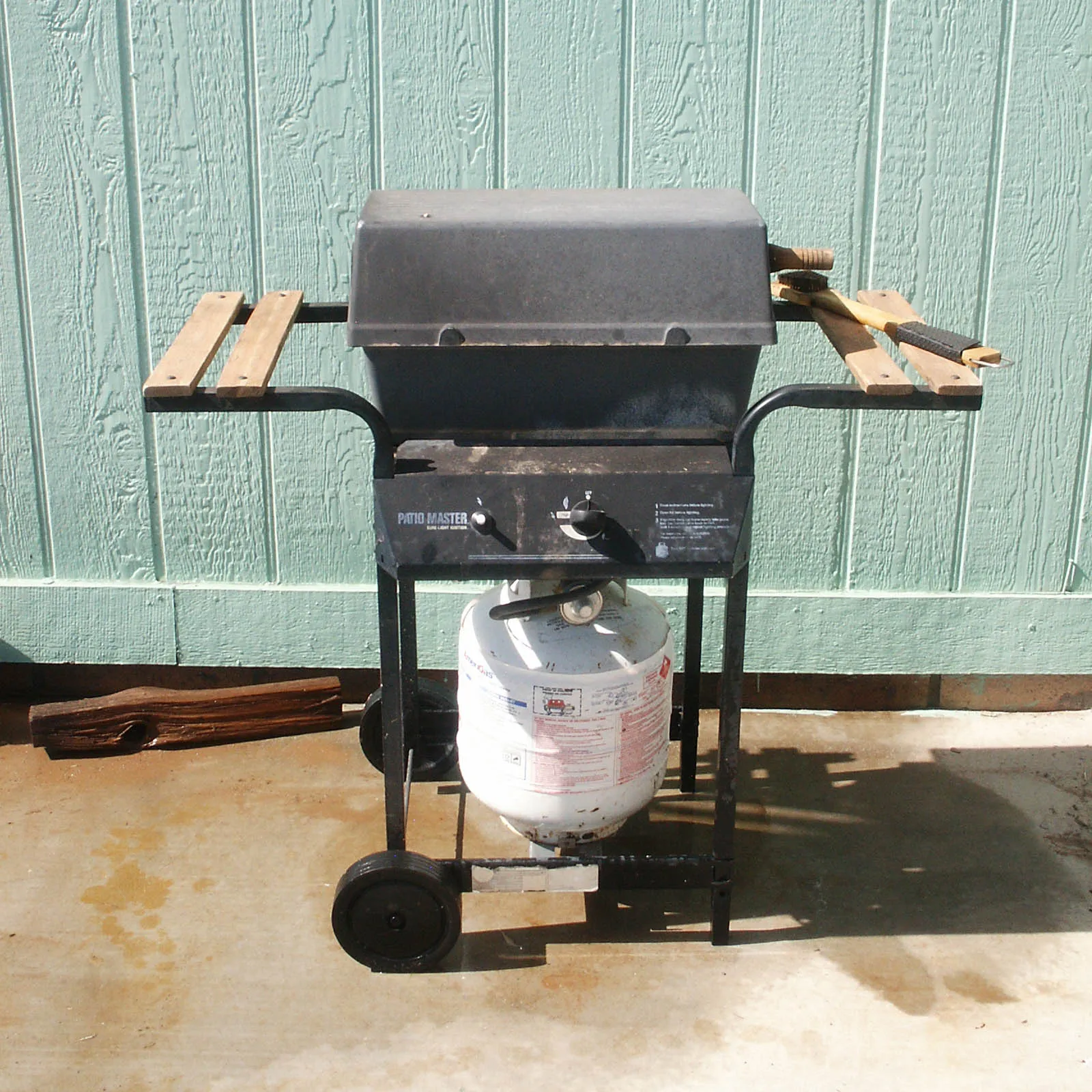
Gas if you grill on weeknights, cook for a family, or value being able to start and stop in ten minutes. Budget $350-$700 for a three-burner that will last a decade.
Charcoal if grilling is a weekend activity you enjoy for its own sake, if you want serious searing heat, and if a 25-minute startup is acceptable. Budget $120-$300 for a kettle that will outlast most gas grills.
Pellet if you mostly want low-and-slow smoking with set-and-forget temperature control, and you accept that most pellet grills sear poorly. Budget $500-$1,000.
Buy both if the budget stretches: a mid-range gas grill and a $150 charcoal kettle together cost less than one premium gas grill and cover far more cooking. This is the recommendation most experienced grillers converge on.
Where the flavour argument actually stands
The flavour difference between gas and charcoal is real but smaller and more specific than the folklore suggests. Most of what people identify as "grilled flavour" comes from two sources, and neither is the fuel.
The first is the Maillard reaction and caramelisation on the meat surface, which is purely a function of temperature and dryness. Any grill hot enough produces it. The second is fat and juices dripping onto a hot surface, vapourising, and depositing back on the food. That happens on gas grills too, via flavouriser bars or heat tents over the burners.
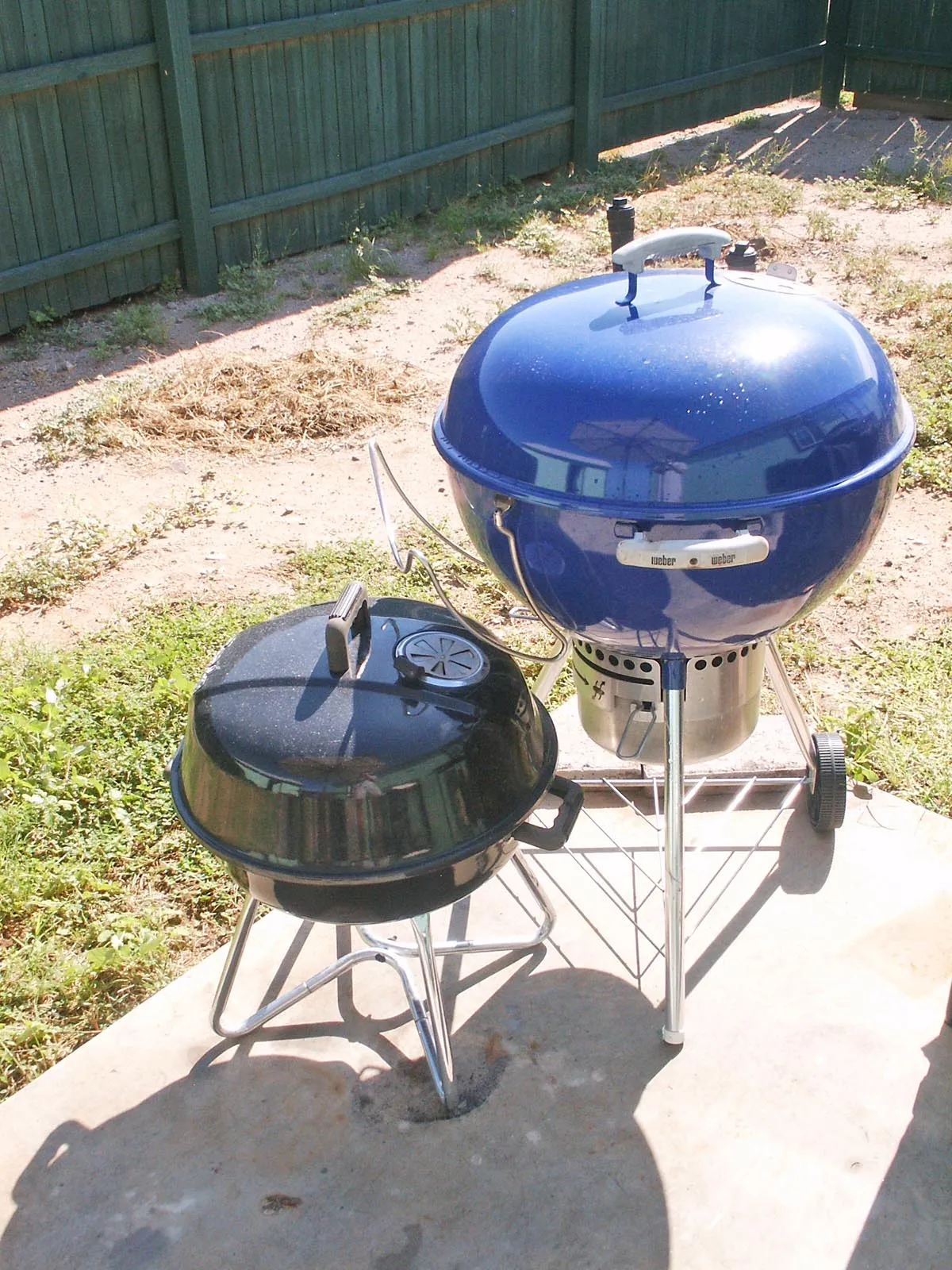
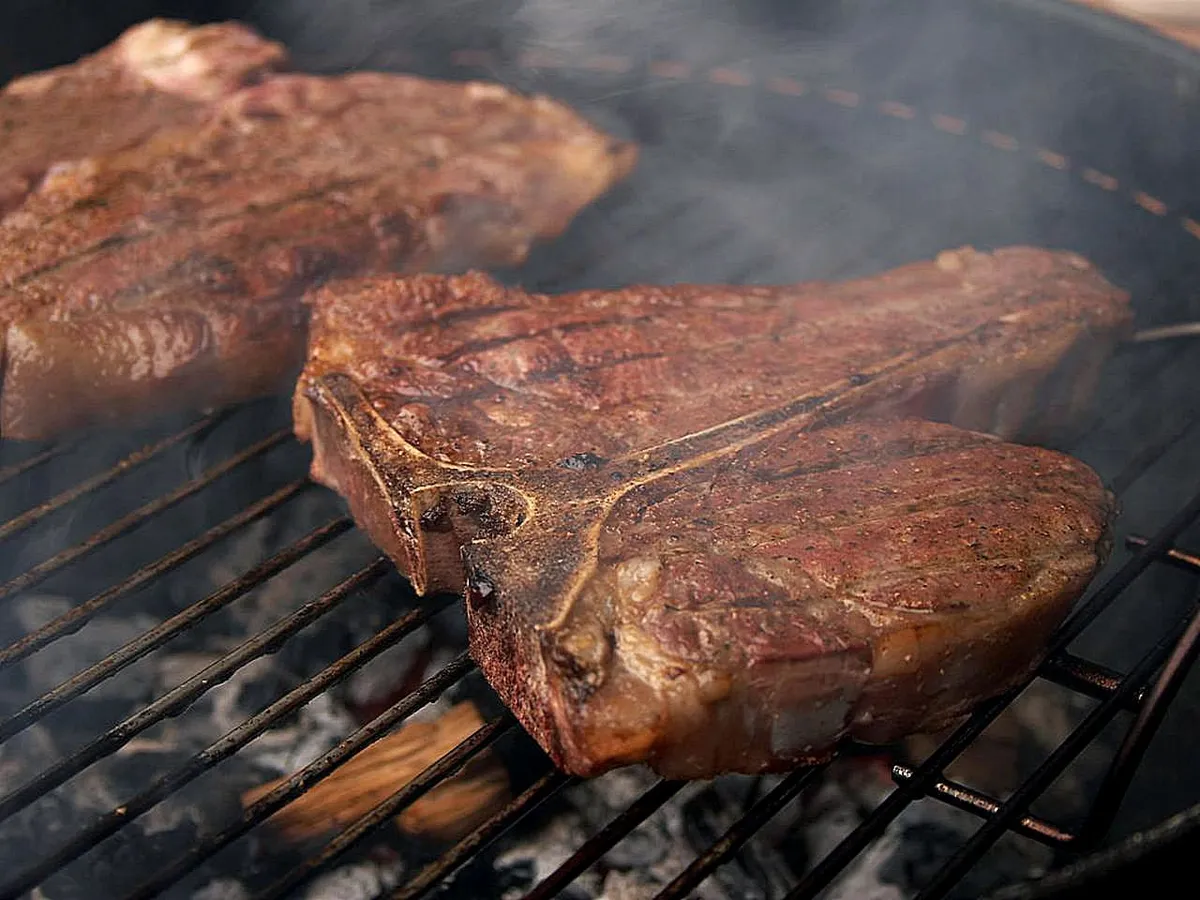
What charcoal adds genuinely is combustion products from the fuel itself — a light smoke character that lump hardwood charcoal provides more of than briquettes. And it reaches higher surface temperatures: a well-lit charcoal bed can exceed 370°C at the grate, while most consumer gas grills top out around 260-315°C. For a thick steak where you want a hard crust before the interior overcooks, that difference matters.
For chicken thighs, burgers, vegetables, and fish — the majority of home grilling — a competent gas grill and a competent charcoal grill produce food that most people cannot reliably distinguish in a blind test.
Judging a gas grill without believing the BTU number
BTU per hour is the specification printed largest and the least useful in isolation. A high BTU rating on a poorly-insulated grill with thin metal just means it burns more fuel to reach the same temperature. The meaningful figure is BTU divided by primary cooking area: roughly 12,000-13,000 BTU per 900 square centimetres is a well-matched design. Substantially more suggests inefficiency, not power.
Four construction details predict how long a gas grill lasts. Firebox material: cast aluminium or thick stainless steel survives a decade; painted thin steel rusts through in three to five years, usually at the bottom where grease pools. Burner material: stainless steel burners last five to ten years, cast brass longer, and aluminised steel is the cheap option that corrodes first. Cooking grate material: porcelain-coated cast iron holds heat best and sears well but chips if you scrape it hard; solid stainless is more forgiving and slightly worse at searing; thin chrome-plated wire is a warning sign about the rest of the grill.
The fourth is lid and body gauge. A grill you can flex with your hands will warp and will not hold a stable temperature with the lid closed, which matters for anything cooked indirectly.
Also check that replacement parts are available. The best mid-range grills are supported with burners, grates, and flavouriser bars for a decade or more, which makes a $500 grill a fifteen-year purchase instead of a five-year one. This is a much larger factor in lifetime cost than the initial price gap between brands.
Pellet grills, honestly
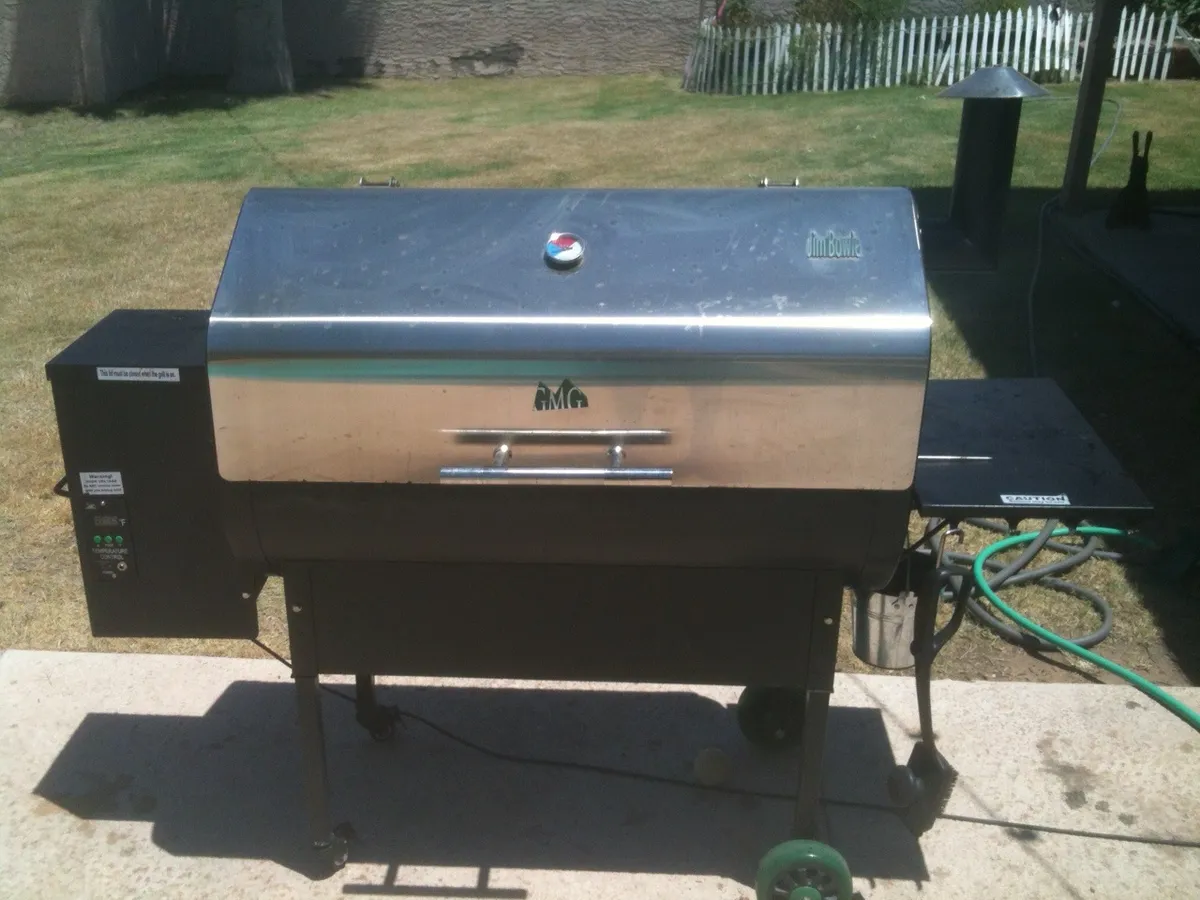
A pellet grill is a wood-fired convection oven with a thermostat. An auger feeds compressed hardwood pellets into a fire pot, a fan controls combustion, and a controller holds a set temperature within about 10 degrees. For smoking a brisket overnight, this is transformative — the machine does the fire management that used to require getting up every ninety minutes.
The catch is searing. Because heat is indirect and fan-driven, most pellet grills struggle to exceed 260°C, and a steak comes out grey rather than crusted. Manufacturers have added sear zones and higher-temperature modes, and they help without matching charcoal.
Pellet grills also need mains power, produce fine ash that requires regular vacuuming from the fire pot, and depend on dry pellets — a bag that has absorbed moisture will jam an auger and ruin a cook. Factor in the ongoing pellet cost, typically $1.50-$2.50 per hour of cooking.
Charcoal: the details that make it easy or miserable
Most people who dislike charcoal disliked lighter fluid and a chimneyless startup. A $20 chimney starter fixes both: a sheet of newspaper underneath, fifteen to twenty minutes, and you have evenly lit coals with no petroleum taste. This single accessory changes the experience more than any grill upgrade.
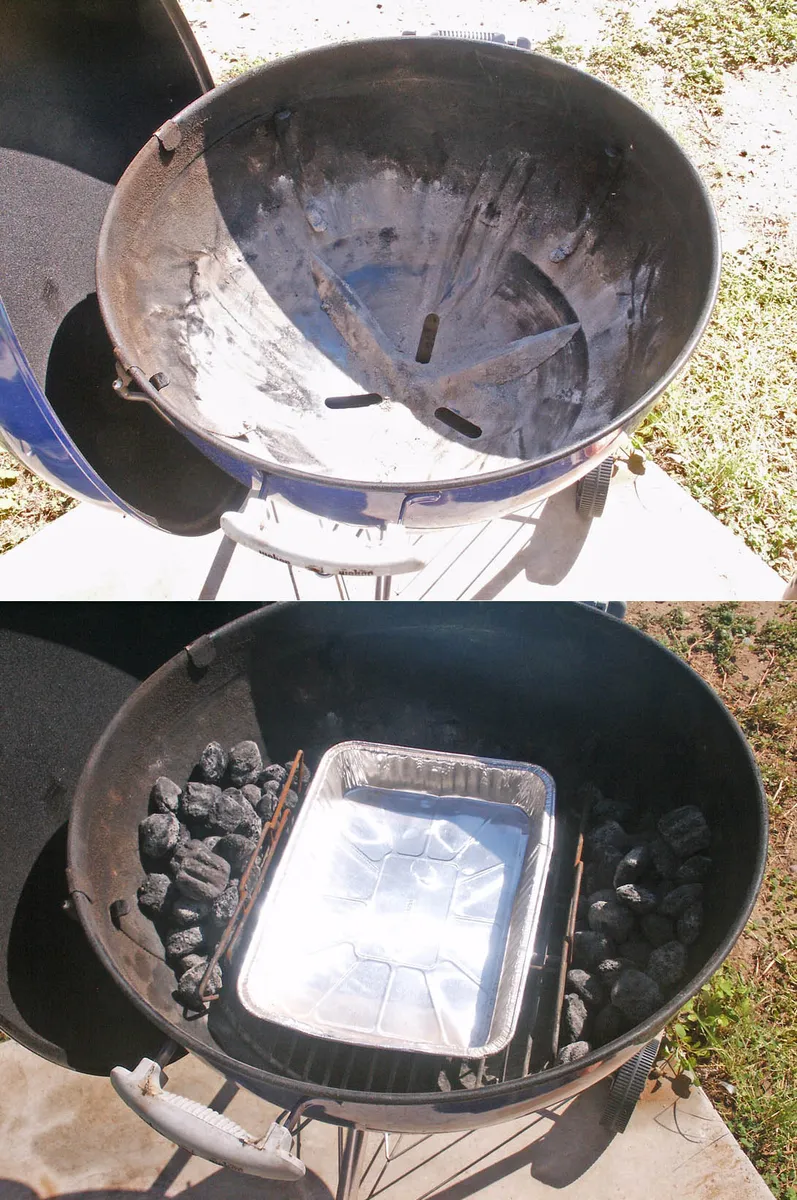
Temperature control on charcoal is airflow control. Bottom vents govern how much oxygen reaches the fire and therefore how hot it burns; top vents govern how fast heat and smoke exit. Both open means hot and fast; both mostly closed means low and slow. A kettle with well-sealing vents and a tight lid can hold 110°C for hours, which is why the humble kettle is still a serious smoker.
Two-zone cooking is the technique that makes charcoal versatile. Bank all the coals to one side. Sear over the hot side, then move food to the empty side and close the lid to finish with indirect heat. This is how you cook a thick chop without burning the outside, and it is not available on a single-burner gas grill or a grill with a small cooking area.
Lump charcoal versus briquettes: lump lights faster, burns hotter, produces less ash, and burns unevenly. Briquettes burn longer at a steadier temperature and produce more ash. For searing, lump. For long cooks, briquettes.
Sizing, and the mistake of buying too big
Cooking area is quoted in square centimetres or inches and often includes the warming rack, which is not usable cooking space. Look for the primary grate area alone. Roughly 1,900-2,600 square centimetres suits a family of four; 2,600-3,900 handles regular entertaining; beyond that you are heating space you rarely use.
Oversizing has a real cost on gas: more burners means more fuel to preheat, and a large grill lit for two burgers wastes both propane and time. On charcoal it means using more fuel than needed or running a fire so small that half the grill is unusable anyway.
Burner count matters more than total area on gas. Three burners is the practical minimum for two-zone cooking, because you can run the outer two and leave the middle off. A two-burner grill can do it in a pinch; a single-burner cannot, which restricts you to fast, thin cuts.
Running costs and fuel
Propane runs roughly $0.60-$1.20 per hour of cooking depending on burner use and local prices, and a 9kg cylinder gives about 18-20 hours. Natural gas conversion, where a line is available, costs less per hour and removes cylinder swaps, at the price of a plumbed installation and a grill fixed in place.
Charcoal runs about $1.50-$3.00 per session for a family cook, which makes it the more expensive fuel per use despite the cheaper grill. Over ten years the totals converge closely enough that fuel cost should not drive the decision.
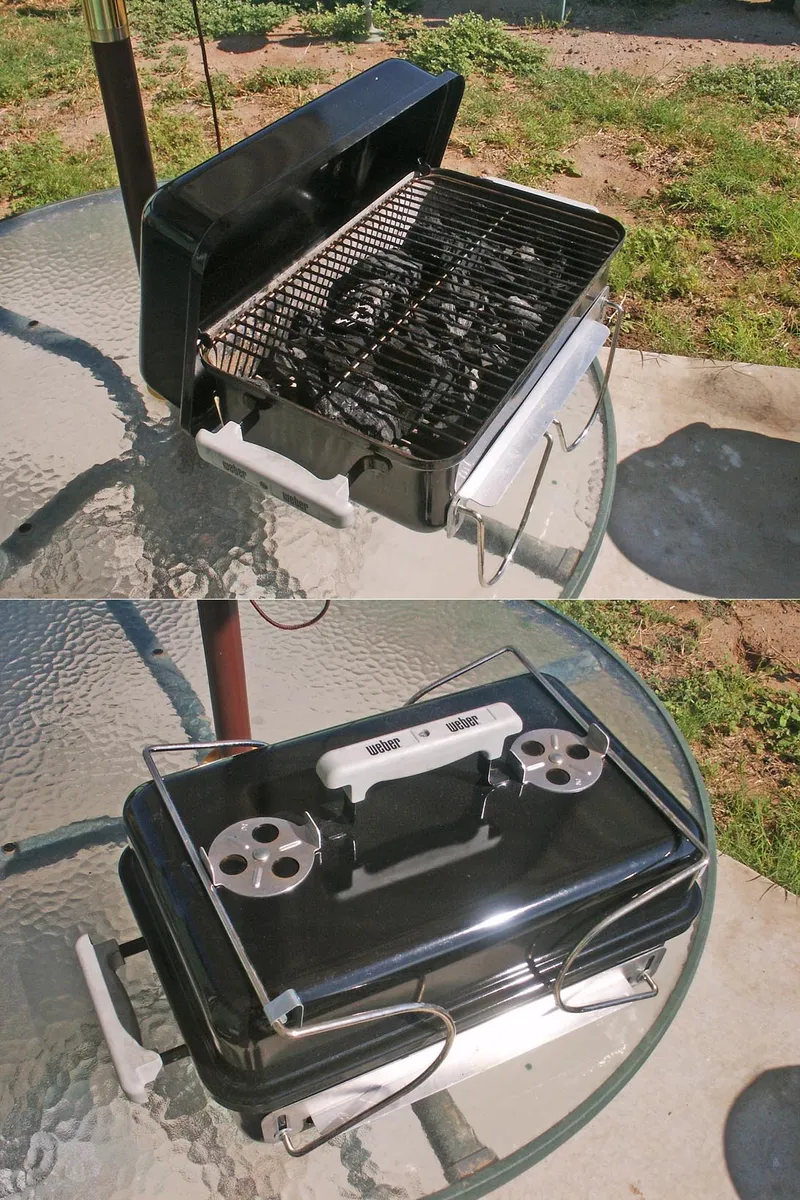
What does drive long-term cost is durability and parts. A $250 gas grill replaced three times costs more than a $600 grill maintained once, and produces worse food throughout. If budget is tight, a charcoal kettle at $150 is a better use of the money than a bottom-tier gas grill at the same price, because kettles have almost nothing to break.
When not to buy a grill at all
If you live in a flat with a balcony, check the rules before shopping. Many buildings and local fire codes prohibit charcoal and open-flame gas grills on balconies entirely, and permit only electric. An electric grill will not sear like charcoal, but it is the legal option and it does produce good results on vegetables and thin cuts.
If you grill twice a summer, a $150 kettle is the correct purchase and a $700 gas grill is not. If you mostly want smoke flavour and already own an oven, a $40 stovetop smoker or a smoker box on an existing grill gets you most of the way for almost nothing.
Accessories that actually earn their space
An instant-read thermometer is the highest-return $25 in outdoor cooking, because doneness is a temperature and every other method is guesswork. A chimney starter for charcoal. A stiff grill brush or, better, a bristle-free scraper — wire bristles occasionally detach and end up in food. A grease tray you can actually remove and clean, which is a design feature to check before buying rather than an accessory.
Skip the fourteen-piece tool sets. You need long tongs, a wide spatula, and a basting brush. The rest goes in a drawer.
For a worked example of how a mid-range three-burner behaves over a full season of real use — preheat times, temperature stability with the lid closed, and where the build quality shows — our Weber Spirit II E-310 review covers fourteen weeks of it, including the parts that the spec sheet does not predict.
More coupon shopping advice

Home Security Camera Buying Guide: Local vs. Cloud Storage
A practical, balanced buying guide to home security cameras that weighs local storage against cloud subscriptions, wired versus battery power, camera placement, night vision, smart detection accuracy, and smart home integration.

Beginner Mirrorless Camera Buying Guide
A practical, honest walkthrough of what actually matters when buying your first mirrorless camera, from sensor size and lens mounts to autofocus, video specs, and the real total cost of a beginner-friendly system.

Air Purifier Buying Guide: CADR, ACH, and Filter Costs Explained
A practical walkthrough of the numbers that actually matter when buying an air purifier — CADR and ACH for sizing, true HEPA versus marketing terms, real three-year filter costs, realistic noise levels, and when a purifier won't help at all.