
Child Car Seat Buying Guide: Stages, Fit, and the Installation Errors That Matter
Every legal seat passes the same crash test, so what you are really buying is a seat you can install correctly and keep using for longer.
Car seats are the only purchase in this category where the consequences of getting it wrong are measured in something other than money, and they are also the category most cluttered with features that have nothing to do with safety. Cup holders, fabric grades, and "premium" trim levels are all real product differentiators, and none of them affect crash performance.
The useful framing is this: every seat sold legally has passed the same regulatory crash test. What varies between a $90 seat and a $450 seat is not whether it protects your child, but how easy it is to install correctly, how long it fits them, and how much abuse the fabric survives. Since incorrect installation is the dominant real-world failure mode, ease of installation is a safety feature — arguably the most important one.
The quick answer
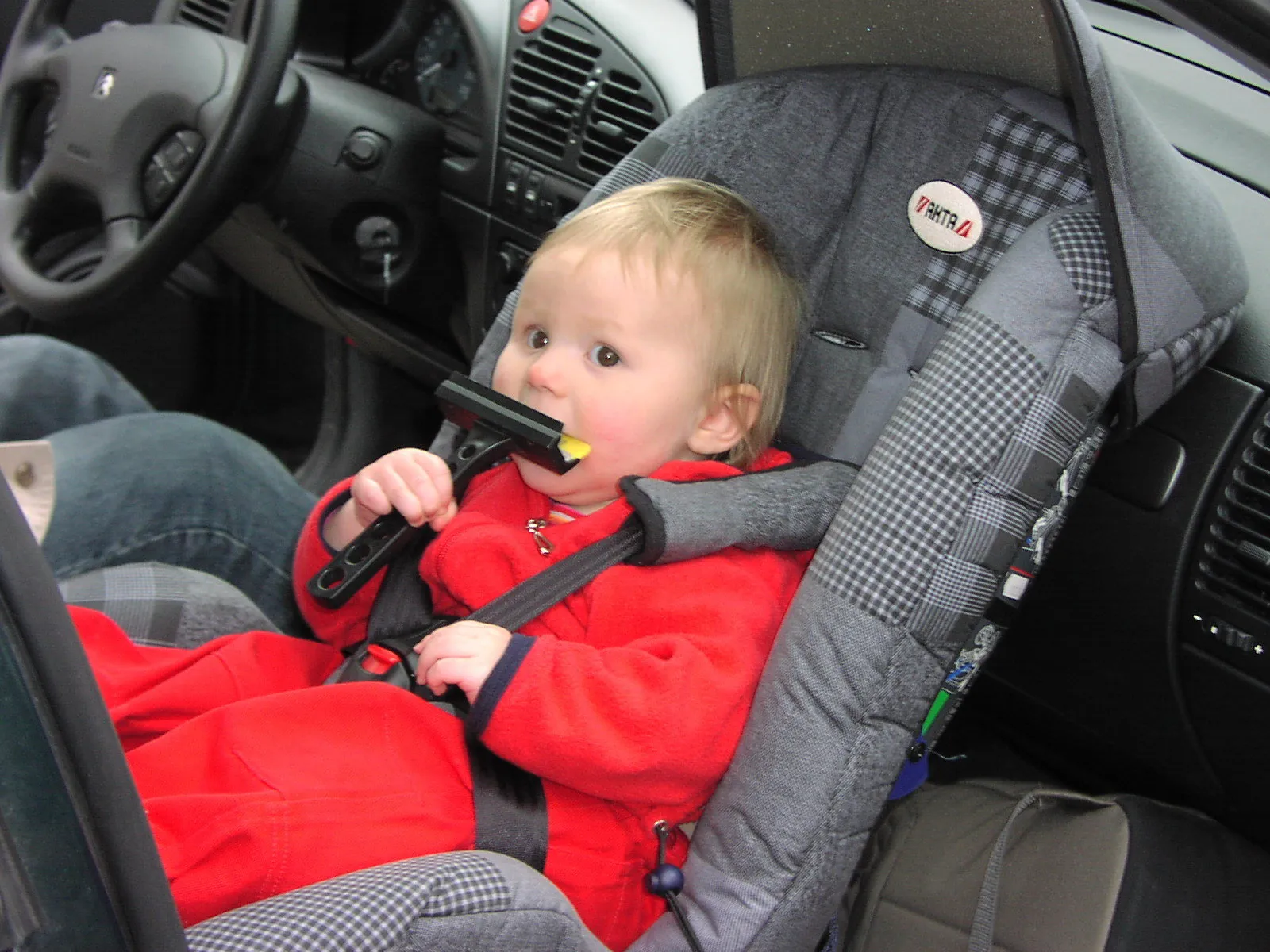
Newborn to around 12 months: an infant carrier with a detachable base, or a convertible seat used rear-facing. The carrier is more convenient; the convertible is cheaper over time.
Roughly 1 to 4 years: a convertible seat, kept rear-facing as long as the seat's limits allow, then forward-facing with a five-point harness.
Roughly 4 to 10-12 years: a high-back booster, moving to a backless booster only when the vehicle has adequate head support, and staying in a booster until the adult seat belt fits properly — which is about height, not birthday.
Buy new, or from someone you personally trust. This is the one product category where the second-hand market carries real risk, for reasons covered below.
Rear-facing is not a phase to rush through
In a frontal collision — the most common serious crash type — an unrestrained head continues forward while the body is held. A young child's head is disproportionately heavy relative to their body, and the cervical spine and its ligaments are still developing. A rear-facing seat spreads that force across the entire shell, supporting the head, neck, and spine together instead of loading the neck.
Crash data and biomechanical studies consistently support keeping children rear-facing well beyond the legal minimum. Guidance in most countries has moved from "until 12 months" toward "until they exceed the seat's rear-facing height or weight limit," which on modern convertible seats commonly means age three or four.
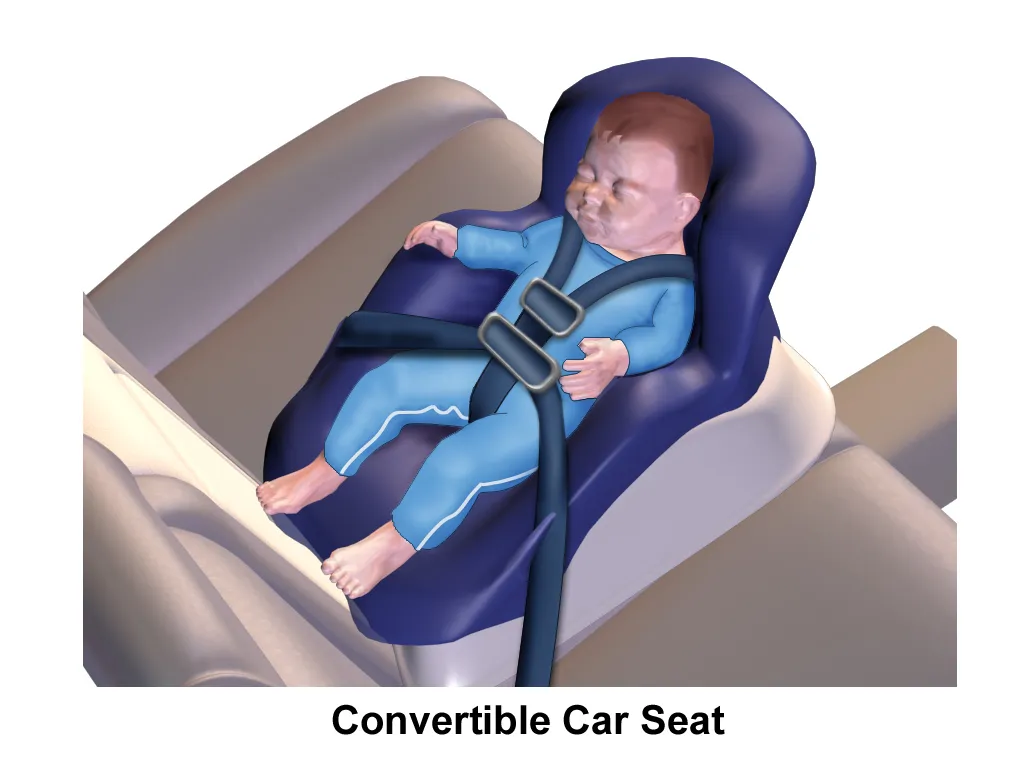
The two objections parents raise are legs and boredom. Bent legs in a rear-facing seat are not a safety problem; children sit cross-legged comfortably and leg injuries in rear-facing children are rare. Boredom is real, and it is a scheduling problem rather than a safety one.
What does matter is the recline angle. Rear-facing seats have an indicator — a line, bubble level, or dial — that must be within range for the child's age. Too upright and an infant's head can slump forward and compromise the airway. Too reclined and crash forces are managed less effectively. This single adjustment is worth more attention than most of the shopping decision.
The four seat types, and when each stops making sense
Infant carriers clip into a base that stays in the car. The appeal is obvious: you carry a sleeping baby indoors without unbuckling. They are outgrown by height, usually before weight, typically somewhere between 9 and 15 months. Budget $120-$300, and expect to replace it within roughly a year.
Convertible seats go rear-facing then forward-facing, covering birth or near-birth to around four years. They stay in the car permanently, which is less convenient with a newborn and considerably cheaper across the whole period. Budget $150-$400.
All-in-one seats extend that further, converting again into a booster and claiming to be the only seat you buy. This is genuinely economical, and the honest caveat is that a seat compromising across a ten-year size range is rarely the best fit at any single stage. Budget $250-$450.
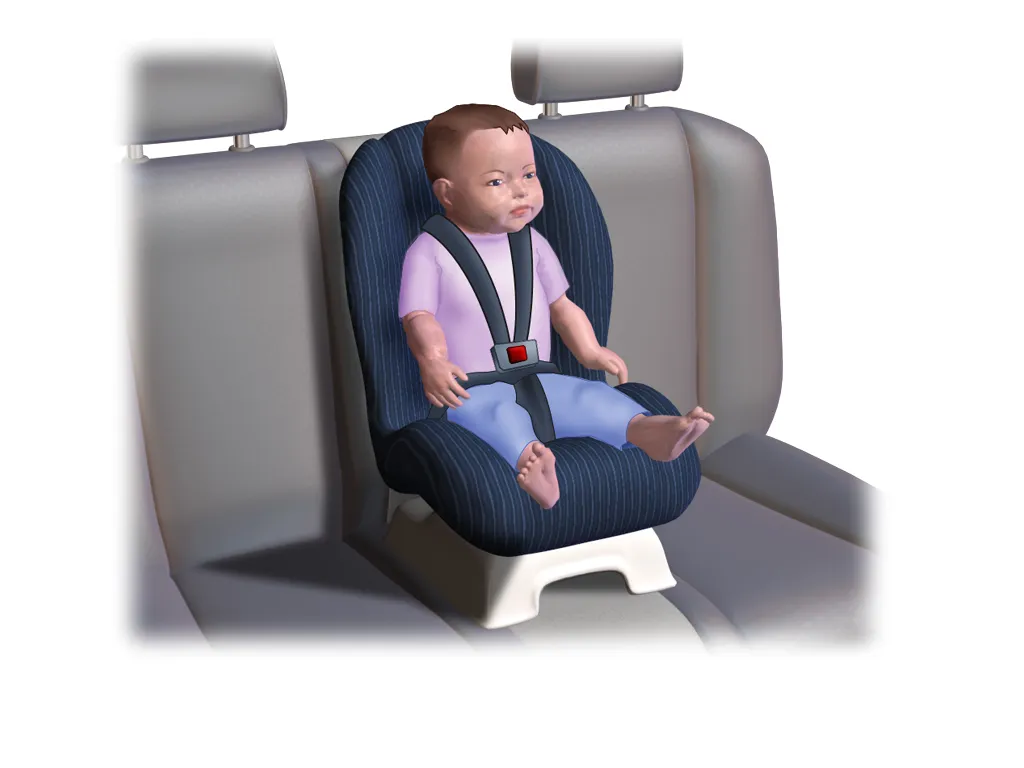
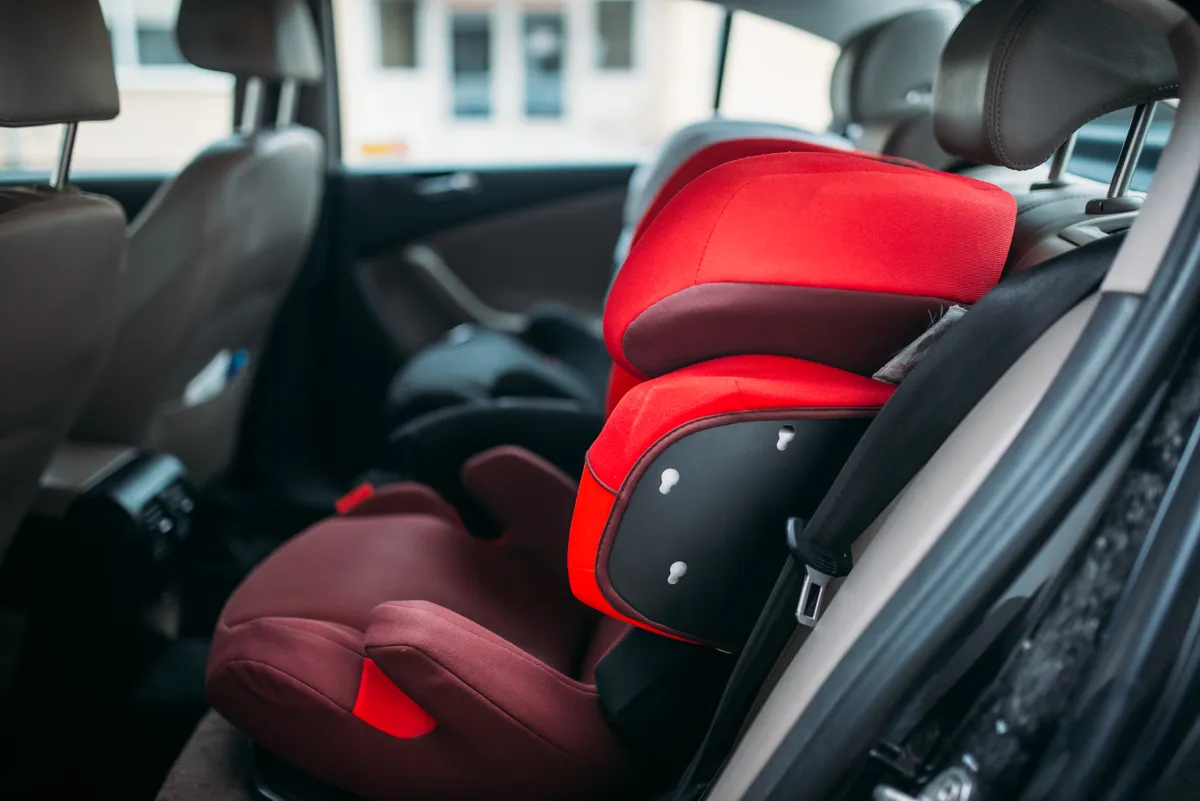
Boosters do one job: raise the child so the adult seat belt crosses the strong parts of the skeleton — mid-shoulder and low across the hip bones, not the neck and soft abdomen. High-back boosters add head protection and belt guides and are the better choice, especially in vehicles with low seat backs. Budget $40-$150.
Installation is where seats actually fail
Roadside checks repeatedly find that a large share of installed seats have at least one significant error. The common ones are worth memorising: a loose install that moves more than 2.5cm side-to-side at the belt path; a harness routed through the wrong slots; a chest clip sitting on the belly instead of at armpit level; harness straps loose enough to pinch a fold of webbing at the collarbone; and bulky winter coats worn under the harness, which compress in a crash and leave several centimetres of slack.
Two attachment systems exist, and they are equally safe when used correctly. The lower-anchor system (ISOFIX in Europe, LATCH in the US) uses dedicated metal bars in the vehicle seat bight. It is easier to get right, and it has a combined weight limit — usually around 29kg of child plus seat — beyond which you must switch to the vehicle belt. That limit surprises many parents and is stated in both the seat and vehicle manuals.
The vehicle seat belt method works at all weights and requires locking the belt, usually by pulling it fully out until the retractor clicks into locked mode. Never use both systems together unless the seat manufacturer explicitly permits it; the load paths are not designed to combine.
For forward-facing seats, the top tether is not optional. It is a strap running from the top of the seat to an anchor point behind the vehicle seat, and it reduces forward head excursion in a crash by a substantial margin — commonly cited as 10-15cm. It is also the most frequently skipped step, because the anchor is often hidden under a parcel shelf or floor trim.
Fit your car, not just your child
Seats vary enormously in footprint, and vehicles vary in seat contour, belt geometry, and rear legroom. A well-reviewed seat can be a poor fit in a specific car — too deep to allow the front passenger seat to move back, or shaped so that it rocks on a heavily-contoured bench.
Three checks before buying. Measure the depth of your rear seat and compare it to the seat's rear-facing footprint. Check whether you need three seats across, which rules out most wide models and makes narrow-profile seats a specific search category. And check whether your vehicle has top tether anchors in the seating positions you intend to use — some middle positions do not.
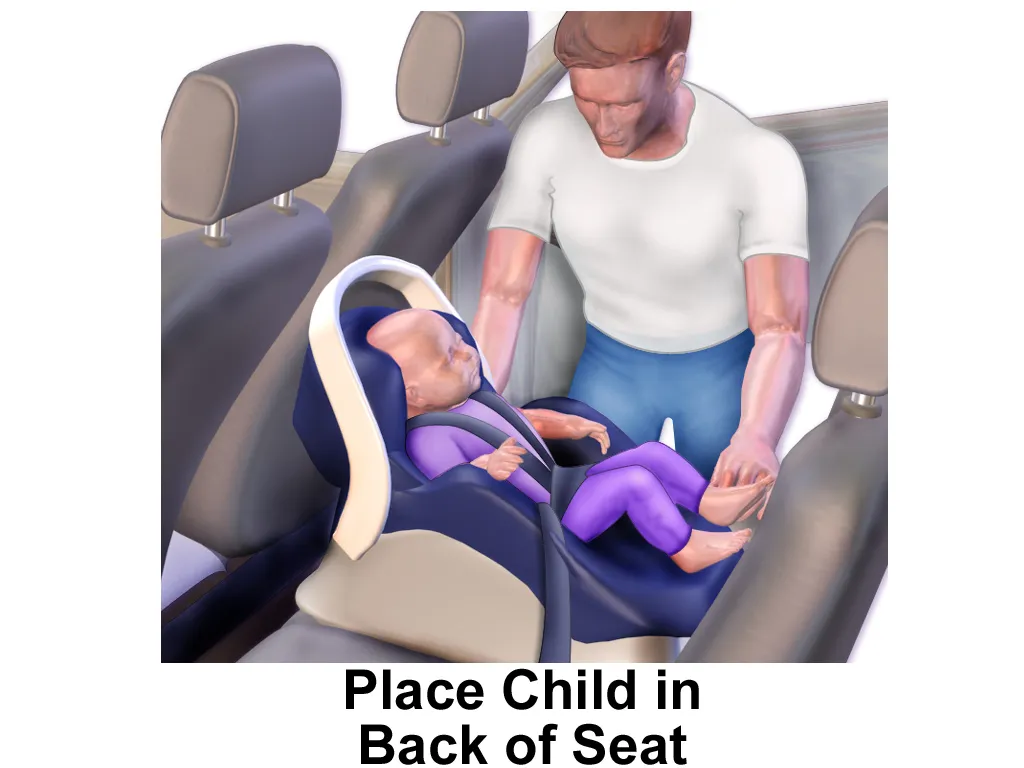
The centre rear position is statistically the safest, being furthest from any impact point. It is also the position least likely to have lower anchors and most likely to have an awkward contour or a raised hump. A correctly-installed seat in an outboard position beats a badly-installed seat in the middle, every time. Choose the position you can install tightly.
Second-hand seats and expiry dates
Car seats carry expiry dates, typically six to ten years from manufacture, moulded into the shell. This is not purely commercial: the polypropylene shell embrittles under years of heat cycling in a parked car, and harness webbing loses strength with UV exposure. An expired seat may look perfect and perform poorly.
A seat that has been in a crash should be replaced, even if it looks undamaged, because the energy-absorbing foam and shell are designed to deform once. Many insurers cover replacement for exactly this reason.
That combination — invisible crash history, invisible age damage, missing manuals, and frequently missing parts — is why second-hand seats from strangers are a genuinely poor risk. From a sibling or close friend whose history you know, and within the expiry date, it is a reasonable saving.
What extra money actually buys
Easier installation: better belt-path routing, built-in lock-offs, tension indicators, and clearer labelling. This is the most defensible reason to spend more.
Longer usable life: taller shells and higher rear-facing weight limits, which can add a year or more of rear-facing use.
No-rethread harnesses: the headrest and harness height adjust together with one lever, rather than requiring you to disassemble and rethread the straps every few months. It sounds minor and it changes how often the harness is actually at the correct height, which is a real safety outcome.

Machine-washable, removable covers without unthreading the harness: unglamorous and genuinely valuable, because covers get vomited on and a cover that takes forty minutes to remove gets spot-cleaned instead.
What extra money does not reliably buy is better crash performance. Side-impact protection claims in particular are worth reading sceptically, since testing standards for side impact vary by region and some marketed "side impact tested" claims are against a manufacturer's own internal protocol rather than an external standard.
A short pre-purchase checklist
Confirm the seat is certified for your region — a seat bought abroad may not be legal or compatible with local belt systems. Check the rear-facing height and weight limits, not just the age range. Measure your rear seat depth. Confirm top tether anchor availability. Verify the harness adjusts without rethreading if you want that convenience. Check the expiry period from the manufacture date, since a seat sitting in a warehouse has already used some of it.
Then, after installation, get it checked. Many fire stations, hospitals, and road-safety organisations offer free inspections by certified technicians, and they routinely find errors in seats installed by careful, attentive parents who read the manual. That check is free and it addresses the failure mode that actually occurs.
For a look at how one all-in-one seat handles the multi-stage transition over years rather than in a showroom, our Graco 4Ever DLX review follows a single seat through its configuration changes and the practical friction at each one.
More coupon shopping advice

Home Security Camera Buying Guide: Local vs. Cloud Storage
A practical, balanced buying guide to home security cameras that weighs local storage against cloud subscriptions, wired versus battery power, camera placement, night vision, smart detection accuracy, and smart home integration.

Beginner Mirrorless Camera Buying Guide
A practical, honest walkthrough of what actually matters when buying your first mirrorless camera, from sensor size and lens mounts to autofocus, video specs, and the real total cost of a beginner-friendly system.

Air Purifier Buying Guide: CADR, ACH, and Filter Costs Explained
A practical walkthrough of the numbers that actually matter when buying an air purifier — CADR and ACH for sizing, true HEPA versus marketing terms, real three-year filter costs, realistic noise levels, and when a purifier won't help at all.