
Wahl Corded Hair Clipper Review: Six Months and Twelve Home Haircuts
Paid for itself in two haircuts and produced acceptable results from cut four onward — the first three were genuinely bad, and the back of your own head stays a problem.
- Corded motor never faded mid-cut, unlike the cordless comparison model
- Adjustable taper lever varies cut length 1-3 mm, which makes blending possible
- Blades still cut cleanly with no pulling after six months of oiled use
- Ten guide combs from 3 mm to 25 mm cover any simple short style
- Paid for itself in two haircuts; about $28 saved per cut thereafter
- Fifteen minutes per cut by the eighth attempt
- First three cuts were visibly stepped and uneven
- Around 72 dB of harsh rotary buzz — a poor choice for cutting children's hair
- Blade area warms noticeably after about eight minutes of continuous use
- 8-foot cord tangles around your arm while working the back of your head
- Two guide combs developed slight flex after six months
- Cannot produce a proper tapered neckline single-handed
A barber visit costs $25-35 where I live, every three to four weeks. A corded Wahl clipper costs about $45. The arithmetic is obvious and it is also the least interesting part, because the real question is whether a home haircut looks acceptable — and the honest answer for the first three cuts is no.
I cut my own hair with a Wahl corded clipper for six months, twelve cuts total, and had a family member cut the back for four of them. Below is what actually goes wrong, in what order, and what the clipper does and doesn't do about it.
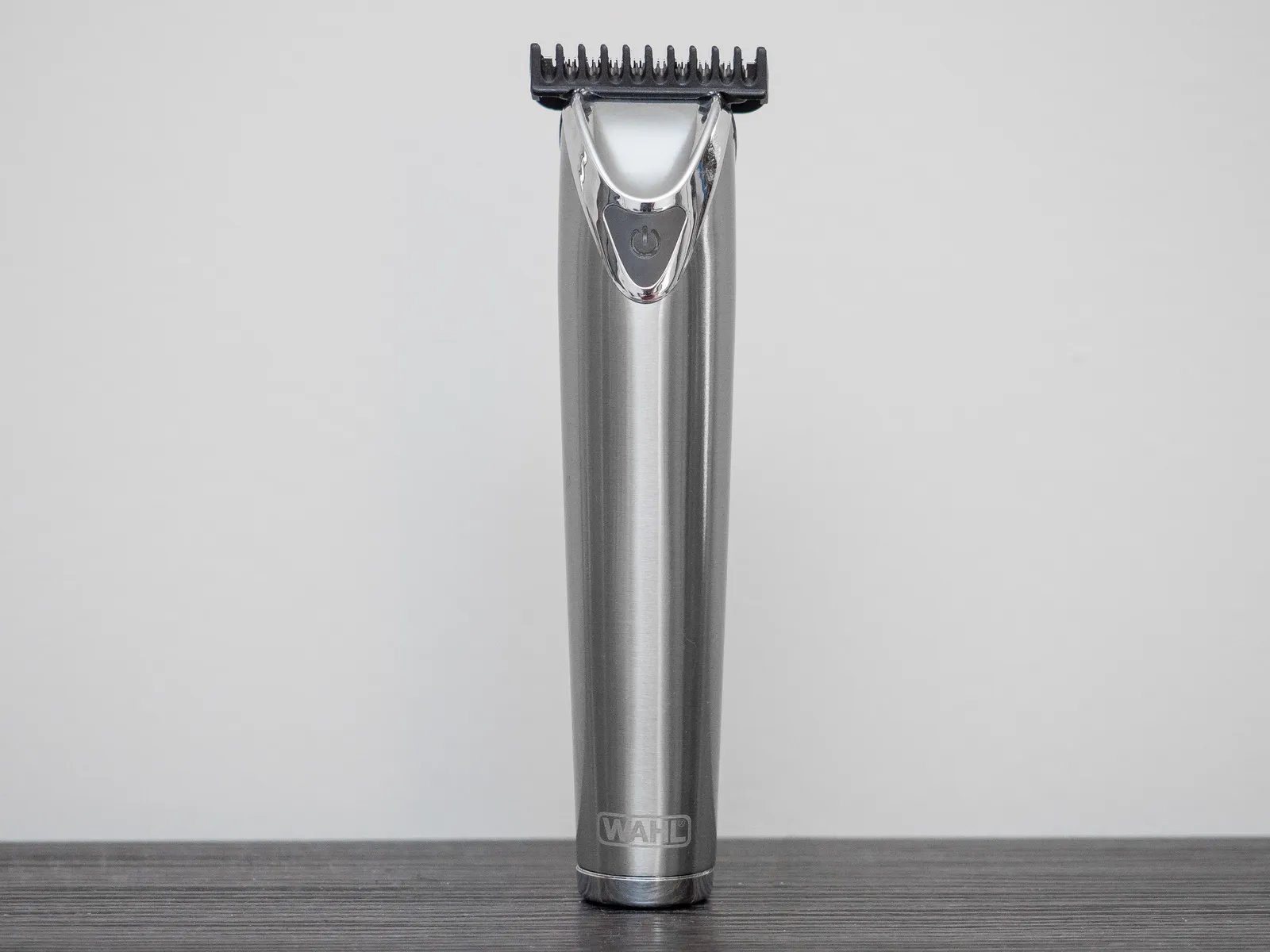
Corded is the right choice and here's why
I deliberately bought corded rather than cordless. A corded clipper runs at full motor speed indefinitely and never fades mid-cut, which matters because the failure mode of a weakening clipper is pulling hair rather than cutting it.
I borrowed a mid-range cordless clipper for two of the twelve cuts as a comparison. Both times it noticeably slowed in the last five minutes and started tugging on the thicker hair at my crown. That is precisely when you're doing the fiddly blending work and it is the worst possible time for the tool to weaken.
The cord is a genuine annoyance — about 8 feet, which reaches a bathroom mirror from a socket but tangles around your arm while you work the back of your head. That's the trade, and for a tool used monthly for fifteen minutes I'd take reliability over convenience every time.
The blade and the thing that makes cheap clippers bad
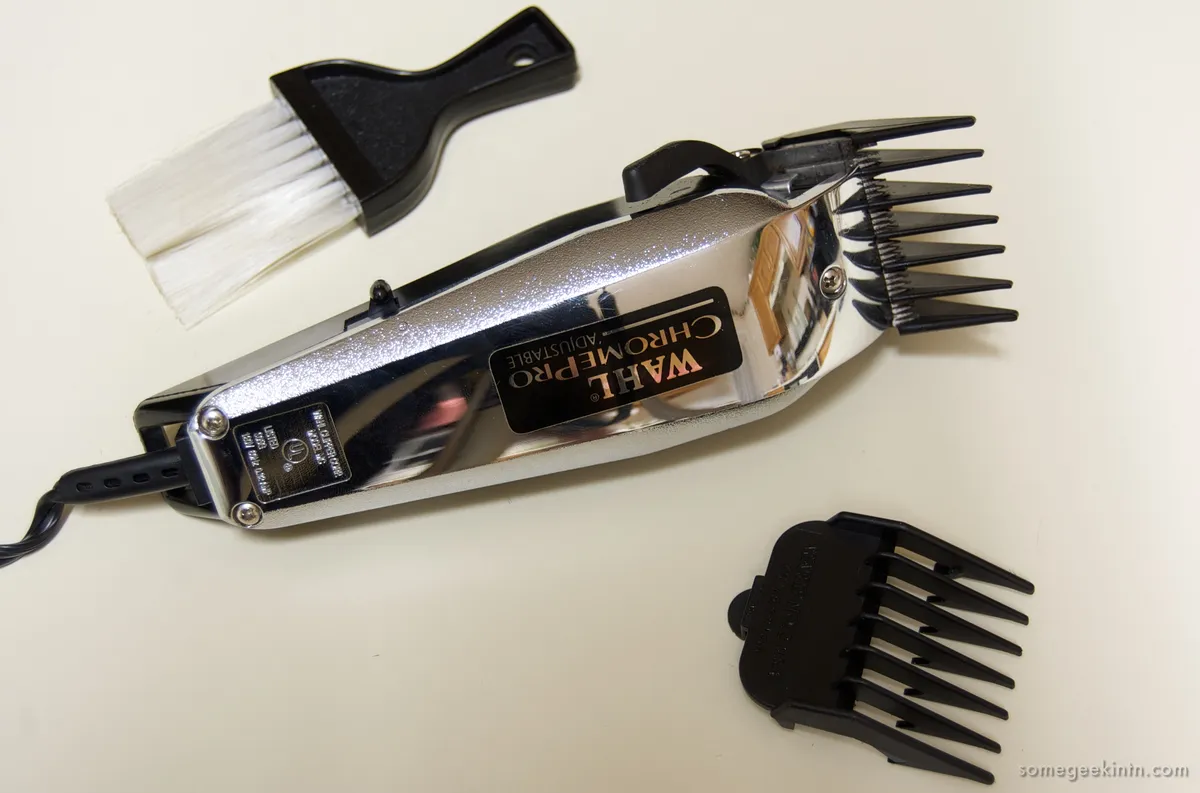
Wahl's self-sharpening precision blades are high-carbon steel and, crucially, adjustable via a lever that varies the cut length between roughly 1 mm and 3 mm without a comb attached. That lever is the difference between blending and stepping.
Six months in, the blades still cut cleanly through dry hair with no pulling. What they need is oil — three drops along the blade before every cut, which takes ten seconds and is the single most skipped maintenance step in home haircutting. An unoiled clipper blade heats up, dulls fast and starts grabbing hair. Mine has been oiled every cut and shows no degradation.
The blades also need brushing out after each use. Hair packs into the gap behind the cutting teeth, and once it's compacted the blade alignment shifts slightly. The kit includes a small brush; use it.
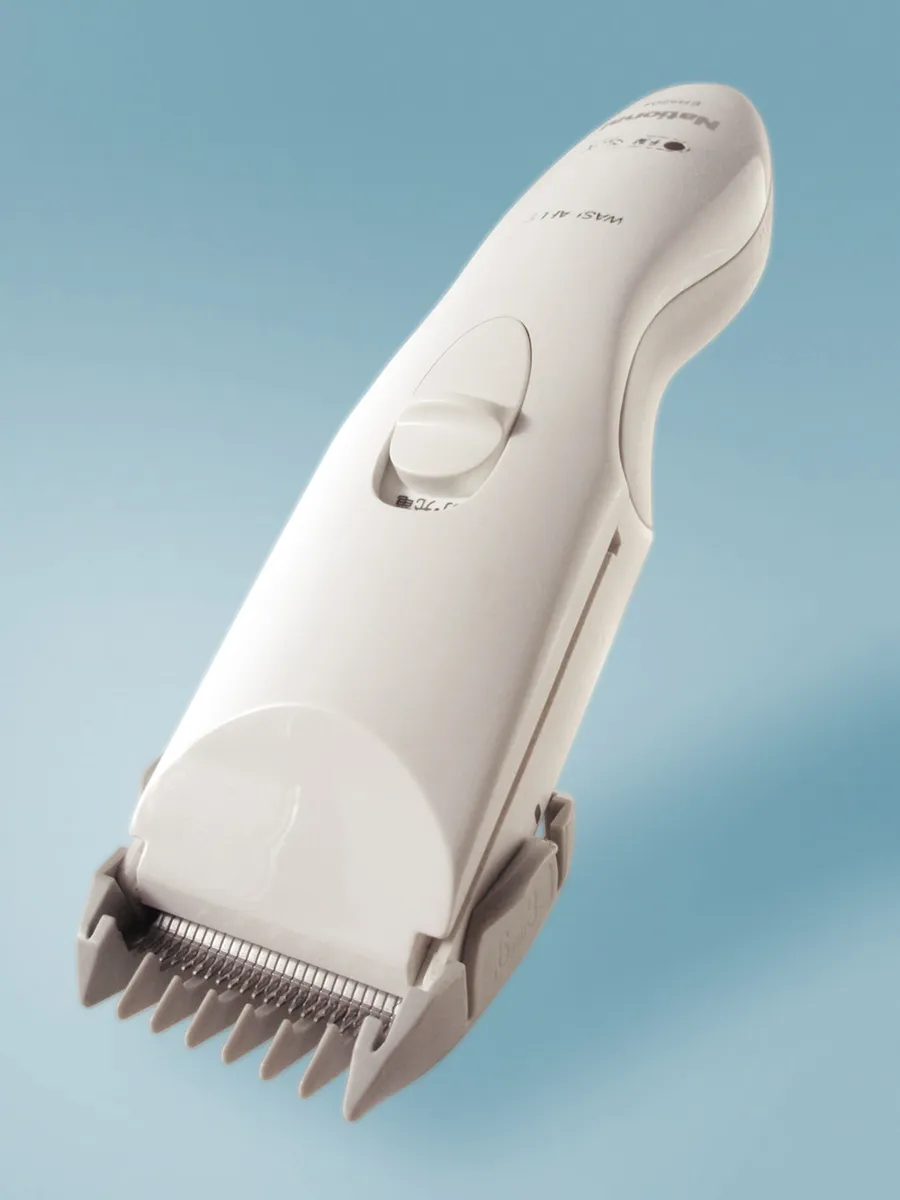
The guide combs, and the mistake everyone makes
My kit came with ten guide combs from 1/8 inch (3 mm) up to 1 inch (25 mm). The numbering convention is that each number is 1/8 inch, so a "#2" leaves about 6 mm of hair and a "#4" leaves 12 mm.
The mistake — and I made it on cut one — is starting too short. I went straight in with a #3 on the sides, decided it looked uneven, went to a #2 to fix it, then a #1, and ended up with sides considerably shorter than I intended and no way back. Six weeks of growing it out.
The correct approach is to start with the longest comb you might plausibly want and work down one number at a time, checking in the mirror between passes. Hair does not grow back within an afternoon and a clipper removes it very fast.
The combs themselves are plastic and clip on firmly. Two of mine have developed slight flex at the widest point after six months, which changes the cut length by perhaps half a millimetre. Replacement sets are cheap.
What twelve cuts actually looked like
Cut 1: bad. Uneven sides, a visible step where I'd changed comb length without blending, and a back I couldn't see and got wrong. Wore a hat for a week.
Cuts 2-3: better but still stepped. The blending problem is the whole skill — you have to feather the transition between comb lengths by tilting the clipper away from the head as you move up, and that takes practice.
Cut 4 onward: genuinely fine. Not a barber's fade, but a clean, even, unremarkable haircut that nobody has commented on, which is the goal. By cut 8 I was doing it in about fifteen minutes.
The back of the head remains the limitation. With two mirrors I can manage it; the four cuts where someone else did the back were noticeably better. If you live alone and want a proper tapered neckline, budget for an occasional barber visit anyway.
Noise, heat and comfort
The clipper measured around 72 dB at arm's length — loud, and a rotary-motor clipper is a harsh mechanical buzz rather than a hum. Cutting a child's hair with this would be a hard sell; there are much quieter cordless options marketed specifically for that.
Heat is the other consideration. After about eight minutes of continuous use the blade area becomes warm — not painful, but noticeable against the scalp. Oiling helps significantly. Professional clippers manage this better; at $45 you take short breaks.
Vibration through the handle is moderate and my hand was slightly numb after the first few cuts, which stopped once I learned to grip it less tightly.
The cost maths
Twelve cuts over six months would have cost roughly $360 at $30 a visit including tips. The clipper cost $45, plus $5 for blade oil and $8 for a replacement comb set. Total $58.
So the payback was two haircuts, and after that it's around $28 saved per cut indefinitely. Over five years the difference is substantial enough that it stops being a comparison and becomes an obvious decision — provided you're satisfied with the result, which is the entire caveat.
Practical safety and hygiene notes
Clipper blades will nick skin, particularly around ears and along a hairline, and they will do it faster than you can react. Go slowly around the ears and fold them forward with your free hand. I have two small nicks in six months, both around an ear, both on early cuts.
If more than one person uses the clipper, disinfect the blade between users — a barbicide spray or isopropyl alcohol on a cloth. Shared clippers are a genuine route for transmitting skin infections, and a $6 spray solves it entirely.
Never use a corded clipper on wet hair or near a filled sink. It is a mains-powered device with a metal blade and this is the one hard rule.
The setup that made the difference
More of the result comes from the environment than the clipper. Three things changed my outcomes more than any technique adjustment.
A second mirror. A cheap handheld mirror used against the bathroom mirror turns the back of your head from guesswork into something you can actually see. This is the single highest-value $8 in the whole exercise and it took me until cut five to work it out.
Good light from the front and side. Under a single overhead bathroom light the sides of my head were in shadow and I could not see the step I'd left until I stepped away. Cutting near a window during daylight showed up unevenness immediately.
And cutting over a bare floor rather than a bath mat. Clipper cuttings are short, spiky and get everywhere; on tile they sweep up in a minute and out of a mat they do not. I now cut standing on an old towel and shake it out of a window afterwards, which takes the cleanup from ten minutes to two.
Against the alternatives
Against a $150-200 professional clipper, you get a stronger motor, cooler running, better blade tolerances and a cordless option that doesn't fade. If you're cutting several people's hair regularly, that's worth it. For one person monthly, it isn't.
Against a $25 budget clipper, the difference is the blade and the motor. Cheap clippers pull hair, which is a distinctly unpleasant experience and the reason most people abandon home cutting after one attempt. The $20 between a bad clipper and this one is the most important $20 in the decision.
Against a barber, the barber gives you a better result, a proper neckline and no learning curve, for $360 every six months. That's a completely defensible way to spend money and the honest comparison here is not close on quality — only on cost.
Who should buy this
Buy it if you have a simple short haircut, if you can tolerate three or four mediocre results while learning, and if you have someone who can do the back or you're happy with a slightly imperfect neckline. Buy corded rather than cordless at this price. Start with the longest guide comb and work down.
Skip it if you have a layered or scissor-cut style, if you want a genuine fade, if you're cutting a young child's hair (too loud), or if a bad haircut would be a real problem at work in the next month. And skip the very cheapest clippers entirely — pulling hair is what makes people give up.
Verdict
Six months and twelve cuts in, this clipper paid for itself after two haircuts and has produced perfectly acceptable results since cut four. The corded motor never fades, the adjustable taper lever makes blending possible, and oiled blades still cut cleanly with no pulling. Against that: it's 72 dB of harsh buzz, it warms up after eight minutes, the first three cuts were genuinely bad, and the back of your own head is a problem no clipper solves. A straightforwardly good purchase if your haircut is simple and your patience holds for a month.
Other products we tested

Ecobee Smart Thermostat Premium Review: Two Months of Real HVAC Testing
We installed the Ecobee Smart Thermostat Premium without a C-wire, tracked its temperature accuracy against a separate thermometer, and measured real energy savings over two months of daily HVAC use.
Bose SoundLink Flex Review: Six Weeks of Hiking, Kayaking, and Beach Days
Six weeks of camping, kayaking, and beach trips show the Bose SoundLink Flex's IP67 rating and PositionIQ orientation sensing are genuinely useful, with honest limits on bass and max volume.

Coros Pace 3 Review: Six Weeks Testing the GPS Watch That Barely Needs Charging
A dual-frequency GPS running watch that trades AMOLED shine for weeks of battery life at a fraction of the price of flagship rivals.