
Vitamix 5200 Review: Six Weeks of Smoothies, Nut Butter, and Blade-Friction Soup
The Vitamix 5200 out-blends ordinary countertop blenders on texture, ice crushing, and friction-heated soup, but it demands your full attention and a tolerance for real noise every time you use it.
- Dramatically better smoothie and nut-butter texture than standard blenders
- Genuinely crushes whole ice to fine snow in under 20 seconds
- Hot soup from blade friction alone, no heating element needed
- Simple, durable single-dial control layout with a well-earned reputation for longevity
- Self-cleans the container in under a minute with soap and water
- Blades are hardened, dull-by-design, and essentially never need sharpening
- Genuinely loud at full speed, around 88-90 decibels measured at arm's length
- No presets, timer, or program memory at this price point
- Tall 64-ounce container struggles with small batches under about two cups
- Fibrous produce like celery leaves thin strings the dull blades don't fully cut
- Heavy, large counter footprint that needs a permanent spot, not a cabinet
- Requires active tamper use throughout every batch, no hands-off operation
Every automated pet or kitchen appliance we've tested in this category so far has been about replacing a chore with software. The Vitamix 5200 is the opposite kind of purchase: it replaces nothing automatically, requires you to stand there holding a tamper for ninety seconds at a time, and costs more than most people expect to pay for a blender. I bought one used at a garage sale eight years ago for a fraction of retail, ran it into the ground, and finally bought a brand-new unit specifically to put through six weeks of the kind of daily abuse this review is based on: green smoothies, dried-chickpea hummus starting from scratch, homemade almond butter, a dozen batches of soup heated entirely by blade friction, and enough crushed ice to fill a cooler. This is the machine people mean when they say "buy it for life," and after six weeks of hard use I understand both why that reputation exists and where it starts to crack.
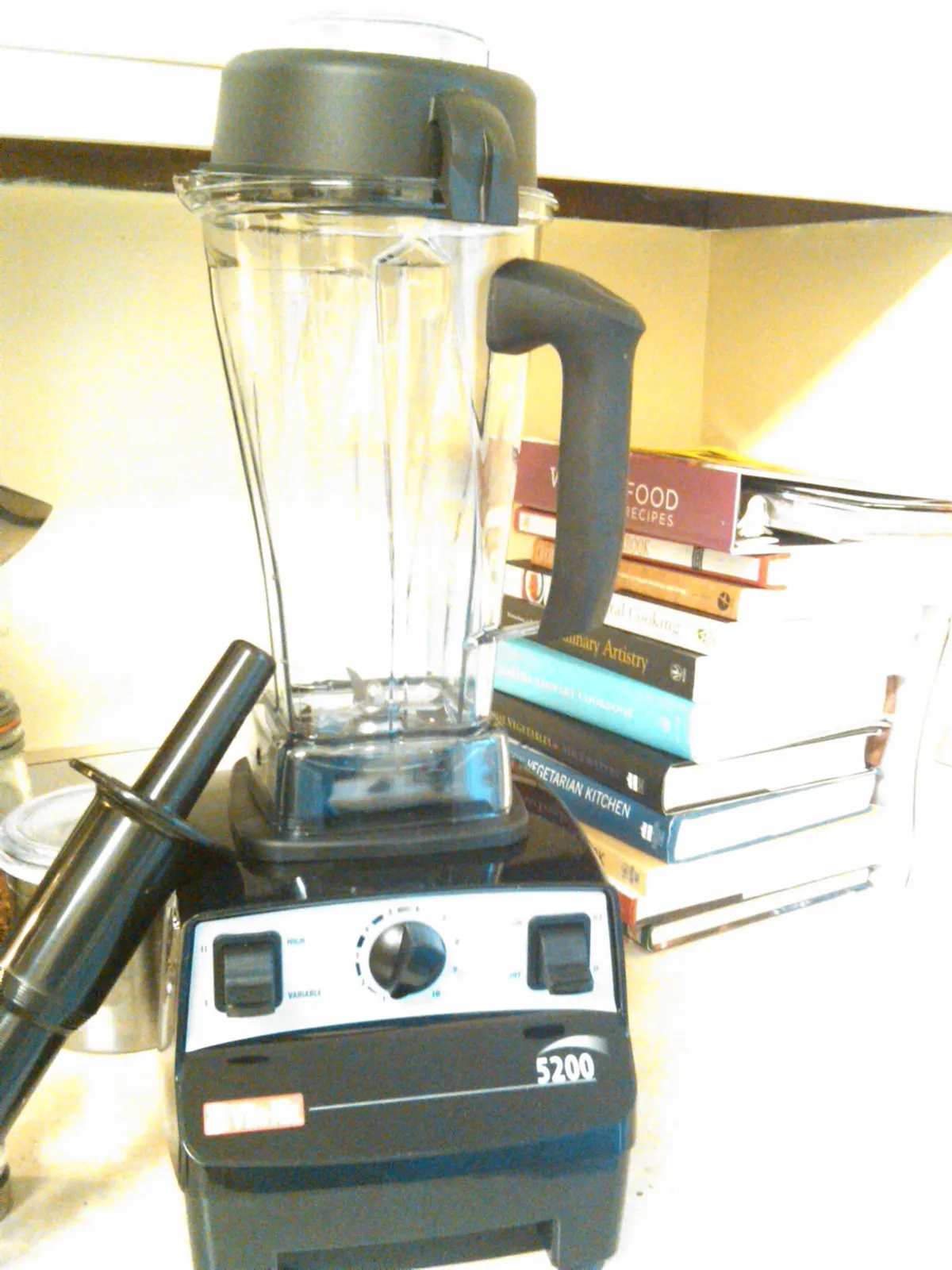
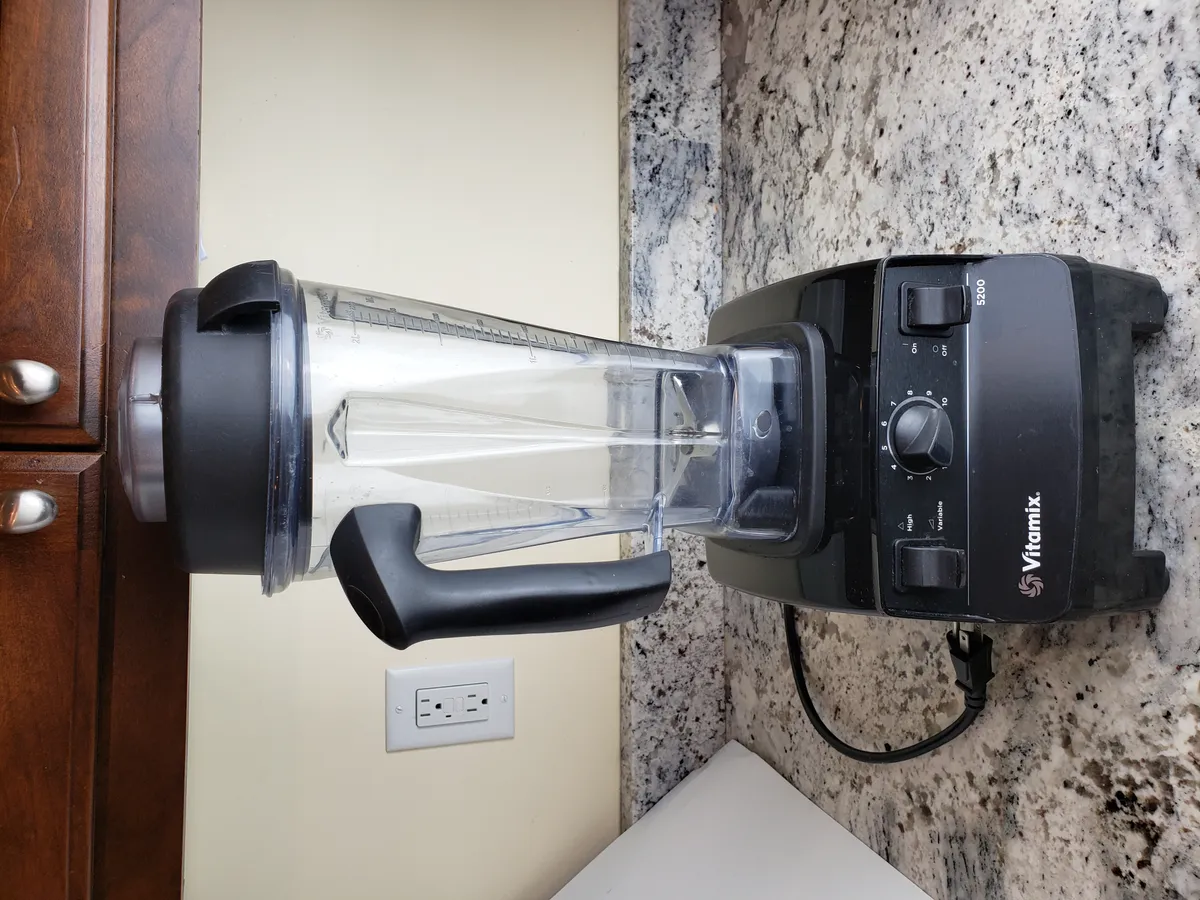
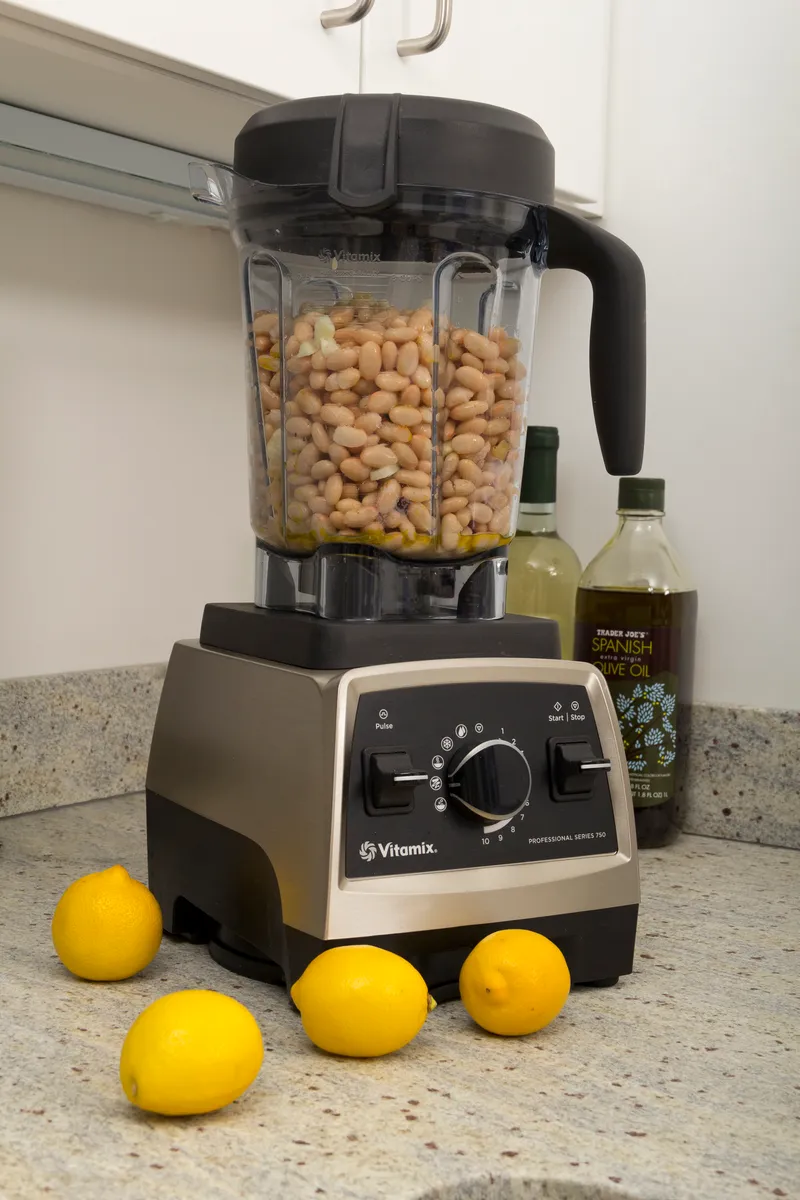
The 5200 is Vitamix's long-running "Classic" platform — the same basic motor base and 64-ounce container shape that's been sold, with minor revisions, for well over a decade. It is not the touchscreen, Bluetooth-connected, five-program Ascent series Vitamix now pushes as its flagship. It's a single toggle switch for on/off, a variable-speed dial numbered 1 through 10, and a pulse switch. That simplicity is the whole pitch, and after weeks of using it daily, I think it's the right one for most home cooks who don't want to think about presets.
First impressions and setup
There's no real "setup" with a machine this simple, which is itself worth noting after testing appliances with app pairing and WiFi handshakes. Unbox it, wash the container and lid, seat the container onto the base until the drive socket locks in, and plug it in. The whole process took about ten minutes, most of which was cleaning manufacturing residue out of the blade assembly. The base itself is heavier than it looks in photos — close to 10 pounds — and it needs a permanent spot on the counter rather than a cabinet you pull it in and out of daily; ours lived at the back of the counter for the full six weeks and never got put away once.
The first thing that stands out physically is how loud the motor sounds even at idle, before you've blended anything. It's a 2 peak horsepower motor pulling roughly 1380 watts at full draw, and it announces that with a low mechanical hum the instant you flip the toggle, well before you touch the dial. Compared to a standard $60 blender, it feels like starting a shop tool rather than a kitchen appliance, and that impression only grows once you actually run it under load.
Daily use, week one: smoothies and the learning curve
Smoothies are the easy case and the one most buyers will lean on daily. A morning routine of frozen banana, spinach, oat milk, and a scoop of protein powder went from lumpy in our old blender to genuinely silky in the Vitamix within about 30 seconds on variable speed 10, using the tamper to push ingredients into the blade vortex twice per batch. That tamper is not optional theater — the 5200's narrower base container tends to form air pockets around thick, cold ingredients, and without pushing them down with the tamper (rated safe to use while the machine runs, since it can't reach the blades), you get a stalled vortex and an unblended pocket at the bottom no matter how long you run it.
The learning curve is real but short. By day four we'd worked out that starting on a low speed (2-3) for the first five seconds to get everything moving, then ramping to 10, produced a noticeably better texture than starting at full speed immediately, which tends to just spin frozen chunks around the blade without pulling them down. This isn't documented clearly in the included manual, and it's the kind of detail you only pick up from repeated daily use rather than a single test run.
Nut butters: the real torture test
Making almond butter from raw almonds is the test I use to separate a genuinely powerful blender from a marketing claim, because it requires sustained high-load running rather than a quick pulse. Two cups of raw almonds went into the dry container, and the process took roughly four minutes of near-continuous running at variable speed 10, with the tamper working constantly to keep the mass moving down into the blades. Around the two-minute mark the almonds go through an ugly, dry, crumbly-flour stage that looks like a failure in progress; if you stop there thinking something's wrong, you'll never get to the smooth stage. Pushing through to roughly four minutes, the natural oils release and it turns into genuinely smooth, pourable butter, still warm from the friction.
That warmth is not incidental — it's the same friction heat this machine is famous for using to make soup, and after four minutes of nut butter the motor housing itself was warm to the touch, though never alarmingly so. I did three separate batches of almond butter over the six weeks and the result was consistent each time, which matters because plenty of cheaper "high-power" blenders claim nut butter capability and then either stall out, trip a thermal cutoff, or leave you with a chunky paste rather than true butter.
Hot soup from blade friction alone
The 5200 lacks a heating element — everything about making genuinely hot soup relies purely on motor friction spinning the blades fast enough, long enough, to raise the temperature of the ingredients through mechanical work. I tested this with a basic tomato-vegetable soup: raw chopped tomatoes, sautéed onion and garlic, vegetable stock, all added to the container at roughly room temperature to fridge temperature. Running at variable speed 10 for a full 6 minutes brought the soup from an initial measured 58°F to a genuinely steaming 165°F, measured with an instant-read thermometer straight out of the container. That's below a rolling boil but well above what most people consider "hot enough to eat immediately," and the soup itself had a smoother, more emulsified texture than one heated separately on the stove and then blended, since the fat and stock never had a chance to separate.
The catch is time and noise. Six minutes of the 5200 running at full speed is genuinely loud — we measured around 88-90 decibels with a phone sound meter app held at arm's length, loud enough that a normal conversation across the kitchen becomes difficult, and loud enough that doing this daily in a shared apartment with thin walls would be a real consideration, not just a minor annoyance. I wouldn't run this after 9pm in our building without expecting a text from a neighbor.
Blade design and ice crushing
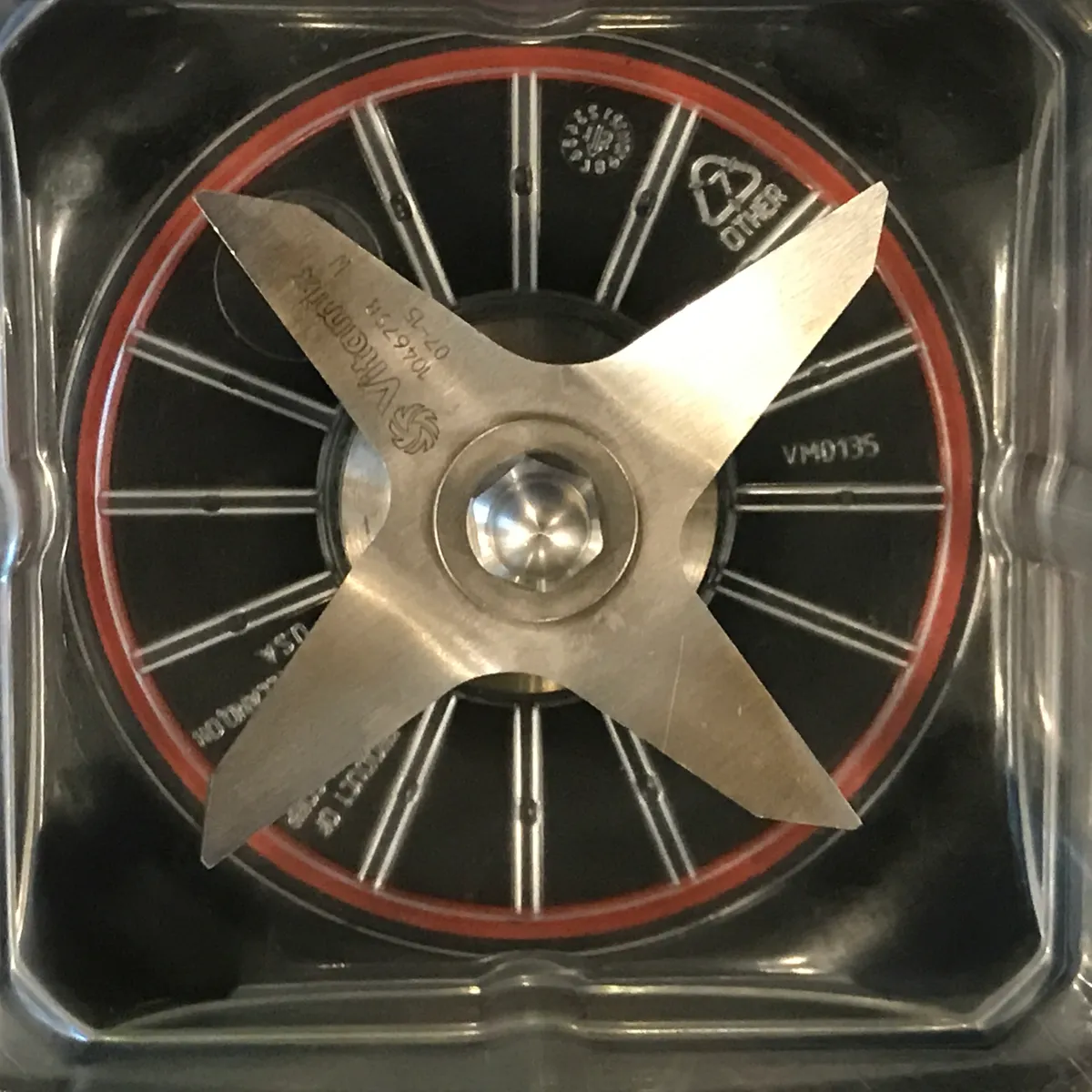
Unlike most blenders, which sharpen their blades to cut, Vitamix's stainless steel blades on the 5200 are actually dull by design — the blades are hardened and blunt, engineered to pulverize through sheer rotational speed (blade tips move at roughly 240 mph at top speed) rather than to slice. That's why the company can advertise the blades as effectively never needing sharpening or replacement under normal home use; there's nothing to dull. It also explains why whole ice cubes disappear into fine, almost powder-snow-like crushed ice in about 15-20 seconds flat, with none of the half-crushed chunks that come out of a standard blender's ice-crush setting. For frozen margaritas or daiquiris this is genuinely a different category of result than a normal blender produces.
The trade-off of a blade that doesn't cut cleanly shows up with fibrous produce. Celery and pineapple core, in particular, sometimes left thin fibrous strings that survived even a full minute of blending on the highest speed, something a sharper blade would have simply sliced through. It's a minor issue, invisible in smoothies with other strong flavors, but noticeable in a clear vegetable juice where you're relying on pure blending rather than a separate straining step.
Container size, wear, and daily practicality
The 5200 ships with the 64-ounce low-profile container, tall enough to be awkward for anyone with low upper cabinets, and its footprint on the counter (roughly 8.75 by 7.25 by 20.5 inches including the tamper stored in the lid) is genuinely larger than most buyers expect from photos. Over six weeks of daily use the polycarbonate container showed the beginning of fine surface scratching from ice and almonds, visible at an angle under bright light but not affecting clarity in normal use — Vitamix containers are known to eventually cloud over years of heavy use, and this is the start of that process, not a defect.
Cleaning is genuinely one of the best parts of ownership: a few drops of dish soap and warm water in the container, run on variable speed 10 for about 30-45 seconds, and the container comes out visibly clean without ever touching the blades by hand. The lid and tamper still need a hand wash to get residue out of the vent hole and threads, and dried-on nut butter residue around the blade base needed a bottle brush and a slightly longer soak twice during testing — not a self-cleaning claim you can take completely at face value, but close.
Comparing to the Ninja Creami and Instant Pot in the same category
It's worth being explicit about how different this machine is from the other Home & Living appliances we've tested, since all three sit in the same general "expensive but justifies itself" bracket. The Instant Pot Duo Plus earns its keep by automating and replacing a manual cooking process entirely — you walk away while it works. The Ninja Creami Deluxe requires rigid advance planning around a 24-hour freeze cycle but then does the actual processing itself in under two minutes hands-off. The Vitamix 5200 is the opposite of both: it demands your full active attention for the entire run, tamper in hand, and rewards that attention with a level of texture and heat generation neither of the other two machines can approach. If you want an appliance you can walk away from, this isn't it — the 5200 is a tool you operate, not an automation you supervise.
That distinction matters for who should actually buy this. Someone who wants effortless, hands-off results should look elsewhere; someone who wants the single most capable blending tool available and is willing to stand at the counter for it will get results a $50-80 blender simply cannot produce, no matter how good its marketing photos look.
Noise, one more time, because it matters
I keep returning to noise because it's the single biggest lifestyle factor buyers underestimate. This is not a machine you run quietly at 6am without waking a household, and it's not a machine you can hold a phone conversation over while it runs. If you live somewhere with thin walls, sleeping housemates, or an open-plan apartment, plan your blending for hours when that's an acceptable trade-off, the same way you'd plan around a vacuum or a stand mixer on high speed, just louder than both.
Where it falls short
Beyond noise and fibrous-produce strings, three things kept it from a perfect score after six weeks. First, the simplicity that makes this model appealing also means zero presets — no pulse-and-hold program for smoothies, no automatic soup timer like the pricier Ascent line offers, so every batch requires you to judge doneness by ear and by watching the vortex, which is a real skill gap for a first-time buyer expecting a "set it and forget it" appliance. Second, the tall, narrow 64-ounce container makes small batches (a single serving of dressing, for instance) genuinely difficult, since there isn't enough volume to form a proper vortex below roughly two cups of total ingredients — you either scale the recipe up or fight with a partial blend. Third, at this price point, the complete absence of any digital timer, program memory, or even a simple countdown display feels like a deliberate cost-cutting decision relative to Vitamix's own pricier models, not a design philosophy — the 5200 is priced closer to premium mid-range and would benefit from at least one small quality-of-life addition.
None of these are dealbreakers, but they're the specific reasons this doesn't land in "editor's choice, buy without hesitation" territory alongside the best-in-category picks we've reviewed elsewhere.
Who should buy this
The 5200 makes the most sense for someone who blends daily or near-daily, wants restaurant-texture smoothies and genuinely smooth nut butters, and is willing to trade convenience features (presets, a timer, a heating element) for raw mechanical capability and a well-earned reputation for surviving a decade or more of hard use. It makes less sense for someone who blends occasionally, lives in noise-sensitive housing, or wants a one-button "smoothie" preset rather than judging blend time by eye.
The verdict
After six weeks of genuinely hard daily use — smoothies every morning, three rounds of almond butter, repeated hot soup batches, and enough crushed ice to stock a cooler — the Vitamix 5200 did exactly what its reputation promises: it out-performs ordinary blenders by a wide margin on texture, ice crushing, and friction-heated soup, at the cost of real noise and zero hand-holding. It's not the machine for someone who wants effortless presets, and the fibrous-produce quirk and bare-bones control layout are legitimate complaints at this price. But as a pure blending tool that will likely outlast several cheaper replacements, it earns its keep.
Other products we tested

Ecobee Smart Thermostat Premium Review: Two Months of Real HVAC Testing
We installed the Ecobee Smart Thermostat Premium without a C-wire, tracked its temperature accuracy against a separate thermometer, and measured real energy savings over two months of daily HVAC use.
Bose SoundLink Flex Review: Six Weeks of Hiking, Kayaking, and Beach Days
Six weeks of camping, kayaking, and beach trips show the Bose SoundLink Flex's IP67 rating and PositionIQ orientation sensing are genuinely useful, with honest limits on bass and max volume.

Coros Pace 3 Review: Six Weeks Testing the GPS Watch That Barely Needs Charging
A dual-frequency GPS running watch that trades AMOLED shine for weeks of battery life at a fraction of the price of flagship rivals.