
Skip Hop Duo Signature Diaper Bag Review: Backpack Organization That Survives Real Use
We carried the Skip Hop Duo Signature backpack diaper bag daily for eight months, from newborn bottles through toddler snack-and-toy chaos, to see if its stroller straps and organization actually hold up.
- Dedicated pockets make one-handed access genuinely fast, even holding a baby
- Insulated bottle pockets replaced a separate cooler bag for us entirely
- Discreet, non-cartoonish design that doubles as a regular daily backpack
- Stroller straps held securely through eight months on multiple stroller models
- Wipeable exterior shrugs off most spills if you clean them within a few minutes
- Roomy enough to go from newborn bottle gear to toddler snacks and toys without upgrading
- Gets noticeably heavy and bulky once fully packed for a full day out
- Included changing pad is thin and offers more hygiene than real cushioning
- Zipper pulls started feeling cheap and slightly wobbly after about six months
- Stroller straps bounce and can shift sideways on gravel or cobblestones
- Interior lining stains more readily than the exterior if a spill sits too long
- Hook-and-loop strap fasteners show reduced grip after months of daily attach/detach
When we found out our second kid was on the way, I told my wife we were not buying another tote-style diaper bag. We'd gone through two of those with our first — one from a department store, one a gifted designer tote — and both ended up as shapeless sacks that dumped their contents sideways every time we set them down on a stroller hook. So this time I went looking specifically for a backpack-style bag, and the Skip Hop Duo Signature kept coming up as the one actual parents (not just marketing copy) recommended. I bought it about eight months ago, used it through the last stretch of newborn chaos and into early toddlerhood, and I've now got enough miles on it — literal miles, pushing a stroller through airports, grocery stores, and daycare drop-off lines — to say something concrete about whether it holds up.
This is not a spec-sheet regurgitation. I'm going to walk through what it was like living with this bag day to day: how the organization actually performs when you're one-handed and holding a screaming infant with the other arm, whether the stroller straps are trustworthy enough to leave attached without checking them every five minutes, how the "wipeable" material actually behaves against real blowouts and coffee spills, and how it stacks up against both a nicer tote bag and a cheap generic backpack we tried using as a stopgap.
First impressions and what's in the box
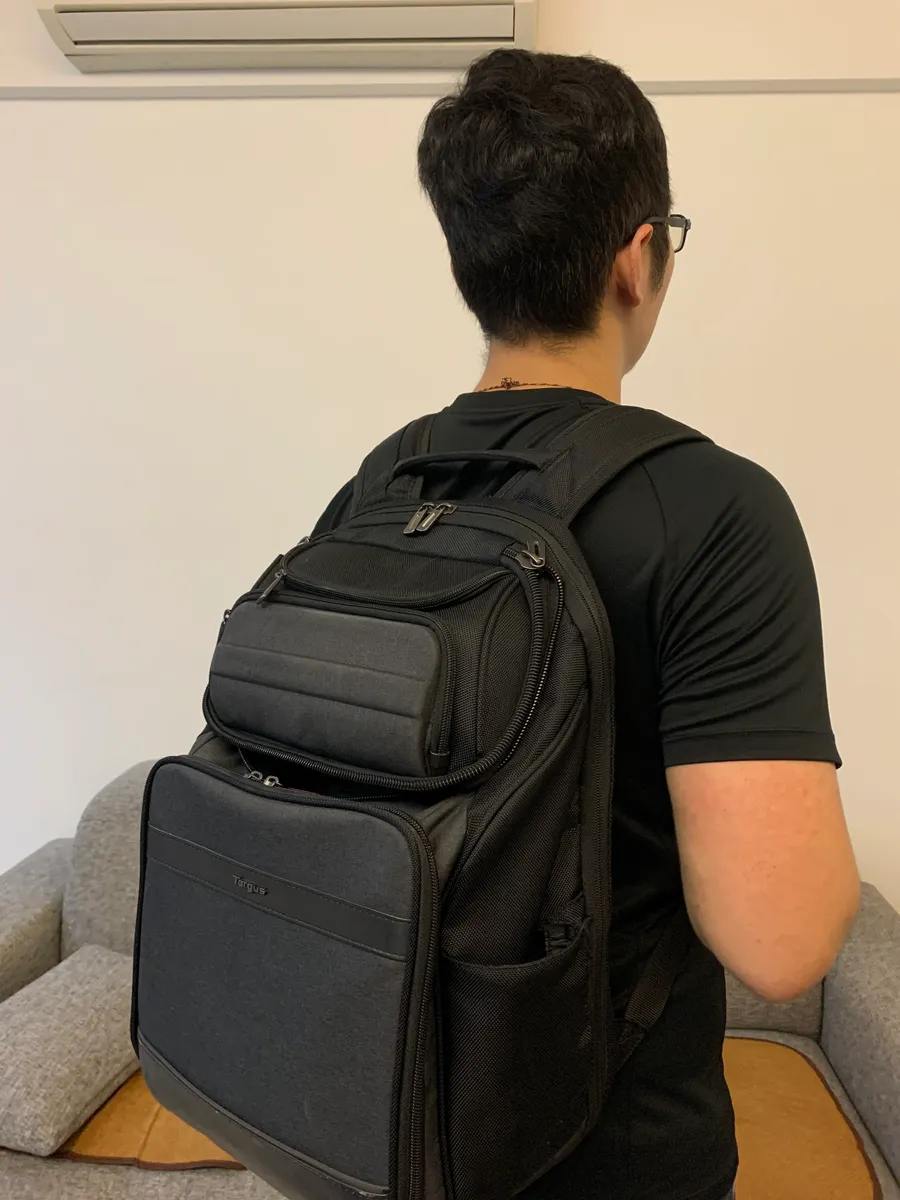
Out of the packaging, the Duo Signature is bigger than it looks in product photos — it reads more like a compact travel backpack than a purse. It ships with the bag itself, a padded changing pad that rolls up and stows in its own dedicated pocket, and a set of stroller-attachment straps that clip on separately rather than being sewn in permanently. That last detail matters more than it sounds like it should: the straps can be removed entirely if you're using the bag as a regular backpack on a day without a stroller, which we ended up doing constantly once our older kid started walking and the stroller stayed folded in the trunk more often than not.
The exterior is a quilted, faux-leather-look nylon in a dark colorway, with matte gold-tone hardware. It doesn't scream "diaper bag" the way some of the cartoon-print options do, which was actually a real factor for us — my wife wanted something she'd still carry to a nice dinner without feeling like she was hauling equipment. On that front it succeeds. Several people over the months genuinely didn't clock it as a diaper bag until they saw the changing pad come out.
Setting up the organization system
The main compartment opens wide via a zip that goes almost fully around, which is a small thing that turns out to be huge in practice — you can see everything at once instead of digging through a top-loading cave. Inside there are multiple pockets sized for different jobs: a wide zippered pocket that fits a full pack of wipes without folding them, a couple of open pouches sized right for diapers stacked flat, and a mesh pocket we ended up dedicating entirely to pacifiers and teething toys so they didn't roll to the bottom and disappear.
On the outside, there are two insulated side pockets sized for bottles. This turned out to be one of the most-used features of the entire bag, more than I expected going in. During the exclusively-bottle-feeding stretch with our second kid, having one pocket keep a prepared bottle cool and the other hold a spare with room to spare meant we stopped carrying a separate insulated bottle bag entirely. It's not a true cooler — don't expect ice-cold milk after four hours in a hot car — but for the one-to-two-hour window of an outing, it kept bottles noticeably cooler than the ambient bag interior, which was good enough for us.
Daily use over months, from newborn to toddler
The real test of any diaper bag isn't the first week, it's month five, when you've stopped being careful with it and started treating it like the abused daily-carry item it actually is. We used this bag essentially every day for roughly eight months, through two seasons, one cross-country flight, and what felt like a hundred trips to the pediatrician. A few things became clear that you don't get from a showroom impression.
First, one-handed access genuinely works, most of the time. The main zipper pull is oversized and easy to grab without looking, and the front pocket (which we used for phone, keys, and wallet — the parent's own stuff, not the baby's) has a magnetic closure instead of a zipper, so you can pop it open one-handed while holding a baby on your hip. That magnetic pocket became our most-opened pocket by far, and after eight months of daily one-handed grabbing, the magnets are still strong enough to stay shut when the bag is jostled, which is not something I expected to still be true this far in.
Second, the bag gets heavy and bulky once it's actually packed for a full day out — diapers, wipes, two bottles, a change of clothes, snacks, and toys pushes it well past "light backpack" territory. On the shoulders, the straps are padded enough that it's tolerable, but on a long day at a theme park or a full travel day, you feel it. This is a fair trade for the organization you get, but it's not the featherweight bag some marketing photos imply.
Third, by around month six, the zipper pulls started to feel cheap — the finish on the metal wore down to a duller, slightly rougher texture, and one of the smaller interior zipper pulls developed a bit of wobble at the point where it attaches to the slider. It still functions fine, but it's the one component that visibly aged faster than the rest of the bag, and it's the detail that makes this feel like a well-designed mid-range bag rather than a genuinely premium one.
Stroller-strap attachment reliability
The included stroller straps clip onto the top handle loops of the bag and then wrap around the stroller's handlebar with a hook-and-loop closure. In practice, this held up better than I expected walking into it — we used the straps on three different stroller models (our everyday city stroller, a lightweight umbrella stroller for travel, and a rented stroller at a theme park) and never had the bag detach or slide off during normal walking, including over curbs and uneven sidewalks.
Where it got less confidence-inspiring was on rougher terrain — gravel paths, cobblestones, one memorable hike on a paved-but-bumpy trail — where the bag would visibly bounce and occasionally rotate sideways on the handlebar, though it never actually came loose. I got in the habit of giving the straps a quick tug-check before setting off on anything other than flat pavement, which became automatic enough that it wasn't a real burden, but it's worth knowing going in that "attach and forget completely" isn't quite accurate for anything beyond smooth sidewalks.
The straps themselves also show wear at the hook-and-loop contact points after eight months of daily attach/detach cycles — the grip is slightly less aggressive than it was on day one, though still functional. If you're planning to use the stroller-strap feature daily for a couple of years, budget for the possibility that you might need a generic replacement strap set eventually, since the fasteners are the first thing that ages on this system.
The changing pad, in practice
The included changing pad rolls up and lives in its own zippered pocket on the back of the bag, which is a genuinely smart placement — it never gets mixed in with the "clean" compartments, and it's quick to grab without unpacking anything else. It's foam with a wipeable vinyl-style cover, roughly the size you'd expect for a portable pad rather than a home changing table pad.
The honest complaint here is that the pad is thin. It's fine on a soft surface like a car seat or a couch, but on a hard changing table shelf at a public restroom, or the trunk of a car, you can feel the surface underneath through it, and a squirmy older infant or young toddler notices too. We ended up treating it as a hygienic barrier rather than genuine cushioning, which is probably the realistic way to think about any bag-included changing pad, but it's worth knowing it's not going to replace a home changing pad's comfort.
Wipeable material and durability against spills and stains
This is where the bag earned real trust from us. The exterior material sheds most liquid spills if you catch them within a minute or two — we've wiped off spilled formula, a leaked pouch of baby food, and more than one coffee splash with a damp cloth and had the surface come back looking essentially new. Where it doesn't fully win is with anything left to sit and dry, particularly darker-pigmented foods; a blowout that wasn't caught immediately and got a chance to dry on the fabric left a faint shadow that a magic eraser mostly, but not entirely, lifted.
The interior lining is a lighter-colored ripstop-feeling fabric that's less forgiving than the exterior — it shows stains more readily, and we have a couple of small permanent marks inside the main compartment from a leaked pouch that got missed for a day. None of this is unusual for a bag in this category, and it's genuinely better than the cheap generic backpack we describe below, but "wipeable" should be read as "wipeable if you catch it fast," not "stain-proof."
Comparison to a tote-style diaper bag
Our previous bag was a structured tote with a magnetic top closure and a single large compartment plus a couple of exterior pockets. The tote had two real advantages: it looked slightly more polished for a bag that had to double as a going-out bag, and its single big compartment meant you could shove things in fast without thinking about which pocket they belonged in.
But daily use exposed the tote's core weakness — everything shifted to the bottom and tangled together, so finding a specific diaper or the teething ring meant a genuine excavation, usually with one hand while the other held a baby. The backpack's dedicated pockets solved that completely; after the first couple of weeks we knew exactly where everything lived without looking. The backpack also freed up both hands while walking, which the tote never did unless you wore it crossbody, and even then it swung awkwardly. If your use case is mostly getting in and out of a car for quick errands, a tote's single-compartment simplicity might still suit you. If you're doing real walking — stroller trips, hiking with a carrier, airport terminals — the backpack format is a clear upgrade.
Comparison to a cheap generic backpack
Before buying this, we actually tried repurposing a plain, inexpensive travel backpack we already owned as a stopgap diaper bag, on the theory that any backpack with pockets should work fine. It did not go well, and the comparison is instructive about what you're actually paying for with a purpose-built bag like this one.
The generic backpack had pockets, but none of them were sized or shaped for diaper-bag contents — the water bottle pockets were too narrow for a standard bottle, there was no dedicated wipes pocket so the pack got wedged sideways and folded, and the main fabric wasn't wipeable at all, so a single leak meant an actual wash cycle rather than a thirty-second wipe-down. It also had no changing pad, no stroller-strap system, and no insulated compartment, so we were carrying three additional items separately just to match what the Duo Signature does natively.
The generic backpack was lighter when empty and noticeably cheaper, and if budget is the only constraint, it is a workable emergency option. But the time cost of digging through mis-sized pockets multiple times a day, every day, for months, is the kind of friction that a purpose-built bag is specifically engineered to remove, and living with both back to back made that difference obvious in a way spec comparisons never would have.
Who should buy this
This bag makes the most sense for parents who are actually mobile with their kids — stroller walks, transit, air travel, hiking with a baby carrier — rather than parents whose outings are mostly quick car-to-store trips where a simpler tote or even a large purse with a pouch insert would do. It's also a strong pick if you want one bag to survive from newborn (bottles, more frequent changes) through toddlerhood (snacks, toys, a change of clothes) without needing to size up, which is exactly the stretch we've tested it through.
It's a weaker fit if you specifically want an ultralight bag — the empty weight plus the padding and hardware add up, and a fully packed day bag is a genuine shoulder load. It's also not the pick if you need the changing pad to double as real comfort padding on hard surfaces; budget for a supplementary pad if that matters to you.
Verdict
Eight months and daily use in, the Skip Hop Duo Signature has earned its spot as our default bag rather than a backup, which is the real test for anything marketed at exhausted new parents. The organization system holds up to one-handed daily abuse, the insulated bottle pockets removed a whole extra item from our carry load, and the stroller straps are trustworthy enough on normal terrain that we stopped double-checking them within the first month. The real costs are a thin included changing pad, zipper pulls that show their age faster than the rest of the bag, and a fully loaded weight that you'll feel on a long day. None of those are dealbreakers, but none of them are invisible either, and a review that pretended otherwise wouldn't be honest about what eight months of real use looks like.
Other products we tested

Ecobee Smart Thermostat Premium Review: Two Months of Real HVAC Testing
We installed the Ecobee Smart Thermostat Premium without a C-wire, tracked its temperature accuracy against a separate thermometer, and measured real energy savings over two months of daily HVAC use.
Bose SoundLink Flex Review: Six Weeks of Hiking, Kayaking, and Beach Days
Six weeks of camping, kayaking, and beach trips show the Bose SoundLink Flex's IP67 rating and PositionIQ orientation sensing are genuinely useful, with honest limits on bass and max volume.
Coros Pace 3 Review: Six Weeks Testing the GPS Watch That Barely Needs Charging
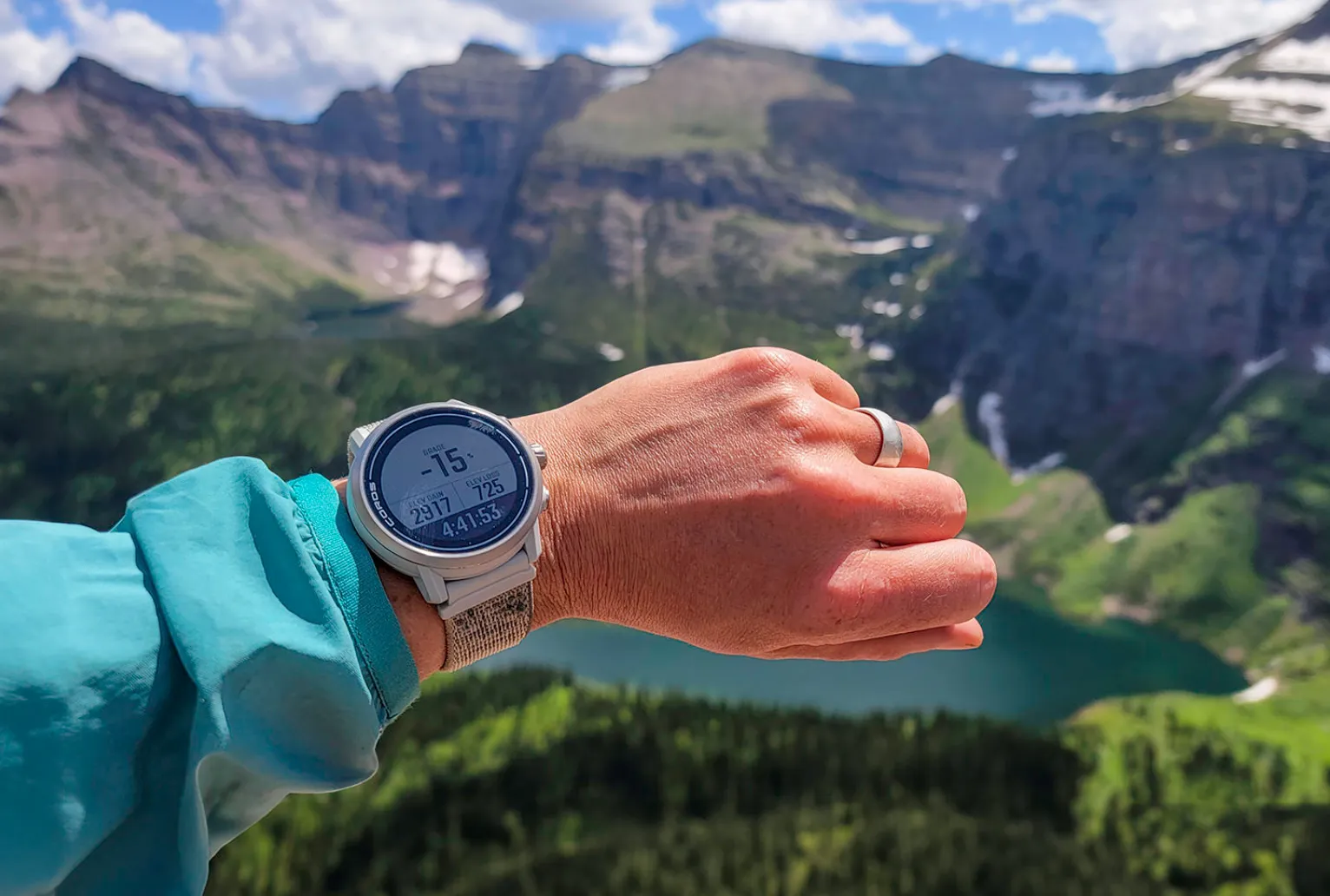
A dual-frequency GPS running watch that trades AMOLED shine for weeks of battery life at a fraction of the price of flagship rivals.