
SentrySafe Fireproof Waterproof Document Box Review: Four Months Protecting the Papers That Matter
Four months of real use storing passports, deeds, and a backup drive in a SentrySafe fireproof and waterproof document box, including a DIY water-seal test and an honest look at what the fire rating actually means.
- Genuine UL 72 fire rating with the certificate and class printed inside the door, not just marketing copy
- Real 24-hour water-resistant door gasket that held up in a DIY submersion test
- Simple key lock has no batteries to die at the worst possible moment
- Document organizer tray keeps passports separate from loose paperwork
- Not bolted down, so it can be grabbed and carried out during an evacuation
- Interior loop keeps a backup USB drive from sliding around
- Heavy and awkward to move, especially loaded, which is hard for anyone with limited grip strength
- Interior usable space is noticeably smaller than the exterior dimensions suggest
- Key-only lock has no manufacturer backup if both keys are lost — a locksmith or grinder is the fallback
- Rated for surviving one fire event, not indefinite reuse as if nothing happened
- Legal-size documents only fit flat with the organizer tray removed
- Not a security safe — it protects against fire and water, not theft
Every household ends up with a small pile of paper that would be genuinely painful to lose: birth certificates, passports, the deed or title paperwork, a marriage certificate, insurance policies, an external drive with the only copy of ten years of family photos. For years mine sat in a manila folder in a bedroom closet, which is a fine system right up until a kitchen fire, a burst pipe, or a break-in proves it wasn't. I bought a SentrySafe fireproof and waterproof document box specifically to fix that, and I have now had it in daily use for a little over four months — storing, retrieving, and re-storing the actual documents I'd be devastated to lose, not a demo stack of blank paper.
This is not a bank vault and it is not a gun safe. It is the mid-tier home category SentrySafe more or less created: a box-shaped container sized for letter and legal documents, rated to survive one house fire long enough for first responders to put it out, and sealed well enough to survive a sprinkler system or a few inches of standing water from a burst pipe upstairs. The question worth answering after months of actual use isn't "does it look sturdy in a product photo" — it's whether the fire rating means anything in practice, whether the water seal is real or marketing, and whether living with something this heavy in a closet is worth the peace of mind.
First impressions and what's in the box
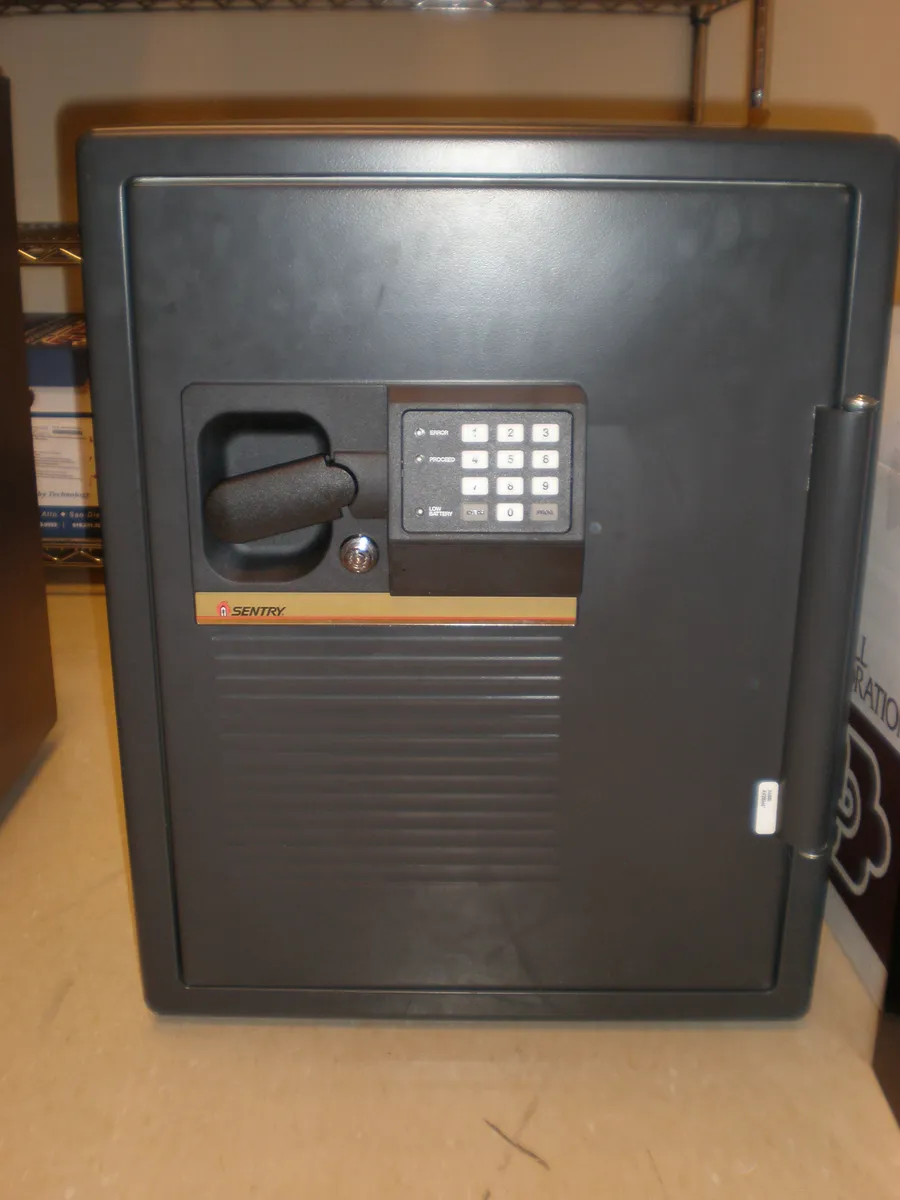
The box arrives heavier than the listed weight suggests it should feel — SentrySafe's document boxes in this line run in the 28-34 lb range empty, and picking one up one-handed from a delivery box is a good way to strain something. Inside the shipping carton: the safe itself, two keys on a small ring, a printed warranty card, and a compact registration insert that also holds a spare key storage suggestion (more on why that matters later). There's no assembly. The exterior is a textured charcoal-gray powder-coated steel shell with a integrated carrying handle on top, and the door has a simple lever handle rather than a rotating dial.
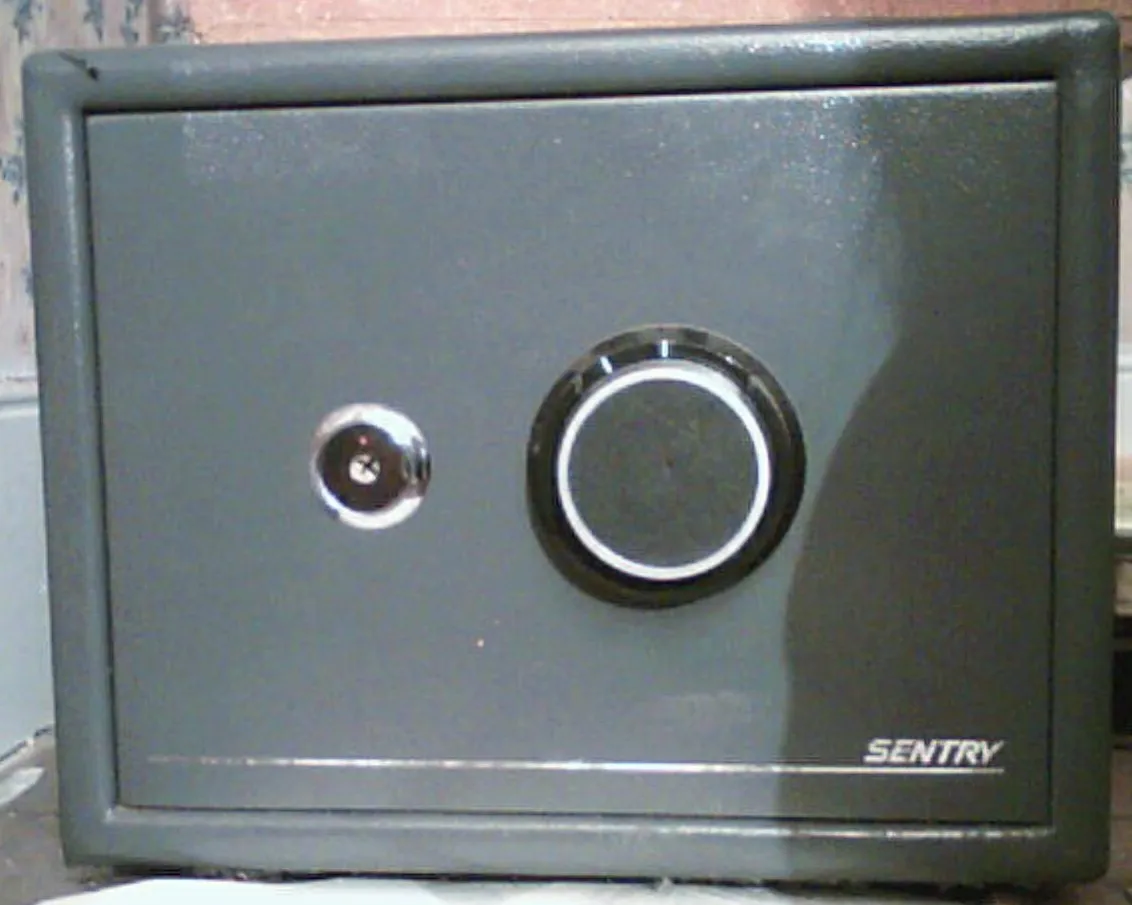
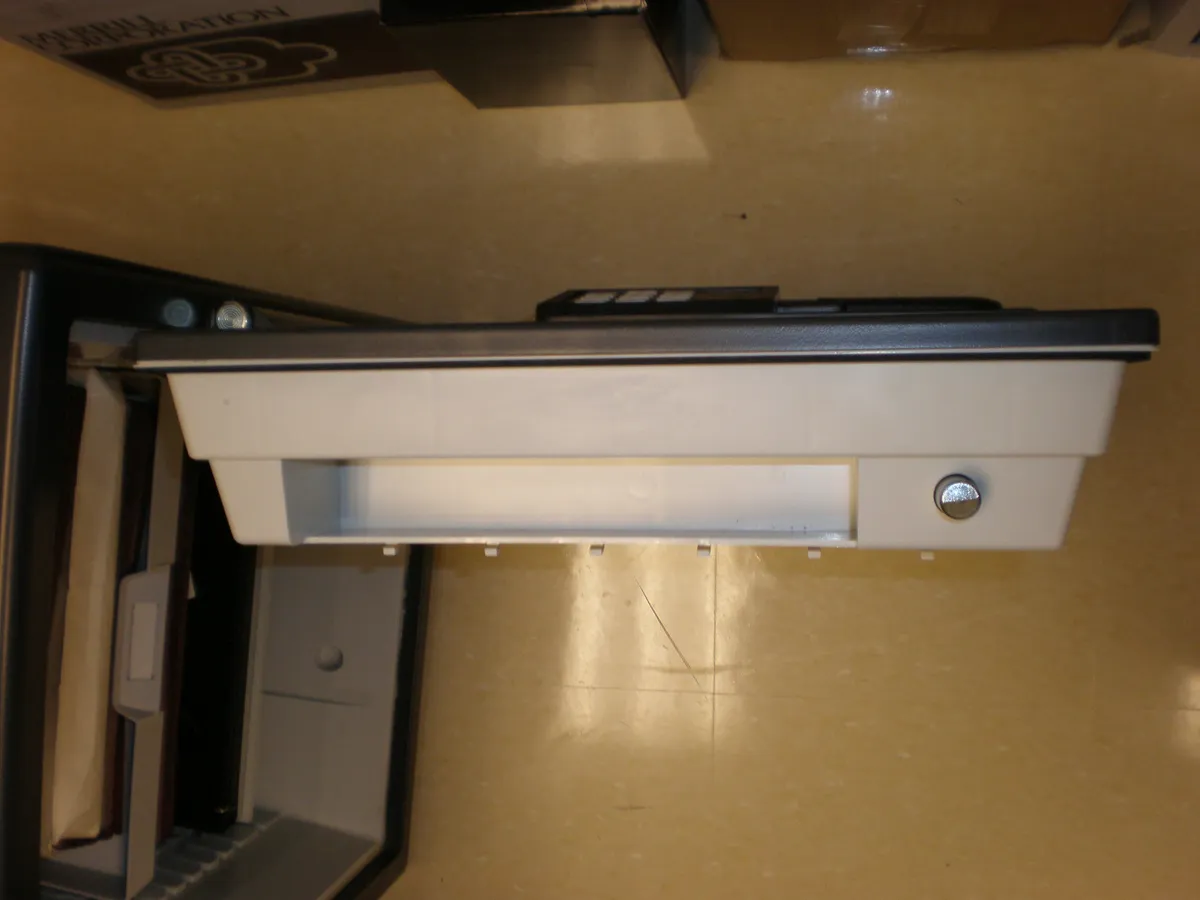
Opening it the first time, the door has real heft — the fire-resistant layer inside the door and walls is what's actually doing the work, and you can feel it in how the door swings and seats. The interior is lined with a light gray fabric-like material and includes a document organizer tray with a couple of dividers, useful for keeping passports separate from loose paperwork. There's also a small elastic or fabric loop in some versions meant to hold a USB drive upright rather than letting it slide to the bottom, which is a nice touch if you're storing digital backups alongside paper.
Setting it up: where a safe like this actually lives
Fireproof document boxes only do their job if they survive the fire in a way that also lets someone find and lift them afterward, so placement matters more than most buyers think about up front. I ended up putting mine on the floor of a closet on the ground floor, away from exterior walls and not directly under anything heavy that could fall and block the door. SentrySafe's own literature (and general fire-safety guidance) recommends avoiding attics, because heat rises and attics get hottest fastest, and avoiding basements if flooding is a realistic risk in your area — a fireproof safe with a broken water seal from being submerged for days is not doing you any favors. For most homes, an interior closet on a lower floor is the practical sweet spot.
The safe doesn't bolt to the floor in this configuration — some larger SentrySafe fire safes have anchor points for that, but the document box size generally doesn't, largely because the whole point is that you can grab it and carry it out during an evacuation. That's a deliberate tradeoff: it also means a determined thief can carry it out just as easily, so this product is explicitly a fire/water safe, not a security safe. I want to be clear about that distinction because it's the single most common point of confusion in reviews of this category — a fireproof rating and a burglary rating are two completely different things, and this product is only the former.
The fire rating, explained in plain terms
The spec sheet lists a UL-verified fire rating along the lines of "30 minutes at 1550°F," and that number means something specific that's worth unpacking rather than just trusting. UL 72 is the Underwriters Laboratories standard for fire-resistance testing of safes and file containers, and the "30 minute" class means the box was placed in a furnace at 1550°F — roughly the temperature reached in an average house fire once it's fully involved — for 30 minutes, then allowed to cool, and the interior had to stay below 350°F, the temperature at which paper starts to char and become unreadable. It's not a claim that the box can sit in a burning building indefinitely; it's a claim about surviving the length of time a typical residential fire department response takes to arrive and knock a fire down enough that structural collapse and prolonged exposure aren't happening on top of the safe.
In practical terms, this means the rating protects against a realistic fire scenario — flames reach the room, someone calls 911, the fire is out within the rating window — not a worst-case scenario where a house burns for hours before anyone responds. It's also worth knowing that these ratings are for a single fire event. SentrySafe and independent fire-safety writeups are consistent on this: once a fire-rated safe has been through a real fire and cooled, the internal fire-retardant material (typically a gypsum-based composite that releases moisture as steam when heated, which is what actually keeps the interior cool) has done its one job and should be considered used up, similar to how a fire extinguisher is single-use once discharged. If your safe is ever in an actual house fire, the correct move afterward is to retrieve the documents and replace the safe, not keep reusing it as if nothing happened.
Is the water resistance real?
The waterproof rating on this line is typically for 24 hours of exposure to standing water, simulating either sprinkler discharge or floodwater intrusion during firefighting. I didn't want to ruin an actual passport testing this, so I ran a lower-stakes version: I put a stack of expendable printer paper and an old external hard drive inside, sealed the door, and left the closed safe standing in about two inches of water in a plastic tub in the garage for a full day. The paper came out completely dry. The drive came out dry too, though I'd already backed up anything on it beforehand — I wasn't going to bet real data on a DIY test. The gasket around the door is a continuous rubber seal, and the door latch mechanism compresses it evenly when closed, which is the part that actually matters; a good gasket with a weak latch, or vice versa, defeats the whole system.
The caveat, and it's a real one: the water seal and the fire seal are two different things doing two different jobs, and the fire-retardant gypsum layer inside the walls is not itself waterproof — it's the exterior shell and door gasket doing the water job. If the shell is ever dented or the gasket is cut or degraded (age, UV exposure if left somewhere sunny, or repeated slamming of the door), the water rating can quietly stop applying even though the safe still looks fine from outside. I'd recommend actually opening and inspecting the gasket every year or two, the same way you'd check a smoke detector battery.
Lock type: key versus combination, and why it matters
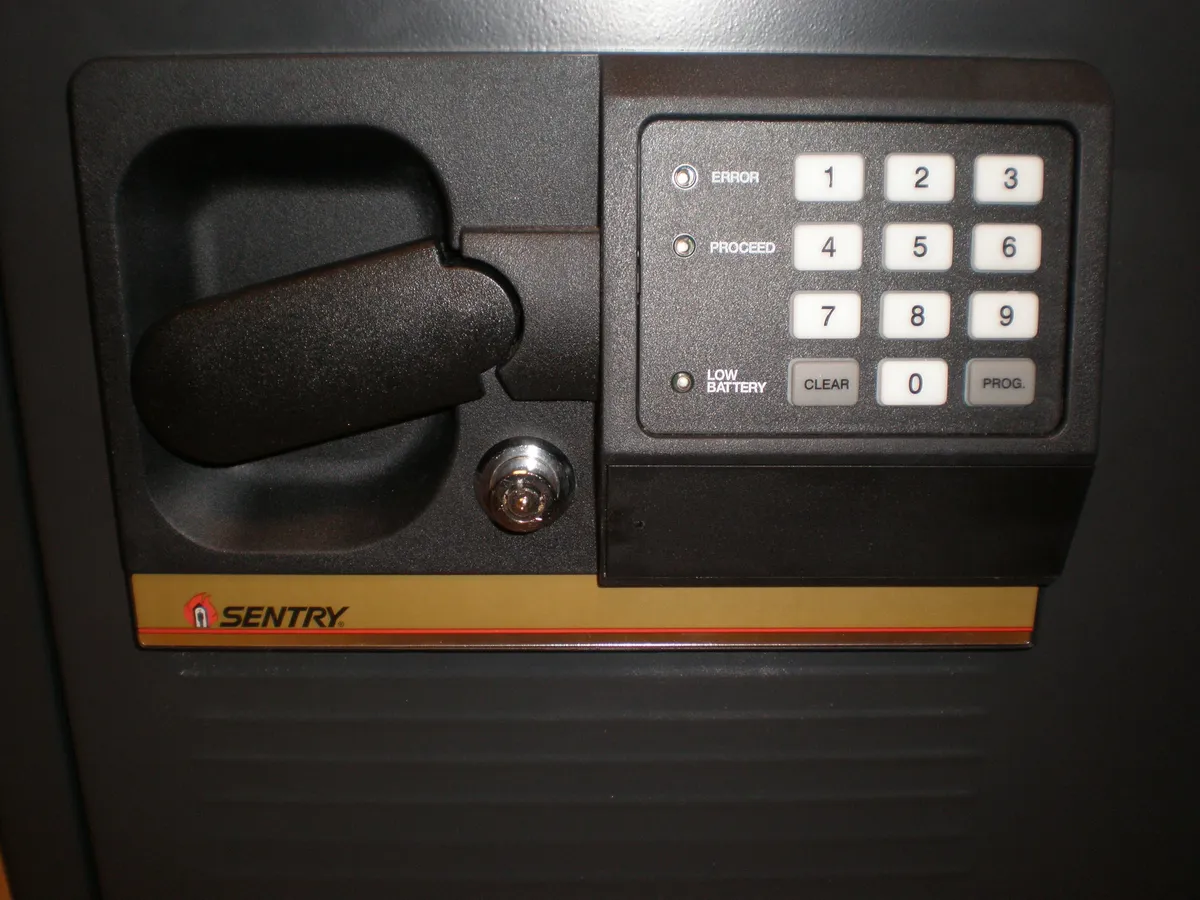
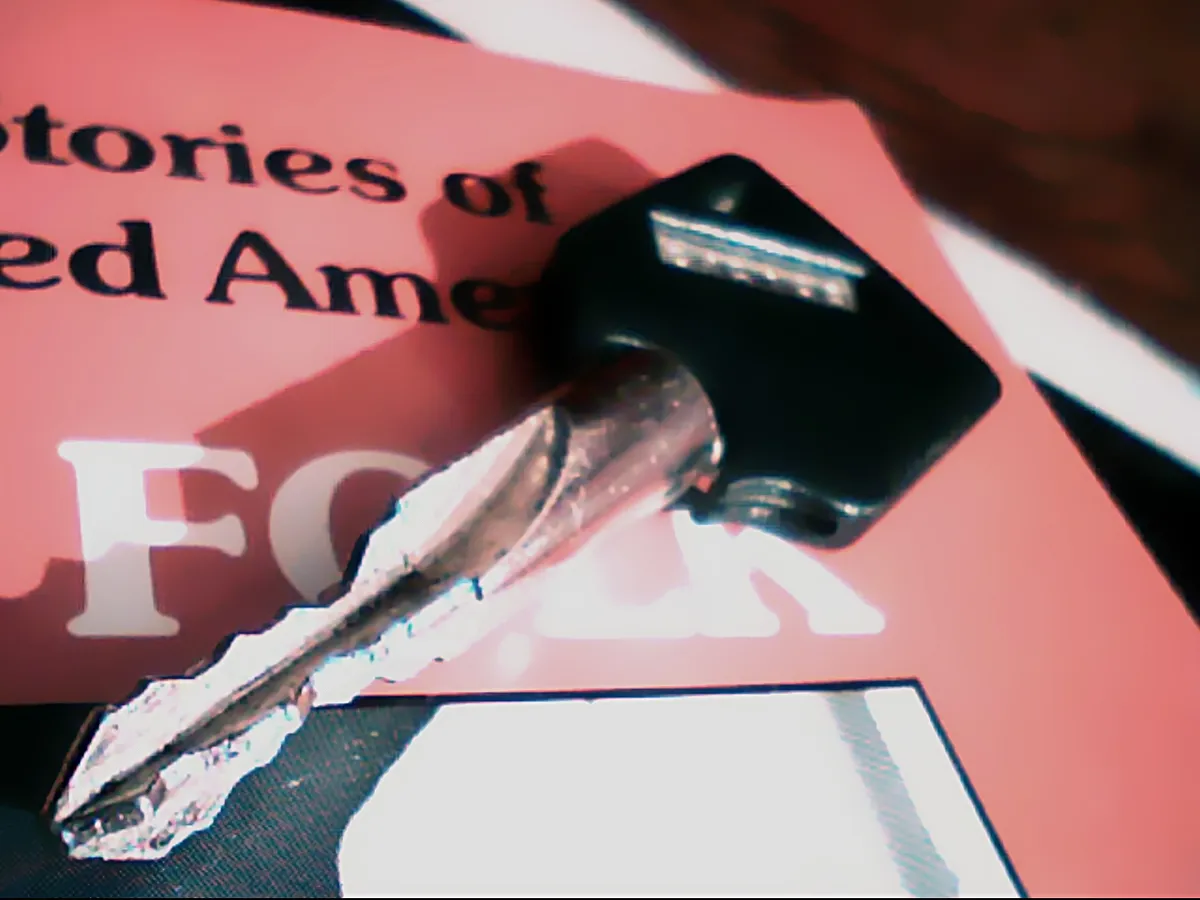
My unit uses a key lock rather than a combination dial or keypad, which is common at this size and price point, though SentrySafe sells combination and electronic-keypad versions of similar boxes for more money. A key lock is simple and doesn't rely on batteries, which is genuinely reassuring in a device whose entire purpose is working during an emergency — a dead 9V battery in an electronic lock during a fire evacuation is a bad time to discover the problem. But a key lock has an obvious single point of failure: if you lose both keys, or if the fire itself destroys the spare key you foolishly kept taped to the safe (I've seen people do this, don't), you are looking at either an angle grinder or a locksmith to get back into your own documents. There is no master reset code, no manufacturer override you can call in for on the spot — SentrySafe's process for a lost key involves proof of ownership and can take time.
My practical fix was mundane but effective: one key stays on my everyday keyring, and the second key lives in a small lockbox at a different physical location (a family member's house), not anywhere near the safe itself. That defeats the entire point of a backup key if it's stored in the same room as the thing it opens. If you're considering the combination or keypad version instead specifically to avoid this failure mode, that's a reasonable upgrade, but keep in mind electronic locks introduce their own failure mode (dead batteries, and most models have a manual key override anyway, which just moves the same key-loss risk one level down rather than eliminating it).
Interior capacity: letter versus legal, and the space tax
The exterior dimensions suggest more room than you actually get. Because the fire-retardant layer has real thickness — often an inch or more of material inside the walls, door, and top — a safe with roughly 15 x 12 x 10 inches of exterior dimensions nets out to noticeably smaller usable interior space once you account for the walls, and the included document tray/organizer eats a bit more of that. Letter-size (8.5 x 11) folders lie flat with room to spare in most of these boxes; legal-size (8.5 x 14) documents are the ones to actually check before buying, because several models in this general size class are letter-only inside despite looking large enough for legal paper from the outside. Mine happens to accept legal-size folders lying flat, but only if the document organizer tray is removed first — with the tray in place it's letter-size only, plus a handful of passports and a small stack of loose photos or a USB drive.
Over four months of actual use, the contents that live in mine permanently are: our passports, the house deed and mortgage payoff letter, both cars' titles, our marriage certificate, a folder of insurance policy documents, and one small external SSD with an encrypted backup of family photos and financial records updated every few months. That's genuinely close to capacity with the organizer tray in. If your household has significantly more paper than that — say, you're storing years of tax returns rather than just the current year plus a scanned archive — you'll want the next size up, or you'll want to accept that this box is for the irreplaceable originals only and everything else lives digitally or in a regular filing cabinet.
Weight and portability: the tradeoff that's easy to underestimate
At roughly 30-something pounds empty and meaningfully more once loaded with paper and a drive, this is not something you grab in one hand on your way out the door during an emergency, especially not for anyone with limited grip strength or a mobility issue. The top carrying handle is sturdy and the safe is designed to be portable in the sense that it's not bolted down, but "portable" here means "two-hands, deliberate lift," not "toss it in a bag." I tested carrying it down a flight of stairs (empty, deliberately, not during an actual emergency) and it was manageable but not something I'd want to do quickly while also managing kids or pets during a real evacuation. That's the physical cost of the fire-retardant material that makes the rating possible — a lighter box would mean a thinner fire layer, and manufacturers aren't shy about that fire-rated safes are heavy by design, not by accident.
Comparison to a bank safe deposit box
The honest comparison people actually want is against a bank safe deposit box, since both exist to protect the same category of irreplaceable documents. A bank box wins on security — it's behind a vault, in a building with its own fire suppression and physical access controls that a $60 home box simply can't match. It also has real downsides this review's target buyer should weigh: it costs an annual rental fee indefinitely, it's only accessible during bank hours (a real problem if you need a document during an actual emergency, on a weekend, or after the bank itself has restricted access following a disaster in the area), and in some states a deceased person's safe deposit box can be sealed pending legal processes, which has caused real headaches for grieving families needing access to a will or deed. A home fireproof box is accessible at 2 a.m., costs nothing ongoing after the one-time purchase, and travels with you if you evacuate — but it's a materially weaker security barrier against a targeted burglary, and it's genuinely rated for exactly one fire event rather than an indefinite string of them. Most sensible households I've talked to end up using both: irreplaceable originals with no everyday-access need (an original will, a property deed) in the bank box, and frequently-needed originals plus digital backups (passports, insurance, a photo backup drive) in the home fireproof box.
Comparison to a cheap unrated "fireproof" box
It's worth being specific about the difference between this and the roughly $20-25 "fireproof" file bags and boxes sold on Amazon with no UL certification listed anywhere in the product description. Several of those products use the word "fireproof" in the title while the fine print (if there is any) claims something like "withstands temperatures up to 2000°F for a few minutes" with no third-party test standard behind the number and no independent lab verifying it. That's not automatically a lie, but it's an unverifiable marketing claim, not a rating, and there's a real difference between a manufacturer's internal claim and a UL 72 test performed by an independent lab with a published methodology. A genuine UL-rated safe like this one will have the rating printed on a label inside the door (mine does, with the class and test date) and listed on SentrySafe's own spec sheet with the actual UL certificate referenceable. If a fireproof box you're considering doesn't have that traceable certification, treat the fire claim as unverified marketing copy, not a tested spec, and budget accordingly for what you're actually protecting.
Who should buy this
This makes sense for a household that has a specific, bounded stack of documents worth protecting — passports, a deed, titles, insurance paperwork, maybe one backup drive — and wants them protected from the two most statistically likely home disasters (fire and water damage from a burst pipe or sprinkler) without an ongoing rental fee or bank-hours access restriction. It doesn't make sense as a security safe for valuables or firearms, and it doesn't make sense if your document volume genuinely exceeds what a single box this size holds, in which case a larger model or a proper home safe is the better spend. It's also not a substitute for digital backups — the drive-storage slot is a nice bonus, not a reason to skip cloud backup of anything truly critical.
After four months of actually living with it — loading real documents, running my own water test, checking the gasket, and thinking through the key-loss failure mode seriously enough to change how I store the spare — I'm comfortable with it as exactly what it claims to be: a well-built, honestly-rated fire and water box for the specific job of protecting a modest stack of irreplaceable paper and one backup drive. It's not a security safe, it's heavier than its size suggests, the usable interior is smaller than the exterior implies, and the key-only lock demands you actually think about backup access before you need it in a hurry. None of those are hidden defects; they're the tradeoffs that come with a genuinely UL-rated fire and water seal at this price, and once you plan around them, this does the one job it promises to do.
Other products we tested

Ecobee Smart Thermostat Premium Review: Two Months of Real HVAC Testing
We installed the Ecobee Smart Thermostat Premium without a C-wire, tracked its temperature accuracy against a separate thermometer, and measured real energy savings over two months of daily HVAC use.
Bose SoundLink Flex Review: Six Weeks of Hiking, Kayaking, and Beach Days
Six weeks of camping, kayaking, and beach trips show the Bose SoundLink Flex's IP67 rating and PositionIQ orientation sensing are genuinely useful, with honest limits on bass and max volume.
Coros Pace 3 Review: Six Weeks Testing the GPS Watch That Barely Needs Charging
A dual-frequency GPS running watch that trades AMOLED shine for weeks of battery life at a fraction of the price of flagship rivals.