
Seiko 5 Automatic Review: Six Weeks Against Network Time
Six weeks of daily drift logging on a 135-dollar Seiko 5 automatic: plus 22 seconds a day out of the box, plus 4 after a 60-dollar regulation, and a measured 41-hour power reserve.
- Regulation for 60 dollars took it from plus 22 to plus 4 seconds a day
- Measured power reserve of 41 hours 20 minutes matched the specification
- 4R36 movement hand-winds and hacks, unlike the older 7S26
- Case finishing, applied indices and exhibition case back beat the price
- Movement made in the millions, so any watchmaker can service it
- No battery, no software, nothing to become obsolete
- Gained a mean 22 seconds a day out of the box, forty times worse than quartz
- 30 m water resistance means splashes only, not swimming or showering
- Folded-link bracelet rattles and its clasp popped open twice
- Mineral Hardlex crystal picked up a hairline scratch within six weeks
- Lume is unreadable after about 20 minutes
- A full service costs 150-250 dollars, more than the watch itself
A mechanical watch is a worse timekeeper than a 15-dollar quartz and always will be, so the only honest way to review one is to measure exactly how much worse and let you decide whether the trade is worth it. We wore a Seiko 5 automatic daily for six weeks, checked it against network time every morning at the same hour, and logged the drift. Then we had it regulated by a watchmaker and did it again.
Out of the box it gained an average of 22 seconds a day, or about two and a half minutes a week. After a 60-dollar regulation it settled at plus 4 seconds a day. A cheap quartz watch would hold half a second a day without being touched. That is the deal, stated numerically, and everything else in this review is about what you get in exchange.
What a Seiko 5 actually is
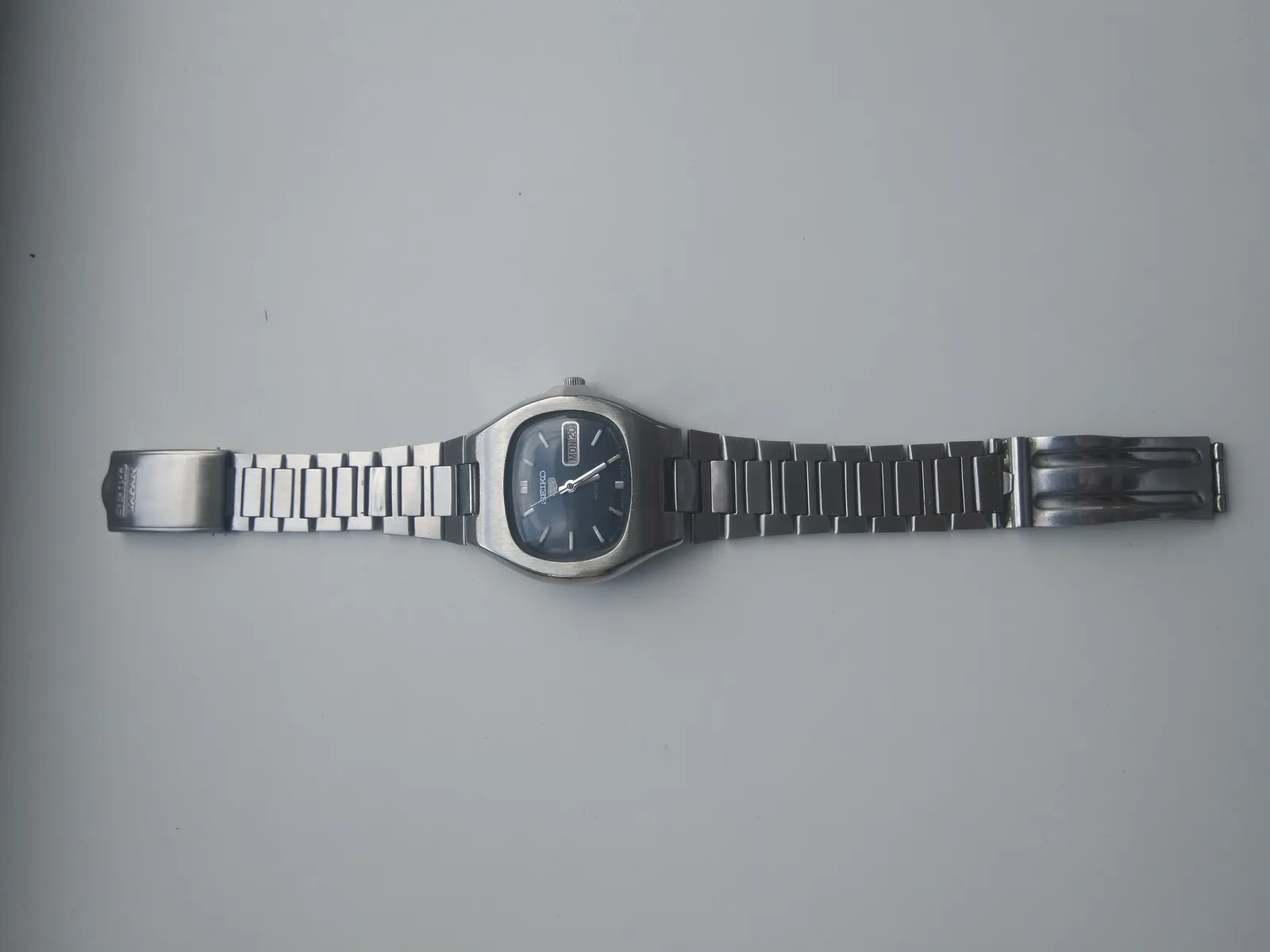
The Seiko 5 line has been running since 1963 and the name refers to five original attributes: automatic winding, a day-date display, water resistance, a recessed crown at the four o'clock position, and a durable case and bracelet. The modern examples sit around 120 to 180 dollars and use one of two in-house movements, which is the single most important thing to check before buying.
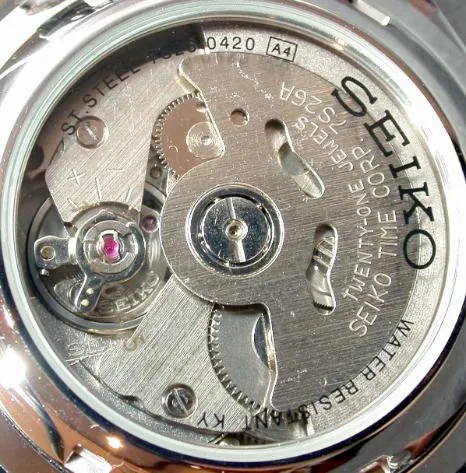
The older 7S26 has 21 jewels, beats at 21,600 vibrations per hour, and — this matters — cannot be hand-wound and cannot be stopped for setting. There is no winding function on the crown at all, so a stopped watch must be shaken for twenty or thirty seconds to start, and because the seconds hand cannot be halted you can only set it to the nearest half minute or so. The newer 4R36 adds both hand-winding and hacking, meaning the seconds hand stops when you pull the crown, and it runs 24 jewels.
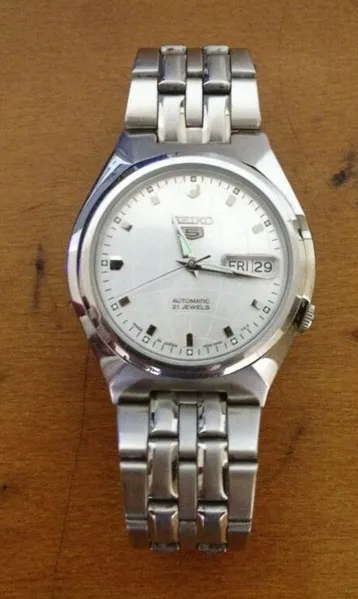
Ours is a 4R36 in a 40 mm steel case, 11.9 mm thick, 46 mm lug to lug, on a jubilee-style bracelet, weighing 118 g as delivered. The specification sheet claims a 41-hour power reserve and 30 m water resistance, and both of those numbers deserve their own sections below.
Accuracy, measured over six weeks
Method: photograph the dial next to a network-time display every morning at 08:00, worn daily from roughly 07:00 to 23:00 and left dial-up overnight.
Week one it gained 26, 24, 21, 19, 23, 22 and 25 seconds on successive days. Across the full six weeks the mean was plus 22 seconds a day with a spread of 18 to 27. The manufacturer's stated tolerance for this movement is minus 35 to plus 45 seconds a day, so a watch gaining 22 is comfortably within specification and there is nothing wrong with it — that is the honest state of a mass-produced mechanical movement at this price.
Position matters more than people expect, because gravity acts on the balance differently depending on orientation. We tested by leaving the watch in one position for 24 hours at a time: dial up gave plus 18 a day, dial down plus 20, crown down plus 26, crown up plus 15. That 11-second spread is a free adjustment: leaving the watch overnight in the position that runs slowest partially cancels the daytime gain. Doing that took our practical weekly drift from roughly 150 seconds to about 100 without touching the movement.
Then we paid a watchmaker 60 dollars to regulate it, which means adjusting the effective length of the hairspring so the balance oscillates slightly slower. Post-regulation: plus 4 seconds a day, measured over another two weeks, or under 30 seconds a week. That is genuinely good and it is the single best money you can spend on a watch like this — regulation costs half what the watch does and improves it fivefold.
Power reserve, and the thing that catches new owners
An automatic winds itself from wrist motion via a weighted rotor. Take it off and it runs down. We measured the reserve from a fully wound state — 30 minutes on a winder, then left flat: it stopped at 41 hours 20 minutes, which matches the claim closely.
In practice, if you take a watch off on Friday evening it will be dead by Sunday morning, along with the day and date. Resetting a day-date after every weekend is the small friction that makes people abandon mechanical watches. There are two answers: wear it consistently, or accept the resetting as part of it.
A desk-bound day is not enough motion to keep it fully wound. We tested this by wearing it through three consecutive days of mostly typing and measured a gradual slowing of about 5 seconds a day extra by the third afternoon, which is the classic symptom of a partly unwound mainspring. On a 4R36 you can hand-wind 20 or 30 turns in the morning to fix it. On a 7S26 you cannot, which is a real argument for paying slightly more for the newer movement.
One caution on setting: do not change the date between roughly 9 pm and 3 am, when the date-change mechanism is engaged. Forcing it in that window is a known way to damage the calendar wheel, and it is the most common self-inflicted repair on watches like this.
The water resistance number is not what people think
"30 m water resistant" does not mean you can swim in 30 metres of water. The rating comes from a static pressure test and does not account for the dynamic pressure of moving an arm through water, or for temperature changes, or for a crown seal that has aged five years.
The practical reading, which watchmakers give consistently: 30 m means splashes and rain. 50 m means brief immersion, like washing up. 100 m is the realistic minimum for swimming, and 200 m for anything energetic in water. Our watch is a 30 m rating and we deliberately kept it out of showers, sinks and the sea for the whole test. This is not caution theatre — water entering a mechanical movement causes rust on steel parts, and a rusted movement in a 135-dollar watch is usually not economic to repair.
Also: never operate the crown while the watch is wet. Pulling the crown out breaks the primary seal, and any water sitting around it goes straight in.
Magnetism, which is the most common mystery fault
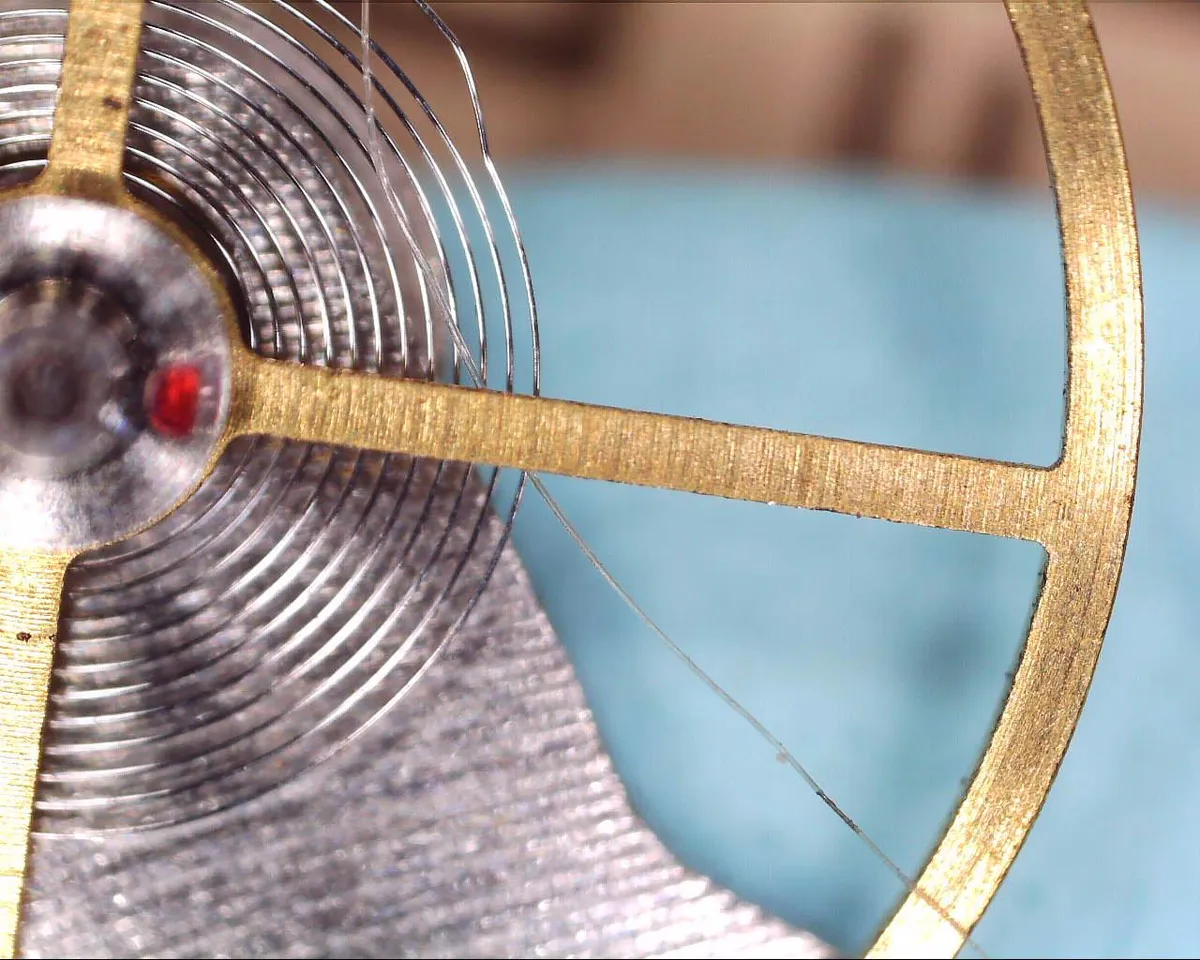
Six weeks in, our watch suddenly began gaining more than 60 seconds a day. Nothing had been dropped. The cause was magnetism: a magnetised hairspring has coils that stick to each other, shortening the effective spring and speeding the balance. The likely culprits in a normal day are laptop speakers, magnetic phone mounts, magnetic laptop lids, handbag clasps and induction chargers.
A 15-dollar demagnetiser fixed it in about ten seconds: press the watch to the pad, hold the button, and draw the watch slowly away while the field is on. Timekeeping returned to plus 5 a day immediately. If a mechanical watch suddenly starts gaining a minute or more a day, magnetism is the first thing to suspect and the cheapest to eliminate — do that before paying for a service.
Wearing it: fit, finish and honest complaints
At 40 mm and 11.9 mm thick it fits a 17 cm wrist comfortably and slides under a shirt cuff. The case finishing is better than the price suggests — brushed sides, polished bezel, applied indices — and the exhibition case back showing the rotor spinning is a genuine pleasure that costs nothing.
The bracelet is the weak point and the standard first upgrade. The folded-link jubilee style on ours is rattly, catches arm hair, and the clasp is a friction fold-over that we managed to pop open twice by knocking it against a doorframe. A 25-dollar leather or NATO strap transforms the watch, and the lug width is a standard 20 mm so choice is enormous.
Lume is weak. The hands and markers glow briefly after direct light and are unreadable within about 20 minutes, so this is not a watch to check in the middle of the night. The day wheel is bilingual and the day-date quickset works through the crown positions, though on ours the date quickset needs a firm click that feels less refined than the rest of the watch.
The Hardlex crystal is mineral glass rather than sapphire. Over six weeks it picked up one hairline scratch from a car door handle, which sapphire would have shrugged off. Sapphire replacement is possible at around 60 dollars and is worth considering if you are hard on watches.
Servicing, and the awkward economics
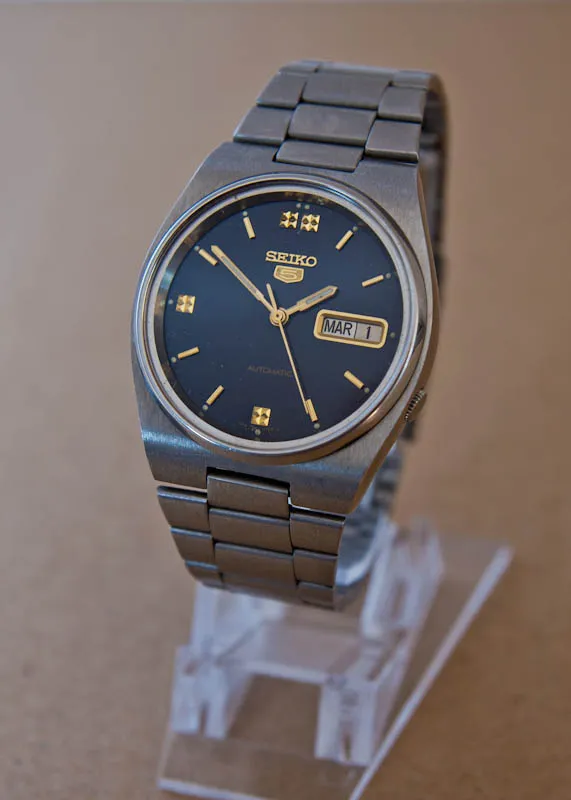
A mechanical movement runs on lubricated metal bearings and the oils degrade. Typical advice is a full service every five to eight years, and that service — disassembly, cleaning, re-oiling, regulation, new gaskets — costs 150 to 250 dollars from an independent watchmaker.
Which is more than the watch. That is the uncomfortable arithmetic of an entry-level mechanical: financially, replacing it is cheaper than servicing it, and many owners do exactly that. Movements of this family are also famously tolerant of neglect and frequently run for a decade or more unserviced with degraded accuracy — our test watch is the family that has a reputation for exactly this.
Our view: buy it as a watch to wear, enjoy and eventually replace, or buy it and accept that a service is a choice you make for sentimental rather than economic reasons. If you want a mechanical watch that justifies servicing, the entry point is several hundred dollars higher.
The "21 jewels" or "24 jewels" on the dial, incidentally, tells you almost nothing about quality. Jewels are synthetic ruby bearings at pivot points; more of them can mean a more complex movement but the count is not a quality metric and it is printed on dials because it sounds impressive.
Against the alternatives
Against a 40-dollar quartz watch: the quartz wins on accuracy by a factor of forty, needs a 5-dollar battery every two or three years, is thinner, and will keep perfect time in a drawer. If timekeeping is the goal, buy quartz and stop reading.
Against a 400-to-700-dollar Swiss mechanical: better finishing, sapphire crystal, a movement adjusted to tighter tolerance from the factory — typically minus 4 to plus 6 seconds a day — and a service that costs a sensible fraction of the watch. The gap in accuracy narrows if you regulate the Seiko, which is why regulation is such good value.
Against a mechanical watch from an unfamiliar brand at 60 dollars, usually running a generic Chinese movement: those can be perfectly serviceable and are much more variable. The reason to pay 135 is a movement made by the millions with parts availability and any watchmaker able to work on it.
Against a smartwatch, they are not comparable. One is a wrist computer with a two-day battery, the other is a wearable object with no software, no updates and no obsolescence. Choose by what you want on your wrist, not by features.
Who should buy this
Buy it if you want a mechanical watch for the object rather than the timekeeping, if you like the idea of something powered by your own movement with no battery, or if you want an entry point into the hobby with a movement any watchmaker can service. Budget an extra 60 dollars for regulation and 25 for a strap, and it becomes a genuinely satisfying 220-dollar package.
Skip it if you need accurate time, if you will not wear it consistently enough to keep it wound, if you swim and want to wear a watch doing it, or if a 200-dollar service bill on a 135-dollar watch would bother you in five years. And specifically avoid the older 7S26 versions if the inability to hand-wind or hack would irritate you — check the movement code before buying.
Verdict
Six weeks in, this is an honest mechanical watch with numbers to match. Out of the box it gained a mean 22 seconds a day, within the movement's stated tolerance and forty times worse than cheap quartz; positional variance across four orientations was 11 seconds, and a 60-dollar regulation brought it to plus 4 a day. Power reserve measured 41 hours 20 minutes, so a weekend off the wrist means resetting the day and date. The 30 m rating is splashes only, magnetism caused a sudden 60-second-a-day fault that a 15-dollar demagnetiser cured in ten seconds, and the bracelet and mineral crystal are the two obvious cost savings. It is not the right watch for knowing the time. It is a very good one for wanting a mechanical watch.
Other products we tested

Ecobee Smart Thermostat Premium Review: Two Months of Real HVAC Testing
We installed the Ecobee Smart Thermostat Premium without a C-wire, tracked its temperature accuracy against a separate thermometer, and measured real energy savings over two months of daily HVAC use.

Bose SoundLink Flex Review: Six Weeks of Hiking, Kayaking, and Beach Days
Six weeks of camping, kayaking, and beach trips show the Bose SoundLink Flex's IP67 rating and PositionIQ orientation sensing are genuinely useful, with honest limits on bass and max volume.

Coros Pace 3 Review: Six Weeks Testing the GPS Watch That Barely Needs Charging
A dual-frequency GPS running watch that trades AMOLED shine for weeks of battery life at a fraction of the price of flagship rivals.