
Opinel No.8 Review: Six Months With a $18 Knife From 1890
The best cutting edge we've used under $20, attached to a wooden handle that swells shut if it gets wet and a design with no clip and no one-handed opening.
- XC90 carbon steel takes a shaving edge on a ceramic rod in under two minutes
- 45 g total — genuinely disappears in a trouser pocket
- Thin blade geometry outperforms thicker folders on food
- Virobloc collar locks the blade both open and closed with no detectable play
- Around $18, and repairable and sharpenable indefinitely
- Beechwood handle swelled shut after getting wet in week two
- Carbon steel spotted with rust within a fortnight before the patina formed
- No pocket clip and no way to fit one without drilling
- Strictly two-handed opening — no thumb stud or flipper
- Fine tip chipped when used for light prying
- Locking blade is legally restricted for carry in the UK and elsewhere
The Opinel No.8 costs about $18, weighs 45 grams, and has four parts. It has been made in essentially this form since 1890, which means either that the design is perfect or that nobody at Opinel has updated it in 135 years. After six months of carrying one daily — picnics, garden work, opening an unreasonable number of cardboard boxes, and two camping trips — my answer is that both things are true, and the second one causes a specific problem the first week of ownership.
This is a review of a knife that is genuinely excellent at cutting and genuinely mediocre at everything a modern folding knife is expected to do.
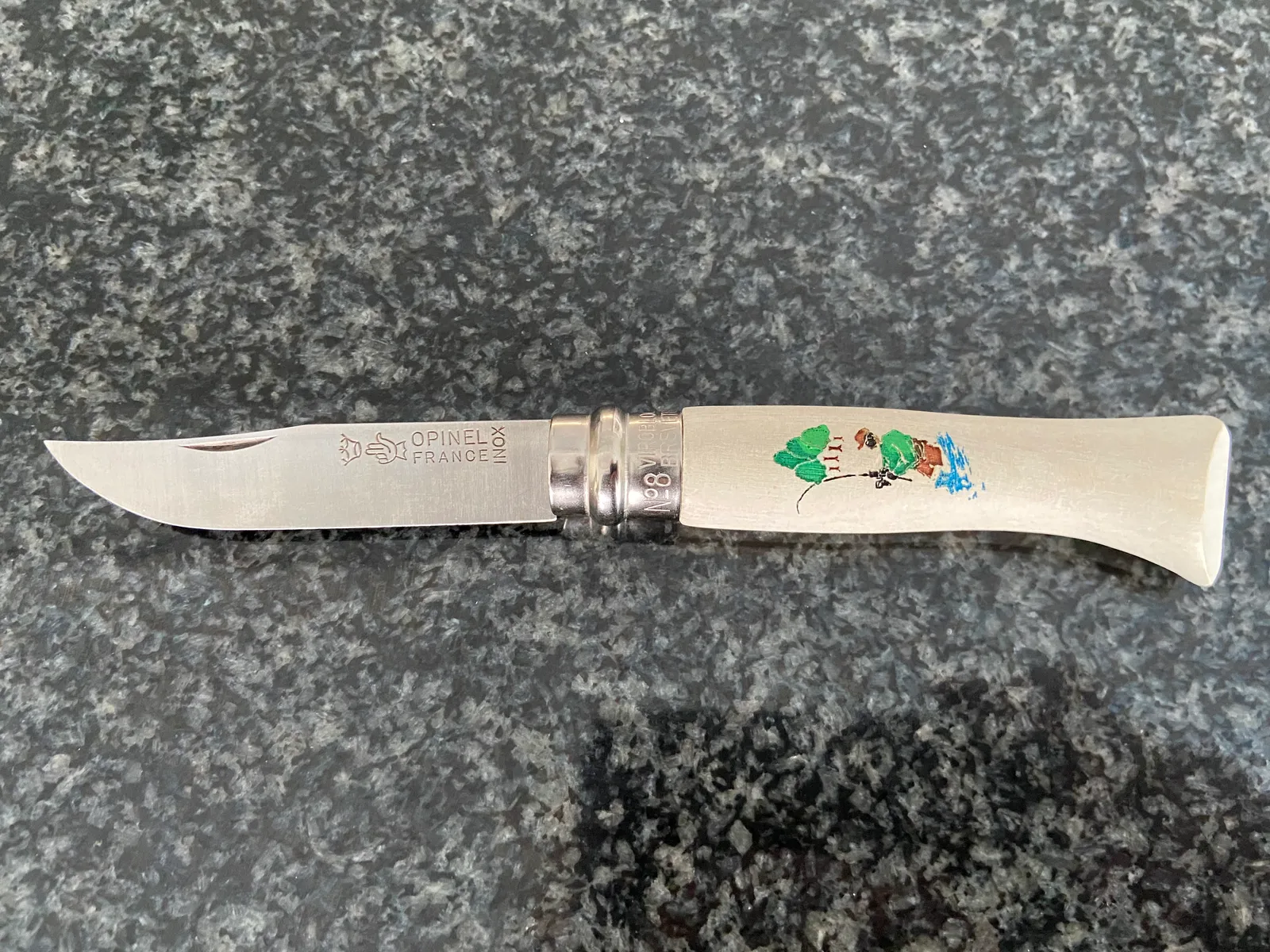
The blade is the reason to buy it
I bought the carbon steel version, which is Opinel's XC90 at roughly 57-59 HRC. Out of the box it was sharper than any production knife I've bought at this price, and it took a hair-shaving edge on a fine ceramic rod in under two minutes. That combination — soft enough to sharpen effortlessly, hard enough to hold a working edge for a week of real use — is the entire pitch.
Over six months I've touched it up perhaps a dozen times and done one full resharpen on a whetstone. A steel this easy to bring back means you actually maintain it, which in practice makes it sharper on any given day than a harder, more stubborn super-steel that you put off sharpening.
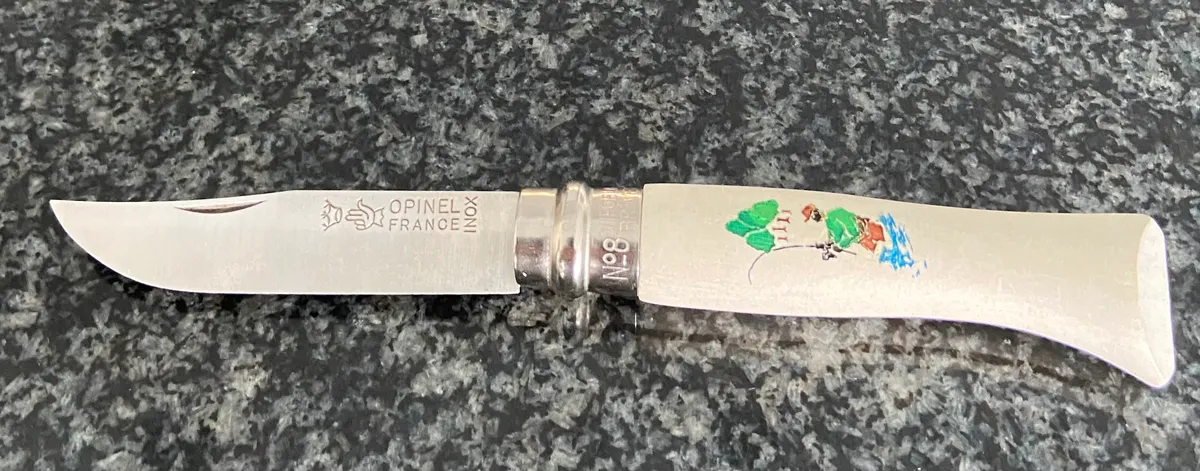
The trade-off is corrosion. Carbon steel rusts. Mine developed light surface spotting within a fortnight from cutting apples and tomatoes, and it now carries a grey-blue patina across the whole blade. That patina is protective and, once established, the rusting largely stopped. But the first two weeks require attention: wipe the blade dry after every use, and never put it away wet. The stainless Inox version avoids this entirely at a small cost in ease of sharpening, and I'd recommend it to anyone who won't remember.
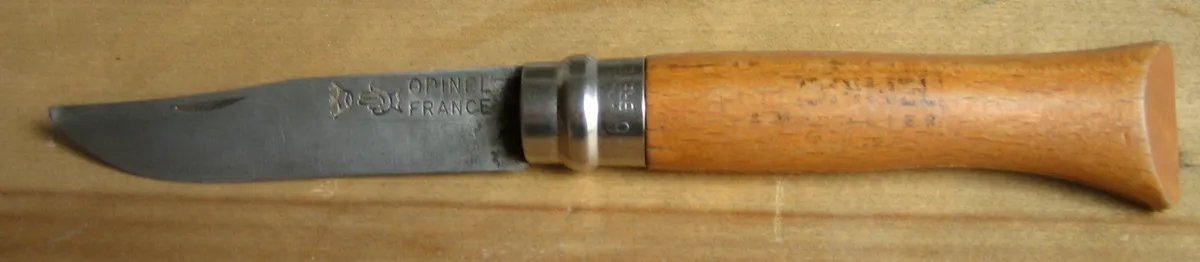
The wooden handle, and the swelling problem
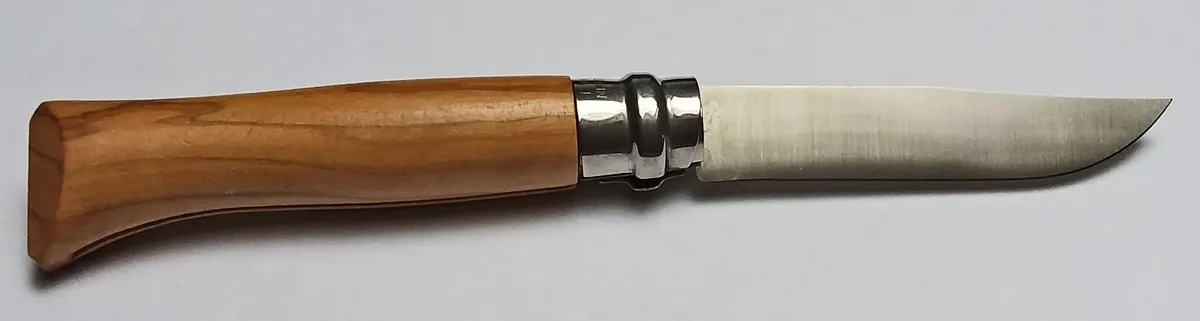
The handle is beechwood, varnished, with a steel collar. It is comfortable in a way plastic and G10 handles rarely are — warm, light, and it fills the hand naturally. It is also wood, and wood moves.
I got mine wet washing vegetables in week two. The next morning the blade would not open. This is the single most common Opinel complaint and it is entirely predictable: the wood swells and pinches the blade tang. The fix that worked was warming the handle gently, then tapping the back of the collar against a wooden surface to shock the blade loose. Forcing it with a fingernail in the nail nick is how people break nails and chip the wood.
The permanent fix is sanding the tang slot slightly, or simply keeping the knife dry. After I stopped washing it under a tap, the problem never recurred in five months.
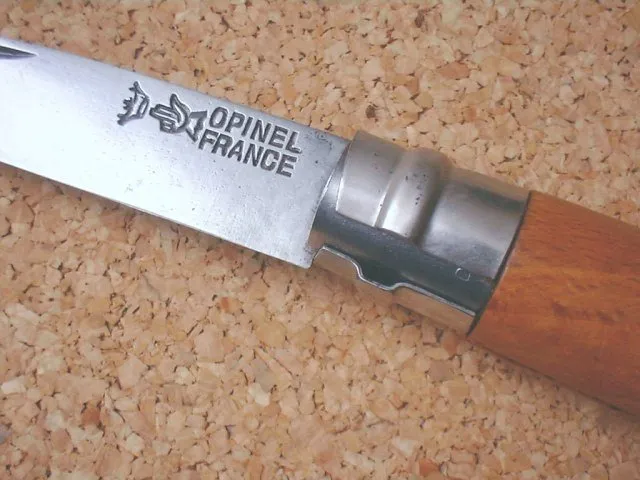
The Virobloc lock
The rotating collar — Opinel calls it the Virobloc — locks the blade open, and since 1955 also locks it closed. It is a simple twist and takes about a second. It holds the blade rigidly open with no play I can detect after six months.
Two honest caveats. First, it is not a one-handed operation: opening this knife needs two hands, always, and there is no thumb stud, no flipper, no assisted anything. If you need to open a knife while holding something else, this is the wrong knife. Second, the collar can rotate slightly loose over time; mine needed a gentle squeeze with pliers at month four to restore the friction.
What size No.8 actually is
Opinel's numbering is not intuitive. The No.8 has an 8.5 cm blade and a 10.5 cm closed length — comfortably pocketable, and the size most people mean when they say "an Opinel." The No.7 is noticeably small in an adult hand; the No.10 is a two-hands-on-a-cutting-board size that lives in a bag rather than a pocket.
Weight is 45 g. For comparison, a typical modern folder with steel liners and a pocket clip runs 100-150 g. Carrying the Opinel loose in a trouser pocket, I genuinely forget it is there, which is the strongest practical argument for it as an everyday knife.
What it does badly
No pocket clip. There is no way to attach one without drilling the handle, and the knife therefore sits loose in a pocket and works its way to the bottom. Several people solve this with a lanyard through a drilled hole; I did not, and I have twice had it fall out of a jacket pocket.
The blade shape is a drop point with a fine tip that is superb for food and light cutting and not built for prying or hard use. I chipped about 1 mm off the tip levering open a stubborn paint tin, which is entirely my fault and would not have happened with a thicker blade. Treat the No.8 as a cutting instrument, not a tool.
It also cannot be pocket-carried in some jurisdictions. Locking folding knives are restricted in the UK and several other countries regardless of blade length, and the Virobloc makes this a locking knife. Check your local law before buying — this is a genuinely common and expensive mistake.
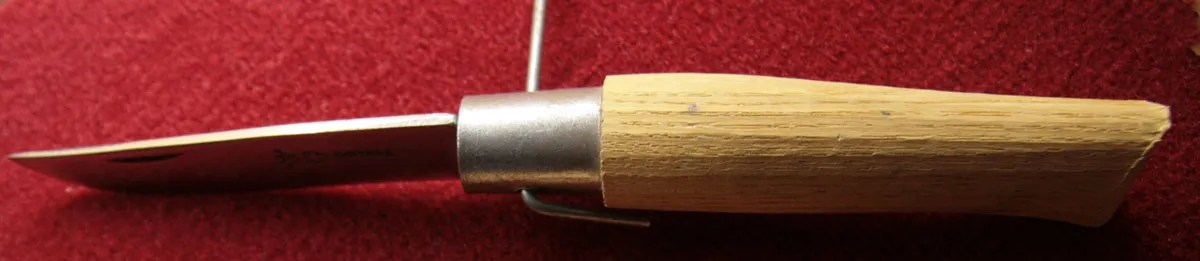
Six months of actual use
As a food knife it is superb. Slicing bread, cheese and sausage on a picnic table is what this design was made for and it does it better than any folder I own, largely because the thin blade geometry means it doesn't wedge in dense food. It is also the knife I hand to other people, because there's nothing about it that a person unfamiliar with knives can get wrong beyond the two-handed opening.
As a garden knife it earned its place cutting twine, opening compost bags and taking cuttings. The wood handle is comfortable for long sessions and does not get cold.
As a general-purpose EDC it is compromised by the lack of a clip and the two-handed opening. I ended up carrying it in a bag rather than a pocket for the last two months, and I reach for it deliberately rather than reflexively.
Cleaning and maintenance in practice
The knife cannot be disassembled — the pivot is a peened pin, not a screw. That means no taking it apart to clean the pivot, and no dishwasher under any circumstances, which would both rust the blade and destroy the handle. Cleaning is a damp cloth on the blade, dry immediately, and an occasional drop of food-safe mineral oil at the pivot.
Once a month I wipe the handle with a little oil, which has kept the varnish from drying out. The wood has darkened slightly with handling and looks better for it.
Sharpening it, specifically
Worth spelling out, because the ease of sharpening is half the value proposition. The factory grind is a full flat bevel at roughly 20 degrees inclusive, which is thin by modern standards and part of why it cuts so well. Maintaining that on a fine ceramic rod takes about eight strokes a side, done leaning against a kitchen counter, and I did it roughly every seven to ten days of use.
The one full resharpen took perhaps fifteen minutes on a 1000-grit waterstone followed by 3000-grit, and the steel responds so readily that it is a good knife to learn on — mistakes are cheap and progress is visible within a few passes. I would not attempt to learn freehand sharpening on a $150 knife in a hard powder steel, and that is a real if unglamorous argument for owning one of these.
The blade also thins gracefully. Six months of sharpening has removed a visible but tiny amount of steel, and at this rate the knife will outlast me. Nothing about it is designed to be replaced.
Against the alternatives
Against a $40-60 modern folder — a Swiss Army knife, a budget framelock — the Opinel cuts better, weighs a third as much, and loses on convenience, weather resistance and versatility. A Swiss Army knife has a screwdriver, scissors and a bottle opener; the Opinel has a blade and an opinion.
Against a $10 hardware-store folder, the Opinel is in a different category on steel quality and edge geometry, and it will still be usable in thirty years with occasional oil.
Against a fixed-blade camp knife, the Opinel is more portable and much less capable. For batoning wood or any task involving force, it is the wrong choice and will be damaged.
Who should buy this
Buy it if you want an outstanding cutting edge for under $20, if your uses are food, garden and light everyday cutting, and if you'll wipe it dry. Buy the carbon version if you enjoy sharpening and don't mind a patina; buy the Inox stainless if you know yourself well enough to admit you'll leave it wet.
Skip it if you need one-handed opening, a pocket clip, or a knife that tolerates prying and wet conditions without thought. And check your local knife law first, because the lock changes the legal picture in more places than people expect.
Verdict
Six months in, the Opinel No.8 is the best cutting edge I own per dollar and the least convenient knife I own per gram. It sharpens in two minutes, disappears in a pocket, and handles food better than knives costing five times as much. It also rusts if you neglect it, swells shut if you wash it, has no clip, needs two hands, and chipped when I misused it. Buy it knowing exactly what it is — a 135-year-old cutting tool, not a modern EDC folder — and it is close to unbeatable value.
Other products we tested

Ecobee Smart Thermostat Premium Review: Two Months of Real HVAC Testing
We installed the Ecobee Smart Thermostat Premium without a C-wire, tracked its temperature accuracy against a separate thermometer, and measured real energy savings over two months of daily HVAC use.
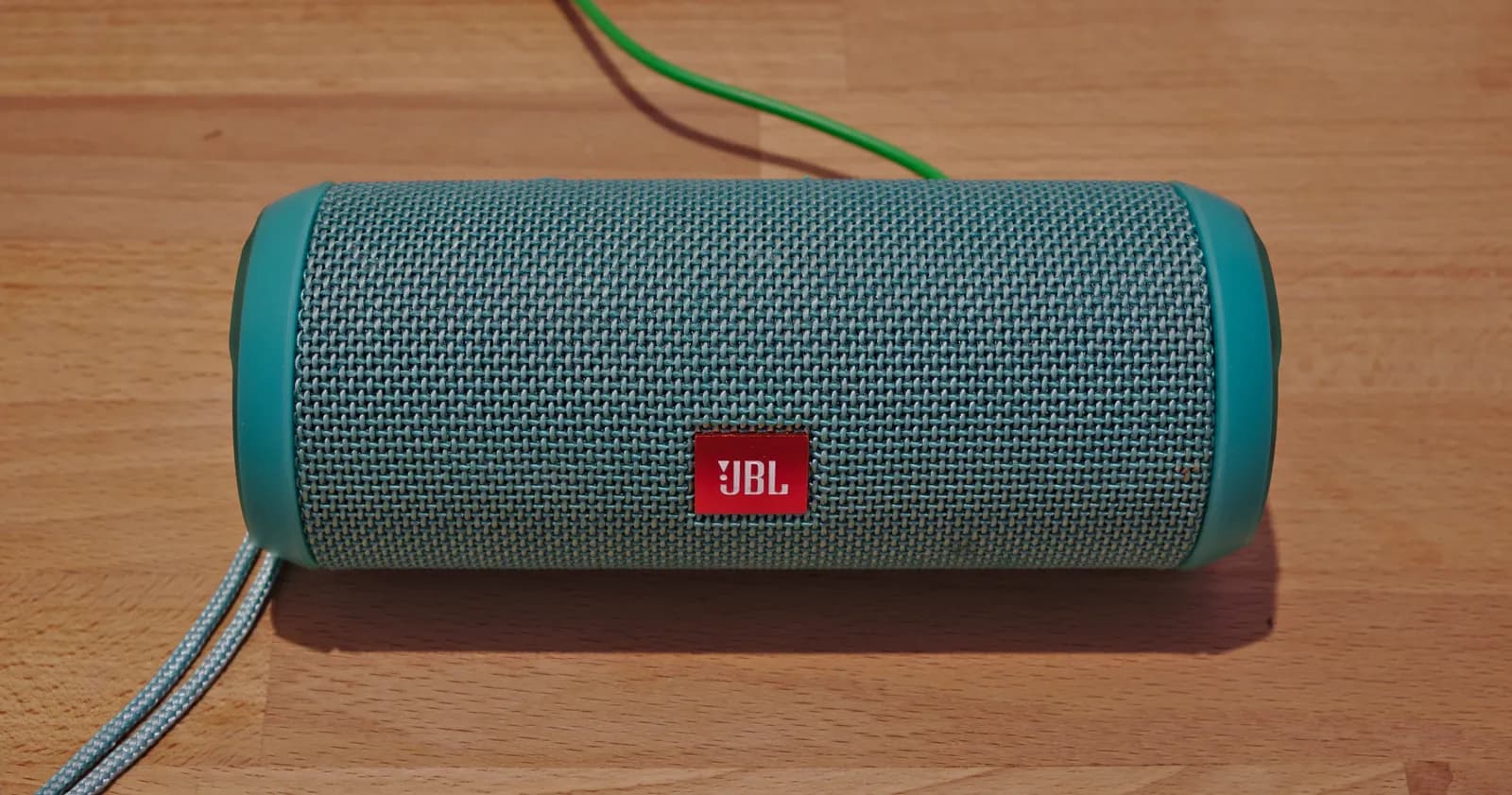
Bose SoundLink Flex Review: Six Weeks of Hiking, Kayaking, and Beach Days
Six weeks of camping, kayaking, and beach trips show the Bose SoundLink Flex's IP67 rating and PositionIQ orientation sensing are genuinely useful, with honest limits on bass and max volume.
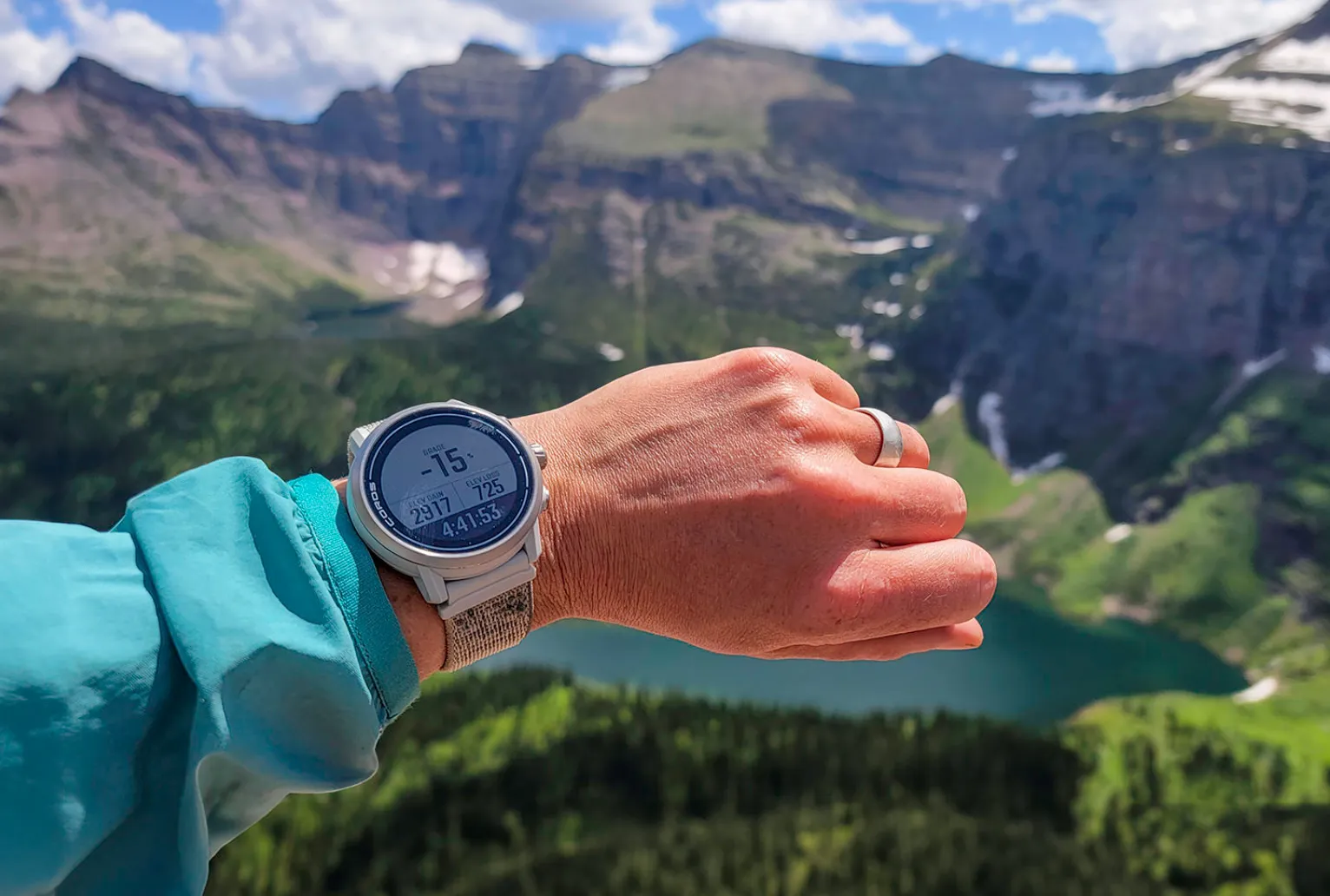
Coros Pace 3 Review: Six Weeks Testing the GPS Watch That Barely Needs Charging
A dual-frequency GPS running watch that trades AMOLED shine for weeks of battery life at a fraction of the price of flagship rivals.