
Nintendo Switch OLED Review: Six Weeks as a Family and Travel Console
We used the Nintendo Switch OLED as a family's shared living-room and road-trip console for six weeks to see whether the bigger screen and wider kickstand matter more than raw power.
- OLED screen is a genuine, noticeable upgrade for handheld and shared-screen play
- Wider kickstand is far more stable for propping up in a car or on a table
- Seamless docked-to-handheld switching protects shared TV time
- Wired LAN port on the dock improves online stability
- Nintendo's first-party library remains the best multiplayer catalog for families
- Same CPU/GPU as the original Switch, so no performance upgrade
- Joy-Con drift remains a long-term reliability risk
- 64GB of internal storage is tight; a microSD card is nearly mandatory
- Physical cartridges are small and easy to lose
- Not built for demanding PC-style games or emulation
Most of the discourse around the Nintendo Switch OLED gets dragged toward comparisons with the Steam Deck, framed as a battle over which handheld is the better piece of PC-adjacent gaming hardware. That's the wrong lens for the audience this console actually serves: families juggling a shared TV, kids who want to play in the back seat on a road trip, and casual players who just want Mario Kart to look good on a plane tray table without fiddling with emulators or a desktop-style interface. We used a Switch OLED as our household's primary console for six weeks, split between docked play in the living room, handheld use during two long car trips, and shared multiplayer sessions with kids and visiting relatives, to see how it holds up as the living-room-and-travel console it's actually built to be.
What actually changed from the original Switch
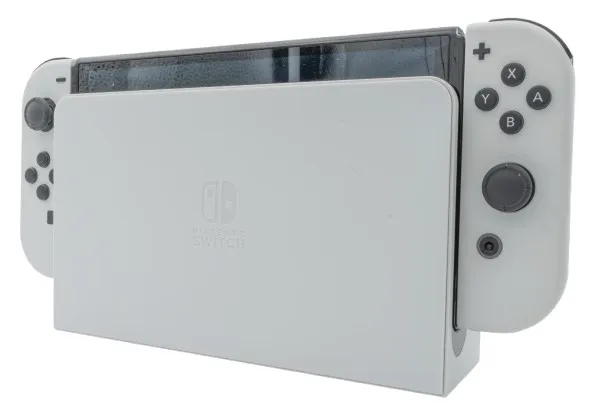
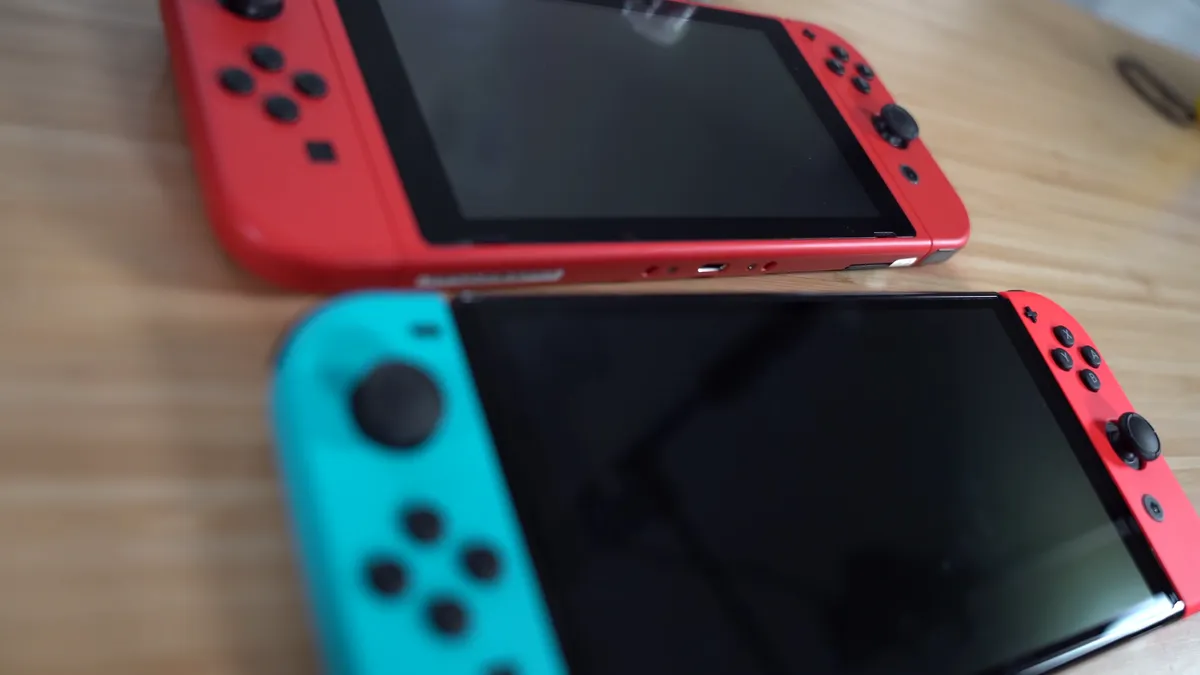
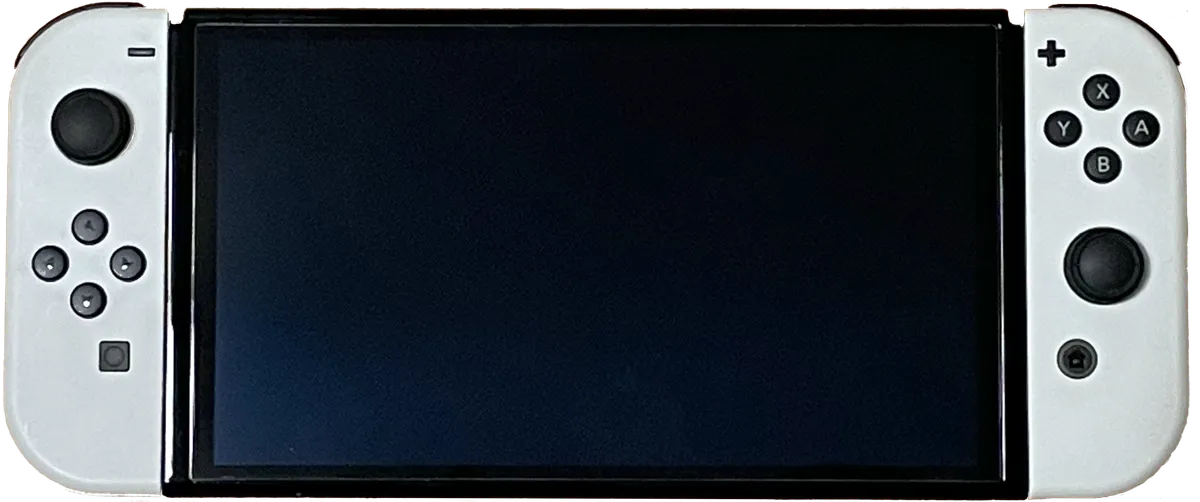
The headline upgrade is right there in the name: a 7-inch OLED screen replacing the original's 6.2-inch LCD, with genuinely deep blacks, richer colors, and a wider viewing angle that matters more than you'd expect when a couple of kids are huddled around one screen in handheld mode trying to watch the same race in Mario Kart. Nintendo also widened the kickstand into a full-width flip-out stand, doubled the internal storage to 64GB, added a wired LAN port to the dock for more stable online play, and improved the speakers noticeably, all changes aimed squarely at making the console better at being itself rather than chasing more processing power. The CPU and GPU are unchanged from the original Switch, which matters for expectations: this is not a more powerful console, and anyone expecting better frame rates or resolution in existing games will be disappointed, because that was never the point of this revision.
Out of the box, the improved screen is the difference you notice within the first five minutes, especially with anything that has dark scenes or sharp contrast, like Zelda's nighttime sequences or Metroid Dread's shadowy corridors. Colors in general look more saturated and alive in handheld mode, and text is crisper thanks to the same resolution packed into a screen that's both larger and uses genuinely emissive OLED pixels rather than an LCD backlight, which also means better battery efficiency during dark scenes specifically, though overall battery life is unchanged from the original model at roughly four and a half to nine hours depending on the game.
Family and travel use: where this console is actually built to live
Two long car rides during our testing period turned out to be the console's best showcase. The wider kickstand let us prop the Switch up on a tray table for a young passenger without anyone holding it, something the original Switch's narrow, flimsy kickstand made awkward and unstable on anything but a perfectly flat surface. Handheld multiplayer with a second set of Joy-Cons, splitting the controllers between two kids sharing the single OLED screen, is where the bigger, richer display earns its keep in a way a spec sheet doesn't capture: games like Mario Kart and Kirby's co-op modes are genuinely playable shoulder-to-shoulder on the built-in screen without needing a TV at all.
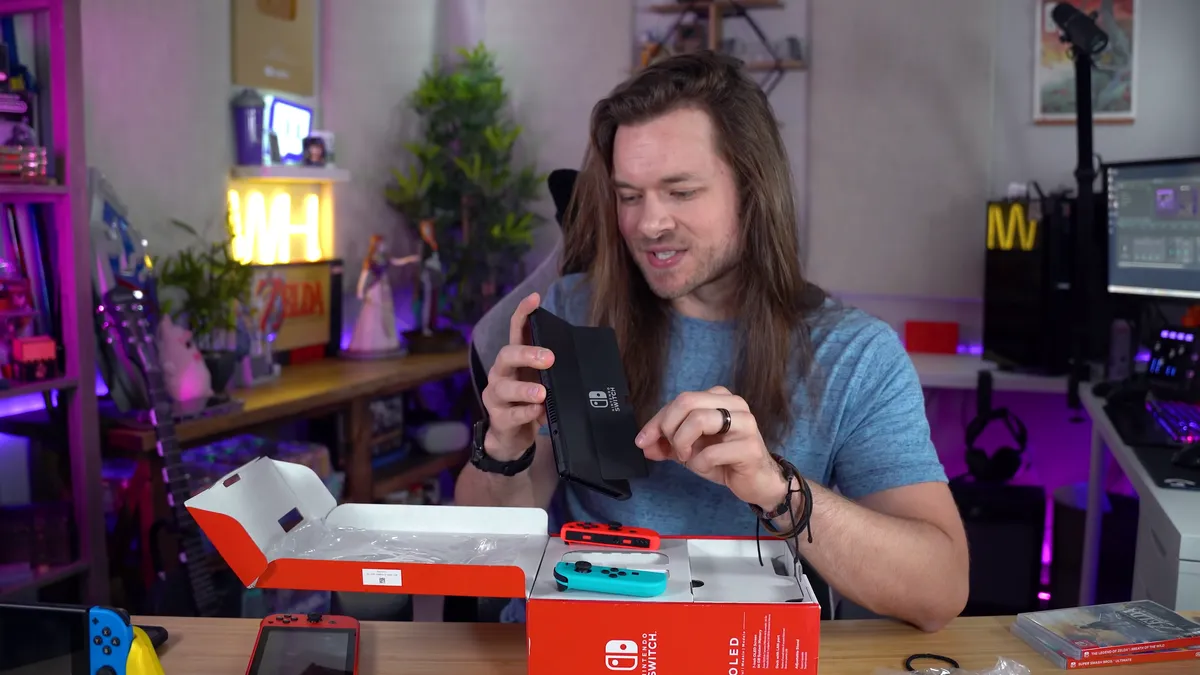
Back home, docked mode in the living room is where the console spends most of its life for a lot of families, and this is exactly where Nintendo's first-party library shines regardless of which Switch model you own, since the dock outputs the same 1080p to a TV whether you have the OLED or the original screen underneath it. What the OLED model does add here is the wired LAN port built directly into the dock, which we used for online Splatoon and Mario Kart sessions and which noticeably reduced the input lag and connection drops we'd occasionally hit relying on Wi-Fi with the original model in the same house.
The controller and interface, unchanged and still the easiest console to hand a kid
Nintendo hasn't touched the fundamental interface here, and that's largely a good thing for the audience this console serves. The home menu remains simple enough that a six-year-old in our test household navigated between games, adjusted parental controls prompts, and launched multiplayer independently within the first weekend, something that's genuinely harder to say about a Steam Deck's more PC-like desktop-adjacent interface, which assumes a level of comfort with menus, settings, and occasionally troubleshooting that a young or casual player just doesn't have and shouldn't need. Joy-Con drift, the console's most persistent and widely reported hardware complaint over its lifespan, remains a real risk; our review unit's Joy-Cons held up fine over six weeks, but this is a known issue across the Switch line broadly enough that buyers should know Nintendo's repair program exists and budget mentally for the possibility down the line.
Docked TV performance and the shared-screen experience
For a household TV setup, the appeal of the Switch over other consoles isn't raw power, it's the seamless jump between docked and handheld without losing your save or needing a second purchase, something that matters enormously for families where the TV is contested between multiple people. Pulling the console out of the dock mid-game to let someone else use the television, then resuming exactly where we left off in handheld mode on the OLED's improved screen, worked exactly as advertised every single time across six weeks, with no loading delay beyond the couple of seconds it takes to reconnect. This single feature, more than any spec, is what separates the Switch experience from a traditional console or a Steam Deck used primarily as a PC gaming device: it was designed from day one around sharing a TV, not around maximizing a single dedicated gaming session.
The library: the actual reason families buy this over anything else
Hardware aside, the case for the Switch OLED rests almost entirely on Nintendo's first-party library, and six weeks of rotating through Mario Kart 8 Deluxe, Zelda: Tears of the Kingdom, Kirby and the Forgotten Land, and Animal Crossing with a mix of adult and child players confirmed why this remains the console families reach for over more powerful but less accessible alternatives. These games are built from the ground up for approachable multiplayer, forgiving difficulty curves that scale to a child's skill level, and short, satisfying play sessions that fit a car ride or a rainy afternoon rather than the long uninterrupted sessions more hardcore PC or console games often assume. None of this changed with the OLED revision, but it's worth restating because it's the actual reason to buy into this ecosystem rather than a more powerful handheld that runs a wider library of PC games but lacks this specific first-party catalog.
Storage, cartridges, and the practical annoyances
The bumped 64GB of internal storage is still tight once you install a couple of larger modern titles, and we ended up buying a microSD card within the first two weeks, which is a near-mandatory accessory purchase Nintendo doesn't clearly flag at checkout. Physical cartridges remain small enough to be genuinely lose-able, something we learned the hard way when a Mario Kart cartridge went missing under a car seat for four days, and there's no getting around occasionally needing to hunt for a specific tiny piece of plastic if you keep a physical game library rather than buying everything digitally, which itself has its own storage-space tradeoffs given the modest internal capacity.
Battery life and charging on the road
Across two car trips, battery life tracked close to Nintendo's stated four-and-a-half to nine hour range depending on the game, with brighter, more demanding titles like Tears of the Kingdom sitting closer to the low end and simpler games like Animal Crossing stretching well past six hours. A portable USB-C battery pack kept the console topped up on longer drives without needing the dock, and the console charges happily while in active play, which meant we never actually ran it fully flat mid-trip even on a six-hour drive with heavy handheld use from two different kids taking turns.
Who this console is actually for
The Switch OLED is the easy, obvious pick for families who want one console that moves between a shared living-room TV and the back seat of a car without complication, for casual players who want Nintendo's specific catalog of approachable, multiplayer-friendly games, and for anyone who wants a console a young child can operate independently within a weekend. It's a poor fit for anyone chasing cutting-edge graphics, a large PC-game library, or emulation flexibility, all of which are the actual strengths of PC-gaming-oriented handhelds built around a different audience and a different use case entirely; that's simply not what this device is trying to be, and comparing it on those terms misses why families keep buying it anyway.
The verdict
Six weeks of docked living-room play, handheld car trips, and shared multiplayer with kids confirmed the OLED screen and wider kickstand are genuine, tangible upgrades for exactly the travel-and-family use case this console is built around, even though the underlying hardware is unchanged from the original Switch. Joy-Con drift remains a long-term risk worth knowing about going in, and the modest internal storage means a microSD card is close to mandatory, but as the console that seamlessly bridges a shared TV and a road trip with a genuinely great screen in between, it remains the easiest recommendation in its category for households, not solo PC gamers.
Other products we tested

Ecobee Smart Thermostat Premium Review: Two Months of Real HVAC Testing
We installed the Ecobee Smart Thermostat Premium without a C-wire, tracked its temperature accuracy against a separate thermometer, and measured real energy savings over two months of daily HVAC use.
Bose SoundLink Flex Review: Six Weeks of Hiking, Kayaking, and Beach Days
Six weeks of camping, kayaking, and beach trips show the Bose SoundLink Flex's IP67 rating and PositionIQ orientation sensing are genuinely useful, with honest limits on bass and max volume.
Coros Pace 3 Review: Six Weeks Testing the GPS Watch That Barely Needs Charging
A dual-frequency GPS running watch that trades AMOLED shine for weeks of battery life at a fraction of the price of flagship rivals.