
LEGO Icons Bouquet of Roses Review: A Permanent Bouquet That Never Wilts
Two months living with LEGO's Bouquet of Roses set as actual home decor, from the nine-stem build process to how convincingly it passes as a real arrangement.
- Clever piece engineering creates convincingly organic petal and bloom shapes
- Nine independent stem builds make it easy to build in short relaxed sessions
- No fading, loosening, or damage after two months on display
- Reads as genuine decor rather than an obvious toy from normal viewing distance
- Well suited as a gift for non-LEGO-hobbyist recipients
- No vase included, requiring a separate purchase to display it
- Dust collects between petal pieces and needs occasional light cleaning
- Doesn't fool anyone up close the way a high-quality silk flower might
- Cost per flower is high compared to a florist bouquet for a single occasion
- Popular Icons sets have a history of retirement and secondary-market price spikes
LEGO's botanical collection has quietly become one of the company's most interesting product lines, aimed squarely at adults who want a satisfying building project that ends with a display piece rather than a toy that gets swept into a bin. The Bouquet of Roses set is one of the line's most popular entries, a permanent bundle of LEGO flowers built to sit in a vase indefinitely, needing no water and never wilting. We built one over a single weekend, then lived with it on a bookshelf for two months to see how it holds up as an actual piece of home decor rather than just a fun Sunday project.
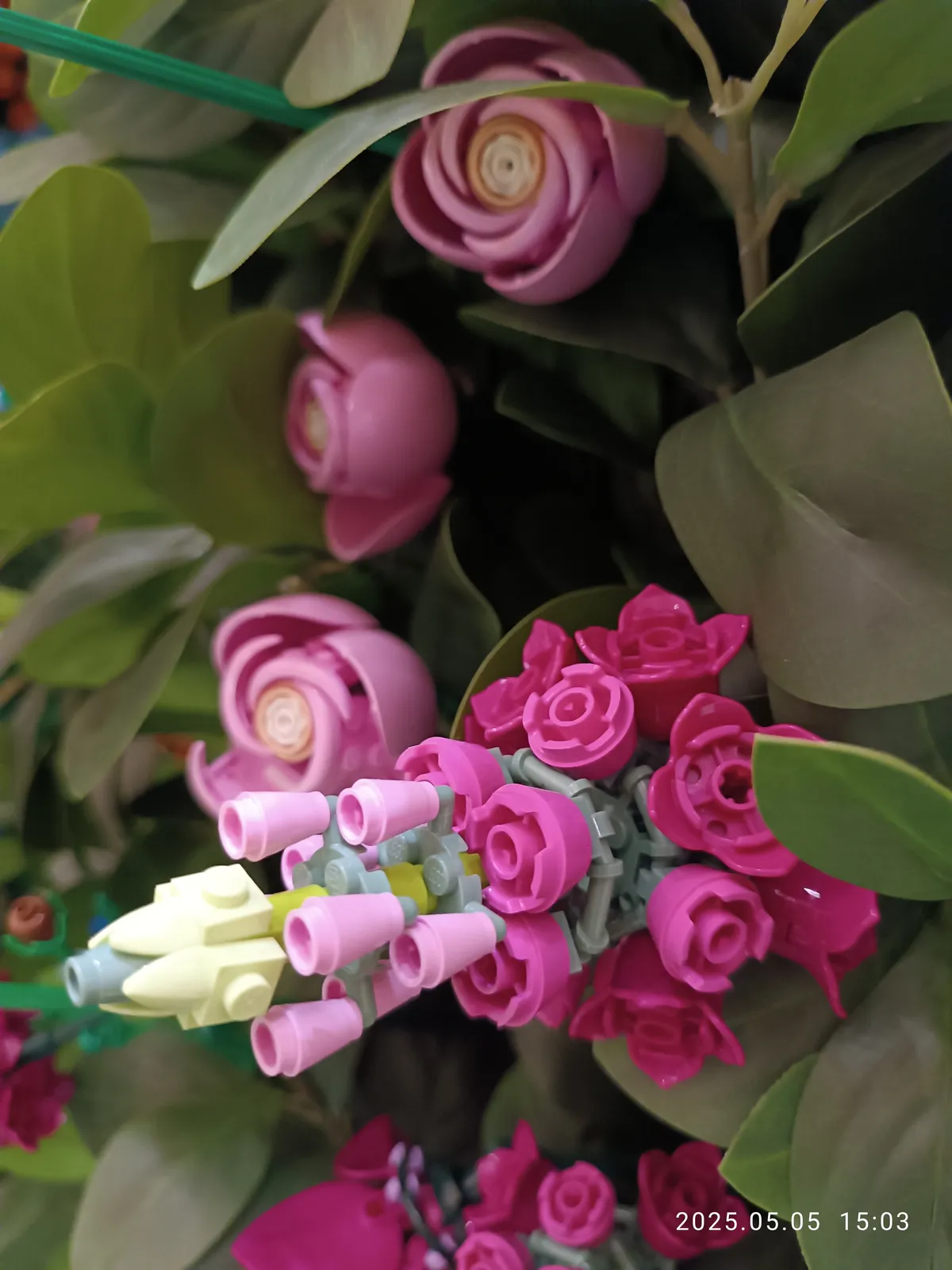
The set includes nine stems total, each finished with a different rose color and bloom style, along with leaves, stems, and a design that intentionally leaves the vase choice up to the builder rather than including one — a deliberate decision that lets buyers use whatever vase already fits their space rather than forcing a specific LEGO-branded container into a room's décor.
The building experience
Unlike most LEGO sets, which are built roughly chronologically through a single continuous instruction booklet, the Bouquet of Roses is really nine small independent builds, one per stem, each taking somewhere between fifteen and thirty minutes depending on the bloom's complexity. This structure makes the set unusually good for building in short sessions rather than requiring a dedicated multi-hour sitting, and we ended up building two or three stems most evenings after work rather than attempting the whole thing in one go. The individual techniques used to create petal curves and layered bloom shapes are genuinely clever — several stems use small hinge and clip pieces at angles we hadn't seen used quite that way in other sets, achieving a convincingly organic, non-blocky flower shape from fundamentally rectangular LEGO pieces.
None of the builds are difficult in a puzzle-solving sense — this is explicitly a relaxation-oriented set rather than a technically challenging one, with no confusing steps or ambiguous instructions across any of the nine stems in our build. Piece count sits in the low hundreds total, modest by adult-LEGO-set standards, and total build time across all nine stems came to a little under four hours split across several sessions, which felt right for a set positioned as a casual weekend project rather than a multi-weekend undertaking like some of LEGO's larger Icons architecture sets.

Piece quality and color accuracy
LEGO's molding quality on the specialty petal and leaf pieces was consistently excellent, with clean clutch power (the friction that holds bricks together) on every stem and no loose or wobbly connections anywhere across the full bouquet after assembly. Color variety across the nine stems includes deep reds, pinks, and a couple of more unusual shades, giving the finished bouquet a more varied, realistic look than a bundle of identical roses would have. We did notice one stem's leaf piece had a very slightly visible mold seam under close inspection, a minor cosmetic issue that's genuinely common across LEGO's specialty pieces in general and not specific to this set, and not visible at all from normal display viewing distance.
Living with it as actual home decor
This is really the core question for a set like this: does it work as a permanent display piece, or does it read as an obvious toy sitting on a shelf. Two months in, our answer is genuinely positive — from a normal viewing distance across a room, the bouquet reads convincingly as a stylized floral arrangement rather than an obviously plastic toy, particularly once placed in a vase with some visual weight to it rather than a flimsy container that undersells the arrangement. Several visitors to our apartment didn't clock it as LEGO at all until getting close enough to see the stud details, which we took as a genuine compliment to the set's design.
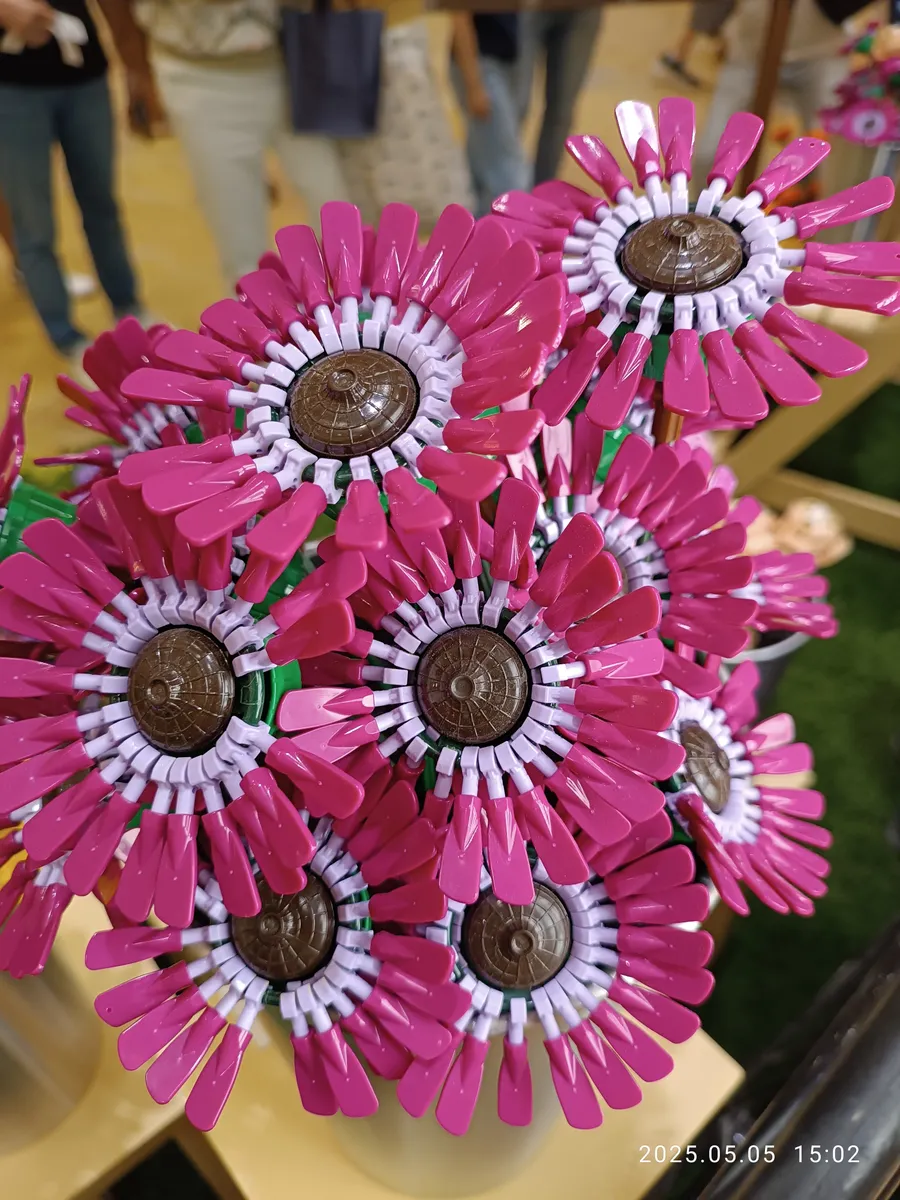
Durability over two months has been a non-issue — the finished stems have survived a couple of accidental bumps while dusting the shelf without any pieces popping loose, and there's been no fading or discoloration from the modest indirect sunlight the shelf gets during the day. Dust accumulation between the petal pieces is the one genuine maintenance quirk worth knowing about; a soft brush or a can of compressed air handles it in a couple of minutes every few weeks, but if you're someone who won't bother with that occasional light cleaning, be aware dust will show more visibly on this than on a smooth ceramic decor piece.
Gift-giving considerations
We bought a second set specifically to give as a gift partway through our test period, which gave us a useful data point on how it lands with someone who isn't already a LEGO enthusiast. The recipient, who has no particular history with LEGO as an adult, responded well to the "flowers that never die" framing and found the building process relaxing rather than tedious, describing it as similar in spirit to an adult coloring book or a puzzle. That's consistent with how LEGO explicitly markets the botanical line — squarely at gift-giving occasions like anniversaries, Mother's Day, and housewarmings, rather than at existing LEGO hobbyists exclusively — and our experience giving it as a gift matched that positioning well.
Comparison to real and artificial flowers
Against real cut flowers, the obvious advantage is permanence: no water changes, no wilting after a week, no disposal, and no recurring cost of replacing a bouquet every so often. Against high-quality artificial silk flowers, the comparison is closer and comes down mostly to aesthetic preference — silk flowers can look somewhat more realistic up close, particularly in petal texture and translucency, while the LEGO bouquet leans into an intentionally stylized, faceted look that reads as a deliberate design object rather than an attempt to fool anyone into thinking it's real. We'd position it less as a flower replacement and more as its own category of decor object, one that happens to be shaped like flowers and comes with a building process as part of the value.
Displaying and styling the finished bouquet
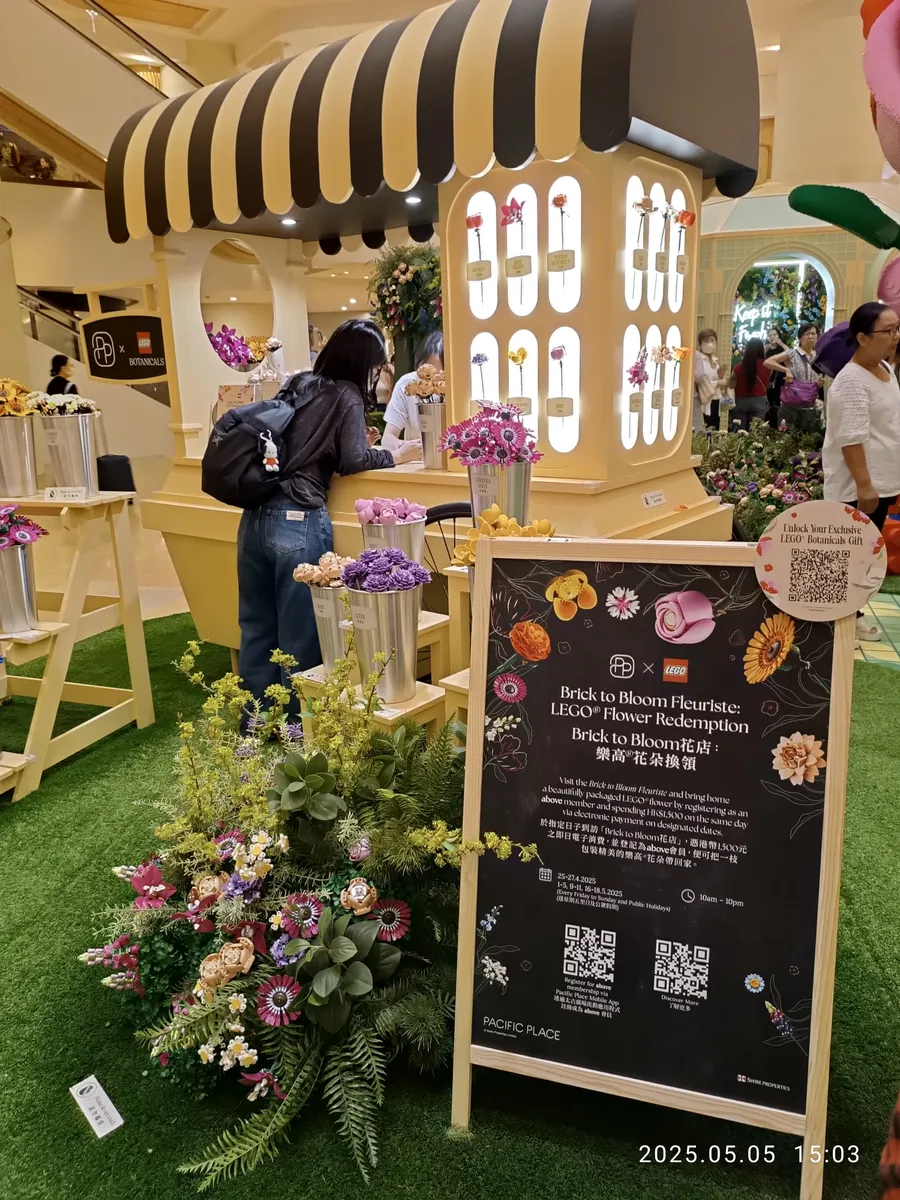
We experimented with a few different vase choices over the two months, and the set's finished look changed more than expected depending on the container. A tall, narrow vase emphasized the stem lengths and made the arrangement look sparser and more architectural, while a wider, shorter vase let the blooms fan out and read as a fuller, more traditional bouquet shape. LEGO's official product photography tends to favor a simple clear or frosted glass vase, and we found that advice held up well in practice — an ornate or heavily patterned vase competed with the flowers' own visual detail rather than complementing it. Grouping the nine stems unevenly, with taller stems toward the back and shorter blooms toward the front, produced a noticeably more natural silhouette than arranging them in a flat, uniform row.

Value and price consideration
Priced in line with LEGO's other mid-size Icons sets, the Bouquet of Roses isn't cheap for what is, materially, a box of specialty plastic pieces, and buyers strictly comparing cost-per-flower against a florist bouquet will find the math unfavorable for a single occasion. The value proposition is really about permanence and the building experience itself rather than raw flower-for-flower cost — amortized over years of display rather than a single week of a real bouquet's lifespan, it reads as reasonable, but it's worth going in with the right expectations about what you're actually paying for.
Who should actually buy this
This set is an easy recommendation for LEGO fans who want a relaxing, low-difficulty build that results in a genuinely nice-looking display piece, and for gift-givers looking for something more memorable than a standard bouquet or a generic home decor object. It's a weaker fit for anyone who specifically wants photorealistic flowers rather than a stylized, faceted look, or for younger children, since the smaller specialty pieces and finer motor skills involved skew this toward teens and adults rather than young LEGO builders.
Availability and retirement risk
Like most LEGO Icons sets, the Bouquet of Roses isn't guaranteed to stay in production indefinitely, and popular botanical sets have historically been retired and then resold at a premium on the secondary market once official stock runs out. If you're considering it as a gift for a specific future occasion, buying somewhat ahead of time rather than assuming it will still be readily available at full retail price closer to the date is a reasonable precaution based on how this product category has behaved before.
The verdict
Two months on a shelf later, the LEGO Icons Bouquet of Roses has held up exactly as promised: no wilting, no water, no maintenance beyond the occasional dusting, and a building process genuinely relaxing enough that we've already looked at other sets in the botanical line as a result. It won't fool anyone up close into thinking it's a real bouquet, and it isn't the cheapest gift option available, but as a permanent, thoughtfully engineered piece of plastic floral decor with a satisfying build behind it, it delivers on a genuinely novel product idea better than we expected going in.
Other products we tested

Ecobee Smart Thermostat Premium Review: Two Months of Real HVAC Testing
We installed the Ecobee Smart Thermostat Premium without a C-wire, tracked its temperature accuracy against a separate thermometer, and measured real energy savings over two months of daily HVAC use.

Bose SoundLink Flex Review: Six Weeks of Hiking, Kayaking, and Beach Days
Six weeks of camping, kayaking, and beach trips show the Bose SoundLink Flex's IP67 rating and PositionIQ orientation sensing are genuinely useful, with honest limits on bass and max volume.

Coros Pace 3 Review: Six Weeks Testing the GPS Watch That Barely Needs Charging
A dual-frequency GPS running watch that trades AMOLED shine for weeks of battery life at a fraction of the price of flagship rivals.