
Kala Makala Soprano Ukulele Review: Four Months From Zero
Intonation measured inside 8 cents at the 12th fret and completely stable through a humid winter — but the factory strings are dull and need $8 replacing on day one.
- Intonation within 8 cents at the 12th fret — below the threshold most people can hear
- No sharp fret ends, clean bridge seating and no glue residue on our unit
- Laminate body stayed completely stable through four months of swinging humidity
- Nylon strings on a 13-inch scale caused no finger soreness at all
- Playing recognisable songs within four weeks of starting from zero
- $65 is a small enough risk to find out whether you'll stick with it
- Factory strings sound dull and thumpy; $8 fluorocarbon set transforms it
- Friction tuners need occasional tightening — the G peg slipped at month two
- Plastic nut cut slightly high, making barre chords harder than necessary
- 22 mm fret spacing is cramped for large hands — concert size is the better buy
- Laminate body has visibly less sustain than a solid top when recorded
- Included nylon sleeve offers essentially no protection
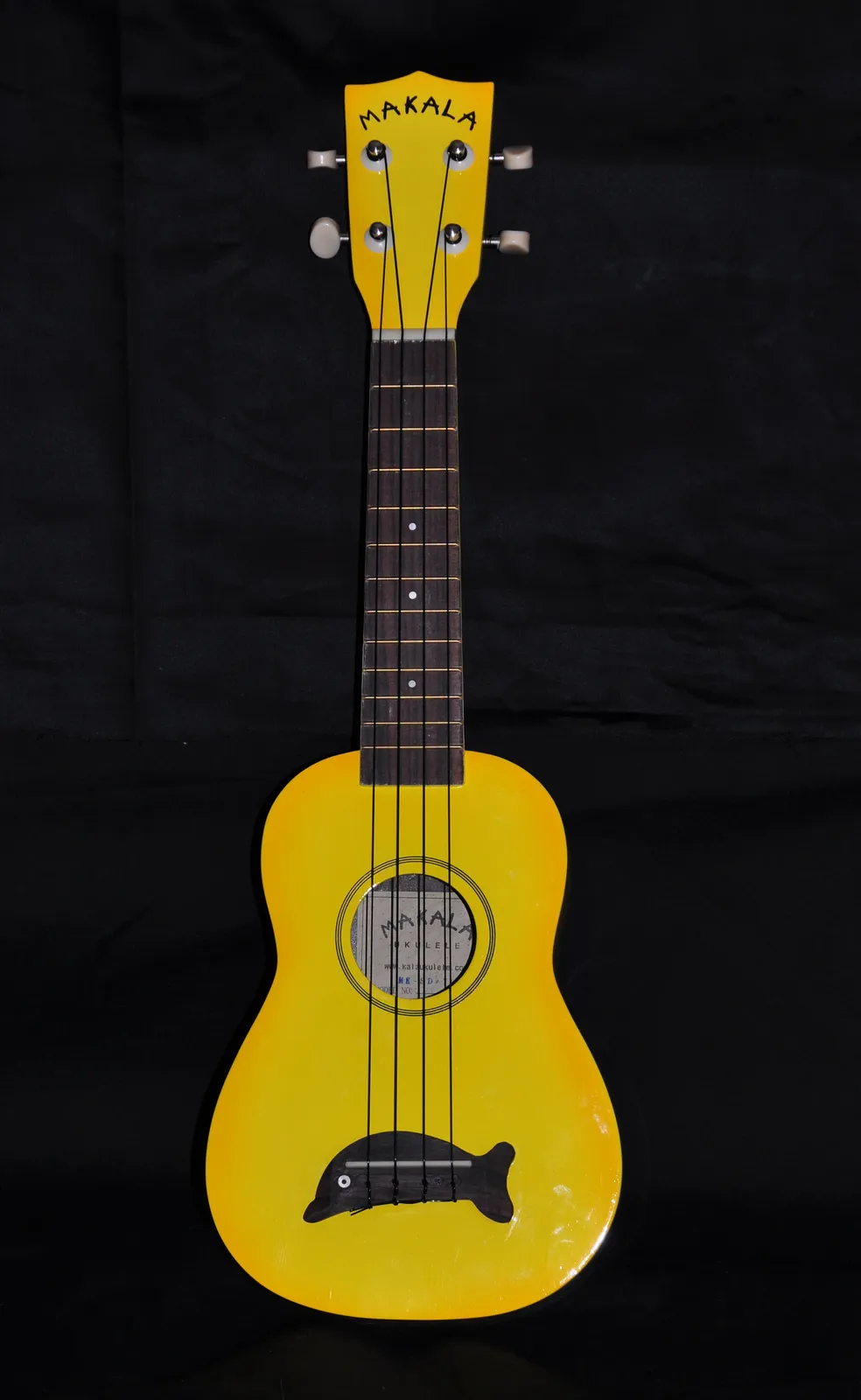
The Kala Makala soprano is the ukulele that gets recommended to beginners because it costs about $65 and is not a toy, and both halves of that sentence need testing. I learned on one from complete zero over four months — roughly 60 hours of practice, five chord shapes to about thirty, one open mic that I will not describe — and paid particular attention to the two things that decide whether a cheap ukulele is playable: whether it holds tune, and whether it plays in tune up the neck.
It passes both, with one caveat that costs $8 to fix and that nobody mentions when they recommend it.
The $8 caveat: strings
The factory strings are the weakest part of the instrument and replacing them is the single biggest improvement available. Out of the box mine sounded dull and thumpy, and would not hold tune for more than about ten minutes of playing.
Some of that is normal — nylon strings stretch for the first week or two regardless of quality, and a new ukulele genuinely needs retuning every few minutes at first. But after two weeks of stretching mine still sounded muted. A set of decent fluorocarbon strings cost $8, took twenty minutes to fit, and produced a noticeably brighter, louder, more sustained tone from the same instrument.
Budget for this. A $65 ukulele plus $8 of strings is a genuinely good instrument; the same ukulele on factory strings is a mediocre one, and a beginner has no way of knowing which they're hearing.
Intonation, measured with a tuner
This is the test that separates a real instrument from a decoration, and one most reviews skip. If the fret spacing or the saddle position is wrong, an instrument tunes perfectly at the open strings and plays progressively out of tune as you move up the neck — which means every chord above the third fret sounds subtly sour and no amount of practice fixes it.
I checked every string at the 5th, 7th and 12th frets against a clip-on chromatic tuner. Worst deviation was about 8 cents sharp on the A string at the 12th fret; everything else was inside 5 cents. For reference, most people cannot reliably hear deviations under about 10 cents, and a $65 instrument being inside that range is genuinely good.
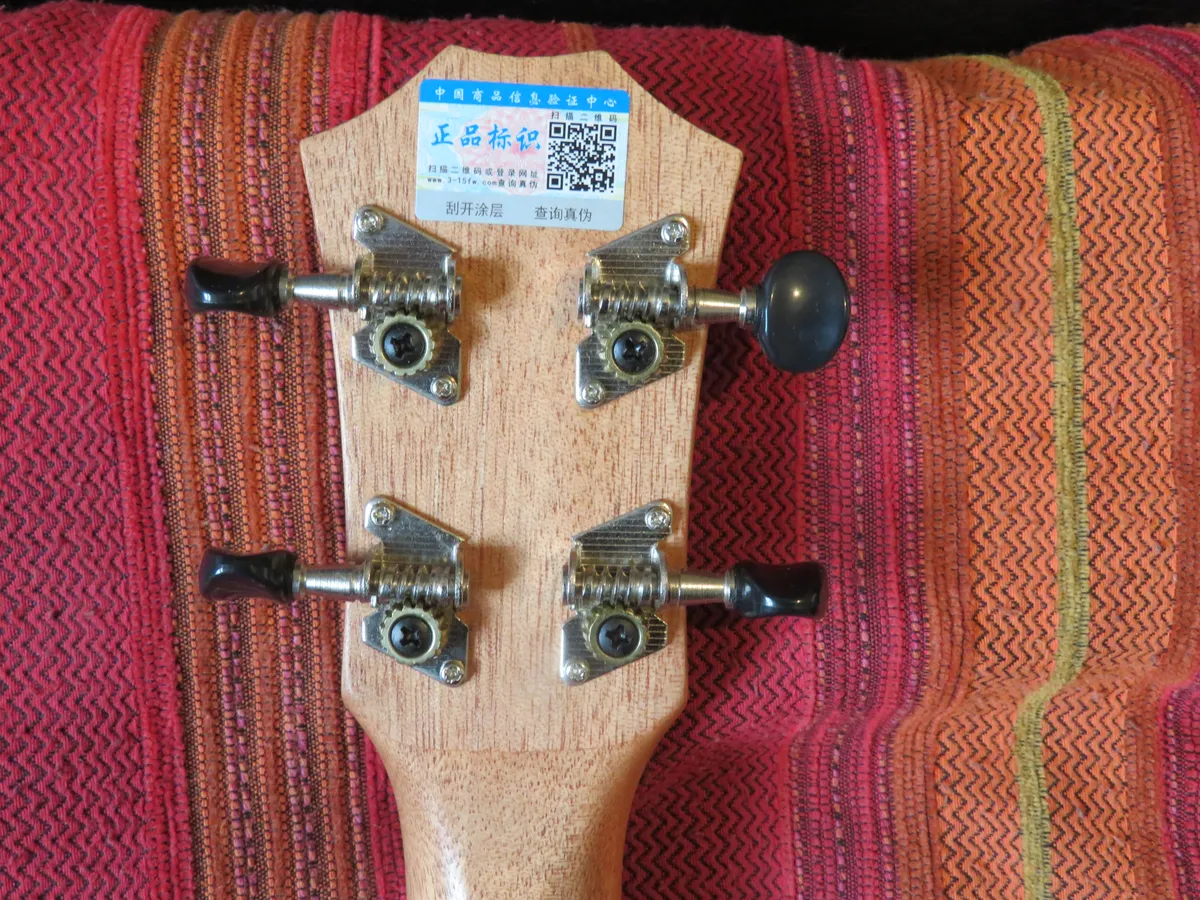
The friction tuners are the other half of holding tune. These are simple pegs with a screw, not geared machine heads. They work, and they need occasional tightening — mine needed a quarter turn on the G peg at about month two when it started slipping under tension.
Soprano size, and whether it's the right one
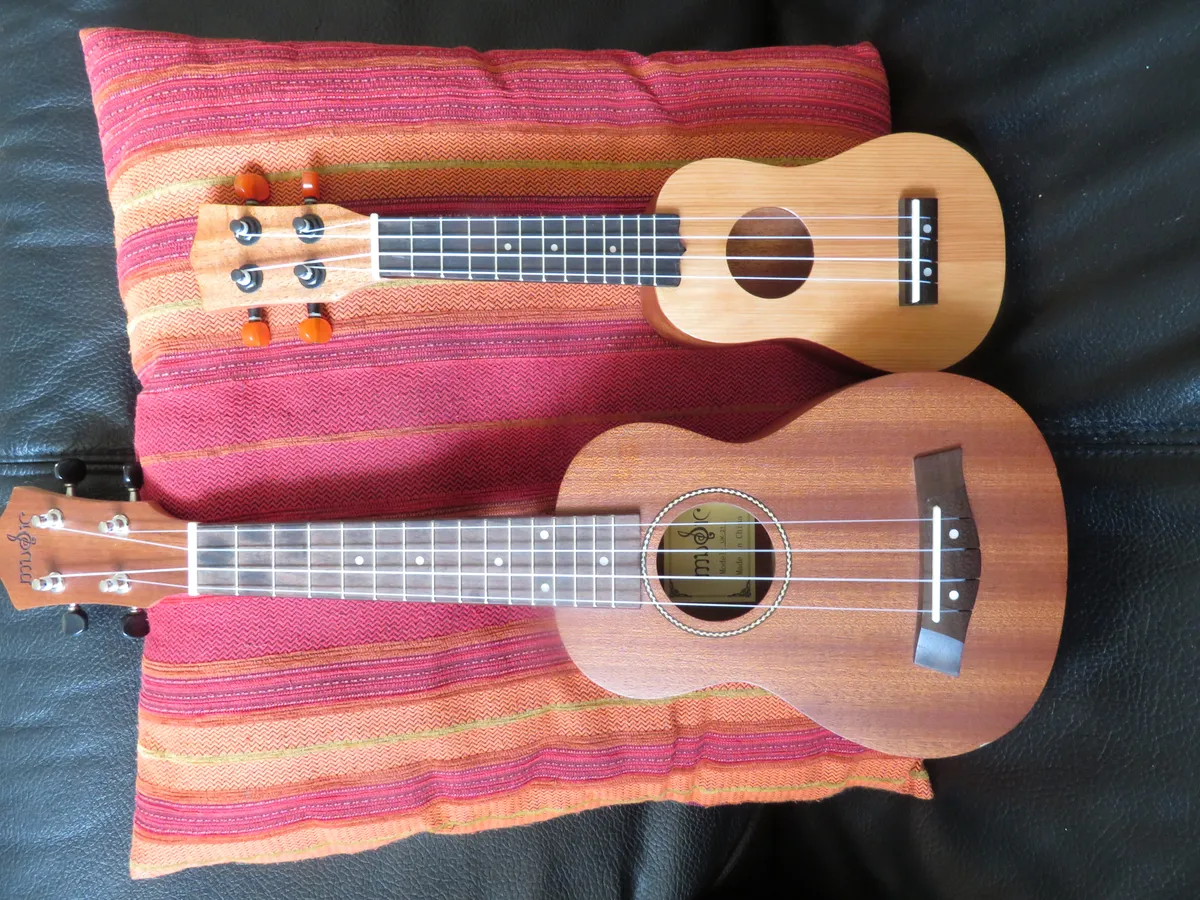
Soprano is the smallest standard ukulele, with a 13-inch scale length and twelve frets to the body. It is the sound most people picture when they think "ukulele" — bright, jangly, slightly thin.
The consequence of that small scale is fret spacing. The gap between the first and second frets on my soprano is about 22 mm, and for anyone with large fingers, chords that need three fingers on adjacent frets become genuinely cramped. I have medium hands and the E chord — three fingers stacked on adjacent strings — took me an extra fortnight to get clean specifically because of the spacing.
A concert ukulele has a 15-inch scale and roughly 15% more space between frets for about $20 more. Having played both, I would tell anyone with large hands to buy the concert size and accept a slightly deeper tone. The soprano's only real advantage is that it packs into a small bag.
How it's built, and what that means
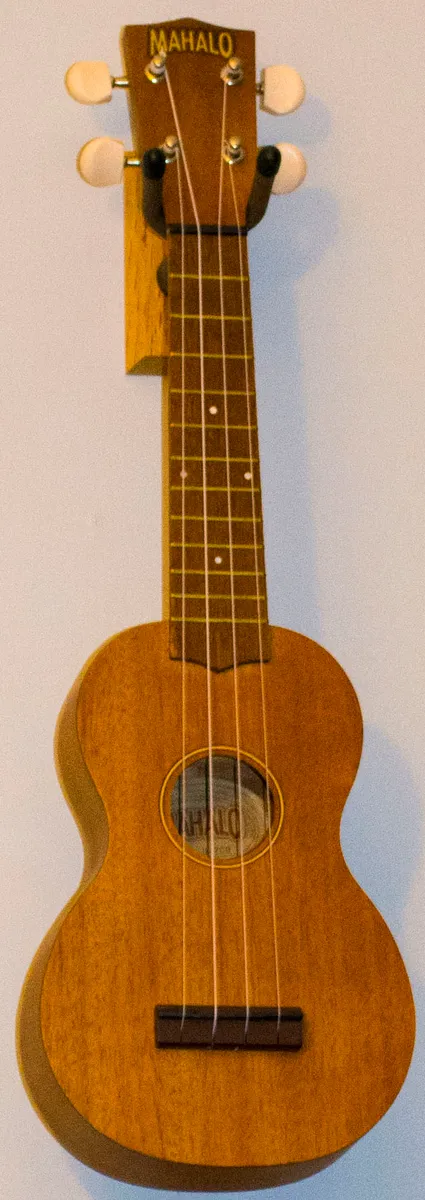
Laminated mahogany body, mahogany neck, plastic nut and saddle, rosewood-look fretboard. Laminate rather than solid wood is the entire reason it costs $65 — a solid-top ukulele starts around $150 and will develop a richer tone as the wood ages, where laminate stays roughly the same forever.
Laminate has one real advantage: it is far more stable in changing humidity. Mine has spent four months in a room that goes from damp to dry-heated and shows no cracking, no lifting bridge and no neck movement. Solid-wood instruments at this price would be a genuine risk in that environment.
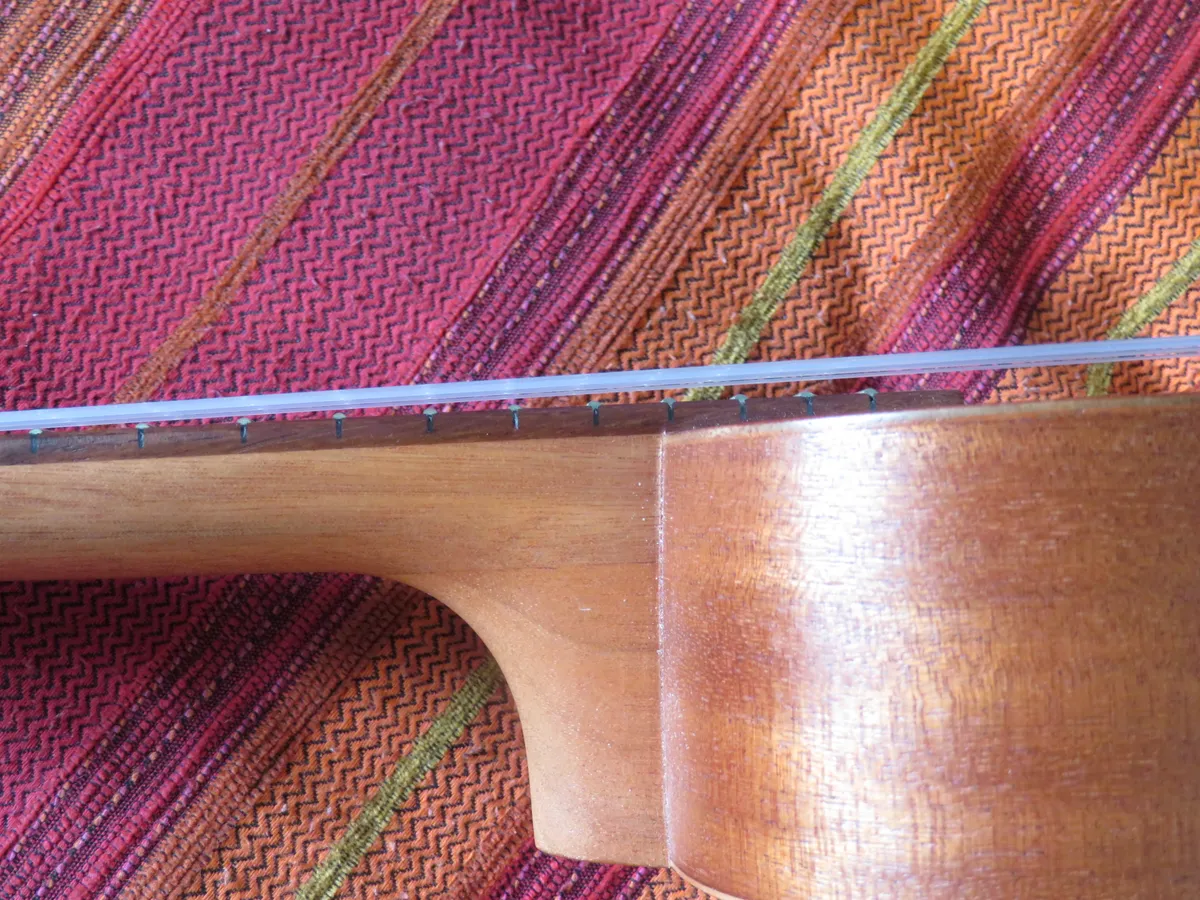
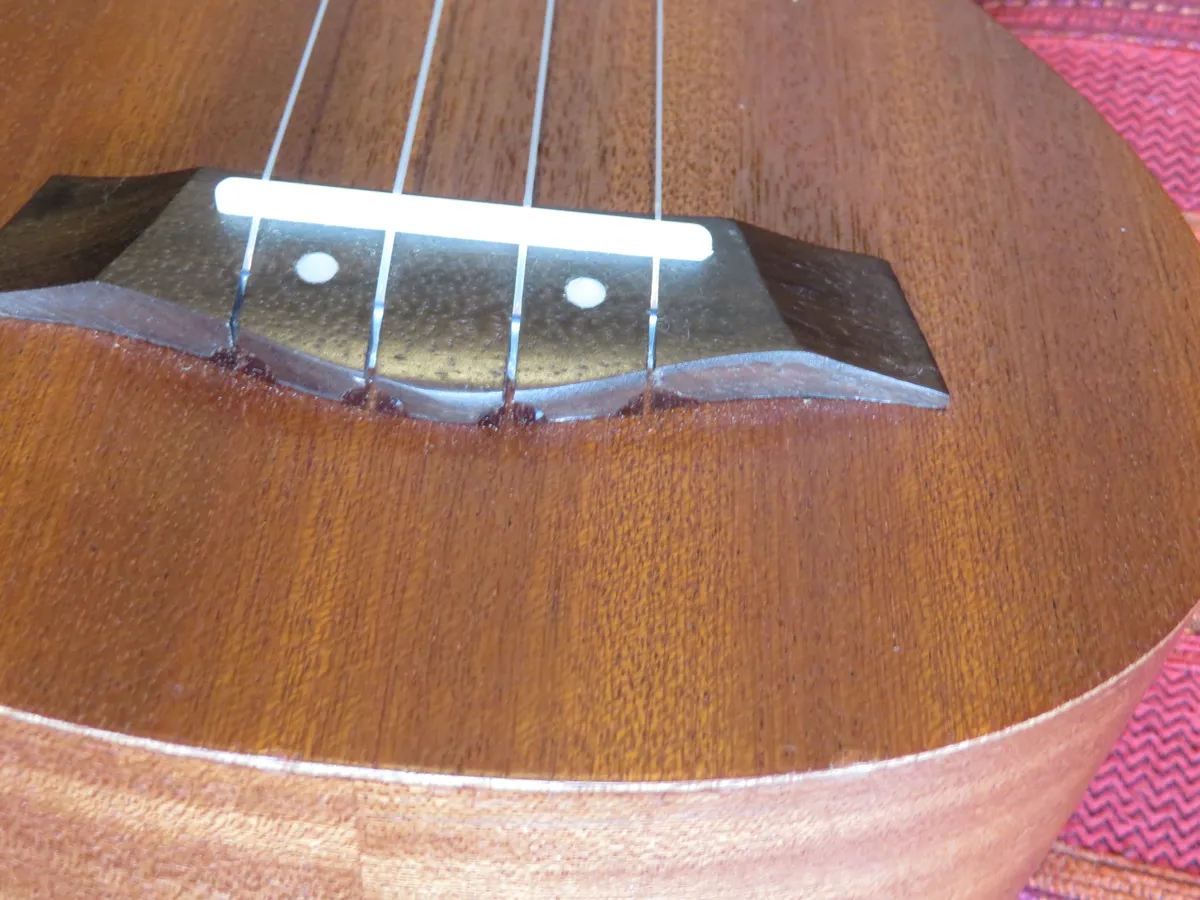
Build quality on mine was clean. No sharp fret ends — which is the most common defect on budget instruments and produces a noticeable scratch against your hand as you slide up the neck — no glue residue, and the bridge is properly seated. I would still check both of those before buying if you can hold one first.
Four months of learning, honestly
Week 1: four chords (C, Am, F, G) badly. My F chord buzzed constantly because I wasn't pressing close enough behind the fret. Fifteen minutes a day was enough to be frustrating and not enough to improve.
Week 4: those four chords cleanly, plus a basic down-down-up-up-down-up strum, and three songs recognisable to other people. This is the point where practice becomes enjoyable and it arrives fast on a ukulele — considerably faster than on guitar, where four strings versus six and nylon versus steel both help.
Month 3: barre chords, which is where the plastic nut showed its limits. A cheap nut cut slightly high makes the strings sit further from the fretboard than necessary, and barring across four strings at the fifth fret took more finger pressure than it should. A luthier filing the nut slots costs about $30 and I have not done it; a better instrument would not need it.
Month 4: about thirty chord shapes, fingerpicking two simple pieces, and no sore fingers at all — nylon strings on a short scale are gentle in a way steel strings are not. That's the real argument for a ukulele as a first instrument.
What it sounds like
With good strings, bright and cheerful and a bit thin — which is exactly what a laminate soprano should sound like. It has noticeably less volume and sustain than a solid-top instrument, and it will be inaudible if you play alongside a guitar without amplification.
Recorded on a phone it sounds perfectly good. Recorded with a decent microphone alongside a $300 solid koa ukulele for comparison, the difference is obvious and mostly in the decay — notes on the expensive instrument ring on where mine stops. That matters for fingerpicking and barely matters for strumming songs.
The accessories you actually need
A clip-on chromatic tuner, about $12, is not optional. A ukulele goes out of tune constantly in its first month and playing an out-of-tune instrument is how beginners conclude they have no ear. Phone tuner apps work but are slower and struggle in a noisy room.
A gig bag, about $15, if it will travel at all. Mine came with a thin nylon sleeve that offers essentially no protection.
You do not need a strap, a capo, or a stand. Ukuleles are light enough to hold and the instrument lives on a shelf.
Against the alternatives
Against a $25 coloured ukulele from a supermarket or toy aisle, the difference is intonation and fret finishing. Those instruments frequently cannot be tuned into playability, and handing one to a child who then concludes they're bad at music is genuinely worse than not buying one.
Against a $150 solid-top ukulele, you get better tone, more sustain, a bone or Tusq nut and geared tuners. If you already know you'll stick with it, that's the better purchase. For finding out whether you'll stick with it, $65 is the right amount to risk.
Against a $200 beginner acoustic guitar, the ukulele is dramatically faster to get to a playable song — four strings, softer strings, simpler chords. The guitar is more versatile forever. For an adult who wants to play something recognisable within a month, the ukulele wins clearly.
Who should buy this
Buy it if you want to find out whether you'll play an instrument without risking real money, if you want to be playing songs within a month, or as a first instrument for a child over about six. Budget $8 for strings and $12 for a clip-on tuner on day one — those two purchases matter more than any upgrade to the instrument itself.
Buy the concert size instead if you have large hands. Skip it entirely if you want rich tone or plan to record seriously, and skip anything cheaper than this, because badly intoned instruments teach beginners the wrong lesson about their own ability.
Verdict
Four months and 60 hours in, the Makala soprano has been exactly what a $65 instrument should be: intonation inside 8 cents at the 12th fret, no sharp frets, completely stable in a room with swinging humidity, and enjoyable enough that I've kept practising. It also arrived with dull strings that needed $8 replacing, has friction tuners that need occasional tightening, a plastic nut cut slightly high that makes barre chords harder than necessary, and cramped fret spacing that anyone with large hands will fight. Excellent value, with the caveat that the version you'll enjoy costs $73 rather than $65.
Other products we tested

Ecobee Smart Thermostat Premium Review: Two Months of Real HVAC Testing
We installed the Ecobee Smart Thermostat Premium without a C-wire, tracked its temperature accuracy against a separate thermometer, and measured real energy savings over two months of daily HVAC use.
Bose SoundLink Flex Review: Six Weeks of Hiking, Kayaking, and Beach Days
Six weeks of camping, kayaking, and beach trips show the Bose SoundLink Flex's IP67 rating and PositionIQ orientation sensing are genuinely useful, with honest limits on bass and max volume.

Coros Pace 3 Review: Six Weeks Testing the GPS Watch That Barely Needs Charging
A dual-frequency GPS running watch that trades AMOLED shine for weeks of battery life at a fraction of the price of flagship rivals.