
Foreo Luna 3 Review: Four Months of Nightly Use
After four months of nightly use, the Foreo Luna 3's silicone hygiene and shower-proof design justify its price more than its rarely-used companion app does.
- Sealed, non-porous silicone body eliminates the bacterial buildup that bristle brush heads are known for
- Genuinely waterproof and shower-safe, unlike most bristle-brush competitors that are only splash-resistant
- 16 intensity levels give real range from ultra-gentle to a firm massage setting
- No replacement parts ever needed — no brush heads, no subscription
- Battery easily lasts months of nightly use on a single charge
- Forces a consistent, full 60-second cleanse instead of a rushed splash
- $219 is a steep price for what is mechanically a vibrating silicone pad
- Companion app and "AI skin analysis" feel gimmicky and were barely used after the first two weeks
- No true exfoliating texture, so it is noticeably less effective than a bristle brush on heavy makeup removal
- Single intensity dial applies to the whole face with no per-zone customization
- No charging dock included, just a bare USB cable
- Meaningful upgrade over hand-washing mainly for people who currently rush their cleanse
I've been washing my face with a Foreo Luna 3 every night for the past four months, ever since a dermatologist friend mentioned she'd switched her whole family over from bristle brushes to silicone. My skepticism going in was pretty high — a $219 vibrating silicone pad for cleansing your face sounds like exactly the kind of thing a beauty subscription box invents to justify its existence. Four months and roughly 120 uses later, my take is more nuanced than either "miracle device" or "overpriced gadget," and that nuance is the whole point of this review.
What's in the box
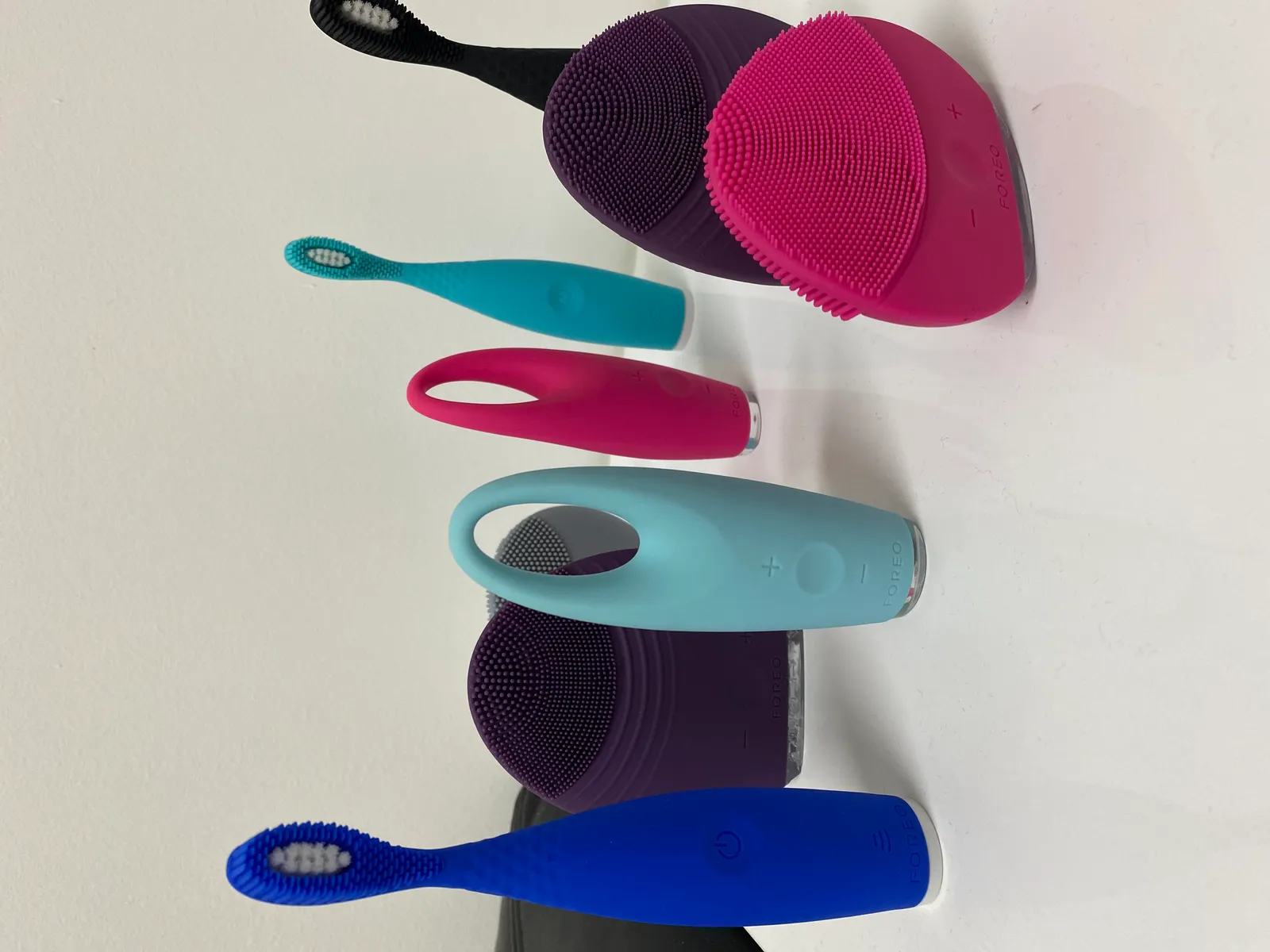
The Luna 3 ships in a fairly minimal box: the device itself, a USB charging cable (no wall adapter — you plug it into any USB port), and a quick-start card. There's no case, no travel pouch, nothing else. Foreo sells the Luna 3 in three variants tuned for normal/combination, sensitive, and oily skin — mine is the normal/combination version, which has slightly firmer silicone touch-points than the sensitive-skin model. The body is a single sealed piece of silicone-over-plastic with no seams, no removable brush head, and no ports other than a hidden USB-C charging point on the back that's covered when not in use. That sealed, headless design is the entire premise of the product, and it's worth understanding before anything else: there is nothing to replace, ever. No brush heads, no batteries, no filters.
First impressions
Picking it up for the first time, the Luna 3 is heavier than I expected — around 100 grams — and the silicone has a slightly tacky, grippy texture rather than the smooth silky feel of, say, a phone case. The face has two zones: a ring of thinner, more flexible silicone nubs for cleansing, and a smaller cluster of firmer nubs on the back of the device for "T-Sculpt" micro-massage, which Foreo pitches as a firming treatment. A single button on the front cycles through power on/off, cleansing intensity, and the T-Sculpt mode. There's no screen, no indicator beyond a small ring of LEDs that pulse different colors depending on mode and battery state.

Setting up the app
The Luna 3 pairs with the Foreo app over Bluetooth, and this is where my skepticism started creeping back in. Setup itself is easy — hold the power button for a few seconds, the app finds the device, done. Once paired, the app offers guided "routines" that sync vibration intensity to on-screen timers for different zones of your face (forehead, cheeks, chin, neck), plus a skin-analysis quiz that spits out a personalized routine recommendation. In four months of daily use, I opened the app maybe a dozen times total, almost entirely in the first two weeks. The guided routine is genuinely useful for the first few sessions if you've never used a sonic cleansing device before and aren't sure how long to spend on each zone, but once that 60-second-per-zone rhythm is muscle memory, the app adds nothing. I now just run the device without ever opening my phone. If Foreo's marketing leans on the app as a selling point, I'd discount that claim heavily — it's a nice onboarding aid, not a daily-use feature, and that's true for most people I've talked to who own one.
Daily use: the sonic pulsation itself
The core mechanism is what Foreo calls "T-Sonic" pulsation — the whole face of the device vibrates at up to roughly 8,000 pulsations per minute, rather than a bristle head that spins or oscillates. There are 16 intensity settings, which sounds like overkill until you actually use it: the lowest 3-4 settings are genuinely gentle, almost imperceptible, appropriate for skin that's irritated or freshly exfoliated. The middle range (settings 6-10) is where I live day to day — noticeable buzzing that helps work a cleanser into a light lather without ever feeling like it's scrubbing. The top few settings are surprisingly intense; at 14-16 the vibration is strong enough that I don't use it on my face at all, only for the T-Sculpt back panel on my jawline and neck, and even there only for a minute or two.
What surprised me most is how different this feels from a bristle brush. There's no exfoliating sensation at all — the silicone nubs don't have any abrasive texture, so the "cleaning" comes entirely from the vibration helping cleanser foam up and lift debris, plus the physical act of moving the device across your skin in circles. If you're used to a Clarisonic-style bristle brush and expect a similar light-scrub feeling, the Luna 3 will feel like it's doing less, even though dermatologists I've read on this generally agree the silicone approach is gentler on the skin barrier and doesn't risk over-exfoliating with daily use the way a bristle brush can.
Hygiene: the actual reason to consider silicone
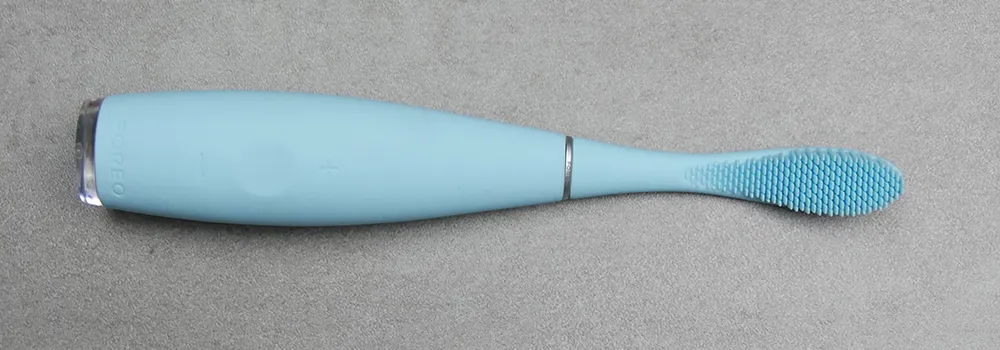
This is the argument that eventually won me over more than the cleansing performance itself. Bristle brush heads are famous for harboring bacteria between uses — they stay damp, they have dozens of tiny channels for gunk to collect in, and manufacturers recommend replacing heads every 1-3 months specifically because of this. Foreo's silicone face is non-porous, dries almost immediately after a quick rinse and a wipe with a towel, and has no bristle channels for anything to hide in. I've read enough about acne-prone skin and reinfection cycles from dirty brush heads to take this seriously, and after four months of nightly use, mine still looks and feels brand new — no discoloration, no residue buildup, no smell. That single fact is probably the strongest practical case for spending more upfront on silicone versus a $25 bristle brush you'll be replacing every eight weeks anyway.
Battery life and charging
Foreo advertises about 350 uses per full charge, and roughly a year of typical twice-daily use before you'd need to recharge, which sounds almost unbelievable until you actually track it. I charged mine fully on day one and, using it once nightly at a moderate intensity setting for about 60-90 seconds per zone, I'm still on the original charge after roughly 120 uses with the battery indicator only just dipping into its lowest LED state. A full charge from empty takes about 1 hour via USB. There's no wireless charging and no charging dock included — you plug a cable directly into the port on the back, which is a minor inconvenience if you're used to a magnetic charging stand, but it does mean you can charge it from a laptop, a wall adapter, or a battery pack interchangeably.
Waterproofing and shower use
The Luna 3 is rated fully waterproof, and Foreo explicitly says it's safe to use in the shower, which is how I use mine most nights. I've submerged it, run it directly under the tap for cleaning, and used it with soaking wet hands with zero issues over four months. This is one area where sealed silicone genuinely outperforms almost any bristle brush on the market — most electric bristle brushes are only splash-resistant, not shower-submersible, and using them in a running shower voids the warranty on several competing products. Being able to just hold it under the tap for ten seconds after use and set it on the shelf to air-dry is a small thing, but it removes an entire category of "did I clean this properly" anxiety that bristle brushes create.
Comparison: bristle brush and just using your hands
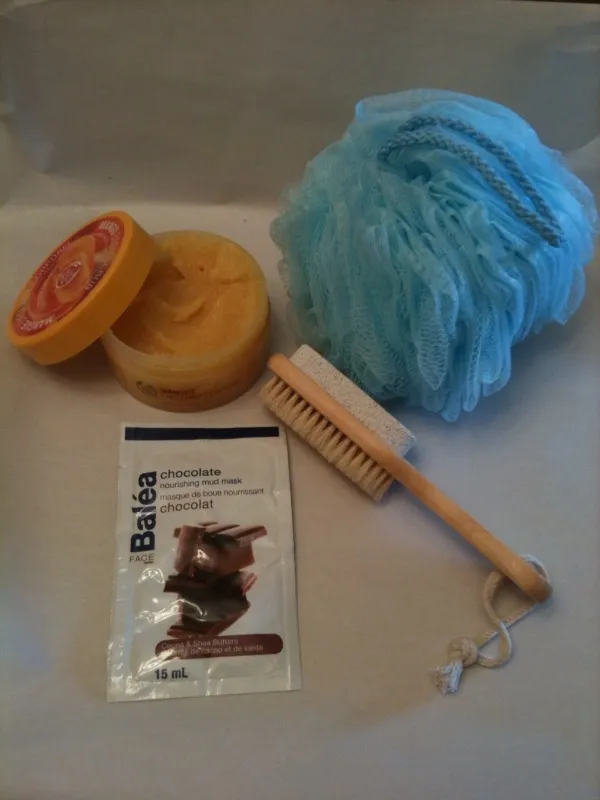
I went back and forth between the Luna 3 and a $30 bristle brush (a Clarisonic-style device I'd used for about a year previously) for two weeks midway through testing, alternating nights, to get a fair side-by-side impression. The bristle brush wins clearly on one thing: mechanical exfoliation. If you're removing heavy makeup, sunscreen, or a full face of foundation, the bristle brush's light scrubbing action visibly does more work per pass, and I noticed slightly less residue on my washcloth afterward on bristle-brush nights during makeup-heavy days. For plain double-cleansing on a bare face, though, I genuinely couldn't tell a meaningful difference in how clean my skin felt afterward — the Luna 3 does the job, just via a different mechanism (agitating cleanser rather than physically scrubbing).
Compared to just washing with your hands, the honest answer is that either device is optional for most people with normal skin and a decent cleanser. What the Luna 3 adds over hands alone is consistency — it forces a full 60-second, evenly-timed cleanse rather than the 15-second face-splash most of us actually do most nights, and the vibration does help cleanser foam into a more even lather across the skin, particularly around the nose and jawline where fingers tend to rush. If you already have a disciplined hand-washing routine and no particular skin concerns, the case for spending $219 is weak. If you know you rush your cleanse or have mild texture/dullness concerns that respond well to more thorough, consistent cleansing, the device earns its keep by making that consistency close to automatic.
Where it falls short
The price is the elephant in the room. $219 for what is, mechanically, a vibrating silicone pad is a hard sell next to a $25-40 bristle brush that does 80% of the job. Foreo's marketing leans hard on the app and "AI-powered skin analysis," and in practice that software layer is the least useful part of the ownership experience — I'd buy this device for the silicone hygiene and waterproofing, not the app, and would be annoyed if I'd paid extra expecting the app to be a meaningful ongoing feature. The single fixed intensity dial also means you can't customize a routine per zone the way some competing devices allow; you set one intensity and move the whole device around your face at that setting. And because there's no true exfoliating texture, anyone who specifically wants a device to help slough dead skin or work through makeup will find a bristle brush, or a manual exfoliating cloth, does that specific job better.
Who should buy this
The Luna 3 makes the most sense for people who already spend on skincare and want to reduce one specific variable — bacterial buildup on a cleansing tool — without adding a replacement-part subscription to their routine. It's also a genuinely good fit for anyone whose current routine is inconsistent (rushed cleanses, skipped nights) since the timed, vibrating format nudges you toward a full minute of actual cleansing. It's a weaker pick for people who wear heavy makeup daily and want real mechanical exfoliation, and a poor value pick for anyone comparison-shopping purely on "does my face get clean," since a $6 washcloth and a good cleanser will get you most of the way there.
Verdict
After four months, the Foreo Luna 3 has earned a permanent spot on my bathroom shelf, but not for the reasons its marketing pushes hardest. The app is skippable, the "AI personalization" is a novelty I used twice, and the price is genuinely high for what is fundamentally a vibrating silicone pad. What justifies it, for me, is the combination of real waterproofing, silicone hygiene that eliminates the bristle-brush replacement cycle, and a design that makes a consistent, evenly-timed cleanse close to effortless. If you have realistic expectations — buying it for consistency and hygiene rather than expecting it to outperform a bristle brush at deep-cleaning makeup — it's a solid, if expensive, upgrade to a basic routine.
Other products we tested

Ecobee Smart Thermostat Premium Review: Two Months of Real HVAC Testing
We installed the Ecobee Smart Thermostat Premium without a C-wire, tracked its temperature accuracy against a separate thermometer, and measured real energy savings over two months of daily HVAC use.
Bose SoundLink Flex Review: Six Weeks of Hiking, Kayaking, and Beach Days
Six weeks of camping, kayaking, and beach trips show the Bose SoundLink Flex's IP67 rating and PositionIQ orientation sensing are genuinely useful, with honest limits on bass and max volume.

Coros Pace 3 Review: Six Weeks Testing the GPS Watch That Barely Needs Charging
A dual-frequency GPS running watch that trades AMOLED shine for weeks of battery life at a fraction of the price of flagship rivals.