
Fjällräven Kånken Review: Five Months of Commuting With a 1978 Design
The Vinylon F fabric shrugs off rain and looks new after five months of daily use, but the flat straps bite above 5 kg and the laptop sleeve has no padding at all.
- Vinylon F stayed dry under a running tap for 90 seconds with no coating to wear off
- No pilling, abrasion or fading anywhere after five months of daily carry
- Horseshoe zip opens the bag almost flat — far better access than a top-loader
- Hand-washes without shrinkage or colour loss
- Looks presentable in a professional setting in a way technical daypacks do not
- Flat 4 cm straps with thin foam dug in within 15 minutes at a 7 kg load
- No sternum strap, no hip belt, no frame or back panel structure
- Laptop sleeve is completely unpadded — the separate Laptop version costs $30 more
- Single-compartment interior needs an aftermarket insert to be usable
- Visible thread abrasion at both shoulder strap attachment points by month five
- Seams are unsealed; sustained heavy rain eventually gets through
The Fjällräven Kånken was designed in 1978 for Swedish schoolchildren with back problems, which is a fact that gets quoted constantly and explains almost nothing about how it performs on an adult commute. I carried a 16-litre classic Kånken every working day for five months — laptop, lunch, water bottle, the usual — and took it on two short trips.
The honest finding is that this is a good-looking, extremely durable, well-priced bag with genuinely poor load carriage, and that the gap between those two things is the entire buying decision.
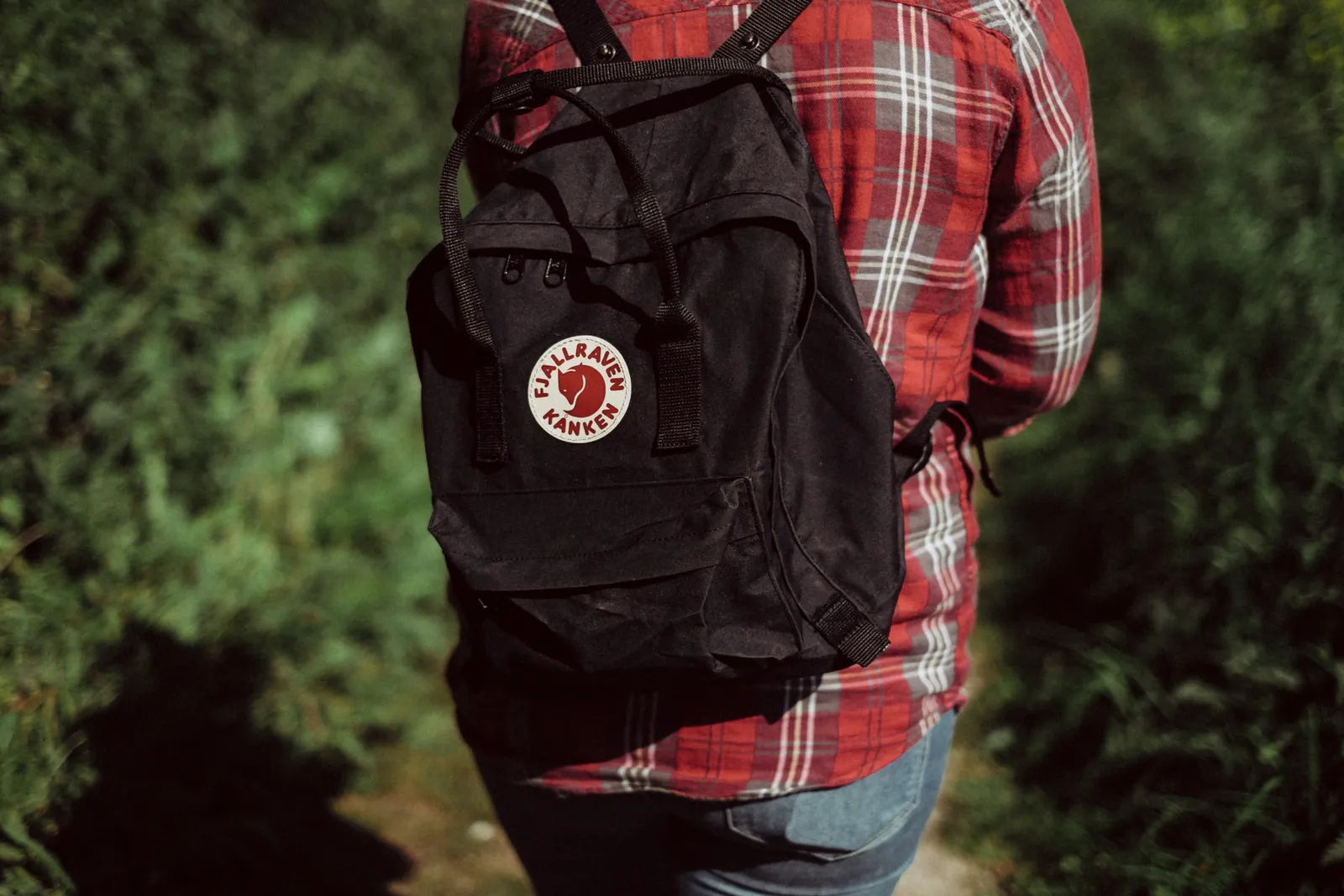
The fabric is the best thing about it
Vinylon F is an unusual synthetic that swells slightly when wet, tightening the weave and making the fabric substantially water-resistant without any coating to wear off. I tested it under a running tap for ninety seconds and the interior stayed dry; in a genuine downpour for about twenty minutes, water eventually came through at the seams and the zip, but nothing inside was more than slightly damp.
Five months of daily use has left the fabric essentially unmarked. No pilling, no abrasion at the base corners where most bags fail first, no fading. Stains from a leaked coffee cup sponged out with warm water. This material is the reason people own these for a decade.
Two caveats. It is not waterproof and Fjällräven does not claim it is — the seams are unsealed. And the fabric is stiff and slightly crinkly, more like a tarp than a textile, which some people dislike on contact.
The straps, and why the ergonomics complaint is fair
The shoulder straps are flat webbing with a thin foam layer, roughly 4 cm wide. There is no sternum strap, no hip belt, no load lifters, and no frame or stiffener of any kind in the back panel.
With about 4 kg of load — a 13-inch laptop, a notebook, lunch and a bottle — the bag is comfortable enough for a 20-minute walk. At 7 kg, which is what it weighed on the days I carried a full water bottle and a book, the straps dug into my shoulders within about fifteen minutes and I found myself hitching them constantly. There is nothing to distribute weight to your hips because there is no hip belt, and nothing holding the load close to your back because there is no frame.
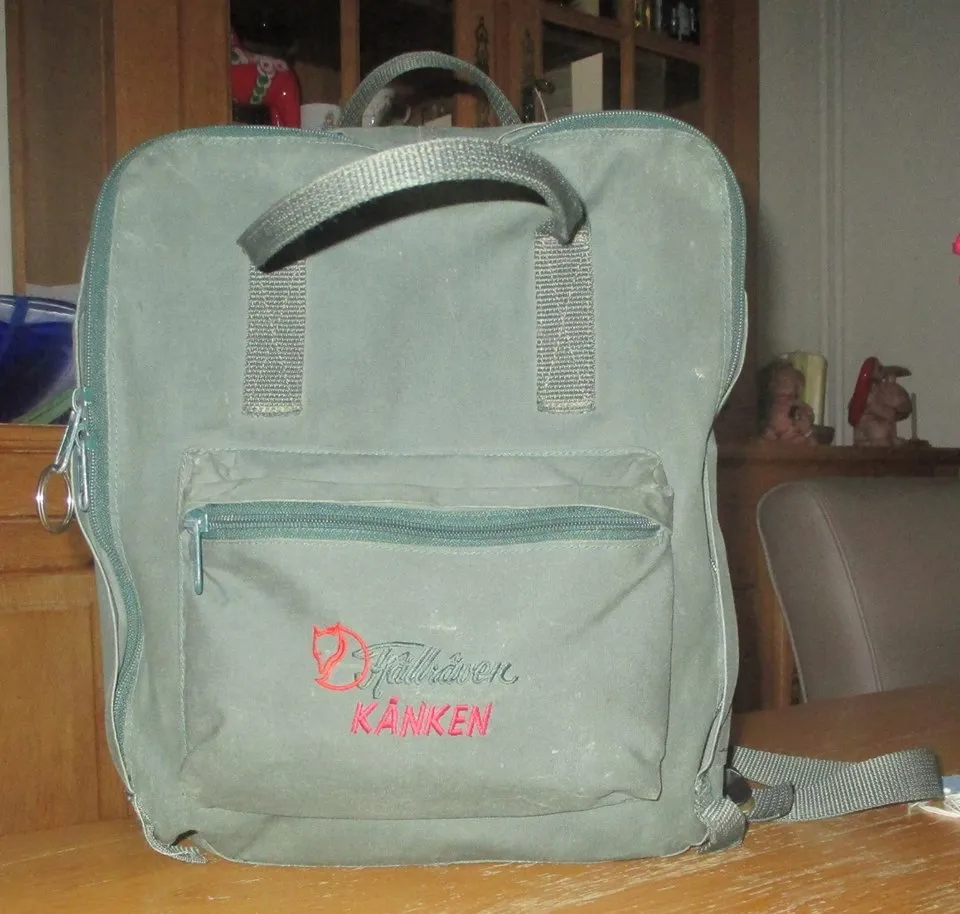
The included seat pad — a thin foam rectangle in a rear sleeve — is often described as back padding. It is not; it is a sit-upon for damp ground, and it provides almost no cushioning against a laptop edge. I left mine in permanently because it does at least stop hard objects poking through, but it is 5 mm of foam.
The verdict here has to be blunt: for a bag descended from an orthopaedic brief, the Kånken carries weight worse than a $50 outdoor daypack. If your commute is a ten-minute walk with a light load, this will never bother you. If it's forty minutes with a laptop and a lock, it will.
The single-compartment problem
Inside, the 16 L classic is one large box. There is a small flat sleeve at the back that fits a 13-inch laptop with no padding whatsoever, two small side pockets on the outside, and one zipped front pocket. That's the entire organisation.
In practice this means everything sinks to the bottom and you excavate. Keys, cables and a phone disappear immediately. I bought a $12 fabric organiser insert in month two and it genuinely transformed the bag — it created the structure the design refuses to provide and also made it hold its shape when half-empty, which is the other thing it does badly.
The wide horseshoe zip is excellent, though. It opens the bag almost completely flat, which makes packing and finding things far easier than a top-loading daypack. Combined with an insert, the layout works. Without one, it's a sack.
Laptop carrying: read this before you buy
The rear sleeve fits a 13-inch laptop and will not fit most 15-inch machines. More importantly, it has no padding — none, not a millimetre — and it sits against the flat back panel with only the thin seat pad between the machine and whatever the bag is resting against. Putting a laptop in a Kånken and setting the bag down hard is a bad idea, and I stopped doing it after one wince-inducing thud in week three.
Fjällräven sells the Kånken Laptop version with a genuinely padded sleeve for about $30 more, and that is the version to buy if a laptop is part of your daily load. The classic 16 L is not a laptop bag with a compromise; it's a bag that happens to have a slot.
Five months of wear
The fabric, as noted, is untouched. The two main zips run smoothly and the pulls — leather-look tabs on the classic — show minor surface wear and nothing more. The plastic buckles on the top handle straps have no cracking.
The one component showing genuine wear is the stitching where the shoulder straps meet the base of the bag. On mine there is visible thread abrasion at both attachment points after five months, not loose yet but clearly the load path. That's a known stress point on this design and worth checking periodically if you carry heavy loads.
The base has no reinforcement panel. Setting the bag down on wet pavement means the bottom fabric takes it directly, which the Vinylon handles well but means the bag gets grubby quickly on the underside. It hand-washes fine — Fjällräven says lukewarm water and no machine, and I've done it twice with no shrinkage or colour loss.

Sizing, because the numbers mislead
The classic Kånken is 16 L. On a tall adult it reads as a small bag and sits high on the back — deliberately, since it was designed for children. The Kånken Big is 20 L and is the size most adults should be looking at for a commute; the Mini is 7 L and is realistically a purse.
The 16 L held a 13-inch laptop, a 1 L bottle in the side pocket, lunch, a paperback and a light jacket, and was full. There is no expansion, no compression, and no external attachment points beyond the two small side pockets, so what fits is what fits.
Two trips, and how it packs
I used it as a personal item on two short flights. The flat rectangular shape is genuinely well suited to this: it slides under an airline seat without wrestling, stands upright on the floor when reasonably full, and the horseshoe zip means you can get at everything without unpacking. On both trips it held a change of clothes, a laptop, a book and toiletries with room left.
What it does badly in transit is everything to do with straps and stability. Slung over one shoulder — the way most people carry a bag through an airport — the flat webbing has no grip on a coat and slid off repeatedly. There is no luggage pass-through on the back to slot over a suitcase handle, so it either rides on your back or sits on top of the case and falls off at the first kerb.
The top handle is two short webbing loops rather than a moulded grab handle. Carrying a loaded bag by them for more than a minute is uncomfortable, and they're the part I'd expect to wear before the fabric does.
Against the alternatives
Against a $50-70 technical daypack from an outdoor brand, the Kånken loses decisively on carrying comfort, organisation and laptop protection, and wins on fabric durability, water resistance and looking like something you'd take into a meeting.
Against a $150 commuter backpack with a padded laptop compartment and a proper harness, the Kånken is not competitive as a working bag. It is competitive as an object you'll still own in 2035.
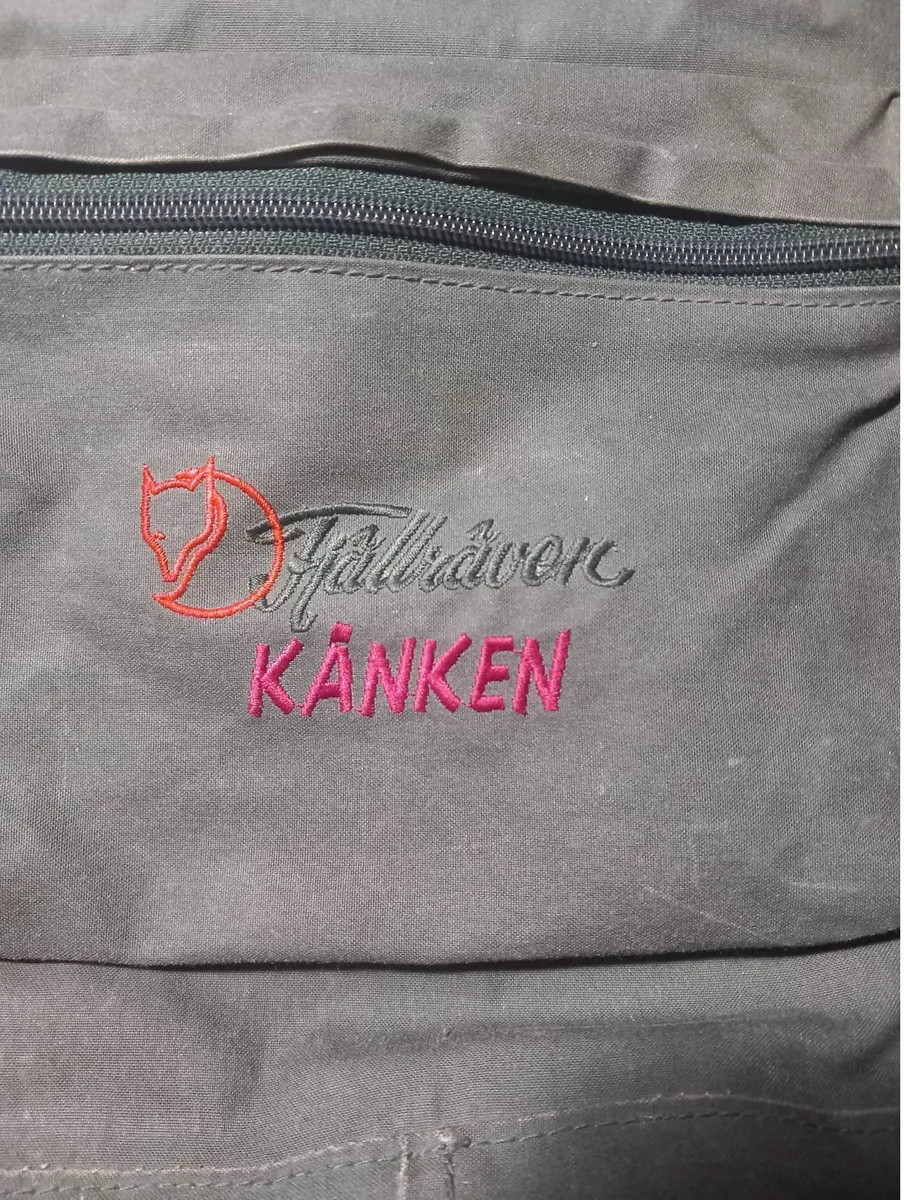
Against the counterfeit market, which is enormous for this bag: the real ones have a specific fabric feel, a stitched-through logo and an inside-seam care label. Fakes are common enough at the $30-45 price point that a suspiciously cheap Kånken almost certainly is one.
Who should buy this
Buy it if your daily load is light, if your commute is short, if you want a bag that will look presentable for years and shrug off rain, and if you'll add a $12 organiser insert on day one. Buy the Kånken Laptop version if a computer travels with you, and the 20 L Big if you're an adult who fills a bag.
Skip it if you walk or cycle far with a heavy load, if you need real laptop protection, if you want internal organisation out of the box, or if a sternum strap is something you'd miss. Those are not unreasonable requirements and this bag meets none of them.
Verdict
Five months in, the Kånken has been completely reliable and mildly uncomfortable. The Vinylon F fabric is exceptional and looks new after daily use; the horseshoe zip and the price are both good. Against that: flat unpadded straps that bite above about 5 kg, no sternum strap, no frame, no laptop padding, and a single-compartment interior that needs an aftermarket insert to be usable. It is a genuinely durable bag with a genuinely dated harness, and the right buyer is someone carrying not much, not far.
Other products we tested

Ecobee Smart Thermostat Premium Review: Two Months of Real HVAC Testing
We installed the Ecobee Smart Thermostat Premium without a C-wire, tracked its temperature accuracy against a separate thermometer, and measured real energy savings over two months of daily HVAC use.
Bose SoundLink Flex Review: Six Weeks of Hiking, Kayaking, and Beach Days
Six weeks of camping, kayaking, and beach trips show the Bose SoundLink Flex's IP67 rating and PositionIQ orientation sensing are genuinely useful, with honest limits on bass and max volume.
Coros Pace 3 Review: Six Weeks Testing the GPS Watch That Barely Needs Charging
A dual-frequency GPS running watch that trades AMOLED shine for weeks of battery life at a fraction of the price of flagship rivals.