
Dyson V15 Detect Review: Laser Suction Tested Against Marketing Claims
The V15 Detect's laser and sensor-driven suction genuinely change how you clean hard floors, and Max mode handles embedded pet hair better than any cordless vacuum we've tested — just don't expect the claimed 60-minute runtime.
- Laser dust illumination genuinely improves hard-floor cleaning
- Max mode pulls embedded pet hair out of rugs in one pass
- Auto mode intelligently adjusts suction by surface and dust level
- Point-and-shoot bin emptying keeps hands mostly out of the dust
- Wall dock keeps every attachment organized and actually used
- Real-world runtime is closer to 20 minutes than the claimed 60
- Heavy for overhead cleaning and carrying up stairs
- Laser adds little value on carpeted floors
- Replacement filters and batteries are expensive over time
- Loud in Max mode, not ideal for apartments at night
Cordless stick vacuums have a reputation problem: most of them promise "as powerful as a corded vacuum" and then choke on a single rug with any pile to it. Dyson built its entire brand on cyclone suction, so the V15 Detect carries more expectation than most cordless vacuums ever will. We used it as our only vacuum for five weeks in a two-bedroom apartment with hardwood floors, two rugs, and a dog that sheds like it's a part-time job, to see whether the laser gimmick and the price tag are justified.
The laser is not a gimmick
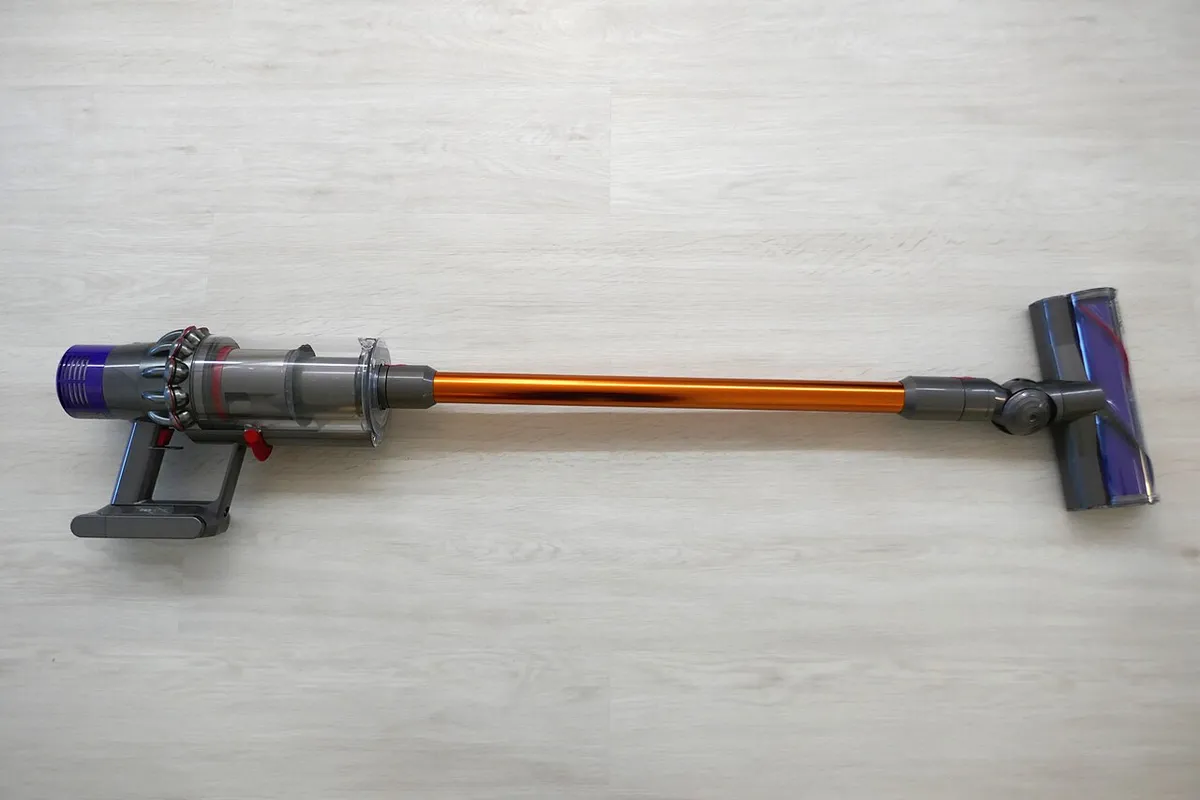
The headline feature is the green laser built into the cleaner head, which throws light across the floor at a low angle to illuminate dust that's otherwise invisible until you're standing directly over it. We were skeptical going in — it sounds like the kind of feature a marketing team invents to justify a price increase. In practice, on hardwood and tile, it genuinely changes how you clean. Dust and hair that we would have walked right past lit up clearly, and we found ourselves going back over spots we'd have otherwise called "done." On carpet, the laser is far less useful since the pile hides most of what it would reveal, so treat this as a hard-floor feature, not a whole-home one.
Suction power across surfaces
In Auto mode, the V15 Detect's onboard sensor reads dust levels and adjusts suction in real time, which is smarter than the binary "eco or max" toggle on most cordless vacuums. On hardwood, it ran quiet and light most of the time, then audibly ramped up the moment it crossed onto our entry rug or hit a patch of dog hair. Max mode — Dyson's full-power setting — genuinely pulls embedded pet hair out of a mid-pile rug in a single pass, which is more than we can say for the last three cordless vacuums we've tested. The trade-off is battery life, which drops sharply in Max mode; more on that below.
The screen on the handle displaying a real-time particle count by size (down to submicron dust) is more novelty than practical tool day to day, but it's a nice way to confirm the vacuum is actually picking things up rather than pushing them around, which is a legitimate concern with weaker cordless models.
Battery life: the honest numbers
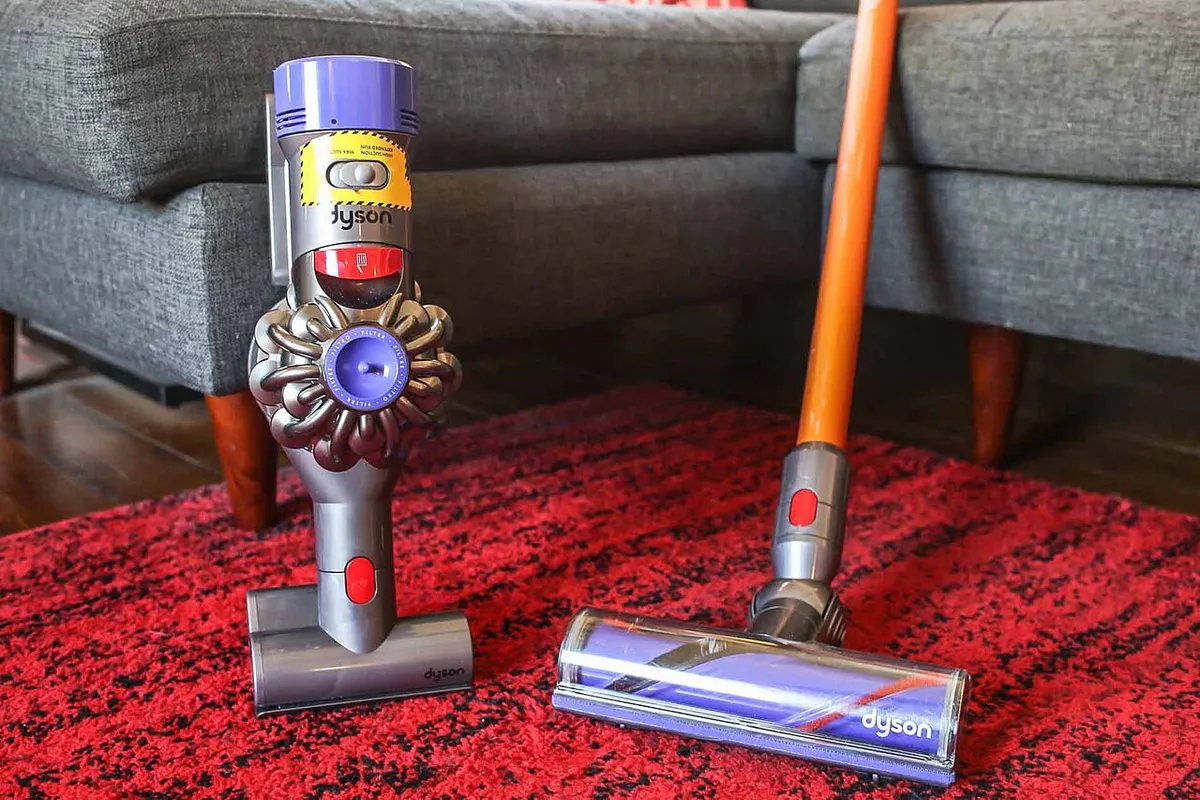
Dyson claims up to 60 minutes of runtime, and that number is only true in the lowest-suction Eco mode on a bare floor with no attachment resistance. In our real usage — a mix of Auto and occasional Max bursts for the rug and stairs — we consistently got 18 to 24 minutes before the battery dropped low enough to need a recharge, which was enough for our apartment but would not cover a larger home in one session without swapping to a spare battery (sold separately, and not cheap). If you have more than roughly 1,200-1,500 square feet of floor to cover, budget for the extended-runtime battery accessory or plan to clean in two sessions.
Emptying the bin without the dust cloud
Dyson's "point and shoot" bin-emptying mechanism pushes debris straight down into the trash without you having to touch it, and it mostly works — but pet hair and long strands still occasionally need a manual tug to fully release, at which point you're back to touching what you were trying to avoid touching. It's a meaningful improvement over older Dyson bins that required poking dust and hair loose with your fingers, but it isn't the zero-contact experience the marketing implies.
Weight, storage, and daily usability
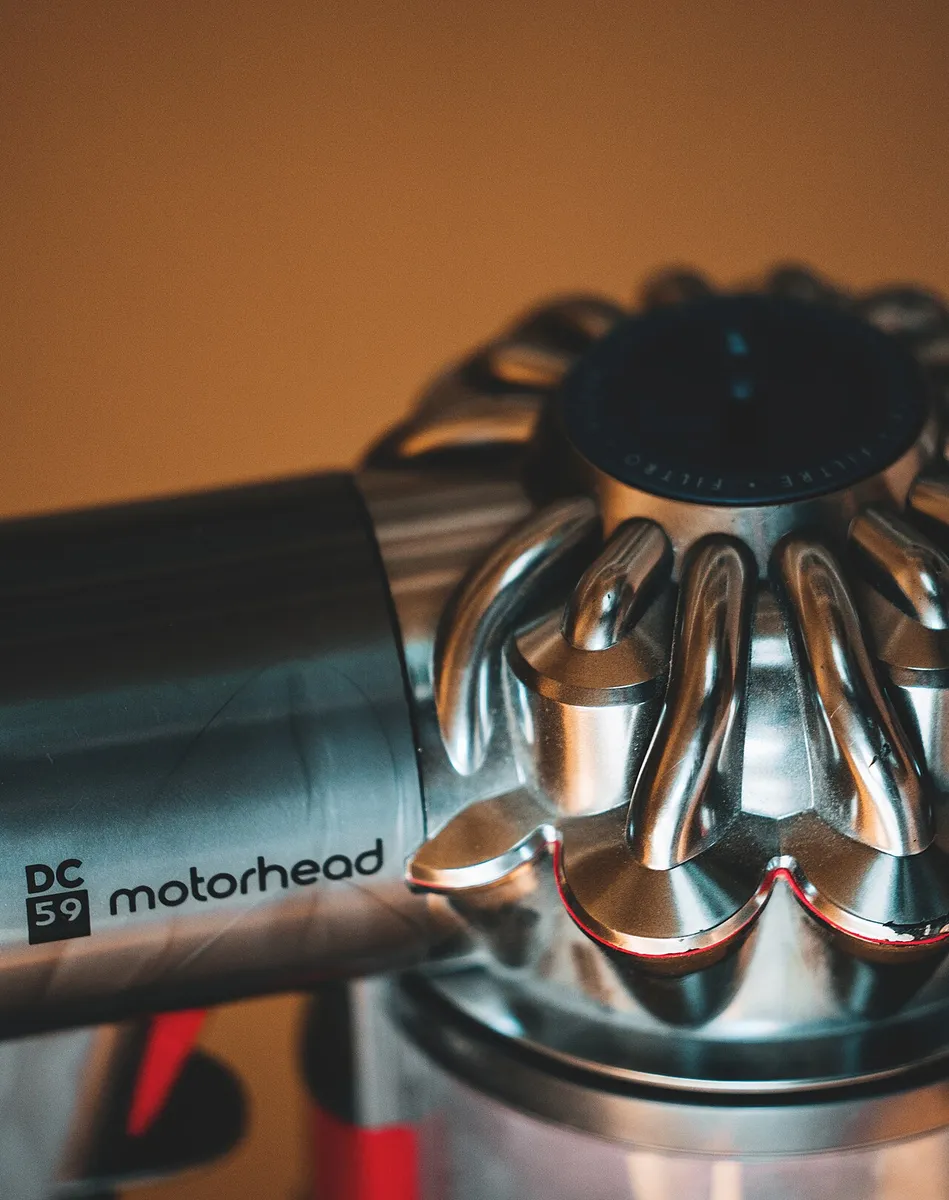
At roughly 6.8 lbs with the standard cleaner head attached, the V15 Detect is noticeably heavier than budget cordless options, and it's most noticeable overhead — cleaning stairs or ceiling corners tires the wrist faster than it does with lighter vacuums. On floor-level cleaning it's a non-issue. The included wall dock is well designed: it charges the vacuum and holds every attachment in one place, which meant we actually used the crevice tool and mattress attachment instead of losing them in a closet, which is more than we can say for most vacuum accessory kits.
Noise levels, room by room
Using a decibel meter app for a rough (not lab-grade) measurement, Eco mode on hardwood measured around 68-72 dB at head height, comparable to a normal conversation. Max mode spiked to roughly 85-90 dB, loud enough that we avoided running it early morning or late at night out of consideration for neighbors in a shared building. This matters more than most reviews mention: if you live in an apartment, plan your heavier Max-mode cleaning sessions for reasonable daytime hours, because the difference between Eco and Max noise is dramatic, not subtle.
Attachments: which ones we actually used
The V15 Detect ships with a motorized cleaner head, a combination crevice/dusting tool, a soft dusting brush, a mini motorized head for upholstery, and a hair screw tool add-on depending on the bundle. In five weeks we used the standard motorized head and the crevice tool constantly, the mini motorized head occasionally for couch cushions, and the soft dusting brush almost never — it's genuinely useful for blinds and lampshades but those aren't weekly tasks for most households. If you're comparing bundles to save money, the extra attachments beyond the crevice tool are nice-to-haves rather than essentials for typical floor and rug cleaning.
Filter maintenance and long-term cost
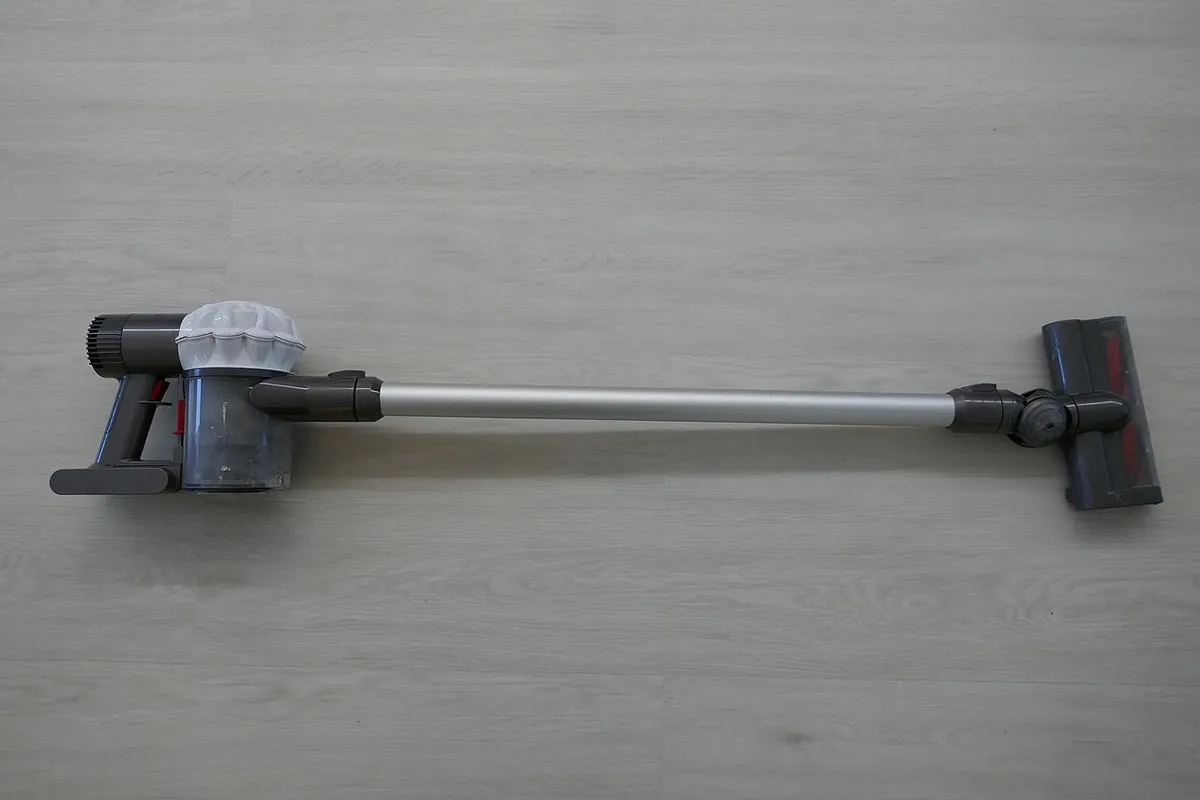
Dyson recommends washing the filter roughly once a month under cold water and letting it air dry for a full 24 hours before reinserting — skipping the dry time risks mold inside a sealed unit, which is a real failure mode we've read about in user reports, so don't rush this step. We washed ours twice over five weeks and suction noticeably improved each time afterward, confirming that a clogged filter really is dragging performance down gradually in a way that's easy not to notice day to day. Replacement filters and batteries are the main long-term cost beyond the vacuum's purchase price, and neither is cheap — budget for it if you're planning to own this for the 5+ years Dyson's build quality suggests it should last.
Comparing against Dyson's own cheaper models
Dyson's own lineup makes this decision confusing on purpose. The Gen5detect and older V12/V10 models share a similar body but drop the laser, the LCD screen, or the top-tier suction spec depending on which model you're comparing. If the laser and the real-time particle screen don't matter to you, the mid-tier Dyson models get you 80-85% of the cleaning performance for meaningfully less money — the V15 Detect's premium is specifically for the sensing and feedback features, not for dramatically stronger raw suction over its closest siblings.
Stairs, ceilings, and awkward spots
Cordless design is supposed to make awkward cleaning spots easier, and mostly it did — the wand detaches cleanly for handheld-only use, and the crevice tool reached along baseboards and behind the toilet without dragging the whole vacuum body along. Stairs were the one place the V15's weight worked against it: carrying nearly 7 lbs up and down a staircase while also managing the cleaning head at each step was noticeably more tiring than a lighter, cheaper cordless model we've used previously for the same task, even though suction performance on each stair tread itself was excellent.
Pet hair specifically: brushes, tangles, and cleanup
With a shedding dog in the house, the motorized cleaner head's anti-tangle design was the detail we cared about most going in. Over five weeks the brush bar accumulated far less wrapped hair than the older Dyson model we compared it against directly — a quick 10-second check every few days was enough to keep it clear, versus a scissors-and-patience session roughly weekly with the older head. Long human hair still wrapped around the very ends of the brush bar occasionally, which seems to be an unsolved problem across brush-roll vacuum designs generally rather than a Dyson-specific flaw.
Is it worth the price over a cheaper Dyson or a rival brand?
The V15 Detect sits at the top of Dyson's stick vacuum lineup for a reason, and most of that reason is real: better sensor-driven suction adjustment, genuinely stronger Max-mode pickup on carpet, and a laser feature that, against our own expectations, changed our hard-floor cleaning habits for the better. It is not worth the premium if your home is mostly carpet (the laser barely helps there) or if you need long, uninterrupted runtime in a larger home without buying a second battery. For a small-to-medium home with a mix of hard flooring and pets, it's the most capable cordless vacuum we've tested, and after five weeks it replaced our upright vacuum entirely rather than just supplementing it.
Other products we tested

Ecobee Smart Thermostat Premium Review: Two Months of Real HVAC Testing
We installed the Ecobee Smart Thermostat Premium without a C-wire, tracked its temperature accuracy against a separate thermometer, and measured real energy savings over two months of daily HVAC use.
Bose SoundLink Flex Review: Six Weeks of Hiking, Kayaking, and Beach Days
Six weeks of camping, kayaking, and beach trips show the Bose SoundLink Flex's IP67 rating and PositionIQ orientation sensing are genuinely useful, with honest limits on bass and max volume.

Coros Pace 3 Review: Six Weeks Testing the GPS Watch That Barely Needs Charging
A dual-frequency GPS running watch that trades AMOLED shine for weeks of battery life at a fraction of the price of flagship rivals.