
Dr. Martens 1460 Review: Eight Months, 700 Miles and One Blister
Five weeks of genuine break-in, including a week-one blister, then the most comfortable boots we own — provided you never needed them to be waterproof.
- After five weeks the leather moulded into the most comfortable boots we own
- Only about 2 mm of heel wear after roughly 700 miles
- Heat-sealed AirWair sole and yellow welt stitching fully intact at eight months
- Resoleable for roughly $70-100, making the cost per year low over a decade
- Wide toe box suits broad feet; leather stayed supple with monthly conditioning
- Survived two full soakings with only slight water staining
- Five weeks of break-in with a genuine heel blister in week one
- Not waterproof — water enters through the welt stitching in about 20 minutes of heavy rain
- PVC sole is genuinely slippery on wet tile, polished concrete and metal
- 1.9 kg for the pair, versus about 700 g for trainers
- Whole UK sizes only, and a roomy toe box causes heel slide on narrow feet
- Two days to dry, and heat drying permanently cracks the leather
- Vegan version does not mould to the foot the way leather does
The Dr. Martens 1460 has a reputation for a break-in period that people describe with something close to pride, which should be a warning rather than a selling point. I wore a pair as my main autumn and winter boots for eight months — roughly 700 miles of city walking by my phone's step count, two of them soaked through, and one blister I will describe honestly.
They are now the most comfortable boots I own. Getting there took five weeks and a specific set of measures, and the version of these boots you buy matters more than most people realise.
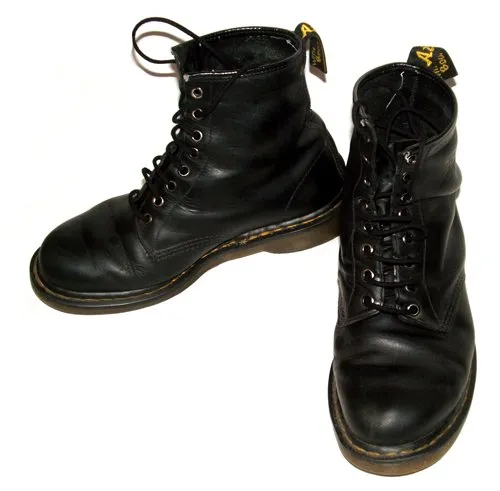
The break-in, week by week
Week 1: worn for two hours a day with thick socks. The rear collar of the boot sits exactly at the Achilles and it is stiff, unyielding leather. I developed a hot spot on day three and a genuine blister on day five, on the right heel, which is the classic 1460 injury and is entirely predictable.
Weeks 2-3: heel plasters, thick socks, three hours a day. The leather began creasing across the vamp and the collar softened noticeably at the point where it had been digging.
Week 5: full days, no plasters, no discomfort. The leather had moulded around my ankle and the collar had broken down into something flexible.
Month 8: genuinely excellent. The footbed has compressed into the shape of my foot, the leather has creased into soft folds, and these are what I reach for on any cold or wet day.
So the honest figure is five weeks of gradual wear, with real blister risk in week one. Anyone telling you it takes two days is describing a different boot or a very unusual foot.
The three things that shortened it
Thick socks, always. Not as padding — as a barrier. Thin socks in week one is how the blister happened. Proper wool boot socks filled the volume and moved the friction point away from skin.
Leather conditioner on the collar. Dr. Martens sells Wonder Balsam and any decent leather conditioner does the same job. Working it into the inside of the rear collar specifically — the part that attacks your Achilles — softened it noticeably within a week. I did this three times in the first month.
Heel plasters before the blister, not after. Obvious in hindsight. Two plasters on the back of each heel for weeks two and three cost about $4 and let me wear them enough to break them in without injury.
Things I tried that did nothing measurable: wearing them around the house with damp socks, stuffing them with newspaper, and freezing water bags in them. The leather softens through flexing, and flexing means walking.
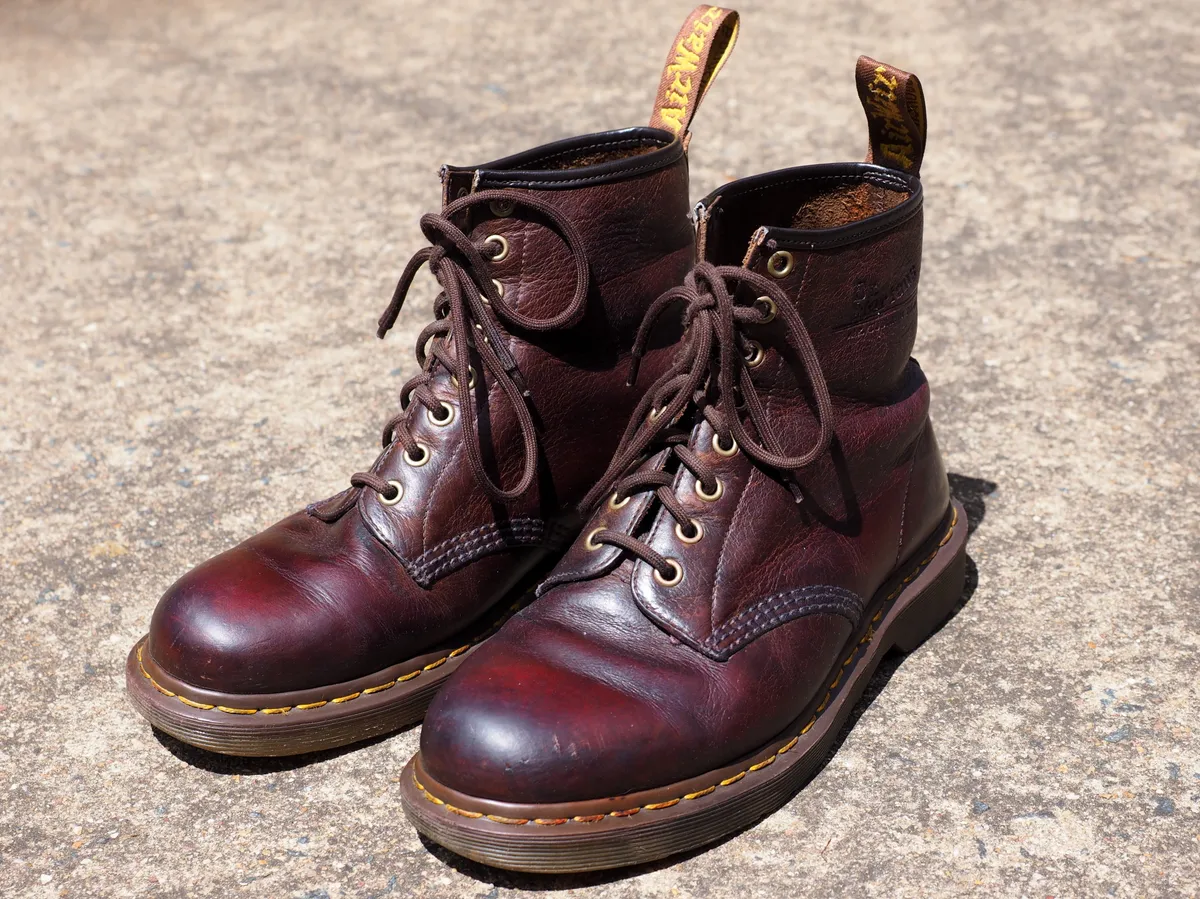
Which version you buy matters
This is the part that catches people out. The 1460 is sold in several leathers and two construction tiers, at very different prices, and they are not the same boot.
Standard Smooth leather, around $170, is the classic. It is a stiff, corrected-grain leather that takes the full five weeks and then lasts.
Softer leathers — Nappa, Virginia, Carpathian — break in dramatically faster, in a week or two, and are noticeably less durable and more prone to scuffing. If you want 1460s to wear rather than to own for a decade, these are a legitimate choice and the shops rarely explain the trade.
Made in England, around $220-250, uses a different leather and a more traditional construction. Having handled both, the English pair felt better made at the welt. I bought the standard version and cannot claim a durability comparison from experience.
The one to avoid for a first pair is the Vegan line unless you specifically want it. The synthetic upper does not mould to your foot the way leather does, and mine — bought for a family member — creased into hard folds rather than soft ones and remained uncomfortable at the collar after two months.
The sole, which is the actual reason to buy them
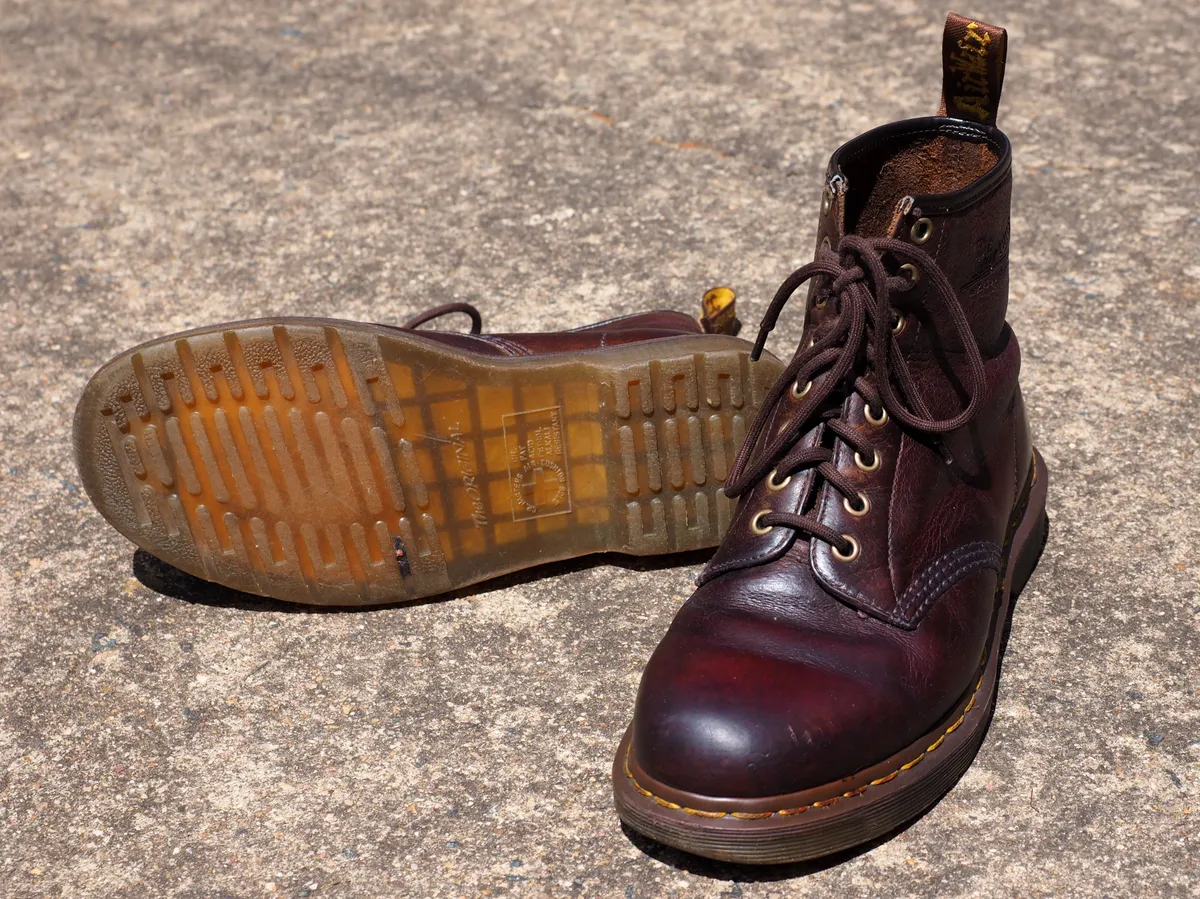
The AirWair sole is PVC, air-cushioned, and heat-sealed rather than glued to the upper. That construction is why these boots survive being resoled and why the sole does not separate the way glued soles do.
Eight months and roughly 700 miles in, my sole shows even wear across the tread with maybe 2 mm gone from the heel edge. That is a slow rate. The yellow welt stitching — the visual signature — is fully intact with no loose threads.
Grip is the honest weakness. On wet, smooth surfaces — tile, polished concrete, painted metal — the PVC sole is genuinely slippery, and I have skidded on wet tram tracks and on a supermarket floor. On pavement, grass and mud it is fine. These are not winter boots in the ice sense and I would not wear them on a frosty morning without care.
Water, and the thing they are not
Standard 1460s are not waterproof. They are water-resistant leather with a stitched welt, and in genuinely heavy rain water comes through the stitching within about twenty minutes of continuous exposure.
I got caught out twice. Both times the boots took two days to dry properly — stuffed with newspaper, at room temperature, away from any radiator, because heat cracks leather permanently. Both times they were fine afterwards, with slight water staining on the toe that conditioner mostly removed.
Regular conditioning is what maintains what water resistance they have. I do it monthly in winter, about five minutes with a cloth, and the leather has stayed supple with no cracking at the flex creases — which is where neglected boots fail first.
Sizing, honestly
The 1460 comes in whole UK sizes only. Dr. Martens advises sizing down if you're between sizes, and that matched my experience: I take a UK 9.5 in trainers and a 9 in these fits correctly with thick socks.
The boot is wide in the toe box and snug at the instep. If you have a high instep, the lacing over the tongue can press uncomfortably for the first month; if you have narrow feet, the toe box will feel roomy and your foot may slide, which causes exactly the heel friction that produces blisters. Thick socks solve the second problem and nothing solves the first except time.
They are heavy: 1.9 kg for the pair on my scale. That is a real difference from a 700 g pair of trainers and you notice it on the first long day.
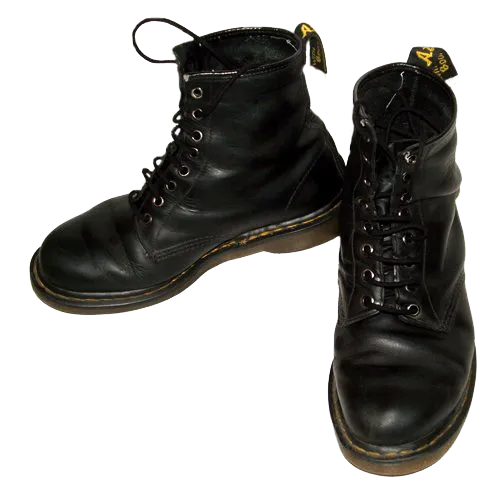
Resoling and long-term value
This is where the price argument lives. A cobbler can resole a 1460 for roughly $70-100, and the heat-sealed sole makes it a more involved job than a stitched Goodyear welt but a routine one for a decent shop.
At $170 plus a resole every few years, the cost per year over a decade is genuinely low — considerably lower than replacing $80 boots every two winters. That maths only works if you condition the leather, which is the part people skip.
Eight months is not long enough for me to make claims about ten-year durability. What I can report is that the leather, welt stitching, eyelets and laces are all intact, and the only measurable wear is 2 mm off the heel.
Against the alternatives
Against a $90 fashion boot, the 1460 is heavier, takes five weeks to become comfortable, and can be resoled rather than binned. The cheap boot is comfortable immediately and structurally finished in two years.
Against a $250 Goodyear-welted work boot from a heritage brand, you'd get a genuinely resoleable welt, usually better leather and often better wet grip. Those boots also take just as long to break in and cost 50% more.
Against actual waterproof boots with a membrane, the 1460 loses badly in sustained rain and wins on how it looks and how long it lasts. If your priority is dry feet, buy the membrane boot and accept it will delaminate eventually.
Who should buy this
Buy them if you want boots for a decade rather than a season, if you can commit to five weeks of gradual break-in with thick socks and heel plasters, and if you'll condition the leather monthly. Buy the standard Smooth leather for durability, or a softer leather if you want comfort in week one and accept faster wear.
Skip them if you need waterproof footwear, if you walk on wet smooth surfaces regularly — the sole is genuinely slippery there — or if 1.9 kg on your feet sounds unpleasant. And skip the Vegan version as a first pair, because a synthetic upper does not mould the way the whole design assumes.
Verdict
Eight months and 700 miles in, these are the boots I reach for by default, and the five weeks it took to get there were genuinely unpleasant for the first one. The AirWair sole has lost 2 mm at the heel, the welt stitching is untouched, and the leather has moulded into something better than any boot I've owned. Against that: a real blister in week one, no waterproofing, a sole that slips on wet tile, 1.9 kg for the pair, and a monthly conditioning habit that the whole value proposition depends on. Buy them for the long term, not for next weekend.
Other products we tested

Ecobee Smart Thermostat Premium Review: Two Months of Real HVAC Testing
We installed the Ecobee Smart Thermostat Premium without a C-wire, tracked its temperature accuracy against a separate thermometer, and measured real energy savings over two months of daily HVAC use.
Bose SoundLink Flex Review: Six Weeks of Hiking, Kayaking, and Beach Days
Six weeks of camping, kayaking, and beach trips show the Bose SoundLink Flex's IP67 rating and PositionIQ orientation sensing are genuinely useful, with honest limits on bass and max volume.
Coros Pace 3 Review: Six Weeks Testing the GPS Watch That Barely Needs Charging
A dual-frequency GPS running watch that trades AMOLED shine for weeks of battery life at a fraction of the price of flagship rivals.