
DJI Mini 4 Pro Review: Nine Weeks and 40 Flights Under 250 Grams
Omnidirectional sensing and a genuinely good camera in a 248 g airframe — but expect 20 usable minutes per battery, not 34, and a real cost above $1,000.
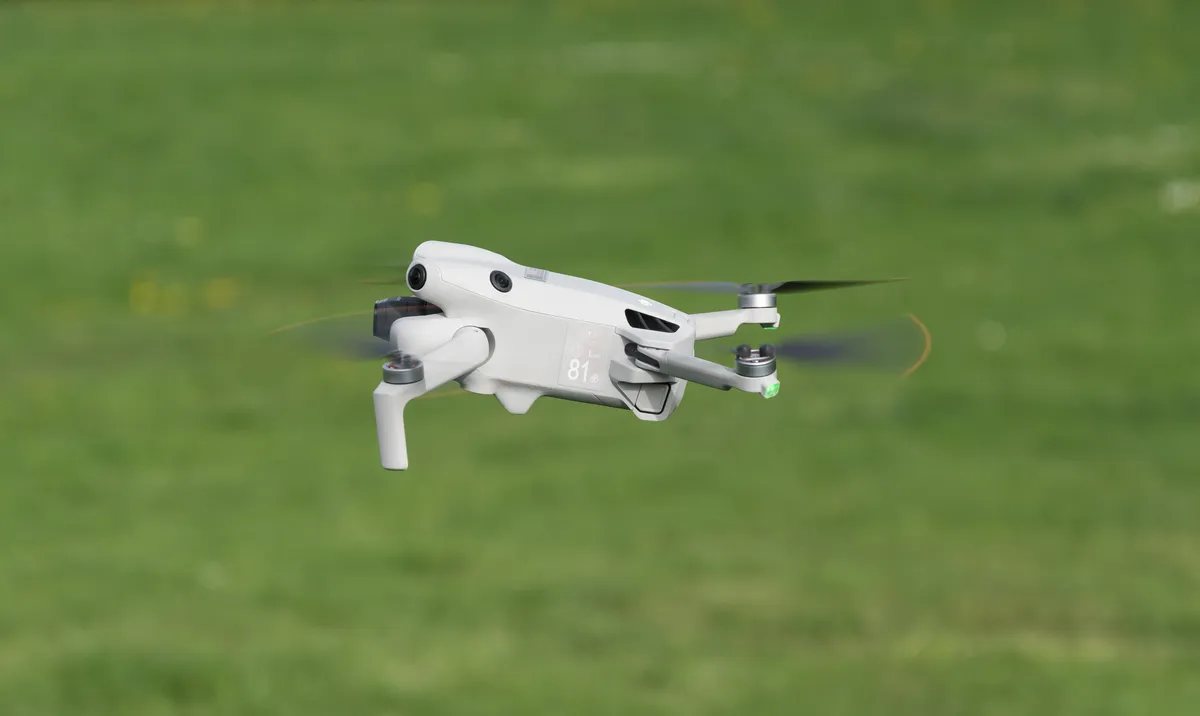
- 248 g measured with standard battery — stays in the lightest regulatory class
- Omnidirectional sensing stopped consistently 1.5-2 m from solid obstacles
- 1/1.3 in sensor holds highlights well in D-Log M; 4K/60 and 4K/100 slow motion
- True vertical gimbal rotation gives uncropped full-resolution vertical video
- Held position and produced stable footage in steady 20-25 km/h wind
- Nothing failed across 40 flights; charging hub drains spare batteries into a phone
- Measured 25-27 min per battery in calm air, 18-19 min in wind — not the claimed 34
- Extended battery pushes the aircraft to ~290 g, losing the sub-250 g advantage entirely
- Obstacle sensing misses branches under about 1 cm and shuts off at dusk
- Noise becomes obvious above ISO 1600 — not a low-light aircraft
- Realistic all-in cost is $1,000-1,200, not $759
- Gimbal cover is fiddly, easy to lose, and blocks power-up if left on
The DJI Mini 4 Pro exists because of a number: 249 grams. Staying under 250 g puts a drone in the lightest regulatory category in most countries, which in the US means no remote ID requirement for recreational flight and in the EU means the C0 class with the fewest restrictions. Everything about this aircraft is engineered around that threshold, and the interesting question is what DJI had to give up to hit it.
I flew mine over nine weeks and roughly 40 flights — coastal cliffs, a wooded valley, several windy days deliberately chosen, and a lot of ordinary hovering while I timed batteries. Below is what the specification sheet doesn't tell you.
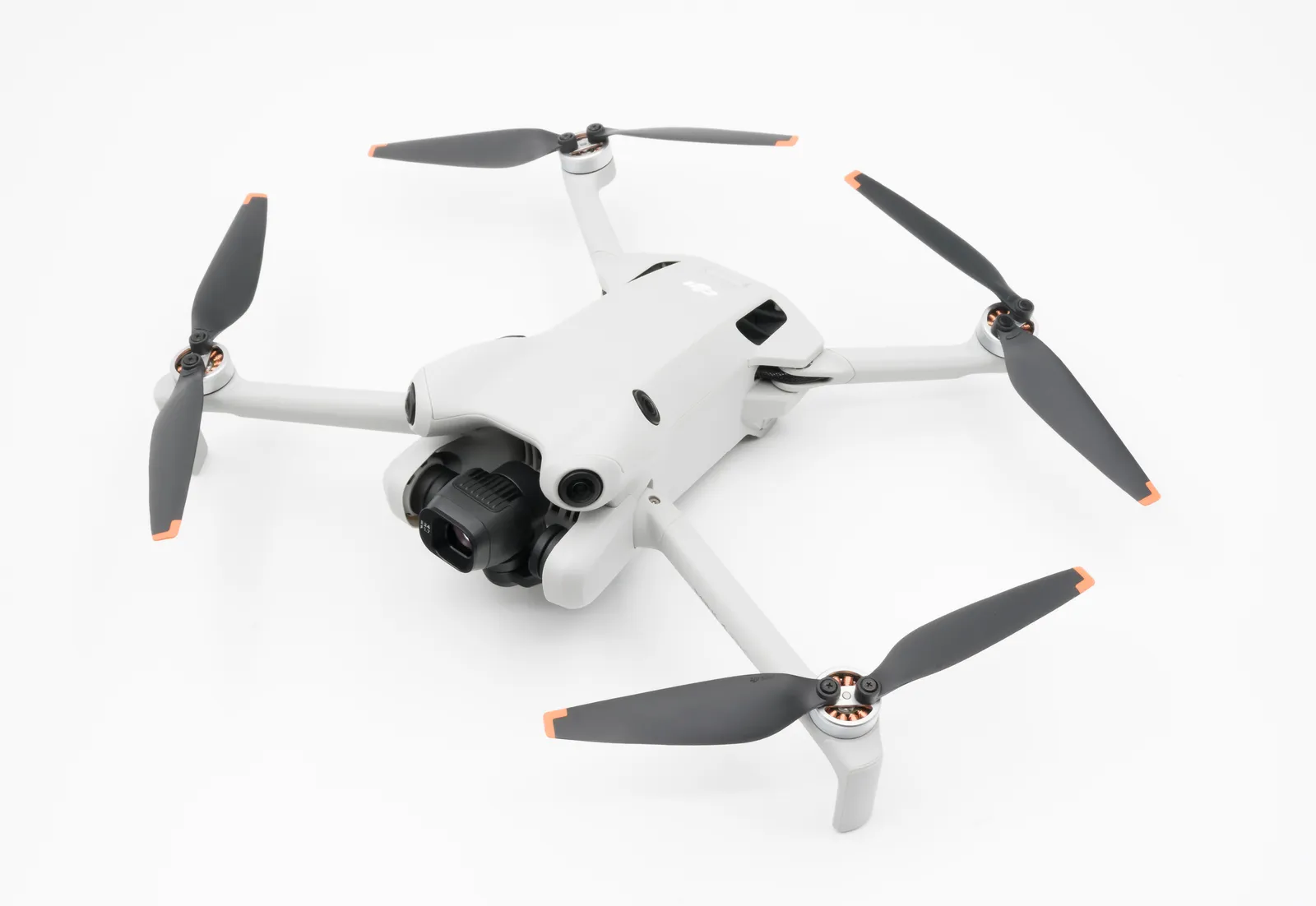
The weight class is the whole product
Mine weighed 248 g on a kitchen scale with the standard battery and propellers fitted, with no ND filters. Add the Intelligent Flight Battery Plus, which extends flight time considerably, and it goes to about 290 g — which pushes it out of the sub-250 category and into a bracket with registration requirements in most places. That is a genuine trap: the accessory DJI sells to fix the weakest specification is the accessory that removes the main reason to buy this model.
Rules vary by country and change often. Verify your national aviation authority's current position before you fly rather than trusting a spec sheet or this review — the regulatory picture in 2026 is not what it was two years ago, and enforcement in populated areas is real.
Flight time, measured rather than claimed
DJI rates the standard battery at 34 minutes. That figure is measured hovering in still air at a constant altitude, which is not flying.
My measured results, flying to the low-battery warning at 20%: 25 to 27 minutes on calm days with normal cruising and some filming. On two deliberately windy days — steady wind around 20 km/h with stronger gusts — it dropped to 18 and 19 minutes as the aircraft worked to hold position. Cold made it worse: at about 6°C the same battery gave 21 minutes.
Practical planning number: assume 20 minutes of usable flight per battery. The Fly More combo with three batteries and a charging hub is close to essential, and it's roughly $260 more.
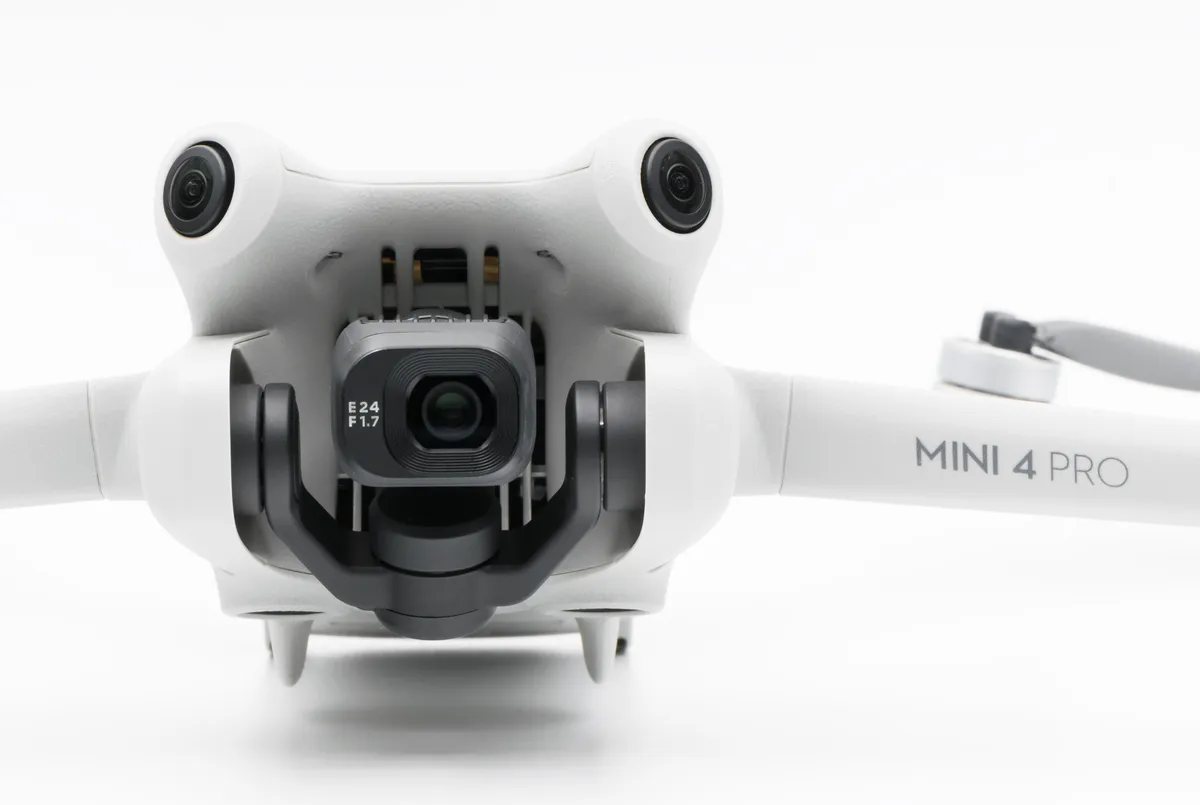
Obstacle avoidance is the real upgrade
The Mini 4 Pro adds omnidirectional obstacle sensing — fisheye vision sensors covering all directions, rather than the forward-and-downward-only arrangement on earlier Mini models. This is the single change that most affects how the drone feels to fly.
I tested it deliberately in a wooded area, flying slowly toward branches. In Brake mode it stopped consistently at about 1.5-2 m from a solid trunk. In Bypass mode it routed around obstacles smoothly at moderate speed. It failed twice, both times against thin bare branches under about 1 cm diameter — the vision system simply doesn't resolve them, and DJI says as much. A drone that avoids trees but not twigs is still a drone you fly carefully in woodland.
It also degrades in low light. At dusk the sensors gave repeated warnings and eventually disabled avoidance entirely, which is correct behaviour and worth knowing before you plan a sunset shoot in a tight location.
Camera: better than a 249 g aircraft should have
The 1/1.3-inch sensor shoots 48 MP stills and 4K at up to 60 fps, with 4K/100 available for slow motion. In good light the results are genuinely good — comparable to a competent phone camera with a much better perspective. Dynamic range in D-Log M holds highlights well enough that a bright sky and a shadowed cliff face were both recoverable in one shot.
In low light it is a small sensor and behaves like one. Noise becomes obvious above ISO 1600, and I would not plan night work with this aircraft.
The gimbal rotating to true vertical is more useful than I expected. Full-resolution vertical video without cropping, for anyone shooting for phone-shaped platforms, removes a genuine workflow annoyance.
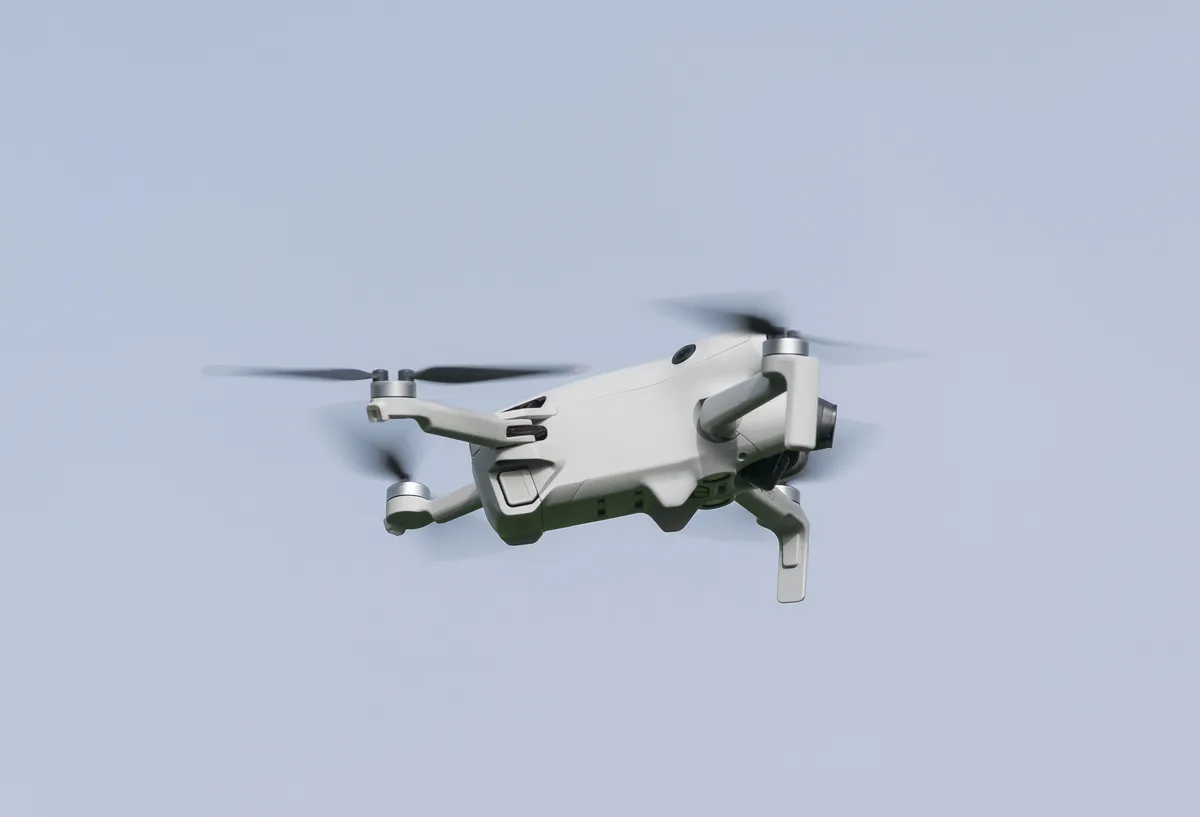
Wind: the unavoidable consequence of being light
DJI rates wind resistance at level 5, roughly 38 km/h. In my testing the aircraft held position in steady 20-25 km/h wind and produced stable footage, which is genuinely impressive for the weight.
What changes is everything else. In wind the drone flies at an angle and the gimbal works harder, consumption rises sharply, and returning upwind takes far longer than going downwind — the classic way people lose light aircraft. On one flight I let it drift 900 m downwind on a good battery and the return leg used more than half the remaining charge. Plan the upwind leg first. This is not a Mini 4 Pro flaw; it's physics applied to a 249 g object, and it is the main practical downside of the weight class.
Transmission and range in reality
OcuSync 4 is rated to 20 km, a figure achievable only in an empty radio environment with clear line of sight and irrelevant almost everywhere. In a suburban area I held a clean 1080p feed to about 2.5 km before the first stutter. Behind a single line of trees, the signal degraded within 400 m.
More useful: the feed quality at realistic distances is excellent, latency is low enough for confident framing, and the automatic downshift to lower bitrate is smooth rather than alarming. In nine weeks I had one full signal loss, in a valley, and the return-to-home behaved correctly and brought it back.
The real cost
The aircraft with the basic RC-N2 controller — which uses your phone as the screen — is around $759. The version with the RC 2 controller and its built-in screen is roughly $959, and the Fly More combo pushes past $1,100.
Having flown with both controllers, the built-in-screen version is worth the difference if you fly regularly. Using a phone means dealing with notifications, battery drain, overheating in sun, and the cable connection. The dedicated controller eliminates all four. If you'll fly twice a year, save the money.
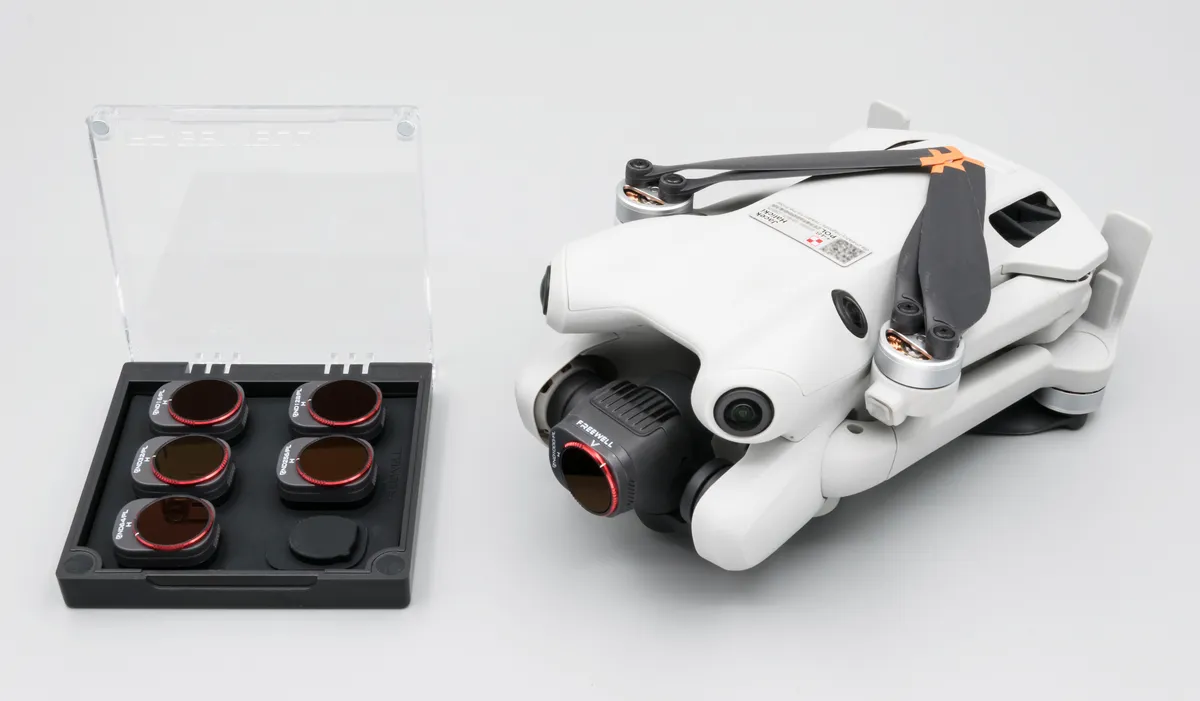
Add ND filters at about $60, spare propellers, and a case, and a realistic all-in figure for a setup you'll actually enjoy is $1,000-1,200.
What broke and what didn't
Nothing broke in nine weeks. The folding arms still have firm detents, the gimbal has no play, and the propellers show only cosmetic scuffing from grass landings.
The one operational annoyance is the gimbal cover, a small plastic clip that protects the camera in transit. It is fiddly to fit, easy to lose, and the drone will not power up correctly with it on. I have already replaced mine once.
The battery charging hub is well designed — it charges sequentially from highest to lowest charge and can drain remaining charge into a phone via USB, which is genuinely useful on a long day out.
The automated flight modes, ranked by usefulness
ActiveTrack 360 is the headline feature and the one I used most. Tracking a walking subject along a path, it held framing reliably and the new radial control — where you set the angle the drone holds relative to the subject — is genuinely intuitive. Tracking a cyclist at about 25 km/h it kept up but chose a cautious line and twice slowed to avoid vegetation the rider passed straight through. Useful, not autonomous.
The QuickShots — Dronie, Rocket, Circle and the rest — are what they always were: a fast way to get a usable clip when you have two minutes and no plan. I used Circle repeatedly and the others almost never.
Waypoint flight, which lets you record a route and repeat it precisely, is the mode I underrated. Flying the identical path at different times of day gave me matched clips I could cut together, and that is a genuinely professional capability on a drone this size. It also, unlike ActiveTrack, does exactly what you told it to every time.
Against the alternatives
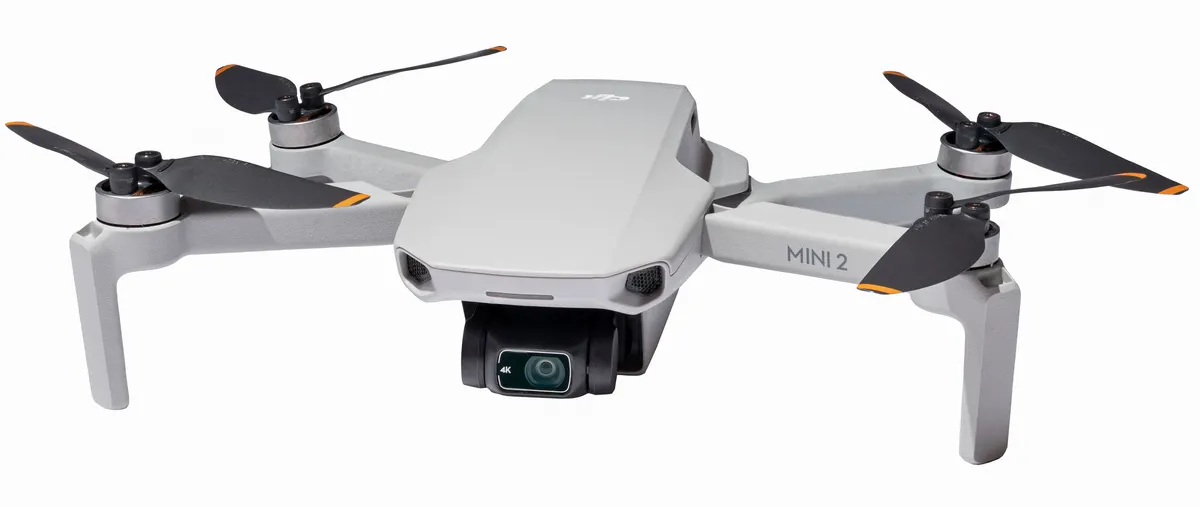
Against the older Mini 2 or Mini 3, the Mini 4 Pro's omnidirectional sensing and subject tracking are the meaningful differences, and both matter most to people flying in complex environments or filming themselves. If you fly over open water and fields, an older Mini at half the price does nearly the same job.
Against a full-size Air or Mavic, you give up sensor size, wind stability and battery life, and you gain a regulatory category and a drone that fits in a jacket pocket. For travel that trade is usually correct; for professional work it usually isn't.
Who should buy this
Buy it if you want the best camera drone that stays under 250 g, if you travel and want something that packs into a small bag, and if you'll accept 20 usable minutes per battery. Buy the RC 2 controller version if you'll fly more than a handful of times a year, and check your local regulations first — not after.
Skip it if you need low-light performance, if you fly in consistently windy coastal conditions, or if you were going to buy the extended battery anyway, because that purchase deletes the sub-250 g advantage this aircraft is built around. And skip it if an older Mini already does what you need; the upgrade is real but not transformative.
Verdict
Nine weeks and 40 flights in, the Mini 4 Pro is the most capable thing I've flown at this weight by a clear margin. Omnidirectional sensing genuinely changes how confidently you can fly, the camera outperforms its class in good light, and the whole aircraft disappears into a jacket pocket. Against that: 20 usable minutes rather than the claimed 34, meaningful degradation in wind and cold, a small sensor that shows in low light, obstacle sensing that misses thin branches, and a true cost closer to $1,100 than $759. Excellent within honestly narrow limits.
Other products we tested

Ecobee Smart Thermostat Premium Review: Two Months of Real HVAC Testing
We installed the Ecobee Smart Thermostat Premium without a C-wire, tracked its temperature accuracy against a separate thermometer, and measured real energy savings over two months of daily HVAC use.
Bose SoundLink Flex Review: Six Weeks of Hiking, Kayaking, and Beach Days
Six weeks of camping, kayaking, and beach trips show the Bose SoundLink Flex's IP67 rating and PositionIQ orientation sensing are genuinely useful, with honest limits on bass and max volume.
Coros Pace 3 Review: Six Weeks Testing the GPS Watch That Barely Needs Charging
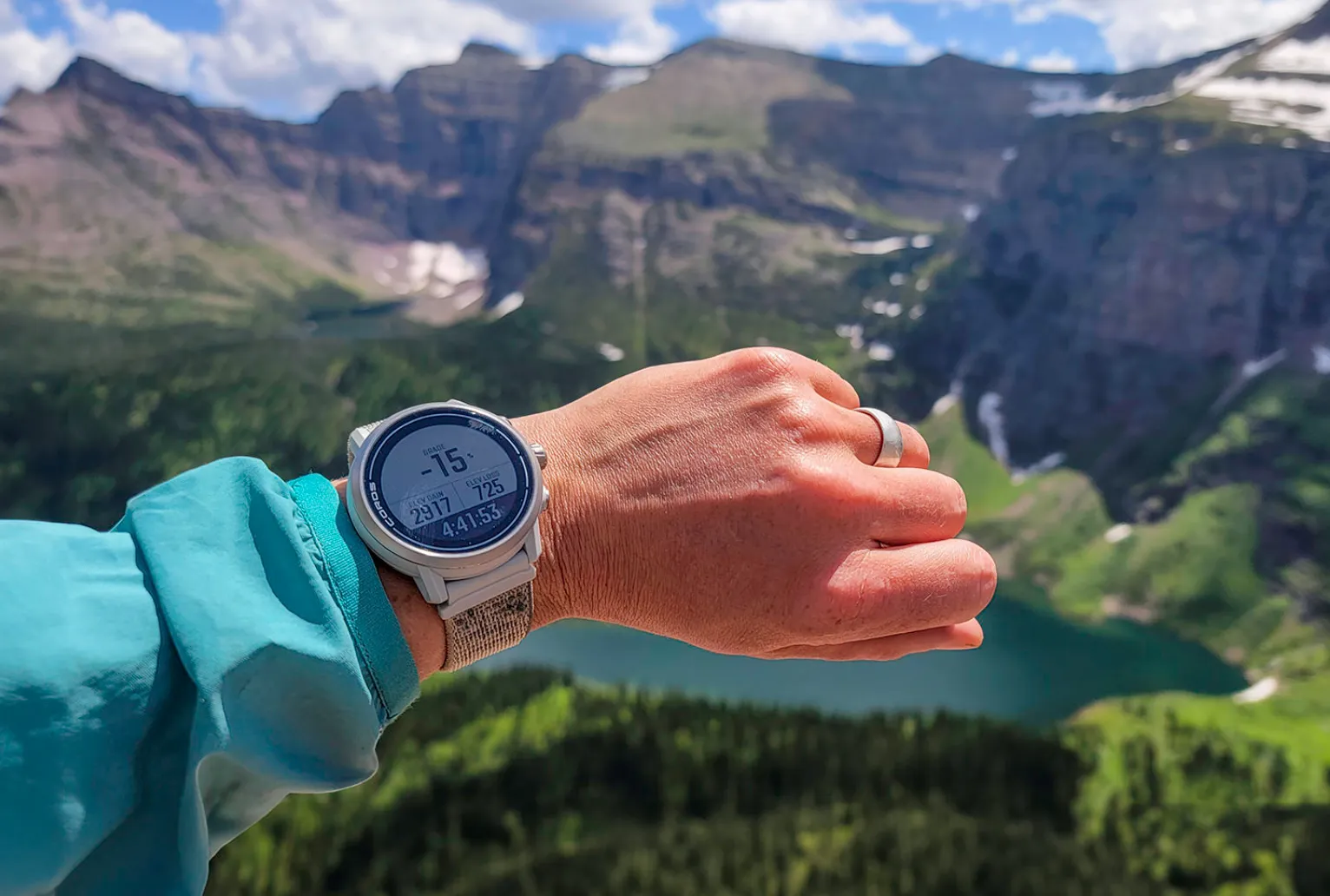
A dual-frequency GPS running watch that trades AMOLED shine for weeks of battery life at a fraction of the price of flagship rivals.