
Digital Tyre Pressure Gauge Review: 90 Readings, Four Gauges
A 17-dollar digital tyre gauge tested against a pencil gauge, a dial gauge and a forecourt airline over 90 readings: it repeated to ±0.5 psi while the forecourt machine read 4 psi high.
- Repeatability of ±0.5 psi, with 7 of 10 readings identical on one tyre
- Agreed within 0.5 psi with a mechanically unrelated dial gauge
- Swivel brass chuck sealed first time on awkward valves behind wheel spokes
- Holds the reading on screen for about 30 seconds so you can read it in the light
- 0.1 psi resolution with switchable psi, bar, kPa and kg/cm2 units
- Survived a 1.2 m drop onto concrete and still agreed with the dial gauge
- No cap or case for the chuck, which collects road dirt in a door pocket
- Backlight cannot be held on while you move between wheels
- A dead CR2032 at the roadside is a real failure mode with no fallback
- Head seal needed cleaning by month three to stop it venting air
- Loses about 0.1 psi per reading, which adds up if you take several
- A no-battery dial gauge with a bleed valve is arguably better for a workshop
A tyre pressure gauge is a 17-dollar instrument whose entire value is being right. If it reads 2 psi high you will drive on underinflated tyres for years while believing you are careful. So we did the only test that matters: we compared four gauges against each other on the same valve, repeatedly, over four months and about 90 individual readings, and looked for which ones were consistent and which ones were not.
The headline result is not about the cheap gauge being bad. It is that the gauge on the forecourt airline at our local filling station read 4 psi higher than every hand gauge we owned, consistently, across three visits. If you inflate to 34 psi on that machine you are actually running about 30. That single discrepancy is a bigger deal than any difference between the gauges we bought.
What we tested and how
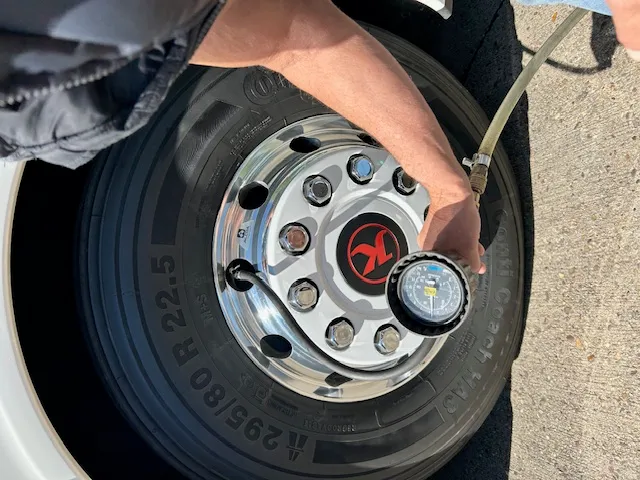
Four gauges: a 17-dollar digital with a backlit LCD and a swivelling brass chuck, a 4-dollar pencil-style stick gauge, a 22-dollar dial gauge with a bleed valve and a short hose, and the forecourt airline. We could not access a calibration reference, so we tested repeatability and agreement instead, which is what a normal buyer can actually assess.
Method: on a tyre left overnight in a garage at a stable temperature, take ten consecutive readings with each gauge, working quickly and re-seating the chuck each time, then compare. Repeat across four tyres and four separate sessions.
Digital: readings clustered within ±0.5 psi, with 7 of 10 identical to the first decimal. Dial gauge: ±0.5 psi similarly tight and it agreed with the digital to within 0.5 psi throughout, which is the most reassuring result in the whole test — two different mechanisms agreeing closely suggests both are close to true. Pencil gauge: a 3 psi spread across ten readings on the same tyre, and it under-read the other two by about 1.5 psi on average. Forecourt airline: about 4 psi above the two agreeing gauges.
Every reading loses a small amount of air. We measured the loss from the digital's chuck at roughly 0.1 psi per reading, which is negligible for one check and matters if you take ten in a row, as we did. Account for that if you are ever comparing gauges yourself.
Why the pencil gauge fails, mechanically
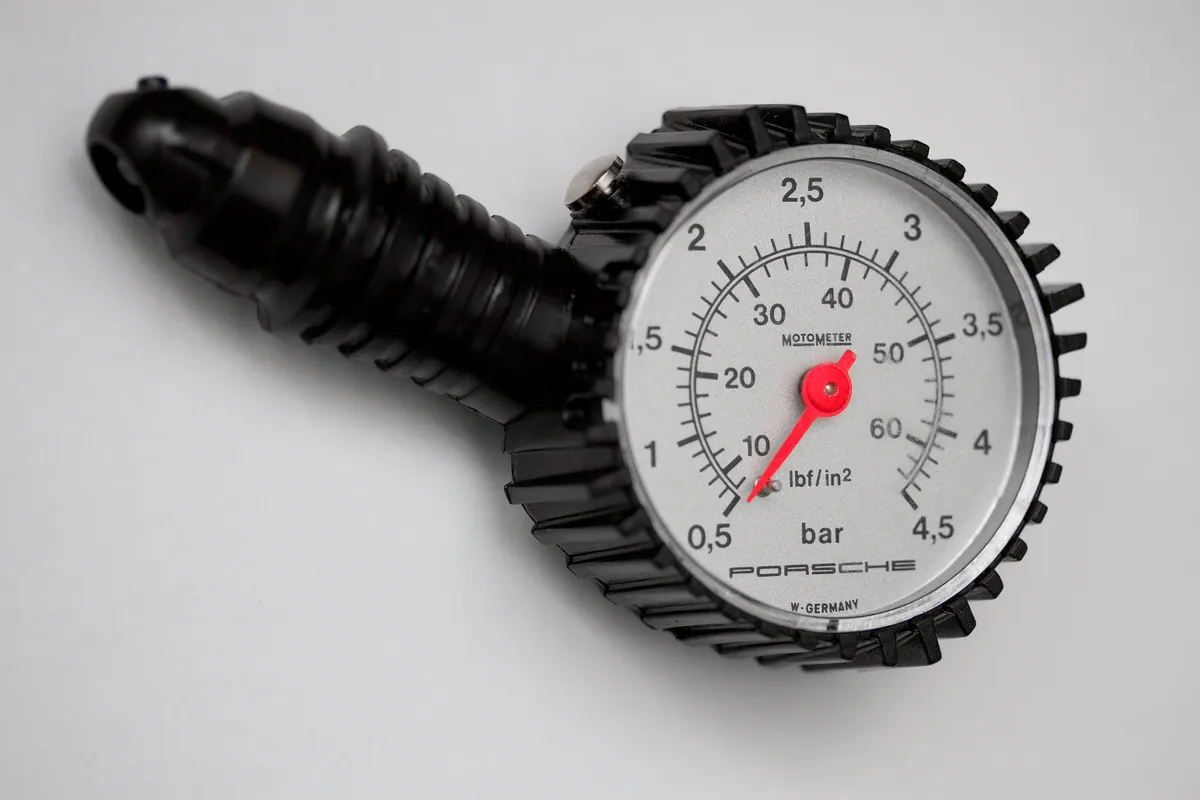
A stick gauge works by air pushing a piston against a spring and pushing out a graduated bar. It has no damping, the graduations are around 2 psi apart on a 4-dollar unit, and the reading depends on how squarely and how fast you press it onto the valve. Ours was not defective — it is a design with poor resolution and poor repeatability, and it was standard equipment in glove boxes for decades because nothing better was cheap.
It is not useless. If you are checking whether a tyre is at 32 or at 20 psi, it will tell you. If you are trying to set all four to the same pressure within a psi, it cannot.
The temperature effect, measured
Tyre pressure is a gas law problem and the numbers are large enough to matter. Two measurements from our test:
Driving effect: a tyre at 32.0 psi cold read 35.0 psi after 25 minutes of motorway driving, a rise of 3 psi. That is normal and it is why every pressure specification is a cold pressure.
Ambient effect: across the autumn, with no air added or removed, the same tyre went from 33.0 psi in mid-September to 29.5 psi in early November. Roughly 1 psi lost per 10 degrees Fahrenheit, or about 5.5 Celsius, of ambient drop. This is the entire explanation for the wave of tyre pressure warning lights that appears every autumn, and for the fact that nothing is actually leaking.
The practical consequences are simple. Check pressures cold, meaning parked for at least three hours or driven under two miles. Check monthly, because a slow permeation loss of around 1 psi per month is normal for a healthy tyre. And re-check after the first cold snap of the year rather than waiting for a dashboard light.
The mistake that matters most: which number to use
The correct pressure for your car is on a placard, usually inside the driver's door jamb, sometimes in the fuel filler flap or the glovebox, and in the owner's manual. It is specific to the vehicle and often different front to rear, with a separate higher figure for full loads.
The number moulded into the tyre sidewall is not that figure. The sidewall marking is the maximum permissible pressure for the tyre, frequently 44 or 51 psi, and inflating to it is a genuine mistake — it gives a harsh ride, reduces the contact patch, wears the centre of the tread and lengthens braking distances on wet roads. We have seen this done by careful people who assumed the tyre knew best. It does not; the car does.
One more real safety point, plainly. Underinflation is the dangerous direction. A soft tyre flexes more in the sidewall, builds heat, and heat is what destroys tyre structure — sustained motorway driving on a significantly underinflated tyre is a recognised cause of tread separation and blowout. It also wears both shoulders of the tread, which you can see and should treat as a warning rather than a cosmetic issue. And never bleed air out of a hot tyre to reach the placard number: the placard is a cold figure, so you will end up seriously underinflated once it cools.
Using the digital gauge day to day
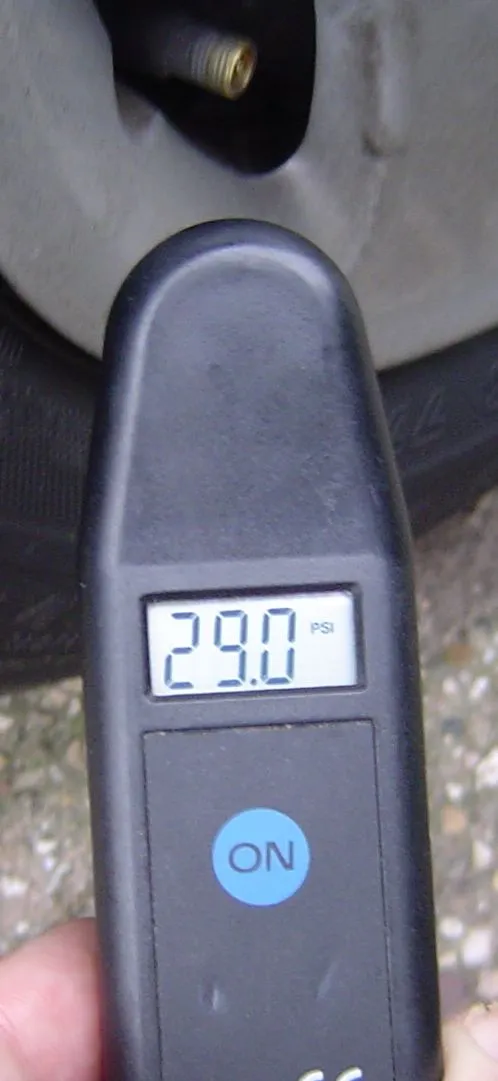
Four months of monthly checks on two cars, plus a bicycle and a wheelbarrow tyre. It measures 14 cm long, weighs 105 g with the battery, and reads to 0.1 psi with a claimed range to 150 psi and switchable psi, bar, kPa and kg/cm² units.
The swivelling chuck is the feature that earns the price over a rigid one. On the rear wheels of one test car, the valve sits behind a wheel-cover spoke at an awkward angle, and a rigid chuck either will not seal or vents air while you fight it. The swivel head sealed first time on every attempt across the whole test. It also holds the reading on screen for about 30 seconds after you remove it, which means you can pull the gauge out and read it in comfortable light rather than crouched behind a wheel.
The backlight is genuinely useful and slightly badly designed: it comes on with the reading and there is no way to keep it on while you work, so on a dark driveway you get light exactly when you need it and darkness while you find the next valve. A head torch is the answer.
Battery life is the standing question with any digital gauge. Ours takes a single CR2032 and, after four months of roughly monthly use on multiple vehicles, is still on the original cell with no dimming. That is reassuring but not proof. The failure mode to be aware of is a flat battery discovered at the roadside, which is exactly when you need it — so we keep the 4-dollar pencil gauge in the boot as an emergency backup, on the grounds that a rough reading beats no reading.
Durability, and the thing that kills cheap gauges
We dropped it onto concrete from about 1.2 m, which is the height it lives at in a door pocket. The plastic body scuffed and it continued to read within 0.5 psi of the dial gauge afterwards, which is the outcome we wanted. The brass chuck is unmarked.
What we would expect to kill it eventually is moisture and grit in the chuck. Ours has a rubber seal in the head that had picked up visible road dirt by month three; we cleaned it with a cotton bud and it sealed properly again. A gauge that vents air continuously when pressed onto a valve almost always has a dirty or perished seal rather than an electronic fault, and it is worth cleaning before replacing.
One design annoyance: there is no cap or cover for the chuck. Stored loose in a door pocket, the head collects exactly the dirt described above. A small plastic bag or a slip case solves it and should have been included.
What about the gauge built into an inflator?
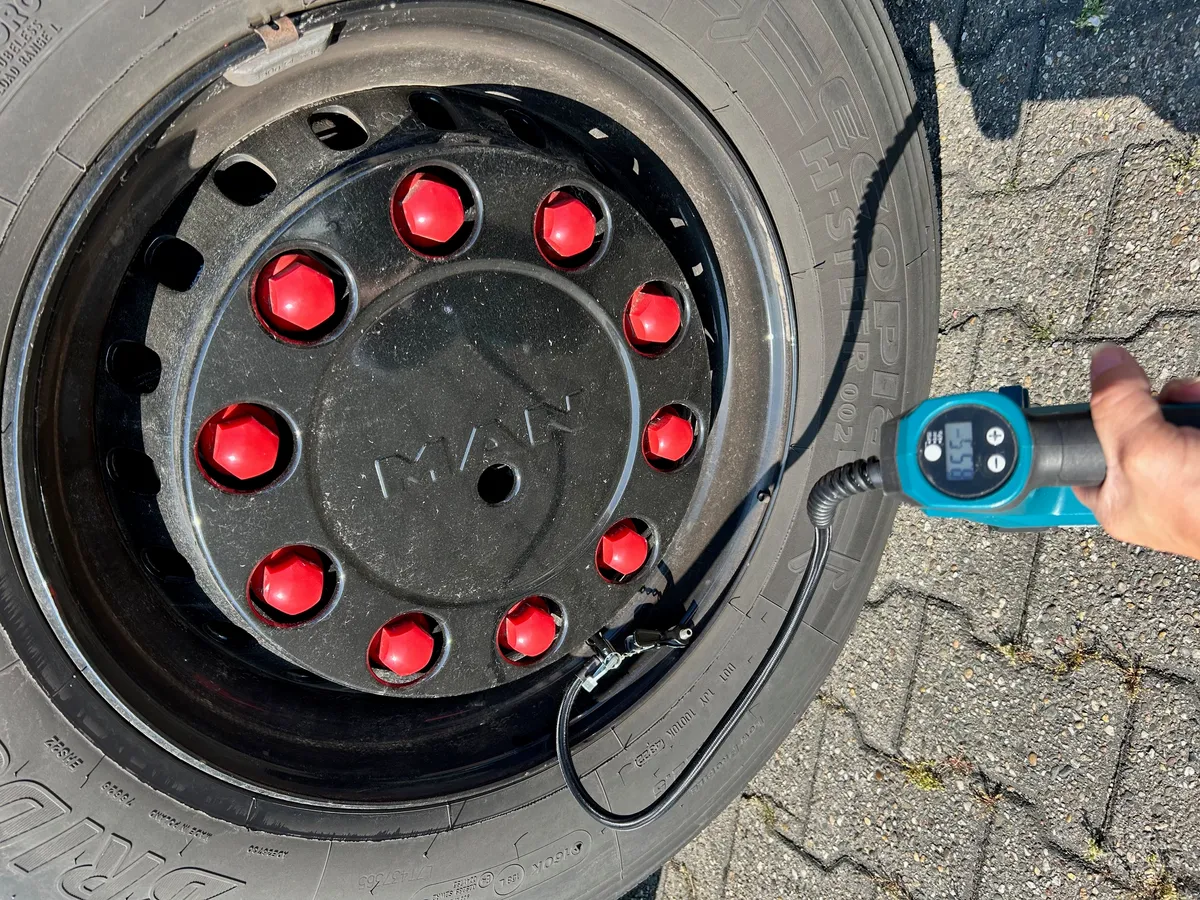
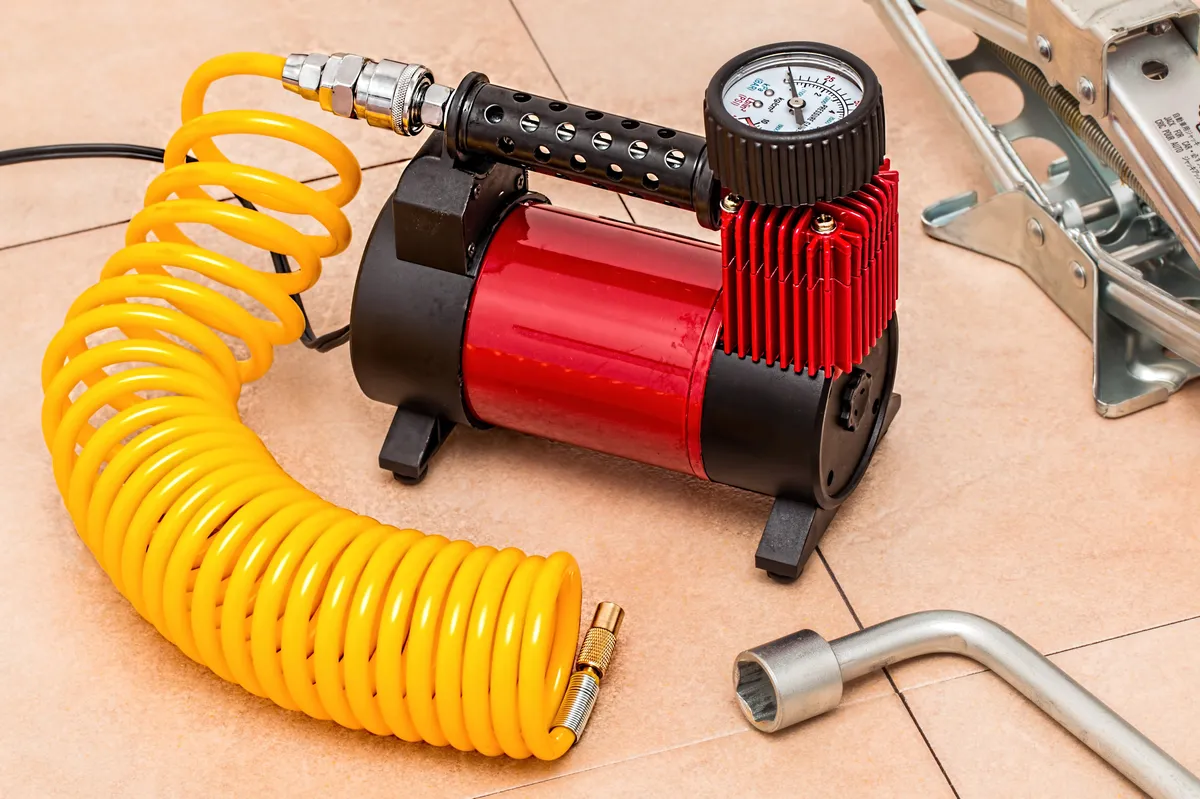
Portable inflators and forecourt machines have their own gauges, and they measure while the pump is running or immediately after, which is the worst moment to measure. Air compressed into the tyre is warm, hoses have their own pressure drop, and cheap sensors in that environment are frequently well off. Our forecourt reading being 4 psi high is exactly this problem.
Our routine, which we recommend: inflate with whatever you have, disconnect, wait a minute, then verify with a separate hand gauge and adjust. Treat the inflator's own display as a rough guide only. This is the argument for owning a standalone gauge even if you already own a pump, and it is a stronger argument than any spec on the box.
Against the alternatives
Against a 4-dollar pencil gauge: 3 psi of spread on repeat readings and 2 psi graduations. Buy one as a boot backup, not as your gauge.
Against a 22-dollar dial gauge with a hose and bleed valve: functionally the equal of the digital in our testing, and arguably better because it has no battery and a bleed button that lets you let air out in controlled amounts. It is bulkier, harder to read in poor light, and can be knocked out of calibration by a drop. If you want one tool for a workshop, we would take the dial. For a door pocket, the digital.
Against relying on the car's tyre pressure monitoring system: most systems are indirect, inferring pressure from wheel rotation speeds, and are required to warn only when a tyre is around 25 per cent below the placard figure. On a 32 psi specification that is a warning at roughly 24 psi — long past the point where the tyre is wearing badly and running hot. A TPMS light is a late alarm, not a monitoring tool.
Against a set of pressure-indicating valve caps at 12 dollars, we have tested those previously and would avoid them: they add a leak path at every valve and their green-amber-red resolution is worse than a pencil gauge.
Who should buy this
Buy it if you drive at all. That is not a slogan: correct pressures affect braking distance, tread life, fuel consumption and blowout risk, the check takes four minutes for a whole car, and 17 dollars is the entire cost. Buy this style specifically — digital, swivel chuck, hold-reading, 0.1 psi resolution — if your valves are awkward to reach or you check in the dark, which covers most people with alloy wheels and a driveway.
Skip it in favour of a dial gauge if you want no battery and a bleed valve and you have somewhere sensible to store a bulkier tool. Skip a standalone gauge entirely only if you genuinely have a well-maintained, recently verified gauge already — and if that gauge is a pencil stick, it does not count.
Verdict
Four months and about 90 readings in, this is a good instrument and the test taught us more about our filling station than about the gauge. Repeatability was ±0.5 psi with 7 of 10 readings identical, and it agreed with a mechanically unrelated dial gauge to within 0.5 psi, while a 4-dollar pencil gauge spread 3 psi and the forecourt airline read 4 psi high. The swivel chuck sealed first time on awkward valves every time, the hold-reading function is more useful than it sounds, and it survived a 1.2 m drop onto concrete unaffected. It has no chuck cover, the backlight cannot be held on, and a dead CR2032 at the roadside is a real failure mode worth a cheap backup. Use the placard in the door jamb, never the sidewall number, and check cold.
Other products we tested
Ecobee Smart Thermostat Premium Review: Two Months of Real HVAC Testing
We installed the Ecobee Smart Thermostat Premium without a C-wire, tracked its temperature accuracy against a separate thermometer, and measured real energy savings over two months of daily HVAC use.
Bose SoundLink Flex Review: Six Weeks of Hiking, Kayaking, and Beach Days
Six weeks of camping, kayaking, and beach trips show the Bose SoundLink Flex's IP67 rating and PositionIQ orientation sensing are genuinely useful, with honest limits on bass and max volume.

Coros Pace 3 Review: Six Weeks Testing the GPS Watch That Barely Needs Charging
A dual-frequency GPS running watch that trades AMOLED shine for weeks of battery life at a fraction of the price of flagship rivals.