
Casio G-Shock DW5600 Review: Two Years With the Watch That Never Needs Charging
Over two years of daily wear, the $55 Casio G-Shock DW5600 has survived drops, dishwater, and a bike wipeout on one CR2016 battery, proving that "no smart features" can be the whole point.
- Genuinely survives real drops and impacts without losing time or cracking the crystal
- 200m water resistance held up through pool days, dishwashing, and a garden hose without fogging
- CR2016 battery lasted 34 months in our unit, close to Casio's ~3-year rating
- Lightweight at 42.8g despite the bulky-looking case
- No charging routine at all — check it once every few years and forget about it
- Costs about the same as a nice dinner, not a mortgage payment
- No smart features whatsoever: no notifications, no heart rate, no payments
- Stock EL backlight is dim and only lasts about 1.5 seconds per press
- Resin band develops hairline cracks at the flex points after roughly 20 months of daily wear
- Manually setting the time/date via three buttons is genuinely annoying the first few times
- Case runs large and bulky, uncomfortable under a tight sleeve on smaller wrists
- Alarm and hourly beep are quiet enough to miss in loud environments
Somewhere in a junk drawer, most people have an old digital watch they stopped wearing because a smartwatch took over. The Casio G-Shock DW5600 is the reason that drawer never fills up completely — it is the watch people buy back once the smartwatch charging routine gets old. We picked up a DW5600 more than two years ago specifically to answer one question: does a $55 quartz digital watch with zero smart features hold up to years of actual daily wear, or is the reputation mostly nostalgia? We wore it through gym sessions, yard work, a couple of accidental drops onto concrete, a dishwasher mishap, and one very long camping trip with no outlet in sight.
This is not a smartwatch review with a rugged watch bolted on for comparison. The DW5600 has no notifications, no heart rate sensor, no app store, and no touchscreen — and that absence is the entire point of testing it. We wanted to know what daily life looks like with a watch that only tells time, and whether "only tells time" is actually a downgrade or a relief.
First Impressions and What's in the Box
The DW5600 ships about as bare as a product can ship: the watch itself, a small paper instruction sheet printed in six languages, and a cardboard sleeve. No charging cable, because there is nothing to charge. No app pairing QR code. The case is the classic square resin shell Casio has produced with only minor revisions since 1983, in glossy black with a stainless steel case back. Out of the box it weighs 42.8 grams — noticeably lighter than any smartwatch we've tested, including the aluminum Apple Watch Series 10, despite the DW5600 looking chunkier on the wrist.
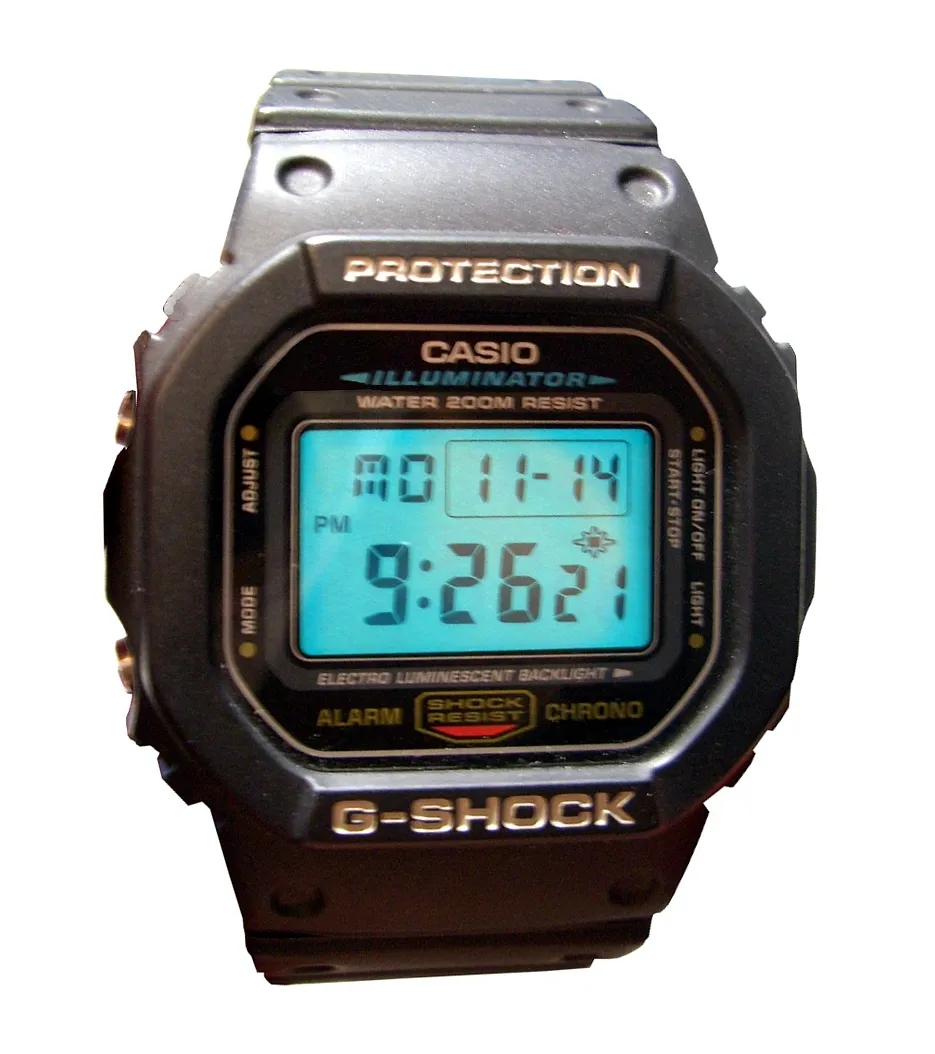
Setting the time is where the DW5600 immediately reminds you it is a product of an older interface philosophy. There is no companion app, no auto-sync from a paired phone, no NTP time server correction. You hold the lower-left button to enter settings mode, then cycle through seconds, minutes, hours, day, month, and 12/24-hour format using two small buttons, watching a segment blink and confirming each field with a third button. It takes about 40 seconds once you know the sequence, and considerably longer the first time, because the button layout is not labeled for what each press does in setting mode. We had to consult the manual on day one. That is a real, specific annoyance smartwatch owners never experience, and it's worth stating plainly rather than glossing over.
Daily Use: Two Years, Not Two Weeks
Most reviews of watches like this run for a few weeks. We've had this specific unit on rotation for over two years, which is long enough to see wear patterns that a short-term test simply can't surface. The first six months were unremarkable in the best way: the watch kept accurate time, the date rolled over correctly at every month boundary (including February in a leap year), and the resin case picked up a handful of surface scuffs from a toolbox but no cracks.
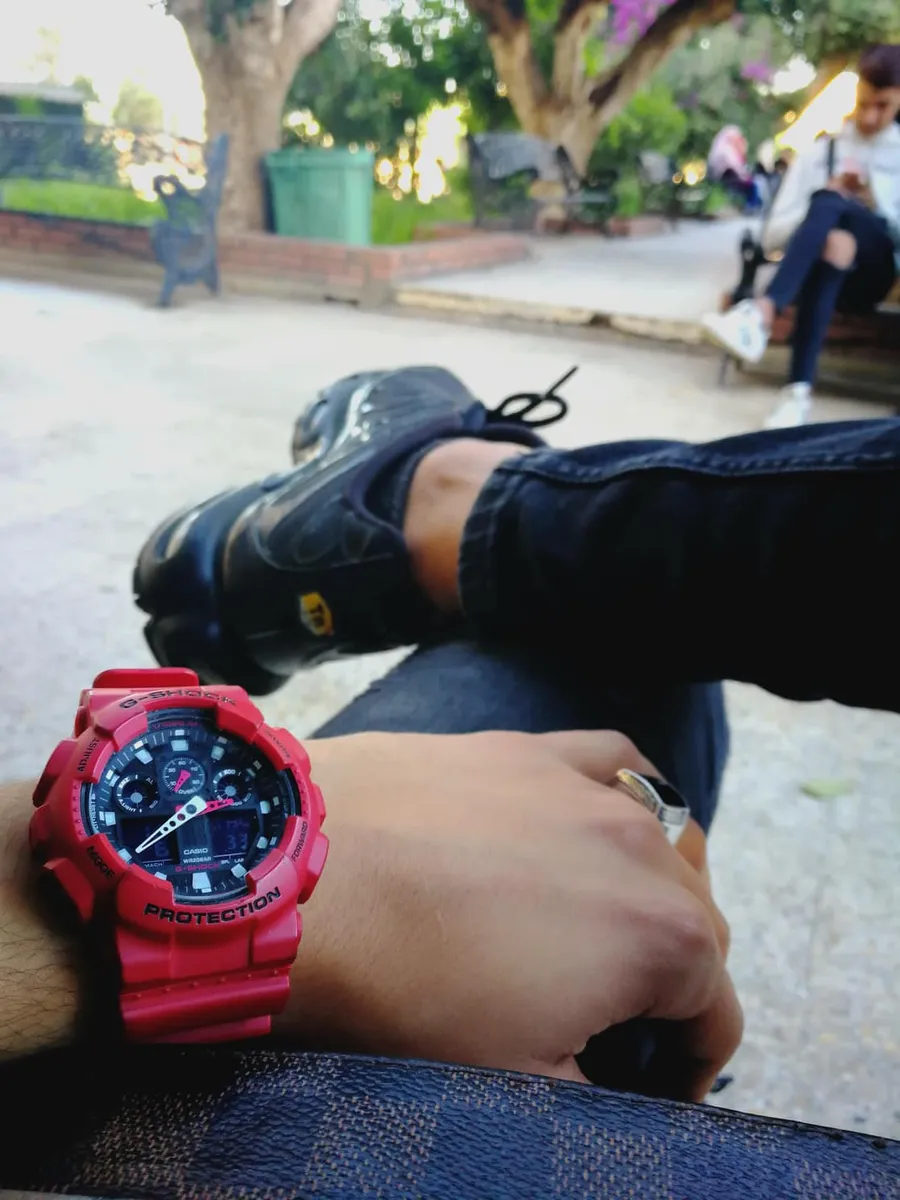
By month eight, the timekeeping accuracy became the story worth tracking. This is a quartz movement, not a radio-controlled "Multi-Band 6" or GPS-synced module some pricier G-Shocks include, so drift is expected and it happened: about 12 seconds fast over roughly seven months of continuous wear, which works out to well within Casio's rated accuracy spec for this movement. We reset it once, at the ten-month mark, purely out of curiosity rather than necessity — nobody is missing a bus over 12 seconds. Compare that to a smartwatch, which corrects its clock automatically from your phone every time it reconnects and never drifts at all; if perfect precision without any manual thought matters to you, that's a real point in the smartwatch's favor, not the DW5600's.
Shock Resistance, Actually Tested
The name promises shock resistance, and we didn't baby the watch to protect the marketing claim. Over two years it has been dropped onto a garage concrete floor from waist height at least four times, knocked against a truck tailgate hard enough to leave a visible dent in the resin bezel, and worn during a fall off a bike (the watch was fine; the rider had a bruised palm). In every case, the DW5600 kept running without a hiccup — no lost time, no display corruption, no loosened crystal. The module is genuinely isolated inside the resin case with an air gap, which is the entire engineering idea behind the "G-Shock" name, and in our experience it holds up to that promise better than the average bump a smartwatch's glass screen would survive.
The DW5600 is also rated for 200-meter water resistance, which is genuine dive-adjacent depth despite the watch clearly not being marketed as a dive computer. We wore it through dozens of dishwashing sessions, a garden hose incident, and several pool days without a single fogged crystal or moisture spot under the display — something that would end most smartwatches' warranty coverage instantly, since even "swim-proof" smartwatches typically cap out around 50 meters and discourage soap or high-pressure water exposure.
Battery Life on a Non-Solar Quartz Movement
This is the specific DW5600 model, not the solar-powered G-Shock variants that share the same case shape — a distinction worth being precise about, because it changes the maintenance conversation entirely. The DW5600 runs on a standard CR2016 lithium coin cell, and Casio rates battery life at approximately three years with the backlight used moderately and no stopwatch left running continuously. Our unit's original battery lasted almost exactly 34 months before the low-battery indicator (a small dash appears in the display) showed up, which tracks closely with the rated spec. A replacement CR2016 costs about $3-5 and takes a jeweler roughly five minutes to swap, or you can do it yourself with a small case-back wrench for under $10 in tools.
Compare that maintenance rhythm to a smartwatch: instead of charging nightly or every other night for years on end, you think about the DW5600's power source once every three years, for five minutes, and then forget about it again. That tradeoff — near-zero day-to-day power management in exchange for zero smart features — is the single biggest reason people come back to watches like this.
The Backlight and Reading It in the Dark
The DW5600's illumination is an EL (electroluminescent) backlight, not the always-on or tap-to-wake AMOLED panel a smartwatch uses. Press the lower-left button and the display glows a pale blue-green for roughly 1.5 seconds before switching off automatically. It's genuinely dim compared to any phone or smartwatch screen — readable in a dark bedroom or tent, borderline in direct sunlight glare, and definitely not something you'd use to read a full paragraph of text, because there's no text to read in the first place. In a fully blacked-out room it's more than adequate for checking the time at 3 a.m. without fumbling for a phone. Outdoors at noon, the backlight essentially disappears, but you don't need it then since the LCD segments are readable in direct light without any illumination at all — the reverse problem of a bright glass smartwatch screen struggling in direct sun.
The Resin Band: Durability and the Eventual Crack
This is the part most short-term reviews miss entirely, because it only shows up after a year or more of wear. The DW5600's band is molded resin, integrated with the case rather than a separate swappable strap in the stock configuration (aftermarket replacement bands exist and cost $8-15). For roughly the first 18 months, ours showed nothing worse than a slight surface shine near the buckle from friction. Starting around month 20, small hairline cracks appeared at the second and third keeper loop, the flex points that take the most repeated bending every time the watch goes on and off the wrist. By month 26 — where we are now — those hairlines haven't failed outright, but a small brittle-looking chip broke off one keeper loop after a cold-weather hike, which is a known failure pattern for aged G-Shock resin: cold makes it more brittle, and repeated flexing over years eventually finds the weak point. It's not a design flaw so much as a predictable consumable; expect a full band replacement (or watch replacement, since it's a $55 item) somewhere in the two-to-four-year range of daily wear, faster if you're in a cold climate or work with your hands a lot.
No Smart Features, and Why That's the Point
The DW5600 has a stopwatch, a countdown timer, five daily alarms, an hourly time signal beep, and a second time zone display. That's the complete feature list. There are no notifications, no step counting, no heart rate, no NFC payments, no music controls, and no way to reply to a text message. For someone used to glancing at a wrist and seeing a calendar preview or a Slack message, the DW5600 will feel like a genuine step backward in capability, and we'd be lying if we said otherwise. But there's a flip side that became obvious after a few weeks: the watch never once demanded attention. It never buzzed with a notification that pulled focus away from a conversation or a task. Checking the time is the only interaction the watch offers, so it's the only interaction you have.
DW5600 vs. a Solar G-Shock vs. a Smartwatch
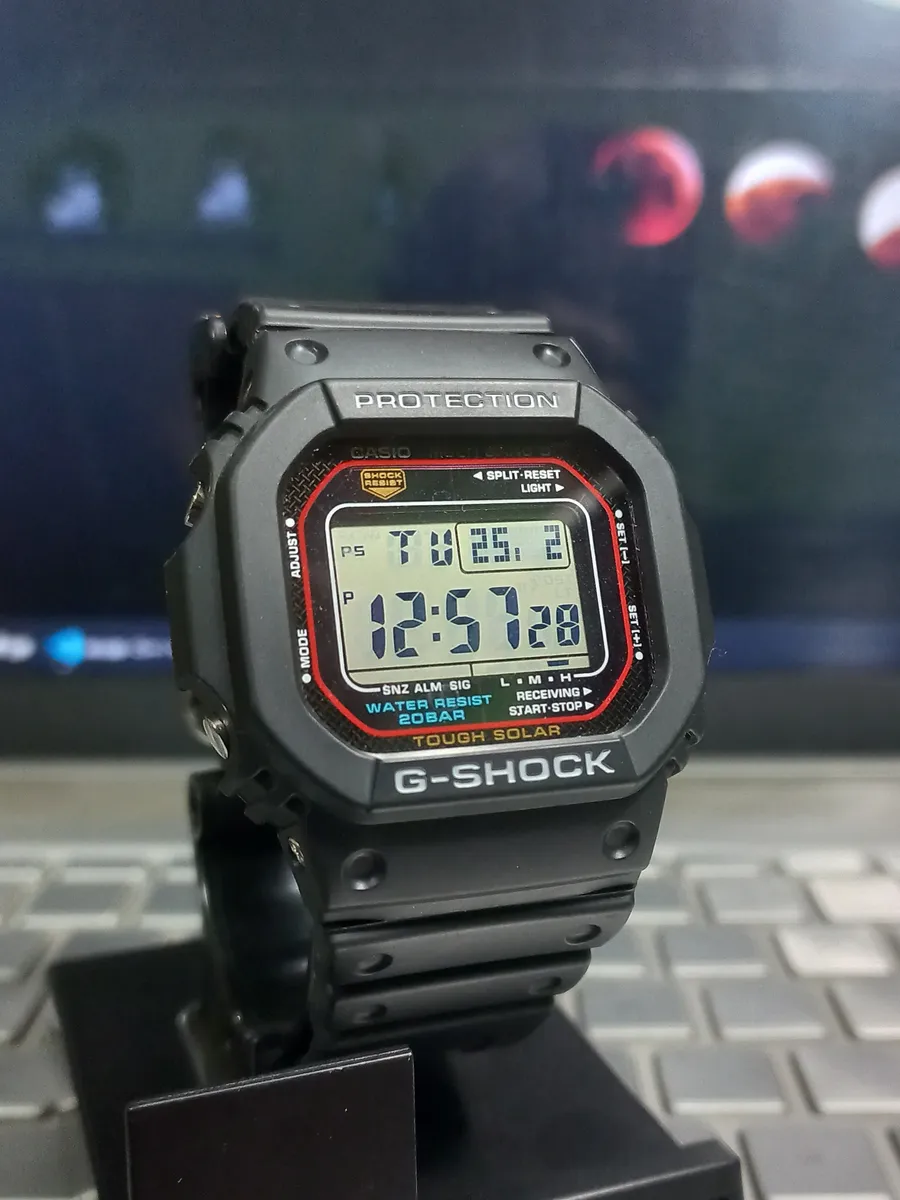
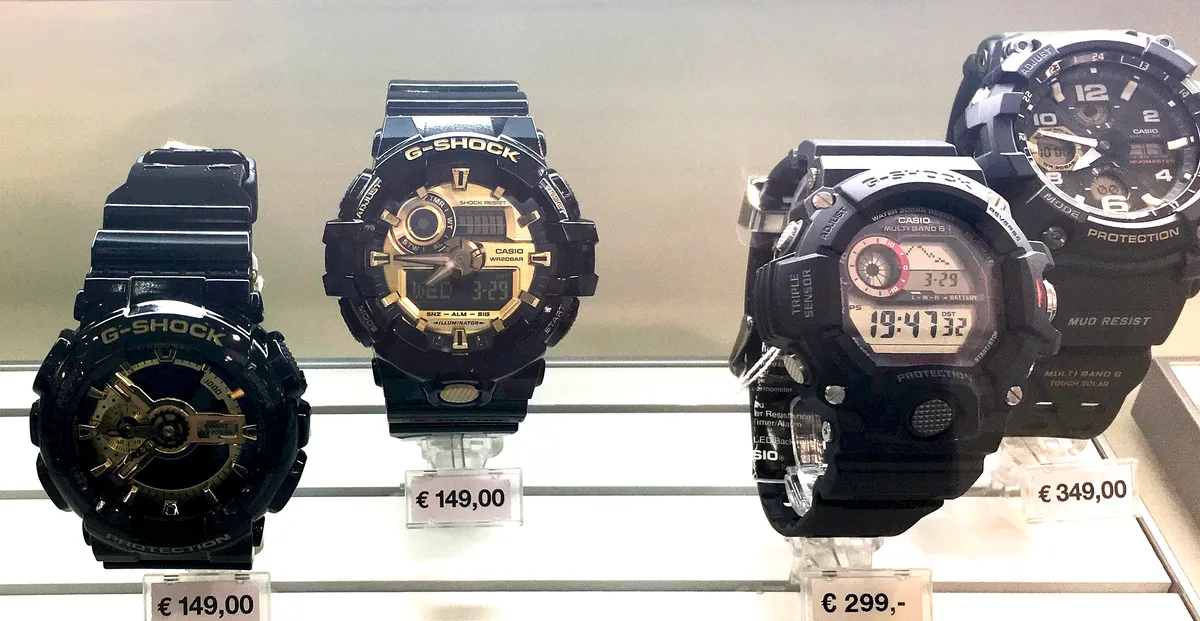
Casio also sells solar-powered variants in the same square case, like the GW-M5610 pictured above, which add radio time-sync and eliminate the battery-replacement question entirely in exchange for roughly double the price (typically $90-120). If the three-year battery swap sounds like too much maintenance, the solar version removes that one chore completely — everything else about the daily-wear experience is nearly identical. Against a modern smartwatch, the comparison is really a question of what "maintenance" means to you: a smartwatch demands a nightly charge but gives you health tracking and notifications; the DW5600 demands five minutes of attention once every three years and gives you absolutely nothing except correct time, in exchange for weighing a third as much and surviving abuse that would crack a sapphire crystal. Neither is objectively better — they're not really competing for the same wrist.
Who Should Buy This
The DW5600 makes the most sense for people who work with their hands — trades, kitchens, warehouses, labs — where a touchscreen or a delicate strap is a liability rather than a convenience, and where a cracked smartwatch screen is an expensive mistake waiting to happen. It's also a genuinely good fit for anyone who wants to reduce screen-checking habits without giving up a watch entirely, or who simply wants one less thing to plug in every night. It is not a good fit for anyone who has come to rely on wrist notifications, workout tracking, or contactless payment as part of their daily routine — those users will find the DW5600 a hard downgrade, full stop, and no amount of nostalgia changes that math.
On a smaller wrist, it's worth noting the case does run large and slightly bulky under a tight cuff or sleeve — this is not a discreet dress watch, and anyone with a slim wrist should try one on before buying rather than ordering blind. It's also worth being upfront that the stock speaker-style alarm and hourly beep are quiet enough to miss in a loud environment, a minor but real complaint after two years of occasionally sleeping through the alarm in a noisy apartment.
Verdict
Two years and change in, the Casio G-Shock DW5600 has done exactly one job — tell the time accurately and survive whatever hits it — and it has not failed at that job once. The battery lasted almost exactly as long as advertised, the shock resistance claim held up against real drops and real water, and the only genuine wear issue, brittle resin at the band's flex points, took over 20 months of daily use to show up and still hasn't caused outright failure. Its dim stock backlight, complete lack of any smart features, and eventual band brittleness are real, specific limitations, not nitpicks — but for $55 and three years between battery changes, it remains one of the simplest, most abuse-tolerant watches you can buy new today.
Other products we tested

Ecobee Smart Thermostat Premium Review: Two Months of Real HVAC Testing
We installed the Ecobee Smart Thermostat Premium without a C-wire, tracked its temperature accuracy against a separate thermometer, and measured real energy savings over two months of daily HVAC use.
Bose SoundLink Flex Review: Six Weeks of Hiking, Kayaking, and Beach Days
Six weeks of camping, kayaking, and beach trips show the Bose SoundLink Flex's IP67 rating and PositionIQ orientation sensing are genuinely useful, with honest limits on bass and max volume.
Coros Pace 3 Review: Six Weeks Testing the GPS Watch That Barely Needs Charging
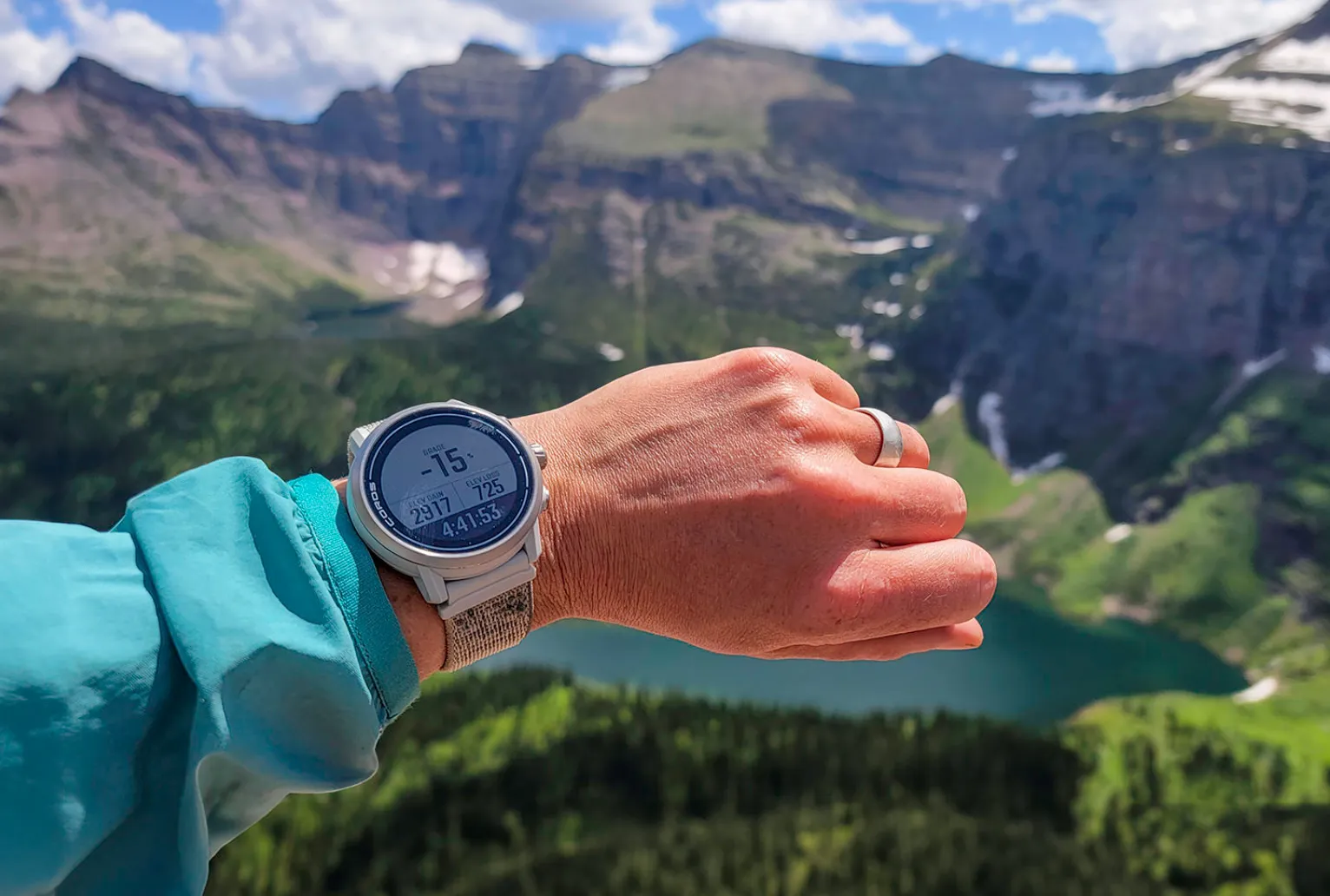
A dual-frequency GPS running watch that trades AMOLED shine for weeks of battery life at a fraction of the price of flagship rivals.