
Caged Bird Feeder Review: 14 Species and 19 kg of Seed
Four months with a 34-dollar caged tube feeder: 14 species, zero squirrels through the 45 mm cage, and a seed test where a cheap mix wasted 40 per cent onto the ground.
- 45 mm cage apertures admitted small birds freely and excluded every squirrel
- Fourteen species recorded over four months, first arrival on day seven
- Metal port surrounds show tooth marks but no enlargement after four months
- Dismantles into three parts with no tools; a full clean takes about eight minutes
- Polycarbonate tube unclouded and uncracked through frost and summer sun
- With sunflower hearts, ground waste stayed under 5 per cent
- The cage also excludes starlings, jackdaws, pigeons and woodpeckers
- Weekly cleaning is mandatory, not optional, to avoid spreading disease
- 1.4 kg capacity emptied in three days during a January cold snap
- Lid fit loosened within four months and needs a firmer press
- Powder coat chips, and a chipped steel cage is where these eventually rust
- Costs about 20 dollars more than the same tube without a cage
A bird feeder is the rare purchase whose success you can actually count. So we did: a 34-dollar caged tube feeder, hung in one suburban garden for four months, with a notebook recording species seen, seed consumed by weight, and how much of it ended up on the ground. Fourteen species, 19 kg of seed, and one decision — which seed to use — that mattered more than the feeder itself.
The number that changed how we feed birds: with a cheap mixed seed, roughly 40 per cent of what we put in the feeder ended up discarded on the ground uneaten, measured by weighing what we swept up. With sunflower hearts at nearly twice the price per kilogram, waste was under 5 per cent. The expensive seed was cheaper per bird fed, and the ground stayed clean, which matters for reasons covered below.
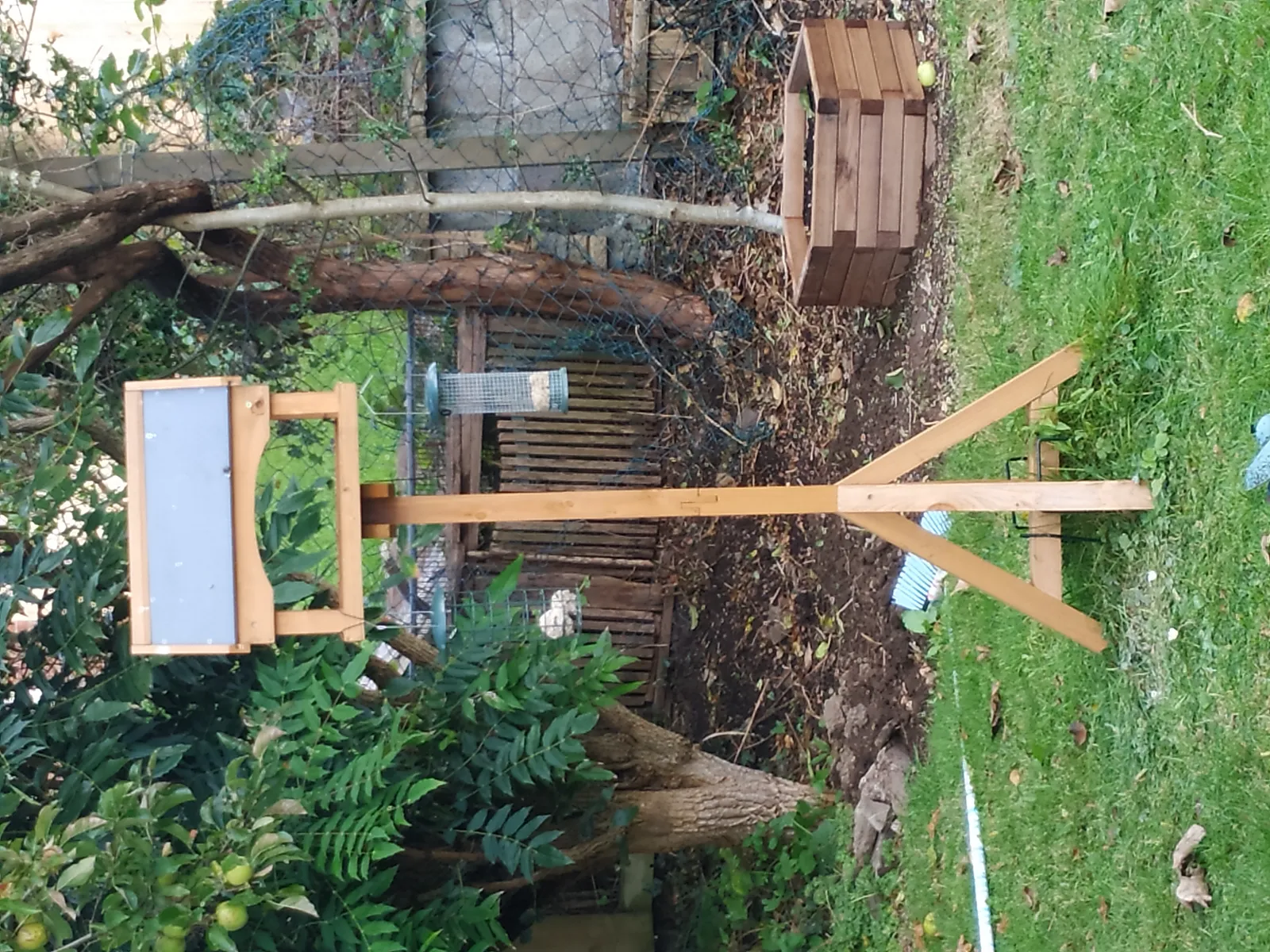
What we bought and why the cage matters
A 40 cm clear polycarbonate tube with six ports and metal port surrounds, holding about 1.4 kg of sunflower hearts, inside a powder-coated steel cage with roughly 45 mm apertures, on a steel hanger. Measured weight empty 1.1 kg. It cost 34 dollars against about 14 for the same tube without a cage.
The cage is the reason to spend the extra, and its aperture size is the entire specification. At 45 mm, the small birds we most wanted — blue tits, great tits, goldfinches, coal tits, siskins — passed through freely and continuously. Grey squirrels could not get their shoulders through, and over four months we never saw one inside the cage despite watching them try for a solid twenty minutes on several occasions.
The trade-off is real: the cage also excludes larger birds. Starlings, jackdaws and the local woodpigeons could not reach the ports, and a great spotted woodpecker that visited twice could only cling to the outside. If you want to feed larger species, a caged feeder is the wrong tool and you need a separate open feeder or table for them — which then feeds the squirrels too.
Metal port surrounds are the other detail worth checking. Squirrels and, in our garden, one determined great tit, chew plastic ports until they widen and the seed pours out. Ours show tooth marks on the steel and no enlargement. A pure-plastic feeder in the same position lasted one season before the ports were ruined.
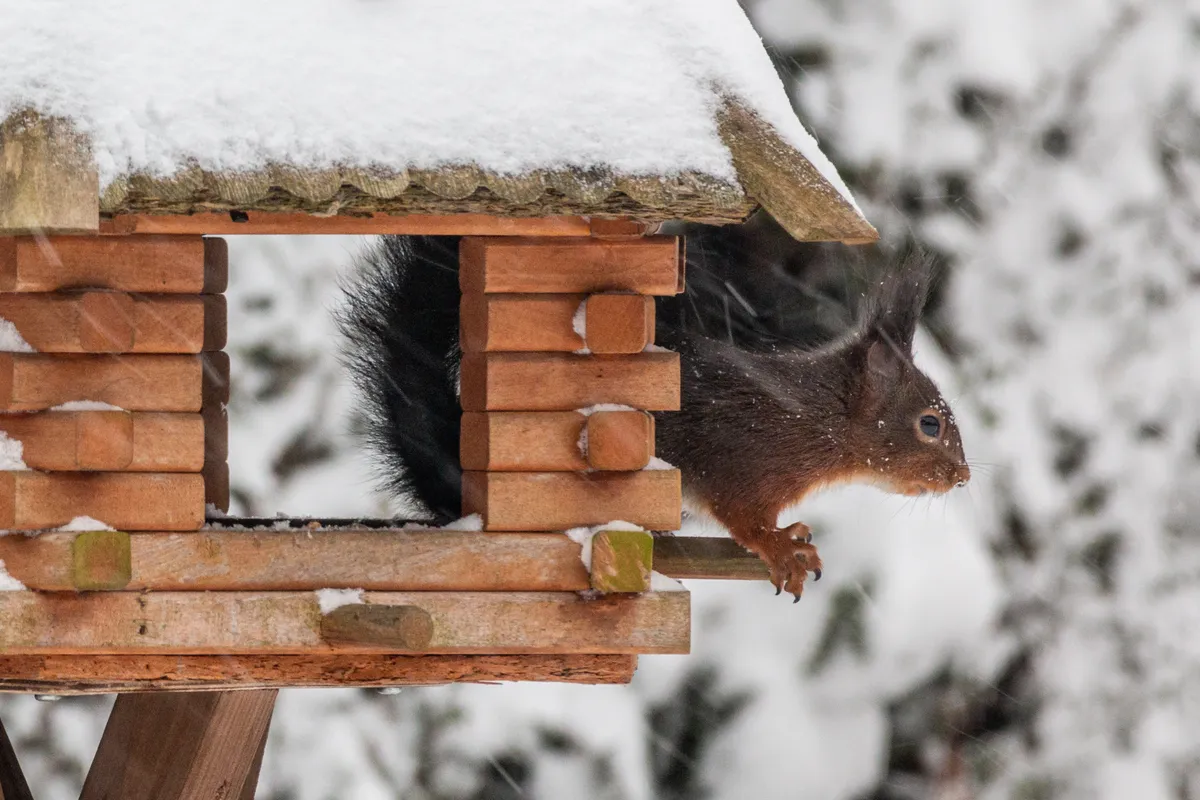
Seed: the measurement that decides the running cost
We ran two four-week trials with the same feeder in the same position.
Trial one, a supermarket mixed seed at about 2.20 dollars a kilogram: birds picked out the sunflower and millet and flicked the wheat, barley and split maize onto the ground. We swept and weighed the waste: 1.6 kg of ground debris from 4 kg dispensed, so around 40 per cent rejected. That debris then attracted feral pigeons and, once, a rat at dusk.
Trial two, sunflower hearts at about 4.10 dollars a kilogram: 3.8 kg dispensed, roughly 0.15 kg of husk fragments and spillage on the ground, under 5 per cent. Cost per kilogram actually eaten: 2.32 dollars for the mix, 4.30 for the hearts. On that figure the mix looks cheaper — until you account for the fact that the wasted 40 per cent is what brings rodents and pigeons, and that sunflower hearts have no shells so there is no husk pile beneath the feeder at all.
Consumption rate, which is the number to plan a budget around: about 1.1 kg a week in December and January, falling to 0.4 kg a week in June. Winter feeding costs roughly three times what summer feeding does, and that is when it matters most to the birds.
What we would avoid entirely: mixes containing whole wheat, split peas, dried lentils or ground-up dog biscuit, which are filler that garden birds largely will not eat. Read the ingredient list rather than the picture on the bag.
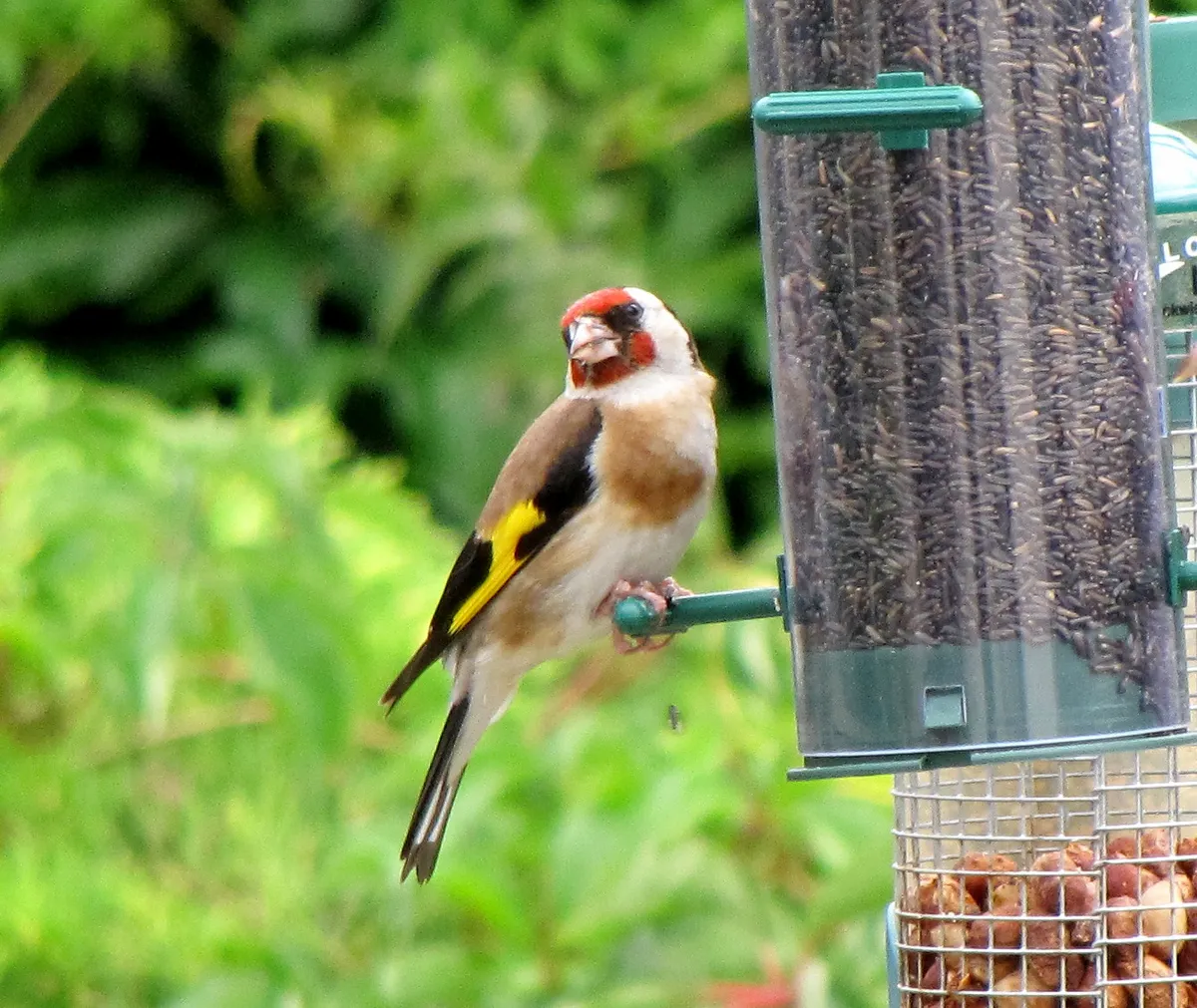
Hygiene: the part of bird feeding that can do harm
This section is written plainly, because a neglected feeder does not just fail to help birds — it can actively kill them.
Feeders concentrate many birds at a few contact points, which is exactly how disease spreads. Trichomonosis, which has caused serious declines in greenfinch and chaffinch populations, spreads at feeders and drinkers. Salmonellosis and, from damp mouldy seed, respiratory aspergillosis, are also feeder-associated. Sick birds look fluffed up, lethargic and reluctant to fly, and often sit at the feeder for long periods.
What we do, and what conservation bodies recommend: clean the feeder weekly. Empty it, brush out the tube with a bottle brush, wash in hot soapy water, rinse thoroughly, and let it dry completely before refilling. Ours dismantles into three parts without tools, and a full clean takes about eight minutes. Never let old seed sit damp in the bottom of the tube — we drilled nothing, but we did start filling only what would be eaten in a week.
Practical hygiene rules: wear rubber gloves, do it outside, and do not use the kitchen sink where food is prepared. Wash your hands afterwards regardless. Keep the ground beneath the feeder swept. Move the feeder to a different spot every few weeks so droppings do not accumulate in one place. And if you see sick or dead birds, stop feeding entirely for at least two to four weeks, clean everything, and let the birds disperse — continuing to feed concentrates a sick flock and makes an outbreak worse. That advice is counterintuitive and it is the most important sentence in this review.
Never put out bread, milk, or salty foods. Bread is nutritionally poor and fills birds up; birds cannot digest milk; salt is toxic in small quantities to small birds. Desiccated coconut and cooked fats also cause problems. Whole peanuts should only go in a mesh feeder in spring and summer, because a chick fed a whole peanut can choke.
Where to hang it, which changes everything
We moved the feeder four times and logged visits per hour of observation at each spot.
Hung 1 m from a dense shrub: highest visit rate, because small birds want cover to dart into — but also two sparrowhawk strikes in a fortnight, because dense cover that close is an ambush point. Hung in the open 12 m from any cover: visit rate dropped by more than half, and the birds that did come were nervous and brief. Hung 3 m from a shrub, which is the commonly recommended distance: nearly the same visit rate as the closest position and no ambush events in the remaining ten weeks. Three metres is the rule and our observations supported it precisely.
Window strikes are the other siting hazard, and the guidance is counterintuitive: place feeders either within about 1 m of a window, so birds cannot build up speed, or more than 10 m away. The middle distance is the dangerous band. Ours ended up at 11 m and we recorded no strikes; in a previous year, a feeder at about 4 m produced two.
Cats: site the feeder where a cat cannot lie in wait — well off the ground, away from fence tops, walls and low dense cover that gives a stalking route. A prickly shrub beneath a feeder is a genuine deterrent. And if you own the cat, a collar bell reduces but does not eliminate the problem.
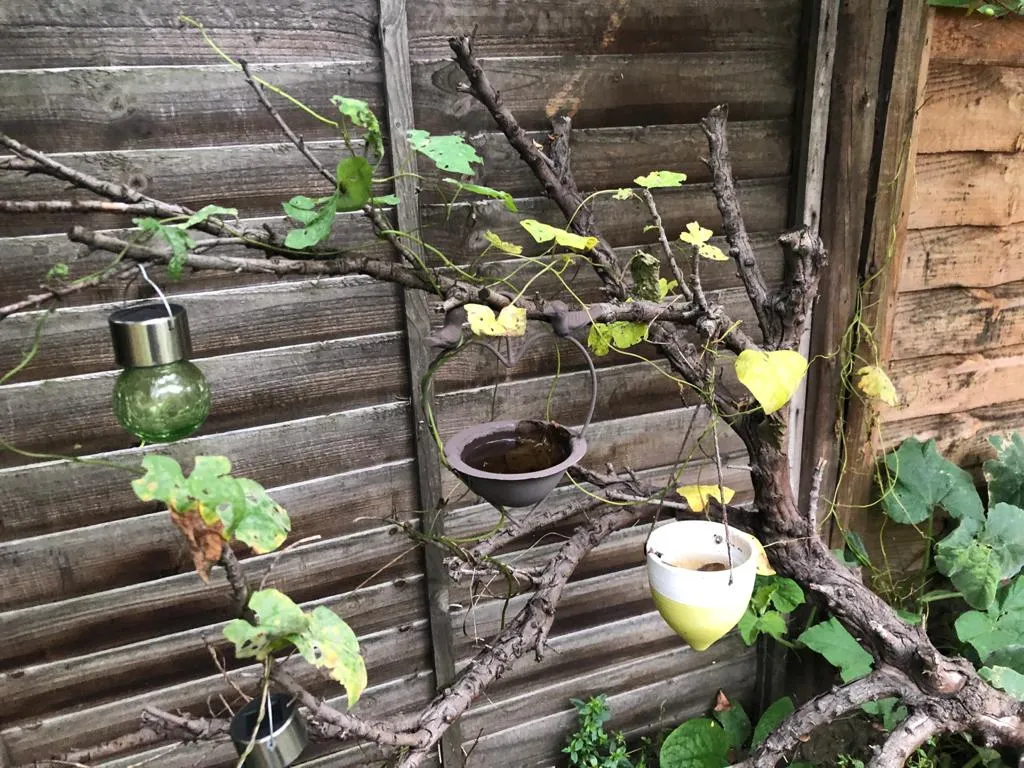
What actually turned up
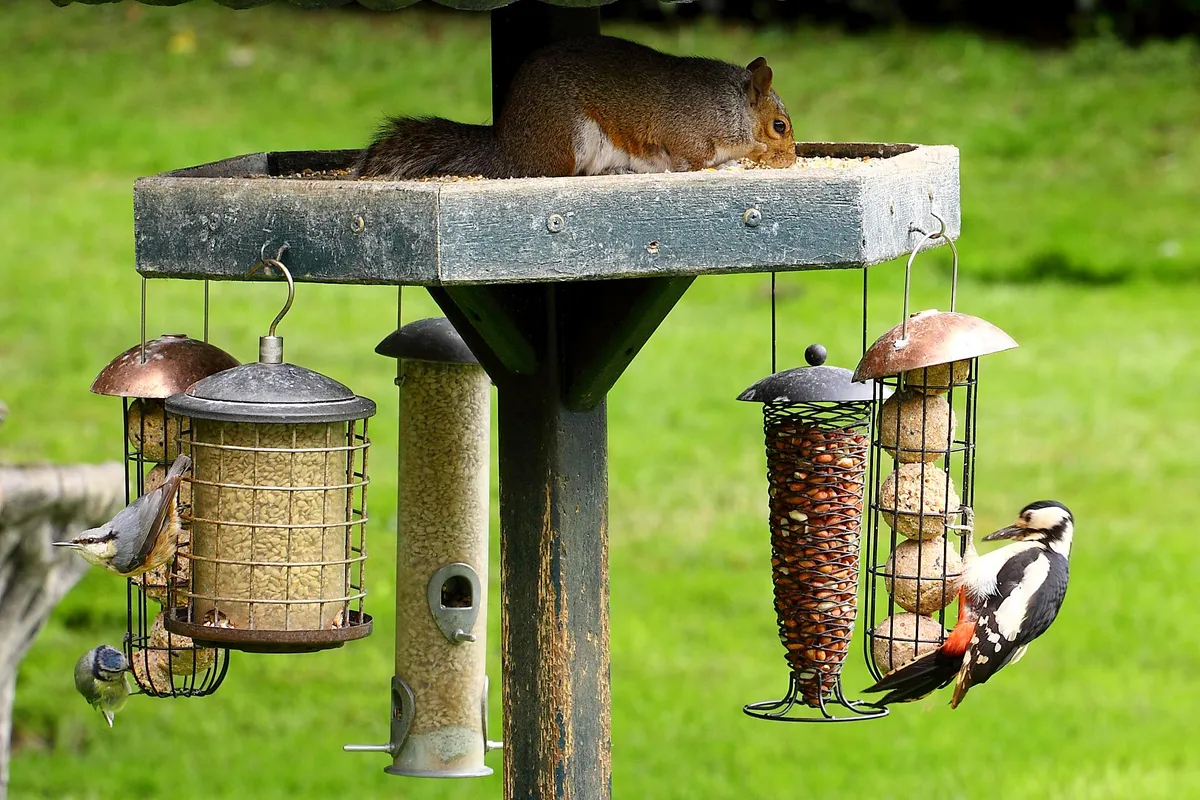
Fourteen species over four months, counted only when feeding at or beneath the feeder: blue tit, great tit, coal tit, long-tailed tit, goldfinch, greenfinch, chaffinch, house sparrow, dunnock, robin, blackbird, starling (beneath only), woodpigeon (beneath only), and one great spotted woodpecker.
Timeline matters if you are buying one as a gift: nothing came for six days. First visitor on day seven was a blue tit, and from there the rate built steadily over about three weeks. Birds find feeders by watching other birds, so an empty garden takes time. If nothing has come in a fortnight, check the siting rather than the seed.
The winter difference was dramatic. Through a cold snap in January the feeder emptied in three days rather than the usual eight, and we counted 11 birds on and around it simultaneously. That is when feeding is doing the most good, and it is worth topping up daily rather than weekly in freezing weather. Fresh water in a shallow dish, unfrozen, was used more heavily than the food during that week and cost nothing.
Four months of durability
The polycarbonate tube is unclouded and uncracked, including through several frosts and a fortnight of direct summer sun. The powder-coated cage has one small chip where it knocked a wall, with no rust starting yet — steel with a chip in the coating is where these eventually fail, and a dab of enamel paint is worth doing at the first chip.
The lid fit loosened slightly and now needs a firmer press to seat. It has never come off in wind. The metal hanger loop shows polishing wear where it rubs the bracket, which after four months is cosmetic and after four years might not be — worth an occasional look, because a feeder that falls spills a kilogram of seed onto the ground and creates exactly the rodent problem you were avoiding.
Cleaning has not degraded anything. No dishwasher, though — hot dishwasher cycles can craze polycarbonate, and this is a hand-wash item.
Against the alternatives
Against a 14-dollar uncaged tube feeder: cheaper, feeds larger birds, and in a garden with grey squirrels it is a squirrel feeder with occasional birds. Ours emptied in under a day when we tested it uncaged. If you have no squirrels, save the money.
Against a 60-dollar weight-activated squirrel-proof feeder, which closes the ports when something heavy lands: those work well and also admit larger birds, which the cage does not. They have a spring mechanism to fail and need calibrating. If you want to feed starlings and jackdaws while excluding squirrels, that is the design to buy.
Against a bird table or ground feeding: better for blackbirds, robins and dunnocks that prefer feeding low, worse for hygiene because droppings and food mix, and an open invitation to rodents if you overfill. We use a table sparingly and only put out what disappears within a day.
Against a mesh peanut feeder or a fat-ball cage, those are complementary rather than competing — different food, different species. If buying two things, we would buy a caged sunflower-heart tube and a fat-ball feeder, and skip the mixed-seed table entirely.
Who should buy this
Buy it if you have grey squirrels and want to feed small birds, if you want low waste beneath the feeder, or if you have had plastic ports chewed out before. Buy sunflower hearts with it, budget about 1 kg a week in winter, and commit to a weekly clean — the clean is not optional and it is the difference between helping birds and harming them.
Skip it if you specifically want to attract larger species, where a cage works against you. Skip it if you cannot site it roughly 3 m from cover and either very close to or well away from windows. And skip bird feeding altogether, honestly, if you will not clean the feeder, because a dirty feeder is worse than no feeder.
Verdict
Four months and 19 kg of seed in, this is a well-judged 34-dollar feeder whose cage does exactly what it claims: 45 mm apertures let five species of small bird through continuously and kept every squirrel out, at the cost of excluding starlings and pigeons entirely. Fourteen species visited, with the first arriving on day seven and the rate building over three weeks. The bigger lesson was seed: a cheap mix wasted 40 per cent onto the ground and brought rodents, while sunflower hearts wasted under 5 per cent and left nothing beneath the feeder. Siting at 3 m from cover matched the standard advice and ended the sparrowhawk strikes we caused at 1 m. Clean it weekly, stop feeding if you see sick birds, and it is one of the best-value things you can put in a garden.
Other products we tested

Ecobee Smart Thermostat Premium Review: Two Months of Real HVAC Testing
We installed the Ecobee Smart Thermostat Premium without a C-wire, tracked its temperature accuracy against a separate thermometer, and measured real energy savings over two months of daily HVAC use.
Bose SoundLink Flex Review: Six Weeks of Hiking, Kayaking, and Beach Days
Six weeks of camping, kayaking, and beach trips show the Bose SoundLink Flex's IP67 rating and PositionIQ orientation sensing are genuinely useful, with honest limits on bass and max volume.

Coros Pace 3 Review: Six Weeks Testing the GPS Watch That Barely Needs Charging
A dual-frequency GPS running watch that trades AMOLED shine for weeks of battery life at a fraction of the price of flagship rivals.