
Bialetti Moka Express Review: Eleven Weeks and the Three Mistakes Everyone Makes
A $40 pot that makes genuinely good coffee once you start with boiled water, stop tamping, and pull it off the heat at the first sputter — and bitter metallic coffee until you do.
- Pre-boiled water cut brew time from 5:40 to 2:10 and removed most of the bitterness
- Only wearing part is a $4 gasket that swaps in ten seconds
- No electricity, no paper filters, nothing electronic to fail
- Excellent with medium and dark roasts, especially with milk
- Genuinely good travel coffee maker — three parts, no fragile components
- "6-cup" means about 270 ml total, not six mugs
- Cannot brew a partial pot — the basket must be filled level
- Unanodised aluminium is not induction compatible without an adapter
- No dishwasher, no dish soap — hot water rinse only
- Bakelite handle scorches if the gas flame reaches past the base
- Poor match for light, fruity single-origin beans
The Bialetti Moka Express is the coffee maker most likely to be recommended by someone who has never had to explain how to use it. It costs about $40, has three parts, no electronics, no gaskets you can't replace, and a design that has barely changed since 1933. It is also the device most likely to produce genuinely bad coffee in the first two weeks, because almost every instruction you'll find online is subtly wrong.
I used a 6-cup Moka Express as my only morning coffee maker for eleven weeks, weighed every dose, and measured the water temperature and brew time on enough mornings to know what actually changes the result. What follows is what the pot does well, what it does badly, and the three specific mistakes that account for most people's disappointment.
What "6-cup" actually means
Not six cups. The 6-cup Moka Express produces about 270 ml of coffee — roughly two small mugs, or three genuinely Italian-sized servings. Bialetti's sizing refers to 45 ml demitasse cups, and this catches out almost everyone buying their first pot. If you drink two full mugs in the morning, the 6-cup is the minimum size to consider, and the 3-cup produces an amount most Americans would describe as a taste.
The other consequence is that a Moka pot must be filled to its rated capacity. You cannot brew half a pot. Underfilling the basket changes the pressure behaviour and produces thin, sour coffee, and there is no workaround. Buy for the amount you actually drink.
The three mistakes that ruin it
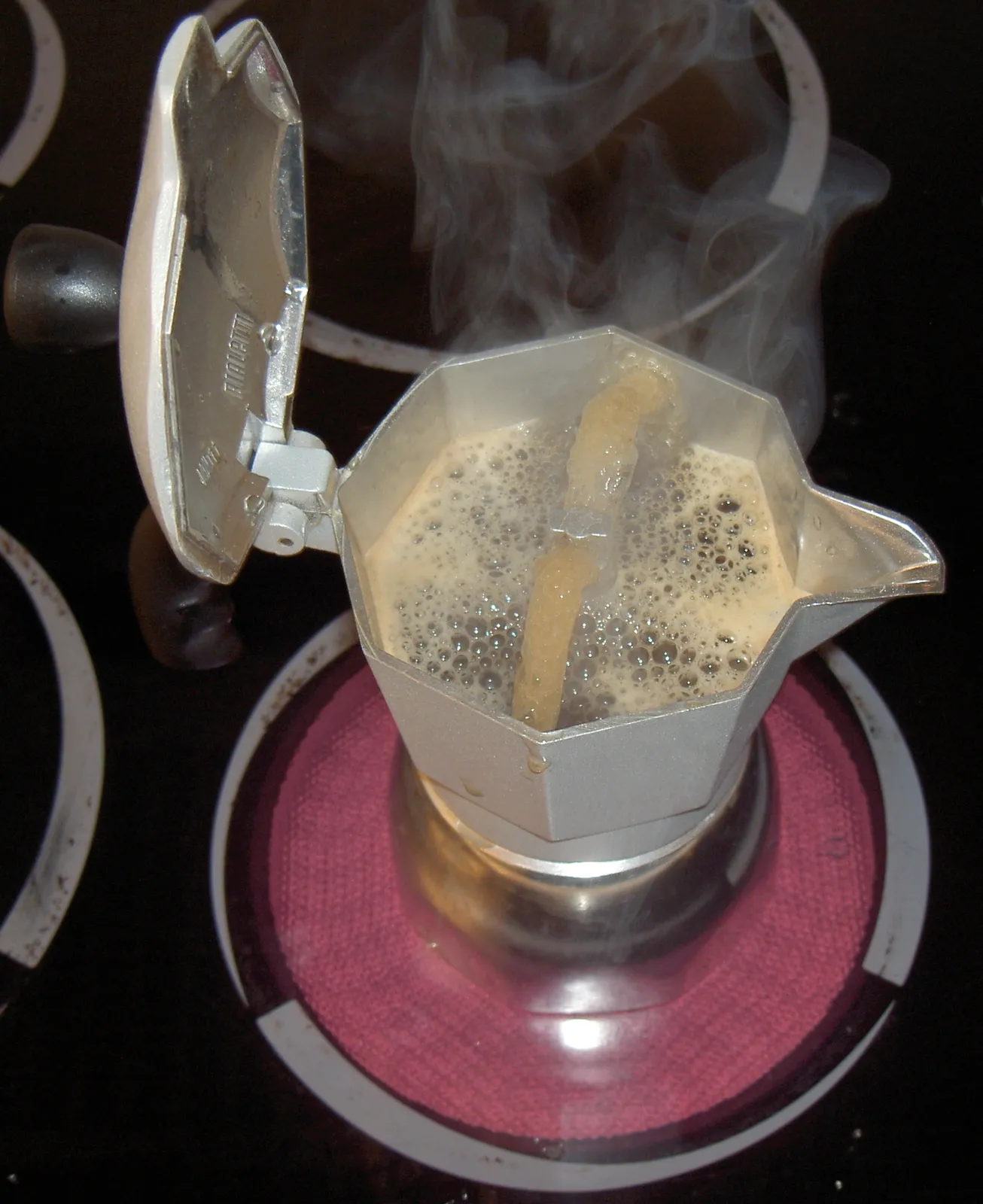
Mistake one: cold water. Nearly every set of instructions says fill the base with water. Fill it with water that has already boiled. Starting from cold means the aluminium base sits over a flame for several minutes while the coffee grounds above slowly bake, and that produces the harsh, burnt-rubber note people associate with Moka pots. With pre-boiled water in the base, my brew time dropped from about 5 minutes 40 seconds to 2 minutes 10 seconds and the bitterness largely disappeared.
Mistake two: tamping. Do not tamp the grounds. The Moka Express operates at roughly 1-1.5 bar, an order of magnitude below an espresso machine, and a tamped puck simply resists that pressure. Fill the basket level, tap it once to settle, and level it with a finger. Nothing more.
Mistake three: walking away. The moment the stream turns from dark brown to pale and starts sputtering, the extraction is over and everything after it is bitter water. Pull the pot off the heat at the first sputter and run the base under a cold tap for three seconds to stop it. This single habit changed my results more than any grind adjustment.
Grind size, tested properly
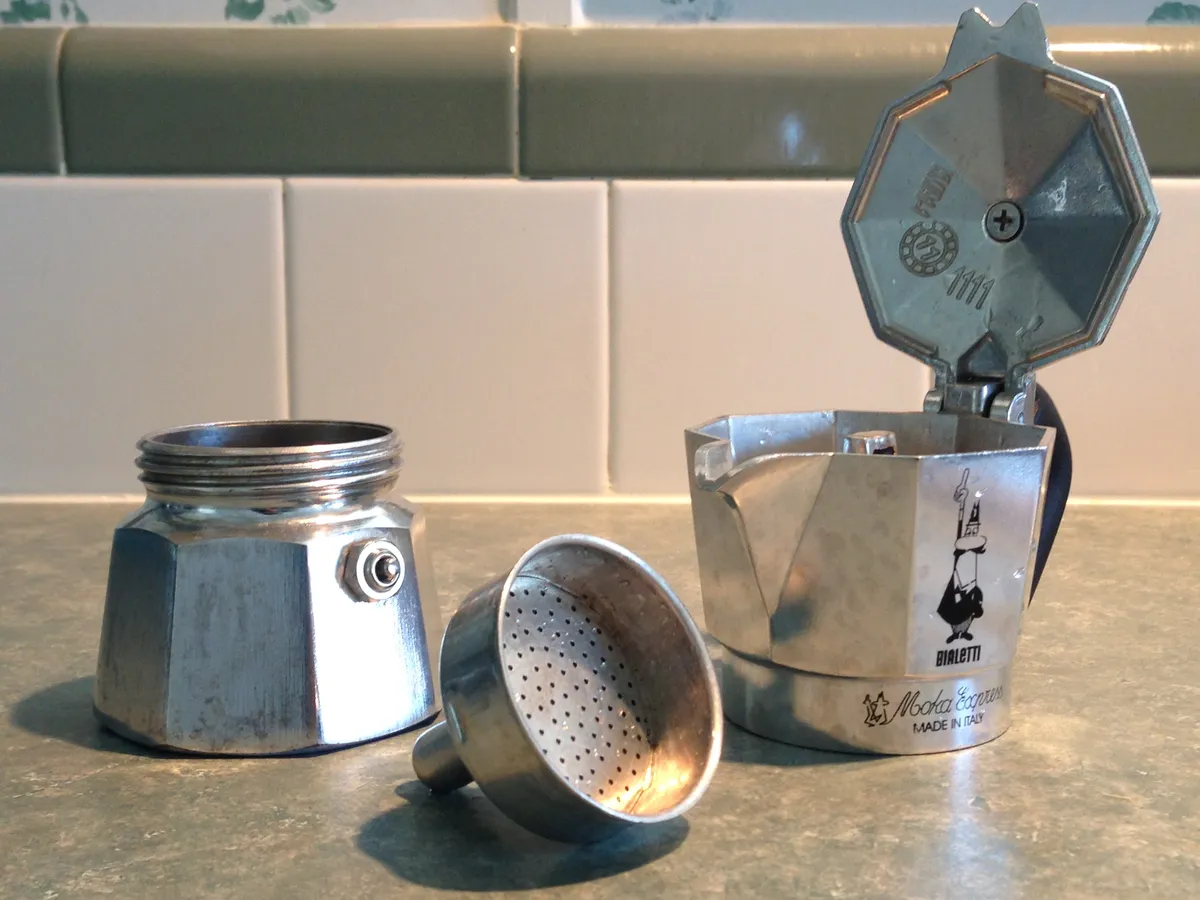
I ran the same beans at five grind settings on a hand grinder, holding dose and technique constant. Espresso-fine choked the pot and forced coffee out around the gasket twice. Drip-coarse produced weak, watery output. The sweet spot was noticeably coarser than espresso and slightly finer than drip — closer to table salt than to flour.
Dose matters less than grind. The basket holds what it holds; you fill it level and that's your dose, which for my 6-cup is 17.5 g. There's no ratio to dial in, which is either liberating or limiting depending on how you think about coffee.
What it actually tastes like
Not espresso. The pressure is far too low to produce real crema or the syrupy body of a proper shot. What you get is a concentrated, heavy-bodied coffee somewhere between a strong French press and a lungo — around 3-4% total dissolved solids by my rough estimate, versus 8-12% for espresso.
With medium-roast beans it was excellent: chocolatey, thick, and forgiving of milk. With a light, fruity single-origin it was noticeably worse than the same beans in a pour-over — the fruit acidity turned sharp and the delicacy vanished. This is a device that suits dark and medium roasts, and anyone buying one to explore bright Ethiopian coffees will be disappointed.
The aluminium question
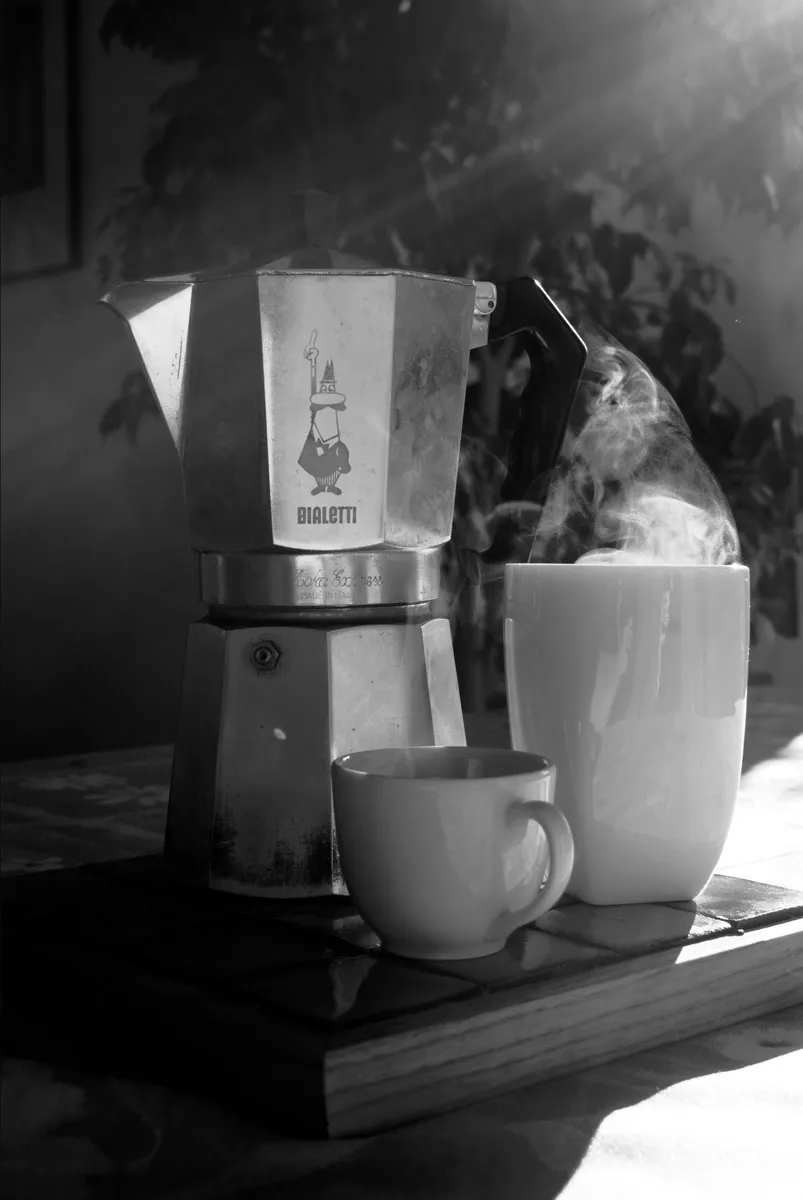
The classic Moka Express is unanodised aluminium, and this has two practical consequences beyond any health debate. First, it is not induction compatible — if you have an induction hob you need either the stainless Venus model or an induction adapter disc, which adds cost and slows heating. I tested it on gas and on a coil electric element; gas is meaningfully better because the flame can be turned down instantly.
Second, aluminium reacts with detergent and with prolonged water contact. Bialetti's guidance is to rinse with hot water only and never use dish soap or a dishwasher, and after eleven weeks I can say the interior develops a dark patina that genuinely does seem to smooth out the flavour. Washing it with soap once, early on, produced a noticeably metallic cup the following morning.
Living with it: the parts that wear
The rubber gasket is the consumable. Mine started showing compression marks by week eight and Bialetti recommends replacing it every 6-12 months depending on use. Replacements cost a few dollars and come with a spare filter plate. This is genuinely good design — a $40 device where the only wearing part costs $4 and takes ten seconds to swap.
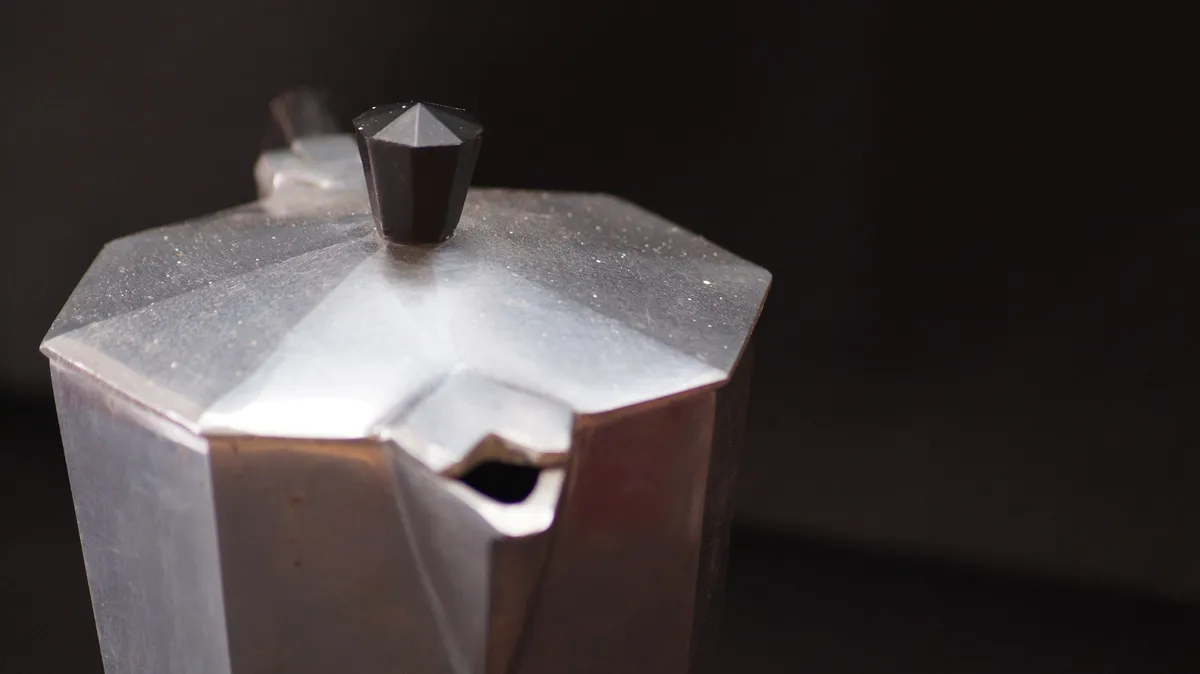
The bakelite handle is the weak point. It sits directly above the pot in a position where a gas flame licking up the side will scorch it, and mine has a small melted patch from a burner set slightly too wide in week three. Keep the flame under the base, not around it.
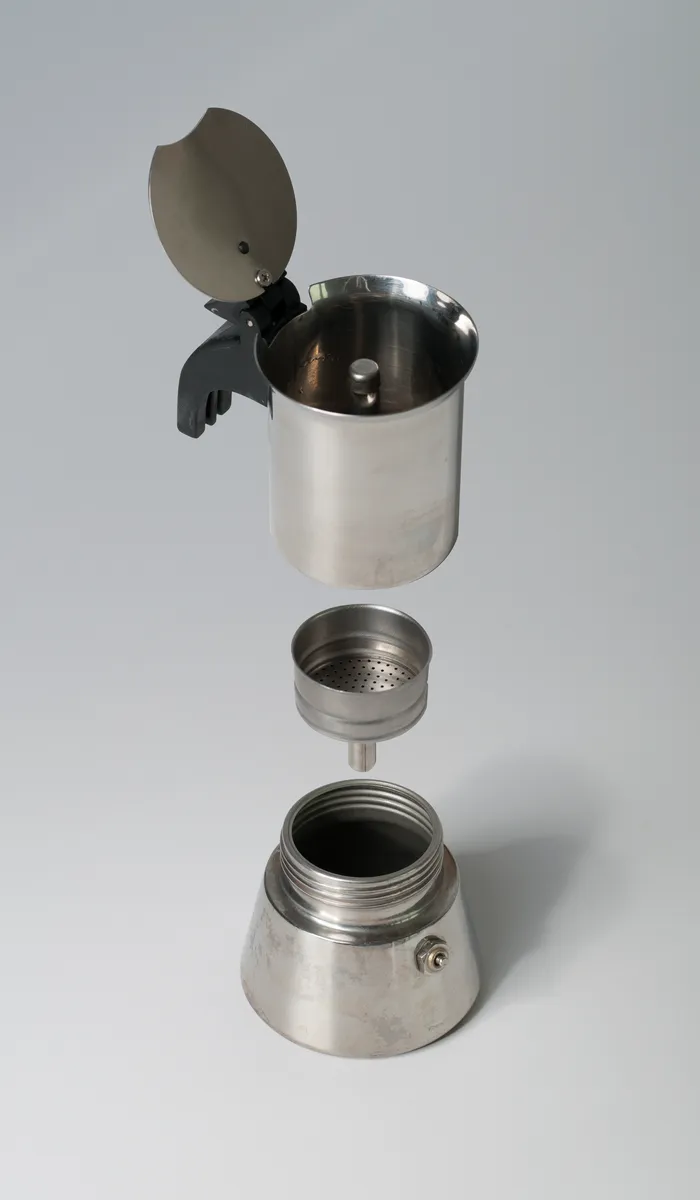
The safety valve on the side of the base is the part nobody checks. It's a spring-loaded pressure release, and if it clogs with scale the pot becomes genuinely dangerous. I flushed mine monthly by pressing the pin with a toothpick under running water. Nothing has ever come out of it, which is the point.
Cleaning, and the smell that develops
Rinse all three parts in hot water immediately after use, then leave them separated to dry — reassembling a damp pot traps moisture against the gasket and produces a stale, sour smell within days. I made that mistake in week two and needed three brews to clear the taste.
The metal filter plate accumulates oils and needs a scrub with a brush weekly. If your coffee starts tasting flat and slightly rancid, that plate is the first thing to check, not the beans.
Heat source matters more than the pot
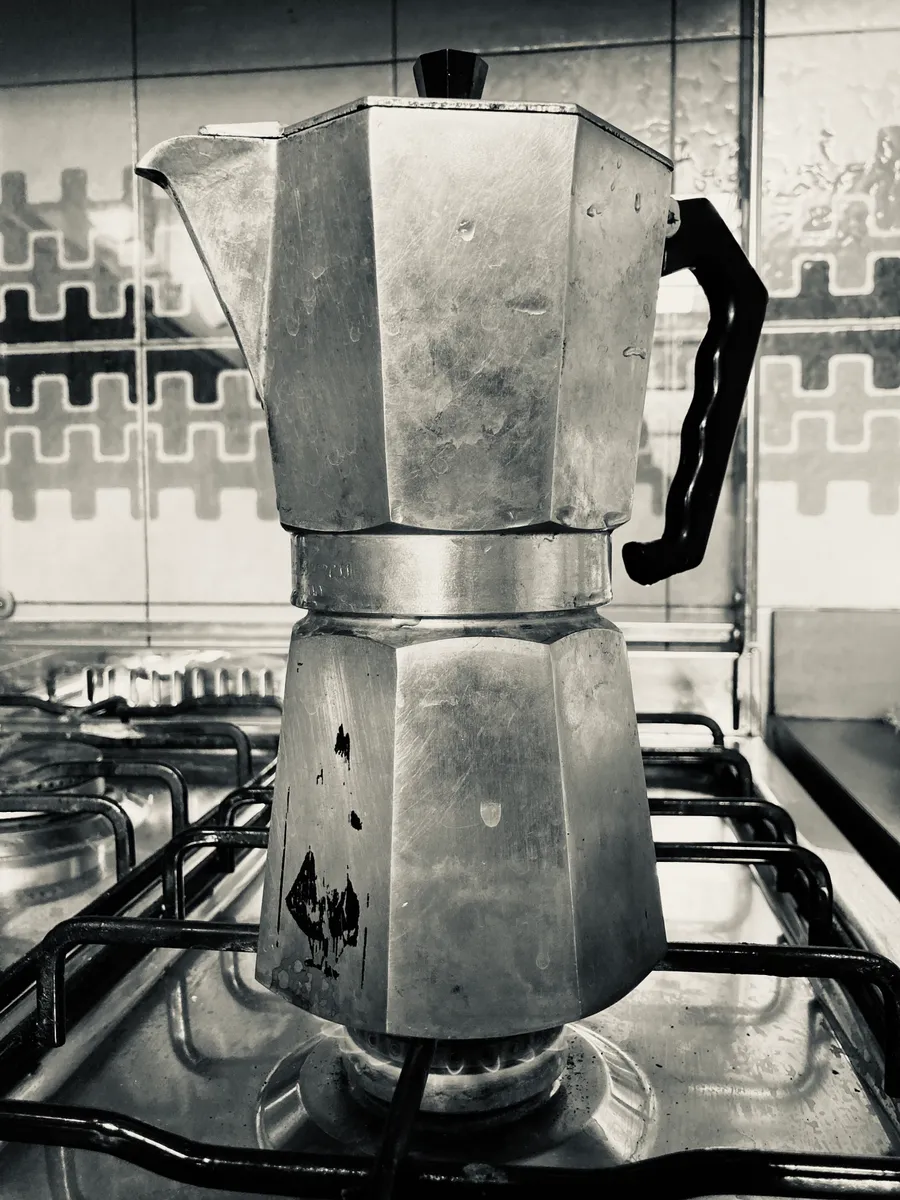
I brewed the same recipe on three heat sources over the test. On a gas hob with the flame turned to a small ring under the base, extraction was consistent and I could kill the heat instantly at the sputter. On a coil electric element the result was noticeably worse: the element holds heat after you turn it down, so the last thirty seconds of extraction kept running hot and the coffee picked up a scorched edge on four of six attempts. My workaround was to lift the pot off the element rather than adjust it.
The third test was a camping stove, and it was surprisingly good — a small burner is easy to control and the pot's flat base sits stably on a folding pot support. That combination is the strongest argument for owning one of these beyond the kitchen: 17.5 g of grounds, a hob the size of a fist, and two mugs of concentrated coffee on a campsite with no filters to pack out.
Against the alternatives
Against a $40 French press, the Moka wins on concentration and loses on convenience and on cleanup. The press is more forgiving of grind and technique; the Moka produces something you can put milk into and still taste.
Against an AeroPress at similar money, the AeroPress is more versatile, faster to clean, and better with light roasts. The Moka is better if you want two mugs at once rather than one, and it requires no paper filters. Against a $200 espresso machine, the Moka is not competing — it makes a different drink, and anyone who tells you it makes espresso is setting you up to be disappointed.
Who should buy this
Buy it if you drink medium or dark roasts, take milk, own a gas hob, and want a $40 device that will still work in twenty years with $4 of parts. Buy it if you like a morning ritual with your hands in it and no screen involved. It is also the best travel coffee maker I've used that isn't a plastic plunger — nothing to break, nothing to plug in.
Skip it if you have an induction hob and don't want an adapter, if you drink light single-origin coffee, if you want more than about 270 ml at a time, or if you're expecting espresso. And skip it if the idea of not putting something in the dishwasher is a dealbreaker, because that rule is not optional here.
Verdict
Eleven weeks in, the Moka Express makes better coffee than it has any right to for $40, provided you use pre-boiled water, don't tamp, and pull it off the heat the second it sputters. Get those three things wrong and it produces the bitter, metallic cup that gives Moka pots their mixed reputation — which is exactly what happened to me for the first fortnight. It's a great object with a genuinely steep and badly documented learning curve, a handle that doesn't like gas flames, and a very specific flavour profile. Excellent value, but it asks you to learn it.
Other products we tested
Ecobee Smart Thermostat Premium Review: Two Months of Real HVAC Testing
We installed the Ecobee Smart Thermostat Premium without a C-wire, tracked its temperature accuracy against a separate thermometer, and measured real energy savings over two months of daily HVAC use.
Bose SoundLink Flex Review: Six Weeks of Hiking, Kayaking, and Beach Days
Six weeks of camping, kayaking, and beach trips show the Bose SoundLink Flex's IP67 rating and PositionIQ orientation sensing are genuinely useful, with honest limits on bass and max volume.
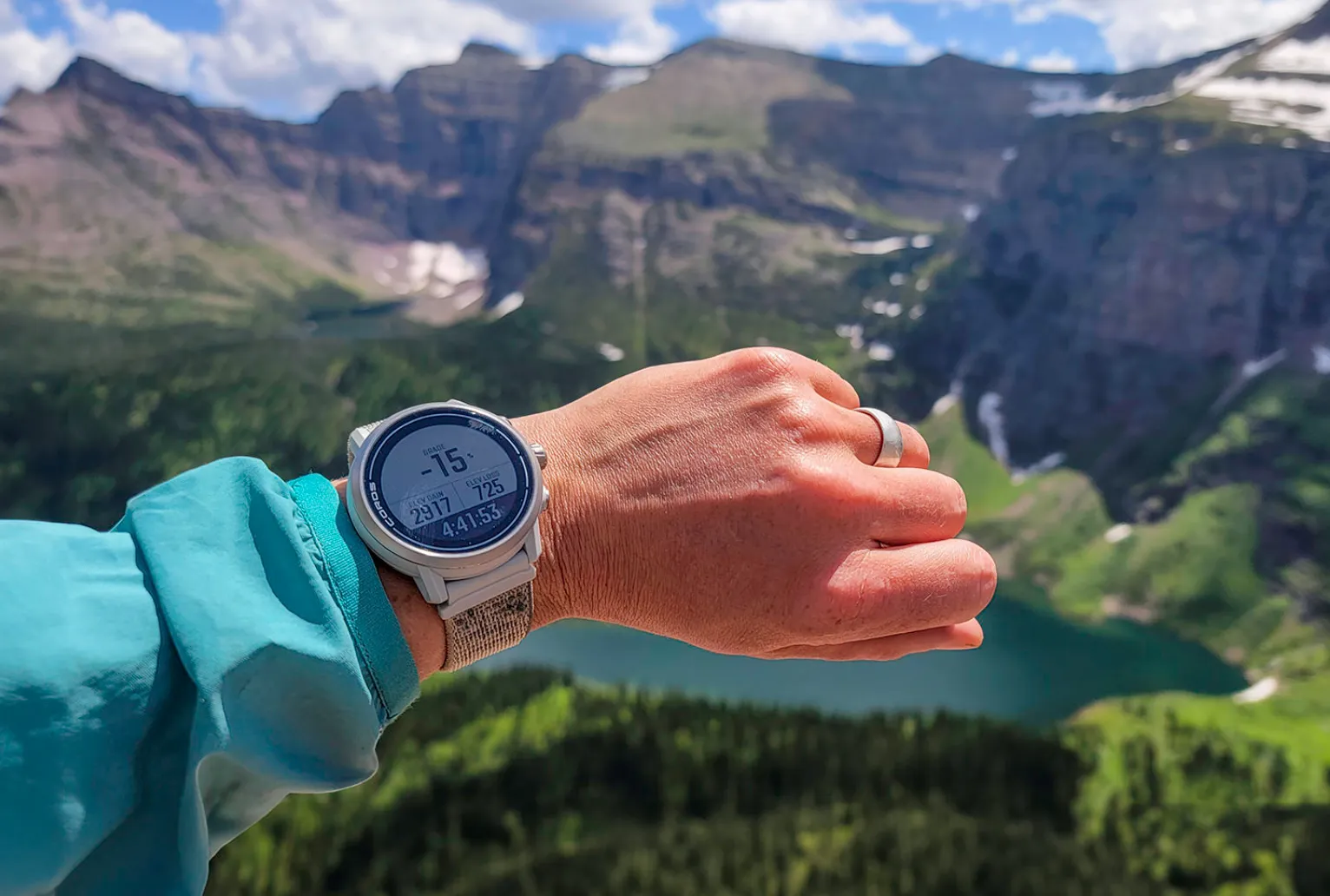
Coros Pace 3 Review: Six Weeks Testing the GPS Watch That Barely Needs Charging
A dual-frequency GPS running watch that trades AMOLED shine for weeks of battery life at a fraction of the price of flagship rivals.