
Bee's Wrap Reusable Food Wrap Review: Three Months Replacing Plastic Wrap
We used Bee's Wrap's beeswax-coated cotton 3-pack as our main plastic wrap replacement for three months, and it earned a permanent spot for cheese, bread, and produce while making clear where it simply can't compete with a sealed container.
- Keeps cheese and bread noticeably fresher than plastic wrap
- Molds to bowls and odd shapes using only hand warmth, no fasteners needed
- Compostable cotton-and-beeswax construction cuts real single-use plastic waste
- Assorted 3-pack sizes cover snacks, bowls, and full loaves of bread
- Genuinely replaces most everyday plastic-wrap use for dry-to-moderate foods
- Simple to fold flat and reuse hundreds of times before needing attention
- Cannot be safely used with raw meat or poultry
- Fails on very wet, saucy, or liquid-heavy leftovers
- Hand-wash in cool water only; hot water or a dishwasher ruins the wax coating
- Tackiness fades gradually over 2-6 months and eventually needs re-waxing
- Higher upfront cost than a roll of plastic wrap
- Takes practice to get a reliably tight seal, especially with cold hands
Our kitchen's plastic wrap roll used to get torn through in a week, mostly for covering half an onion, wrapping a block of cheese, or capping a bowl of leftovers before it went in the fridge, and every one of those pieces went straight in the trash after a single use. That's the specific habit we set out to break by switching to Bee's Wrap, the beeswax-coated cotton wraps sold in an assorted 3-pack of small, medium, and large sheets. Unlike a sealed silicone bag or a rigid container, a beeswax wrap doesn't lock anything in a chamber; it's a piece of cloth that clings to itself and to a bowl's rim using nothing but the warmth of your hands, and we wanted to know whether that low-tech mechanism actually holds up over months of real kitchen use, not just a first-week honeymoon period.
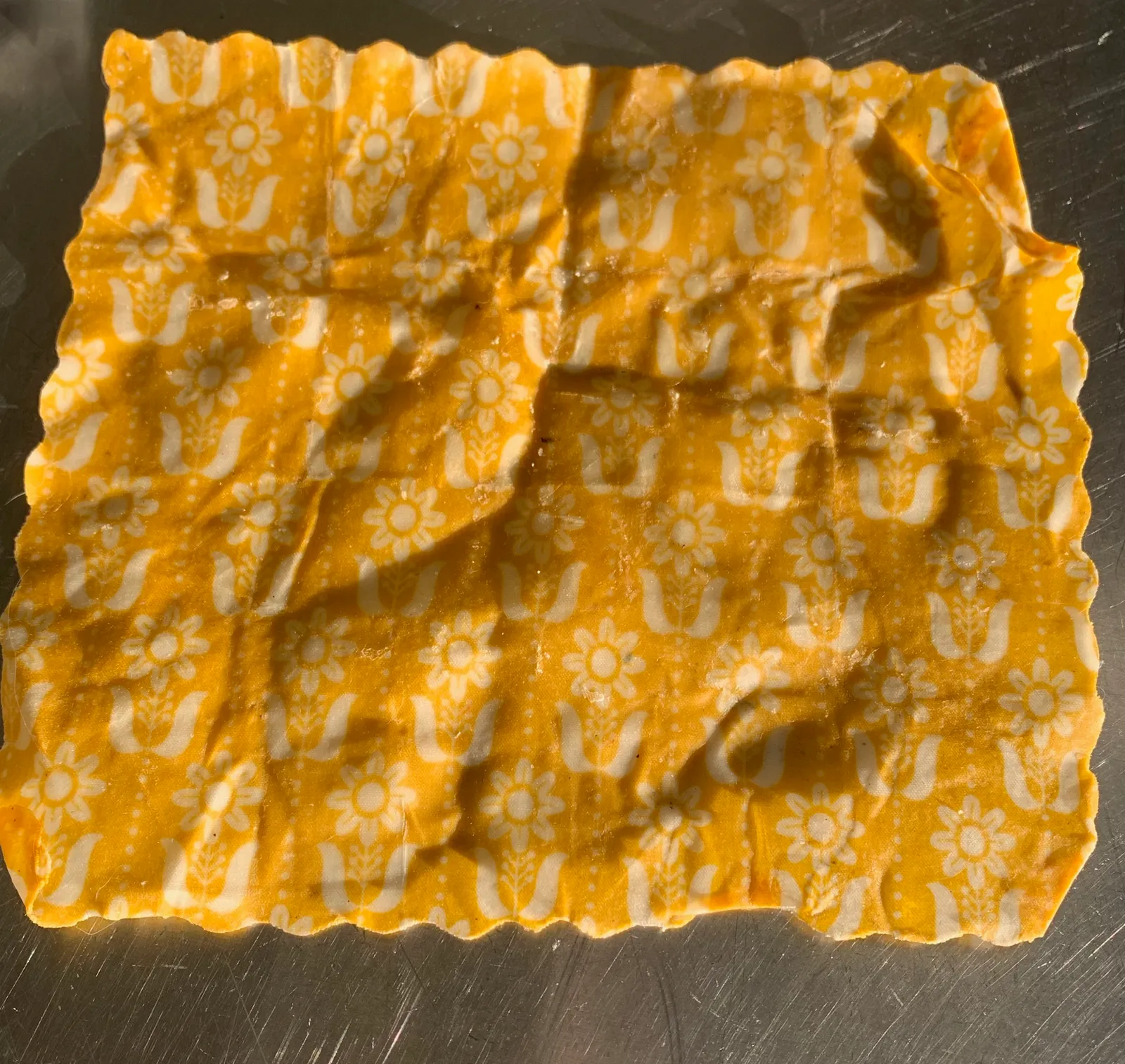
What's actually in the pack
The assorted 3-pack ships with one small square roughly the size of a salad plate, a medium rectangle big enough to cover a standard mixing bowl, and a large sheet sized for wrapping a loaf of bread or a big block of cheese. Each sheet is organic cotton muslin infused with a blend of beeswax, jojoba oil, and tree resin, which is what gives it both the stiffness to hold a folded shape and the tackiness that lets it seal to itself without any tape, clip, or zipper track. Straight out of the packaging the sheets feel stiffer than a normal dish towel, almost like a thin sheet of cardboard that's been dipped in wax, and they carry a faint honey-and-resin smell that's noticeable for the first few uses and fades with washing.
There's no plastic liner, no separate lid, and no seal mechanism to learn, which is the first real point of contrast with something like a silicone storage bag: a beeswax wrap doesn't create an airtight compartment at all. It's closer to a reusable piece of parchment paper that becomes moldable with a bit of hand pressure, which sounds like a limitation on paper but turned out to define exactly what it's good at and what it isn't over the following weeks.
First impressions: the cling test
The core trick to a beeswax wrap is pressing it against itself or against a bowl's rim with the warmth and pressure of your palms; the beeswax softens slightly from body heat and the edges stick together well enough to hold a seal without any extra fastener. Our first attempt wrapping half a cut avocado was clumsy, we used too little pressure and the wrap sprang back open within an hour, but by the third or fourth attempt we'd learned to run a thumb firmly along every edge and corner rather than just pressing the center, and after that the seals held reliably. Cold hands make this noticeably harder; on a cold morning the wax stays stiffer and takes longer to soften, so we started keeping a mug of coffee nearby less for drinking and more for warming fingers before wrapping something that needed a tight seal.
Covering a bowl works differently than wrapping a discrete item, and it's arguably the wrap's best trick: drape the medium or large sheet over the bowl's opening, then press the edges down around the rim the way you'd smooth a fitted sheet corner, and the wax grips the ceramic or glass surface enough to stay put even when the bowl is tilted or bumped in a crowded fridge. It won't survive being turned fully upside down, but for the ordinary case of leftover rice or half a cut melon sitting upright on a shelf, it held every time we tried it over three months of testing.
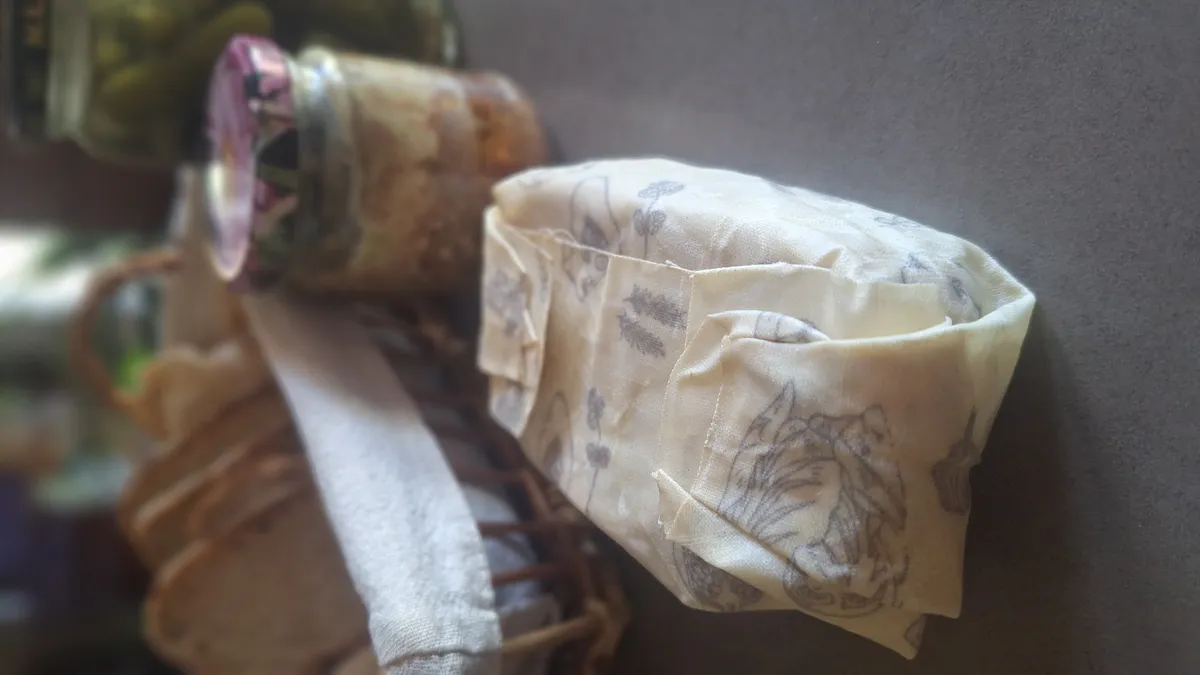
Three months of daily use: what it's genuinely good for
Cheese was the single best use case we found, by a wide margin. A block of cheddar or a wedge of parmesan wrapped in the medium sheet stayed fresher, noticeably less dried-out at the cut edge, than the same cheese left in its original plastic film after we'd cut into it, likely because the wrap is breathable rather than fully sealed, letting the cheese release a little moisture instead of sweating inside an airtight pocket. Bread was the second strong use: a wrapped baguette or half a boule kept its crust from going rubbery for an extra day or two compared with a plastic bag, again because the fabric isn't airtight and lets some moisture escape rather than condensing back onto the crust.
Produce with a cut face, half an onion, half a lemon, a wedge of cabbage, worked well for two to three days in the fridge, and wrapping a whole avocado pit-in or a bunch of herbs loosely rolled in the small sheet kept them noticeably fresher than leaving them bare on a shelf. Sandwiches and snacks for lunch bags were the other reliable win: the wrap folds around a sandwich, seals along the overlapping edge, and survives a backpack better than we expected, unwrapping cleanly at lunchtime and folding right back over any uneaten half.
Where it clearly falls short
Raw meat and poultry are explicitly a no; the wax coating isn't rated for direct contact with raw protein, both from a food-safety perspective around cross-contamination on a surface you can't run through a dishwasher, and practically because the wax picks up and holds onto meat smell in a way that's hard to fully wash out. We tested this once with a small cut of raw chicken out of curiosity and regretted it; the wrap needed several hand-washes with dish soap before the smell was gone, and we retired that particular sheet to non-food utility wrapping afterward rather than trust it again with food.
Very wet or saucy leftovers are the other clear miss. A bowl of soup, a container of pasta swimming in marinara, or anything with loose liquid will find the one place the wrap isn't fully sealed and either drip out over time or soak straight through the fabric, soften the wax, and lose its shape. We ruined one attempt at covering a bowl of leftover curry this way, coming back an hour later to find the wrap had gone limp at the point where sauce had pooled against it and slid halfway off the bowl. For anything with real liquid content, a lidded container or a silicone bag is simply the better tool, and no amount of technique fixes that; it's a structural limitation of a wrap that clings rather than seals.
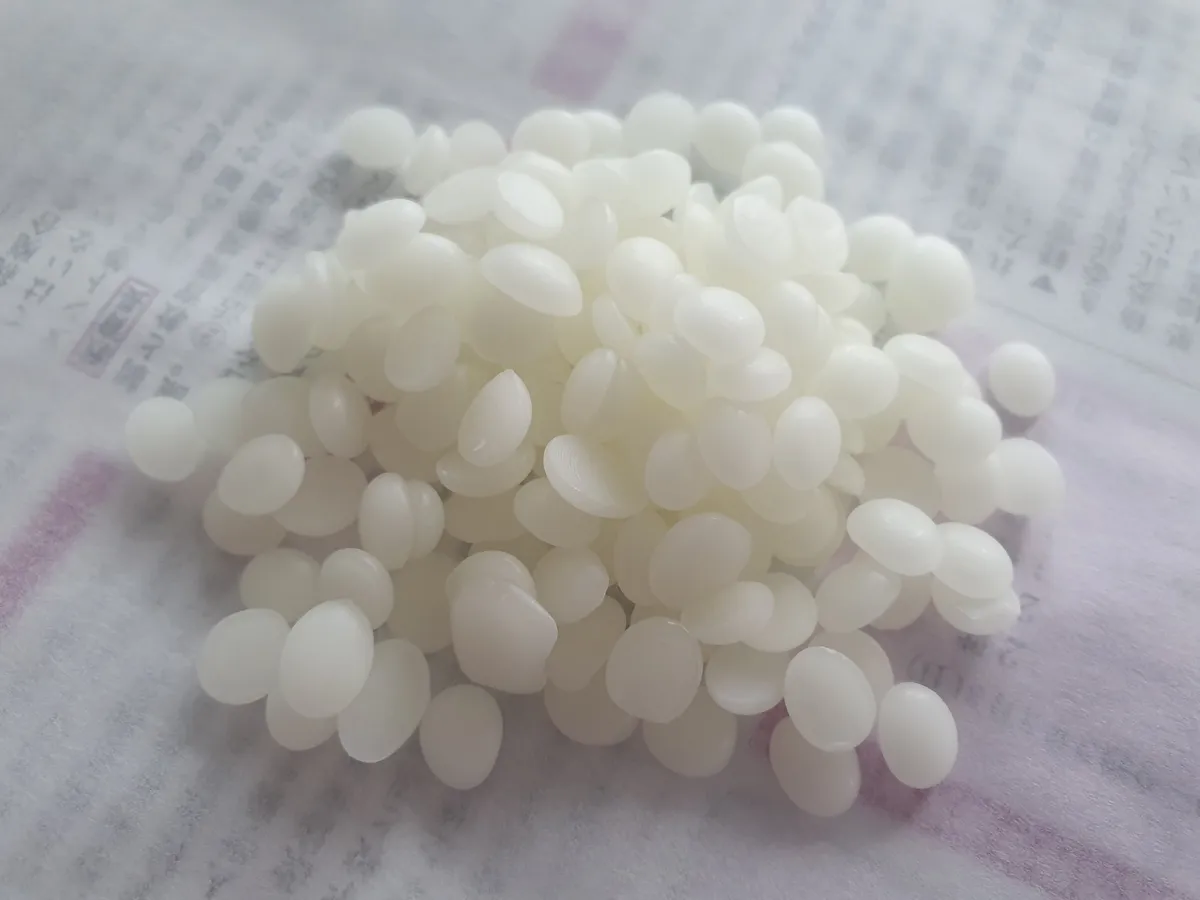
Care, washing, and what actually happens to the wax over time
Care instructions are strict and matter more than they first appear: cold or lukewarm water only, a mild dish soap, and a soft sponge, then air-dry fully before folding or stacking. Hot water and the dishwasher are both hard no's, since heat above roughly body temperature melts the wax coating off the cotton entirely; we confirmed this by accident early on when a housemate tossed one of our test sheets into a load of hot-water dishes, and it came out with visible bare cotton patches where the wax had liquefied and rinsed away, never recovering its cling in those spots. After that we hand-washed exclusively in cool water and hung the sheets to dry over a drying rack, which took about twenty extra seconds per wash and became routine quickly.
Even with careful cool-water washing, the coating does wear down gradually. By roughly the two-month mark, the medium and large sheets we used most often for daily sandwiches and bowl-covering had noticeably less tack than when new; folds that used to snap shut with light pressure needed a firmer press and sometimes a few extra seconds of hand warmth to hold. Bee's Wrap and most beeswax-wrap makers sell a standalone refresher bar of the same wax blend for re-coating a tired sheet at home with a warm iron or a low oven, and we did this once around week ten on our most-used medium sheet; it restored most of the original tack, though not quite to the crispness of a fresh-out-of-the-package sheet. Realistically, expect a wrap used daily to need re-waxing somewhere between two and six months depending on how hot your hands run and how often it's washed, and expect to eventually retire and compost a sheet once the cotton itself starts fraying at the corners, which for our heaviest-use piece happened around the four-month mark.
Smell, staining, and the honest cosmetic picture
The honey-resin smell is strongest in the first two weeks and mostly a non-issue after that, fading with each wash to the point where by month two we couldn't detect it on the wraps at all unless we held one right up to our nose. Staining is a real but minor cosmetic issue: turmeric, beet, and tomato-heavy foods left faint tinting on two of our three sheets that a cool-water wash didn't fully lift, similar to what you'd expect from a cloth napkin used for the same foods. It never affected function, the wraps sealed and clung the same regardless of staining, but anyone expecting the sheets to stay showroom-white through months of real food contact should recalibrate that expectation immediately.
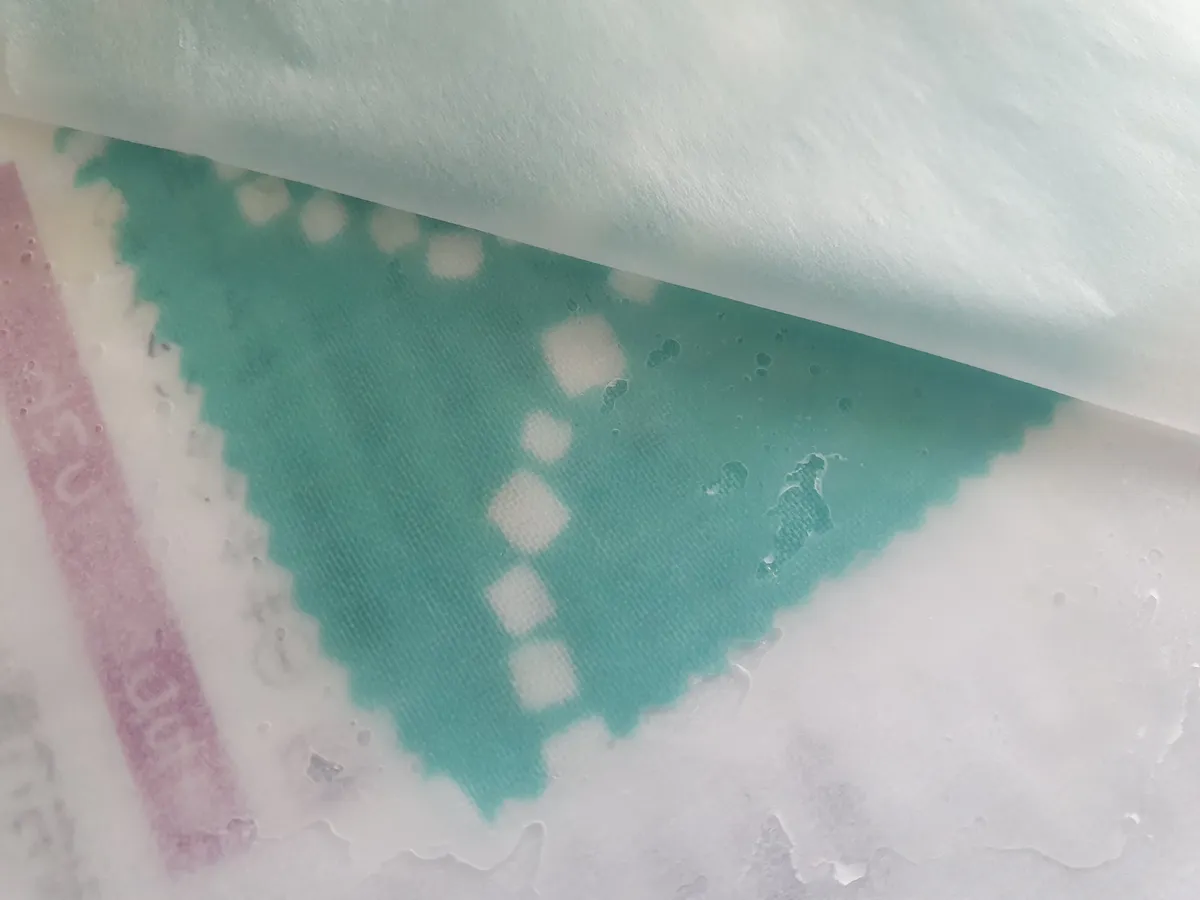
How it stacks up against a silicone bag and against plastic wrap
The obvious point of comparison in a plastic-free kitchen is a reusable silicone bag, and the two products solve genuinely different problems rather than competing head-on. A silicone bag seals liquid-tight, survives the freezer and the dishwasher, and works for marinating or freezing in a way a beeswax wrap structurally cannot. What a beeswax wrap does that a silicone bag doesn't is mold itself around an irregular shape, half an onion, an oddly cut wedge of cheese, using nothing but hand pressure, with zero learning curve around a pinch-seal mechanism and zero risk of a bag not lying flat in a crowded fridge shelf. We ended up using both for different jobs rather than picking a winner: silicone bags for the freezer and for anything wet, beeswax wrap for the fridge-and-counter jobs that only last a day or two and don't involve liquid.
Against actual plastic cling wrap, the product it's most directly meant to replace, the honest comparison favors Bee's Wrap on almost every axis except pure convenience and upfront cost. Plastic wrap is cheaper per use in isolation, requires no washing, and clings to any surface with static rather than needing warm hands, but it's single-use, tears easily, and a full roll disappears within a few weeks in an active kitchen, meaning the ongoing cost of continually rebuying it adds up over a year in a way that's easy to underestimate. A 3-pack of Bee's Wrap costs more than a roll of plastic wrap on day one, but it replaced most of our plastic-wrap use entirely for the better part of a season before the sheets needed re-waxing, which is a trade most people cutting down on kitchen plastic will find worth making even with the higher sticker price and the extra thirty seconds of hand-washing per use.
Who should actually buy this
This is a strong fit for anyone who regularly deals with cheese, bread, cut produce, or packed sandwiches and wants to cut down on single-use plastic wrap without taking on the learning curve or upfront commitment of switching an entire kitchen to rigid containers or silicone bags. It's a poor fit for anyone whose fridge is mostly saucy leftovers or raw meat prep, since neither of those use cases plays to the wrap's strengths, and a poor fit for anyone unwilling to hand-wash in cool water only, since a single trip through hot water or a dishwasher can ruin a sheet permanently. For a household that's already composting food scraps and trying to cut plastic waste room by room, this earns a permanent spot in the kitchen drawer rather than becoming a novelty that gets used twice and forgotten.
The verdict
After three months of daily use across cheese, bread, produce, and packed lunches, Bee's Wrap did exactly what a piece of moldable, hand-warmed cloth can reasonably be expected to do: it kept dry-to-moderately-moist foods fresher than plastic wrap, sealed onto bowls without any hardware, and composted-in-spirit rather than added to a landfill after each use. The real caveats are structural rather than incidental: it cannot handle raw meat or genuinely wet leftovers, it needs strict cool-water hand-washing, and the tack fades gradually enough that a heavy-use sheet will need re-waxing or replacing well before a rigid container or silicone bag would show similar wear. None of that makes it a bad product, it makes it a specific tool for a specific set of kitchen jobs, and for cheese, bread, cut produce, and lunch-packing, it's a genuine, lasting replacement for a roll of plastic wrap that we haven't gone back to buying since we started this test.
Other products we tested

Ecobee Smart Thermostat Premium Review: Two Months of Real HVAC Testing
We installed the Ecobee Smart Thermostat Premium without a C-wire, tracked its temperature accuracy against a separate thermometer, and measured real energy savings over two months of daily HVAC use.
Bose SoundLink Flex Review: Six Weeks of Hiking, Kayaking, and Beach Days
Six weeks of camping, kayaking, and beach trips show the Bose SoundLink Flex's IP67 rating and PositionIQ orientation sensing are genuinely useful, with honest limits on bass and max volume.

Coros Pace 3 Review: Six Weeks Testing the GPS Watch That Barely Needs Charging
A dual-frequency GPS running watch that trades AMOLED shine for weeks of battery life at a fraction of the price of flagship rivals.