
AstroAI Portable Tire Inflator Review: Four Months of Trunk Duty
A four-month test of AstroAI's digital tire inflator, including an accuracy check against a shop gauge and a real roadside slow-leak emergency.
- Digital gauge read within 1 PSI of a calibrated shop reference gauge
- Auto-shutoff at a programmed target pressure removes guesswork
- Handled a real roadside slow leak in about four minutes
- Built-in LED work light genuinely useful for nighttime roadside use
- Supports PSI, BAR, KPA, and KG/CM2 units with a memory preset
- Requires the car's 12V outlet running; no battery-only option on this model
- Noticeably slower than a shop or gas station air compressor
- Gets warm during extended continuous use past 10-15 minutes
- Too underpowered for regularly airing up large or fully flat tires
- Heavier than expected for a device marketed as compact
Every driver eventually has the same slow-motion realization: a dashboard tire pressure warning light comes on during a cold morning, or worse, a tire goes visibly soft in a parking lot with nowhere nearby to get air. The AstroAI portable tire inflator is the kind of unglamorous purchase nobody wants to think about until the exact moment they desperately need it, so we bought one, threw it in a trunk, and used it deliberately over four months — for routine seasonal pressure top-offs, one genuine slow-leak emergency, and a side-by-side test against a gas station air pump — to see whether it earns its spot as permanent trunk gear.
AstroAI sells several inflator models at different price points and feature levels; we tested the mid-range digital model with a built-in pressure gauge, digital display, and auto-shutoff, which appears to be the company's most popular configuration based on how consistently it shows up in searches and comparison articles. It plugs into a car's 12V accessory outlet rather than running on an internal battery, which is a meaningful design decision worth understanding before you buy, since it shapes how and where you can actually use the thing.
First impressions and build quality
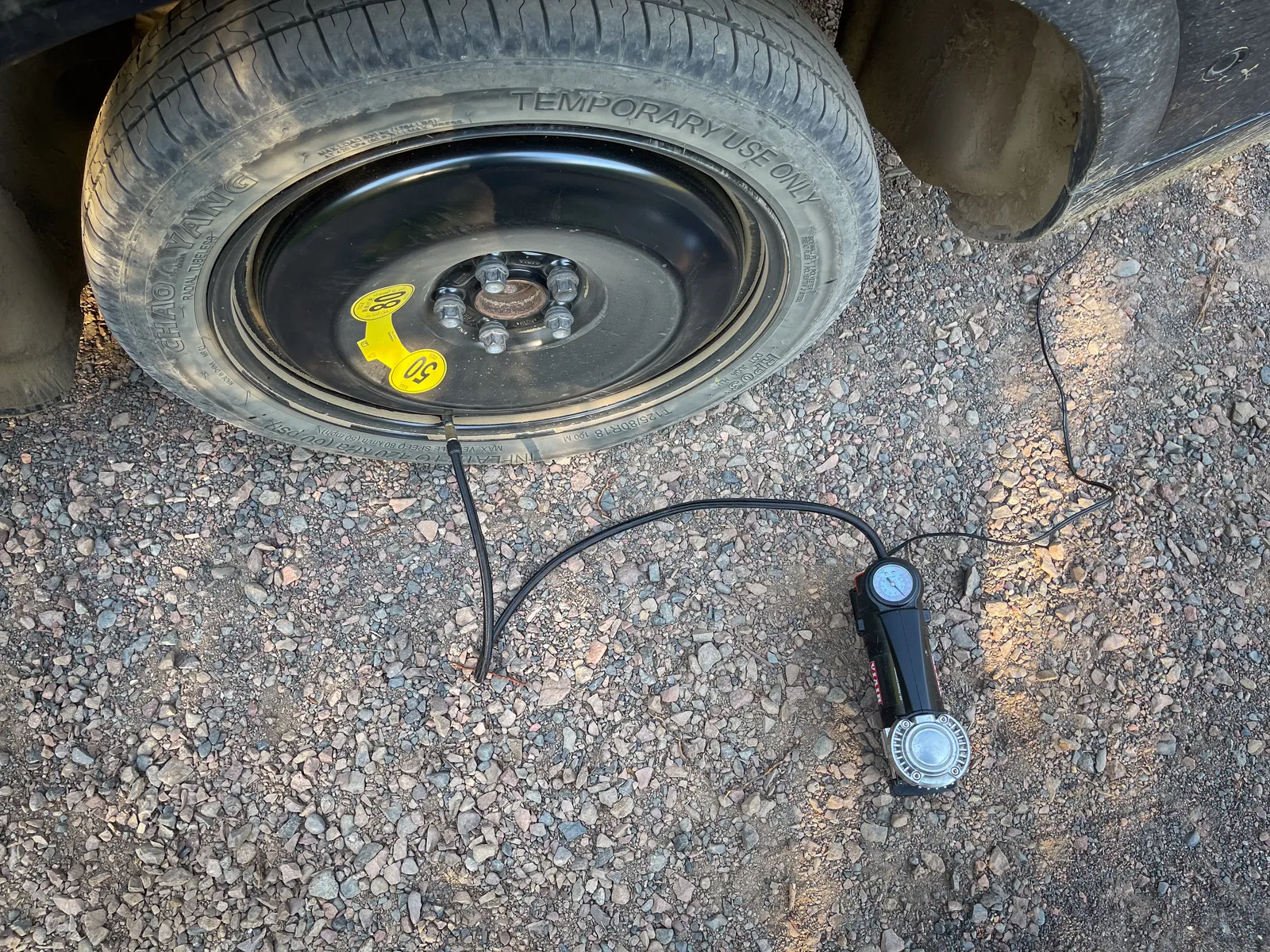
Out of the box the unit is a dense little brick of a machine, heavier than we expected for something marketed as portable, with a coiled air hose, a cigarette-lighter power cord, a small LED work light, and a digital display showing current pressure in your choice of PSI, BAR, KPA, or KG/CM². The housing is hard plastic with a rubberized carry handle, and the whole thing feels built to be thrown around in a trunk rather than treated delicately, which is exactly the right design philosophy for a tool that lives in a place full of jumper cables and ice scrapers.
Setup is genuinely simple: plug the power cord into the 12V outlet, screw the air chuck onto the tire valve, set your target pressure on the digital display using the plus/minus buttons, and press start. The compressor runs until it hits the target pressure and then auto-shuts off, which removes the guesswork and overinflation risk that comes with older analog inflators you have to babysit and switch off manually.
Accuracy testing against a shop gauge
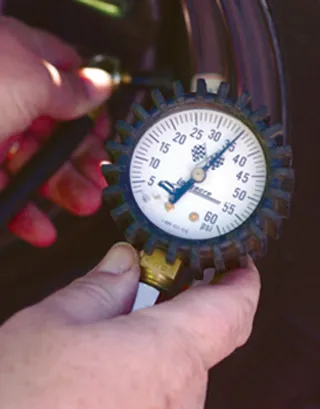
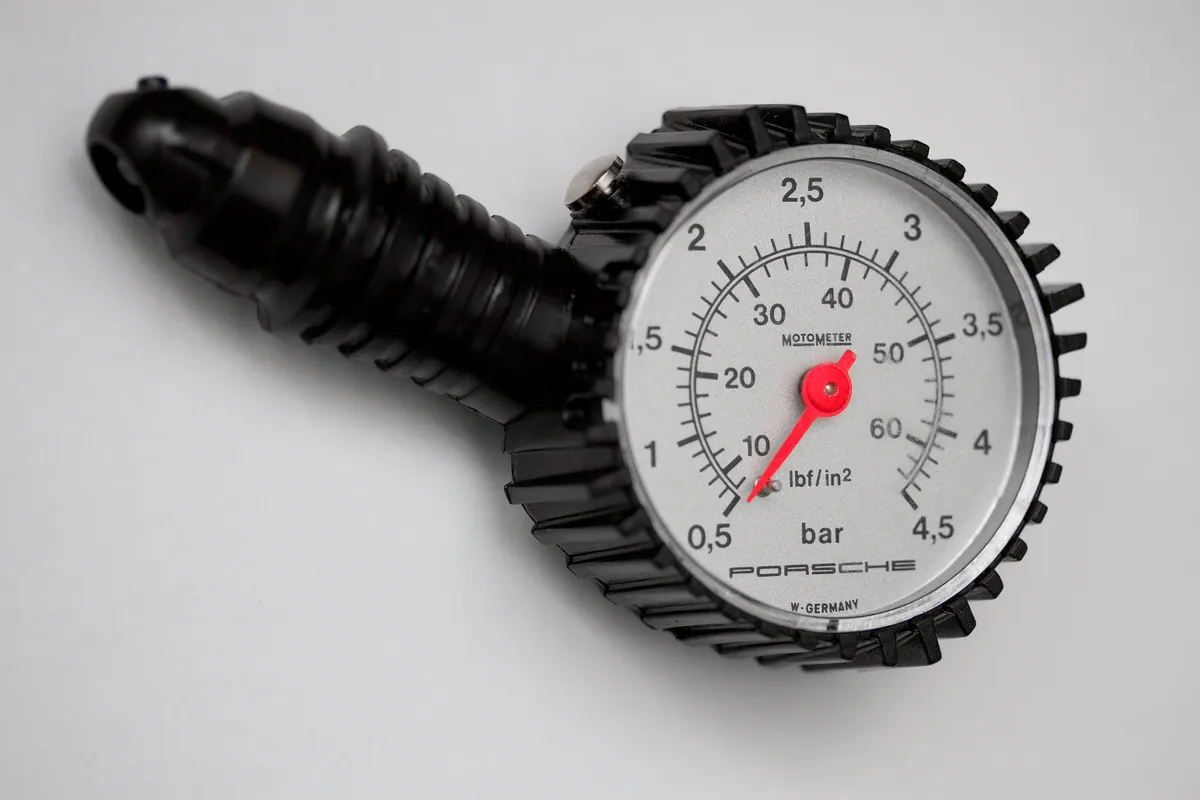
We were most skeptical about the built-in gauge's accuracy, since cheap tire gauges are notorious for being off by several PSI in either direction. We checked the AstroAI's reading against a calibrated shop-quality gauge across all four tires on two different vehicles, six total pressure checks, and found the built-in digital gauge consistently within 1 PSI of the reference gauge — accurate enough for genuine confidence rather than a rough approximation. That is a meaningfully better result than we expected from a sub-$50 consumer device, and it's the single most important spec for a tool whose entire job is telling you an accurate number.
Inflation speed: honest expectations
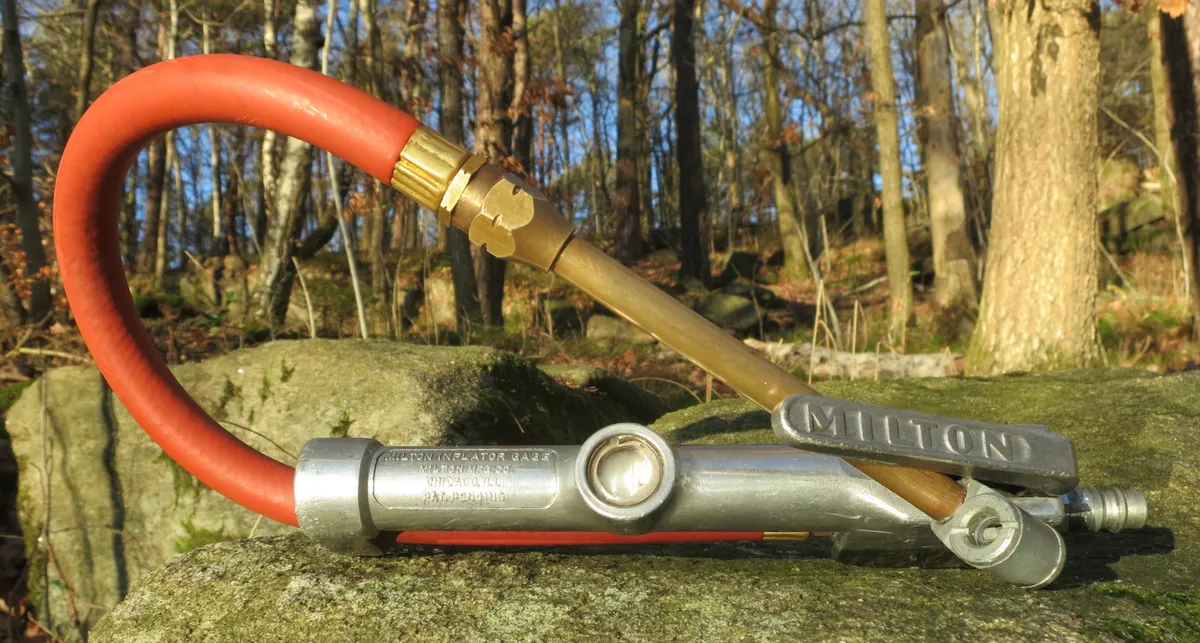
AstroAI's marketing emphasizes speed, and while the unit is faster than a bicycle-pump-style manual inflator, it is genuinely slow compared to a shop air compressor. Taking a passenger car tire from roughly 20 PSI (a realistic "noticeably low, needs air soon" starting point) up to 35 PSI took us right around three and a half minutes per tire in our testing, consistent across multiple tires and multiple sessions. That is perfectly fine for routine top-offs and emergency situations, where you're grateful to have any air source at all, but it is not a substitute for a garage-mounted compressor if you're regularly airing up several tires from fully flat, or inflating something larger like an RV or trailer tire, where the small motor works considerably harder and takes proportionally longer.
The unit does get warm to the touch after several consecutive minutes of continuous operation, and the manual explicitly warns against running it for more than roughly 10-15 minutes straight without a cooldown period, which matters if you're using it to inflate a fully flat spare tire from zero rather than topping off an already-mostly-inflated tire.
The real-world emergency test
The most useful data point from our four months came from an actual slow leak: a nail had worked its way into a rear tire, and the dashboard low-pressure warning lit up on a highway on-ramp with no gas station in sight. We pulled over, plugged the AstroAI into the 12V outlet, and brought the tire from roughly 18 PSI back up to the recommended 32 PSI in about four minutes, enough to safely limp to a tire shop a few miles away rather than attempting to drive on a dangerously underinflated tire or waiting for roadside assistance. That single use case is, honestly, the entire reason a tool like this belongs in a trunk — it turned a potentially stressful roadside wait into a five-minute inconvenience.
Battery vs plug-in power: the tradeoff to understand
Because this model draws power directly from the car's 12V outlet rather than an internal battery, the engine needs to be running (or at minimum, the accessory circuit needs power) for it to work, and it draws enough current that AstroAI recommends keeping the engine on during use to avoid draining your car battery. This is the right call for the vast majority of use cases — a flat tire happens while you have a running car nearby — but it does mean the inflator is useless for inflating things away from a vehicle entirely, like bicycle tires at a park or an inflatable pool toy at the beach, unless you buy AstroAI's separate battery-powered model instead. We'd treat this plug-in version as strictly a car-tire and small-item tool, not an all-purpose inflation device.
Extra features: light, auto-shutoff, and presets
The built-in LED work light turned out more useful than we expected, specifically for the nighttime roadside repair scenario it's obviously designed for — finding a tire valve stem in the dark on the shoulder of a road is a genuinely miserable task that a small light meaningfully improves. Preset unit options (PSI, BAR, KPA, KG/CM²) cover basically every labeling convention you'd encounter on a tire sidewall or bicycle tire internationally, and the memory function that remembers your last-used target pressure saved us a few button presses on repeat use during a multi-tire seasonal check.
Comparison to a gas station air pump
We ran a direct comparison against a coin-operated gas station air compressor on the same visit, checking the same tire with both. The gas station pump was considerably faster, unsurprisingly, since it's a much larger stationary compressor, but its gauge was noticeably less accurate — off by nearly 4 PSI compared to our shop reference gauge, which lines up with the widely known reputation gas station air pumps have for unreliable calibration. The AstroAI's slower fill time is a real tradeoff, but the accuracy advantage and the fact that it requires no coins, no working pump nearby, and no getting out in the rain to reach a service station island are meaningful conveniences the gas station option simply can't match.
Storage and everyday practicality
The included zippered carrying case keeps the hose, power cord, and adapter nozzles for bikes and inflatables organized in the trunk rather than rattling around loose, which matters more than it sounds like over months of use — a tangled hose and a lost adapter nozzle are the kind of small annoyances that make people stop bothering with a tool like this. At just under two pounds, it's light enough to leave permanently in a trunk or under a seat without noticing the extra weight, unlike some bulkier compressor units aimed more at off-roaders airing up much larger tires.
Who should actually buy this
This is squarely aimed at everyday drivers who want cheap insurance against slow leaks, seasonal pressure drops from cold weather, and the occasional dashboard warning light, not off-roaders who need to rapidly air up and down oversized truck tires on the trail. If your primary need is fast, high-volume inflation for large tires, a heavier-duty 12V or battery-powered compressor built for that job is a better fit and worth the extra cost and bulk. For the much larger population of drivers who just want a reliable, accurate, glovebox-or-trunk-sized answer to "my tire looks low," this hits the mark cleanly.
The verdict
Four months, one genuine roadside emergency, and a head-to-head accuracy test against both a shop gauge and a gas station pump later, the AstroAI earned its permanent spot in our trunk. It is not fast, and it is not a substitute for a real shop compressor if you're inflating fully flat tires regularly, but its accuracy, simplicity, and auto-shutoff convenience make it exactly the kind of unglamorous, inexpensive tool that pays for itself the first time you actually need it on the side of a road.
Other products we tested

Ecobee Smart Thermostat Premium Review: Two Months of Real HVAC Testing
We installed the Ecobee Smart Thermostat Premium without a C-wire, tracked its temperature accuracy against a separate thermometer, and measured real energy savings over two months of daily HVAC use.
Bose SoundLink Flex Review: Six Weeks of Hiking, Kayaking, and Beach Days
Six weeks of camping, kayaking, and beach trips show the Bose SoundLink Flex's IP67 rating and PositionIQ orientation sensing are genuinely useful, with honest limits on bass and max volume.

Coros Pace 3 Review: Six Weeks Testing the GPS Watch That Barely Needs Charging
A dual-frequency GPS running watch that trades AMOLED shine for weeks of battery life at a fraction of the price of flagship rivals.