
Mattress Buying Guide: Foam, Hybrid, or Innerspring, and What the Specs Mean
Foam density, coil gauge, firmness by weight and sleep position, and the trial-period fine print that matters more than any of it.
Mattresses are the worst-structured major purchase in the home. You cannot meaningfully test one in a showroom, the marketing vocabulary is almost entirely invented, identical-looking products vary by a factor of four in price, and the feedback loop is so slow that you may not know you bought wrong for six weeks. Everything about the category is arranged to make comparison hard.
The good news is that underneath the branding, there are only about four construction types, three firmness decisions, and a handful of specifications that predict how a mattress will actually feel. This guide covers those, plus the trial-period mechanics that matter more than any of them.
The quick answer
Side sleepers need pressure relief at shoulder and hip, which means a softer surface and at least 7cm of comfort layer. Back and stomach sleepers need support that keeps the hips from sinking below the shoulders, which means firmer and thinner comfort layers. If a couple splits across those two categories, a hybrid with zoned support or a split configuration is the compromise that actually works.
Ignore the firmness number on the website. There is no industry standard behind "medium-firm 6.5 out of 10," and one brand's 6.5 is another's 4. What is comparable across brands is construction and material density, which is what the rest of this guide focuses on.
Above all, buy from somewhere with a genuine 100-night trial and a free return, because your body's verdict after three weeks is the only test that counts.
The four constructions
Innerspring is the traditional build: a steel coil unit with a thin comfort layer. It sleeps cool because air moves freely through the coil layer, it has strong edge support, and it is cheap. The weakness is motion transfer — an interconnected coil system passes movement across the bed, so a partner turning over wakes you.
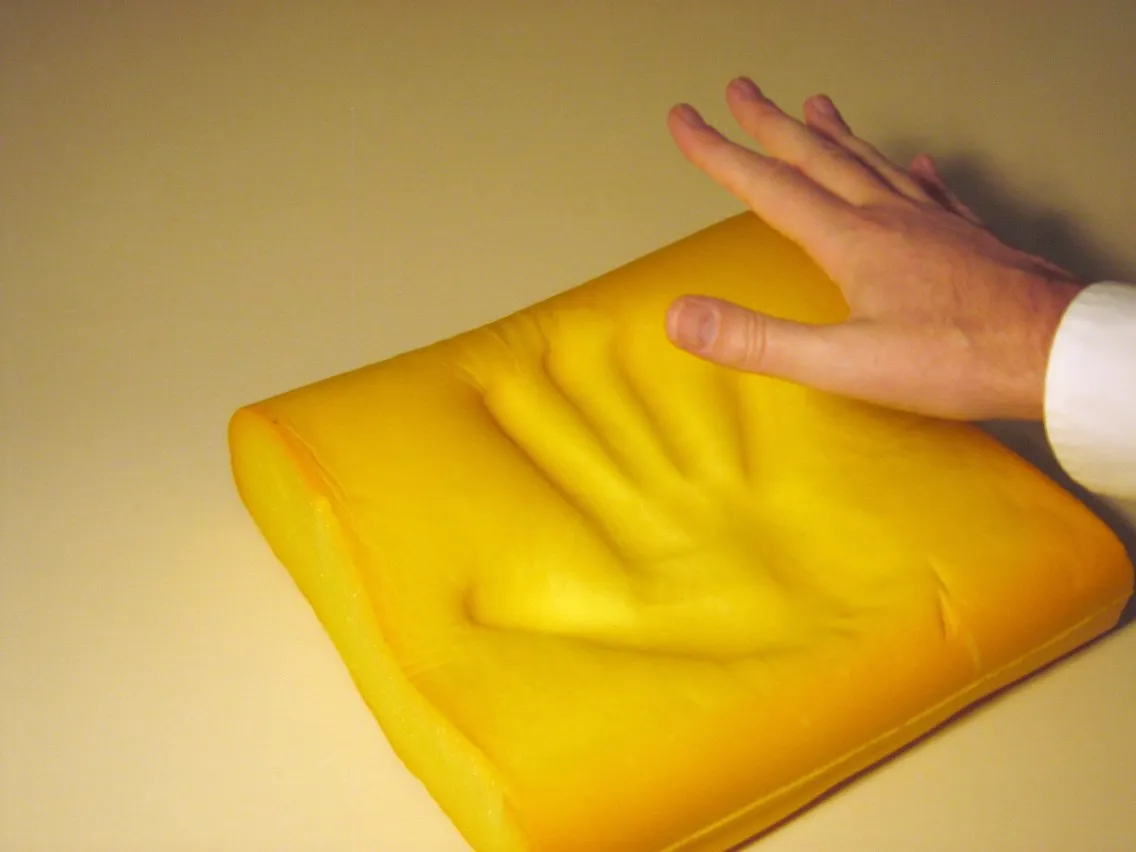
All-foam mattresses stack polyurethane foam, usually with a memory-foam or latex comfort layer over a denser support core. They excel at motion isolation and pressure relief and are the default for side sleepers. Their weaknesses are heat retention, which memory foam is genuinely prone to, and edge support, which is usually weaker because there is no perimeter structure.
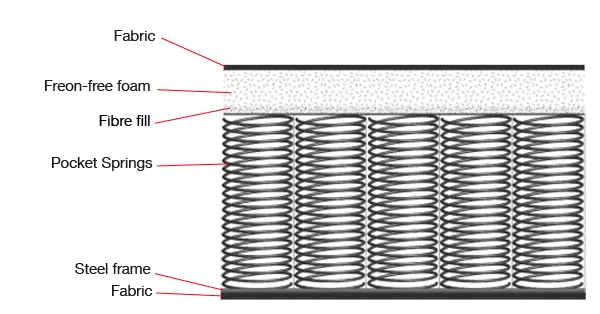
Hybrids put a pocketed coil unit — individually wrapped springs that move independently — under a substantial foam or latex comfort layer. This is the construction most premium mattresses use now, because it gets most of foam's pressure relief with most of a spring bed's airflow and edge support. It is also heavier, harder to move, and more expensive.
Latex, either natural (from rubber trees) or synthetic, is springier than memory foam, sleeps notably cooler, and is by far the most durable material in the category — quality latex cores commonly last fifteen to twenty years. The cost is price and weight; a natural latex queen can cost $1,800 and weigh 45kg.
The specification that predicts durability
Foam density, measured in kilograms per cubic metre or pounds per cubic foot, is the closest thing this industry has to an honest quality metric. Memory foam below about 48kg/m³ (3lb/ft³) softens noticeably within two to three years; 56kg/m³ (3.5lb) and above holds up for seven-plus. For the polyfoam support core, look for at least 29kg/m³ (1.8lb).
Brands that publish density figures are generally the ones with nothing to hide. If a product page lists "premium high-density foam" without a number, assume it is at the low end. This single check separates the $600 mattress that lasts a decade from the $600 mattress that develops a body impression in year two.
For coils, the relevant figures are gauge and count. Gauge is wire thickness, counterintuitively numbered so lower is thicker: 12-13 gauge is firm and durable, 15-16 gauge is softer and more conforming. Count matters less than marketing suggests above about 800 in a queen; beyond that you are adding thinner wires, not more support.
Firmness, sleep position, and body weight together
Firmness advice given by sleep position alone is incomplete, because body weight changes how deeply you sink into the same surface. A 55kg side sleeper and a 110kg side sleeper on an identical medium mattress are having completely different experiences.
The usable rule combines both. Under about 60kg, most people should go one step softer than the standard recommendation for their position, because they do not compress the comfort layer enough to reach the support core. Between 60 and 100kg, standard recommendations apply: soft to medium for side, medium-firm for back, firm for stomach. Above 100kg, go one step firmer and pay particular attention to comfort-layer density, since a low-density layer will bottom out and you will feel the coils.
The spinal-alignment test is worth doing during a trial. Lie in your normal sleeping position and have someone look at your spine from behind. It should follow the same gentle curve it has when you stand. Hips sagging lower than shoulders means too soft. A visible gap under the waist means too firm.
Cooling claims, sorted from the marketing
Heat is the most common complaint about foam mattresses and the most heavily marketed feature. Some of the technology is real and some is decoration.
What works: open-cell and convoluted foam structures that let air move, coil units that create a genuine airflow layer, latex, and covers made from materials with high thermal conductivity. What works less than claimed: gel infusions, which absorb some heat initially and then saturate within an hour or two; and "cooling" phase-change covers, which have a real but short-lived effect at the moment you lie down.

A blunt point that saves money: your sheets and mattress protector affect sleeping temperature more than most in-mattress cooling technology. A waterproof vinyl-backed protector will make any mattress hot, no matter what is underneath. If you sleep hot, spend $60 on percale cotton sheets and a breathable protector before spending $400 more on a cooling model.
Trial periods, warranties, and where the fine print bites
The trial is the most valuable part of a modern mattress purchase, and its terms vary more than the price. Three things to verify before ordering.
First, is there a mandatory break-in period? Many trials require you to keep the mattress 21 or 30 days before you can return it. This is reasonable — foam does soften and your body does adapt — but it means a 100-night trial is really a 70-night decision window.
Second, who pays for return shipping and removal? A "free return" that requires you to box a 40kg mattress and get it to a depot is not free in any practical sense. Good policies arrange collection.
Third, does the trial reset if you exchange? Some brands give you a second full trial on a swapped model; others give you the remainder of the original window, which can leave two weeks to judge a replacement.
Warranties are less useful than they appear. A twenty-year warranty typically covers manufacturing defects and body impressions deeper than a specified threshold — often 2.5cm to 3.8cm measured with no weight on the bed. Normal softening that ruins comfort without creating a deep permanent dent is not covered. Most warranties also void if the mattress is used without adequate support: slats more than 7-8cm apart, or a queen or larger without a centre support leg, is the most common voiding condition, and it is worth checking your existing frame before the mattress arrives.
Realistic budgets, and where extra money stops helping
Under $500 for a queen buys a serviceable all-foam mattress with low-density layers. It will be comfortable for two or three years. For a guest room or a short-term flat, that is a rational purchase and there is no reason to feel bad about it.
Between $800 and $1,400 is where the value sits. In that band you can get a hybrid with a pocketed coil unit and genuinely dense foam, or a solid all-foam bed with published density figures, from a brand with a real trial. This is the range most people should target for a primary bed.
Above about $2,500, you are paying for natural materials, handcrafting, longer warranties, and organic certifications. These are real things and some people value them, but the sleep-quality difference between a well-specified $1,300 hybrid and a $3,000 one is small and highly individual. Diminishing returns arrive early in this category.

When not to buy a mattress at all
If your current mattress is under five years old and the problem is a specific pressure point, a $150 topper solves it far more cheaply. Toppers work well for making a too-firm bed softer; they work badly for making a sagging bed supportive, because they follow the sag.
If you wake with lower back pain, check the bed base before replacing the mattress. A slatted base with a broken slat, or a sagging box spring, will ruin a new mattress within months and reproduce the exact symptom you were trying to fix.
And if the real complaint is heat or partner disturbance rather than support, address those directly. Better sheets, a breathable protector, and separate duvets solve more sleep complaints than a new mattress does — and cost under $200 combined.
For a worked example of the trial-and-adaptation process on a specific bed, including how long the break-in actually took, our Purple Hybrid mattress review documents twelve weeks of it. The pattern it shows is the one to expect: the first week feels wrong, week three tells the truth, and the trial window exists precisely because of that gap.
More coupon shopping advice

Home Security Camera Buying Guide: Local vs. Cloud Storage
A practical, balanced buying guide to home security cameras that weighs local storage against cloud subscriptions, wired versus battery power, camera placement, night vision, smart detection accuracy, and smart home integration.

Beginner Mirrorless Camera Buying Guide
A practical, honest walkthrough of what actually matters when buying your first mirrorless camera, from sensor size and lens mounts to autofocus, video specs, and the real total cost of a beginner-friendly system.

Air Purifier Buying Guide: CADR, ACH, and Filter Costs Explained
A practical walkthrough of the numbers that actually matter when buying an air purifier — CADR and ACH for sizing, true HEPA versus marketing terms, real three-year filter costs, realistic noise levels, and when a purifier won't help at all.